


 English
 Español
 русский
 عربى
 中文简体

Lin Qian — International Sales Manager
40-Inch Economic Three-System Collar Knitting Machine: Performance, Flexibility, and Production Value
Date:Oct 02, 2026
Content
- 1 1. The Role of Advanced Collar Knitting in Modern Garment Production
- 2 2. Three-System Single-Carriage Architecture
- 3 3. Variable Stitch Density for More Valuable Collar Products
- 4 4. Multi-Stage Needle Selection Jacquard System
- 5 5. High-Precision Insert Needle Bed
- 6 6. Upper-Lower Composite Traction System
- 7 7. Compact Fully Motorized Cam System
- 8 8. Yarn Carrier Configuration for Complex Patterns
- 9 9. Control System and Production Management
- 10 10. Comprehensive Protection and Safety Functions
- 11 11. Product Specifications at a Glance
- 12 12. Comparison with Conventional Collar Machines
- 13 13. Manufacturing Strengths and Engineering Approach
- 14 14. Recommended Applications
- 15 15. Production Workflow Recommendations
- 16 16. Maintenance and Long-Term Performance
- 17 17. Questions and Answers
- 17.1 Q1: What is the main advantage of the GS-CE340?
- 17.2 Q2: Can the machine produce plain collars as well as jacquard collars?
- 17.3 Q3: What does variable stitch density do?
- 17.4 Q4: How many colors can the machine use for jacquard knitting?
- 17.5 Q5: What gauges are available?
- 17.6 Q6: What is the maximum knitting speed?
- 17.7 Q7: How does the machine improve pattern consistency?
- 17.8 Q8: Is the machine suitable for small-batch production?
- 17.9 Q9: What protection functions are included?
- 17.10 Q10: What power supply does the machine use?
- 17.11 Q11: How does the composite traction system help fabric quality?
- 17.12 Q12: Who is the machine best suited for?
- 18 18. Conclusion
- 19 References
- 20 Product: GS-CE340 40-Inch Economic Three System Collar Knitting Machine
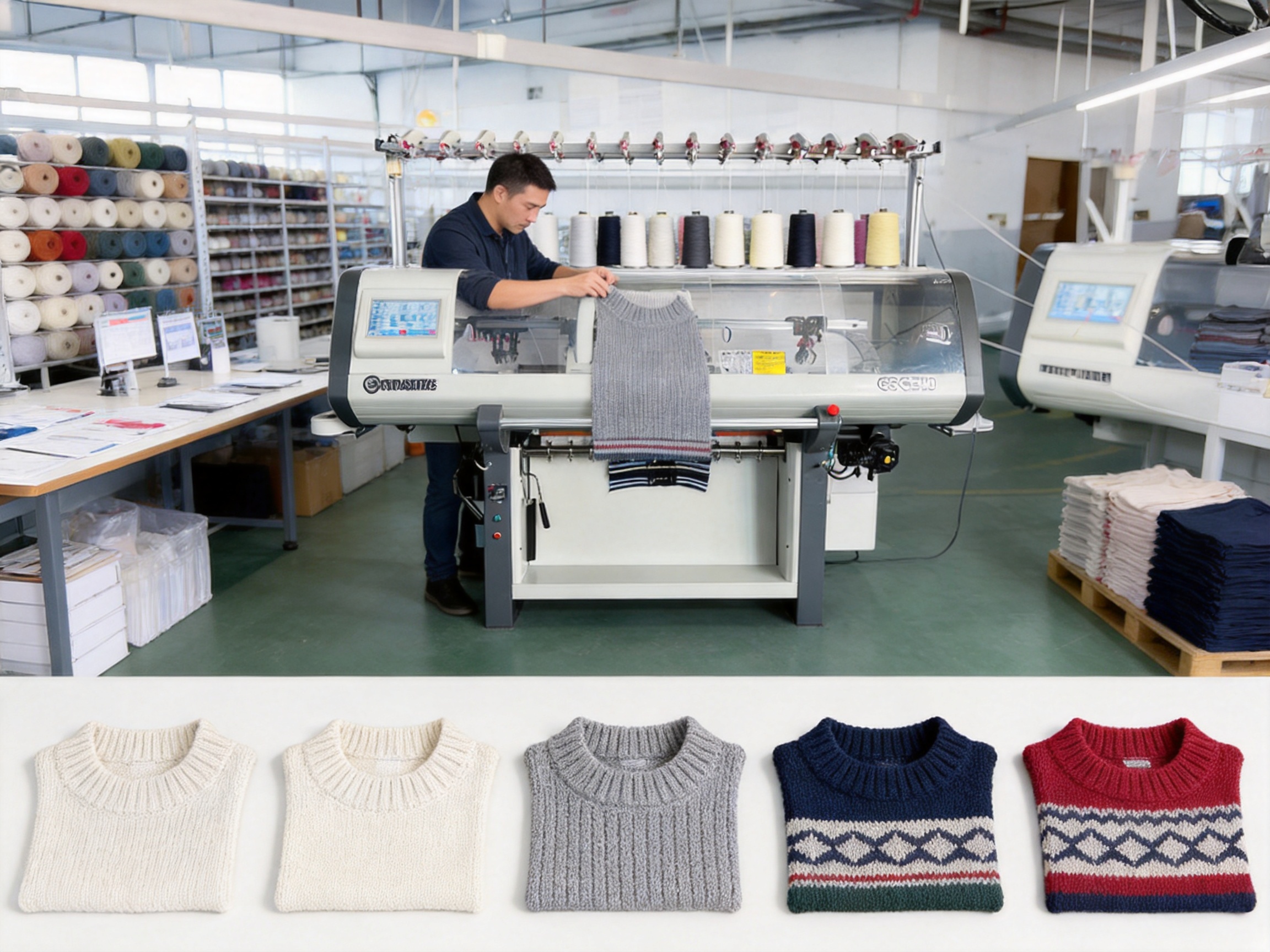
In modern knitwear manufacturing, collars are no longer treated as simple supporting components. A collar contributes to the appearance, comfort, durability, and commercial identity of a garment. Fashion brands increasingly request ribbed collars with multiple colors, structured transitions, decorative patterns, and carefully controlled elasticity. As a result, collar production requires machinery that can combine productivity with accurate pattern control, stable fabric formation, and flexible design capability.
The GS-CE340 40-Inch Economic Three-System Collar Knitting Machine is developed for manufacturers that need more than a conventional single-system collar machine but do not want the investment level of a fully specified high-end platform. It combines an economic three-system, single-carriage architecture with three-color jacquard knitting, variable stitch density, computer-controlled needle selection, composite take-down, and a high-precision insert needle bed.
With a maximum knitting speed of 1.5 meters per second and a 40-inch knitting width, the machine is designed to support efficient production of knitted collars and related fabric components. Its available gauges from 12G to 20G allow factories to address a wide range of yarns, fabric weights, garment styles, and customer specifications.
The machine’s central value proposition is balance. It provides a meaningful increase in knitting efficiency and design capability compared with basic economic collar machines, while maintaining a practical configuration for factories that must control equipment investment, operating costs, and maintenance requirements.
1. The Role of Advanced Collar Knitting in Modern Garment Production
Collar manufacturing is highly sensitive to consistency. Small variations in stitch density, tension, edge formation, or pattern alignment can affect the way a collar fits the garment body. A collar that is too tight, too loose, unevenly knitted, or distorted during take-down may create sewing problems and reduce the finished garment’s appearance.
Traditional collar machines often focus on basic rib structures and standard production requirements. These machines can be suitable for simple products, but they may become restrictive when manufacturers need multi-color patterns, varied fabric textures, or more differentiated product lines. In a competitive market, the ability to produce distinctive collars without excessive manual adjustment can directly influence factory productivity and product value.
The GS-CE340 addresses these requirements through a coordinated set of mechanical, electronic, and software-controlled systems. The three-system configuration expands the number of knitting actions performed during each carriage pass. The multi-stage needle selection system improves pattern control. The variable stitch density function allows structural changes within the same knitted piece. Meanwhile, the upper-lower composite traction system helps preserve dimensional stability across the 40-inch working width.
These features are especially relevant to factories supplying fashion sweaters, sportswear, children’s knitwear, uniform garments, premium basics, and other products requiring reliable collar quality. The machine can be used for plain ribbed collars as well as more complex jacquard products, allowing manufacturers to serve multiple market segments with one equipment platform.
2. Three-System Single-Carriage Architecture
The defining feature of the GS-CE340 is its Economic-Three System, Single Carriage configuration. A three-system arrangement enables the machine to perform more knitting actions during one carriage passage than a single-system or many basic double-system machines. This creates a direct opportunity to improve production efficiency, especially when the programmed structure requires repeated knitting, transfer, tuck, or color-related operations.
For production managers, the benefit is not limited to nominal speed. Effective output depends on how efficiently a machine converts carriage movement into completed knitted structures. A system that can complete more operations in each pass may reduce unnecessary carriage movement and improve output per unit of operating time.
The three-system arrangement also supports three-color jacquard knitting. This is a major advantage over machines primarily intended for single-color or basic two-color collar production. Three-color capability gives designers greater freedom to create logos, stripes, geometric arrangements, contrast effects, and decorative pattern transitions.
In practical production, three-color jacquard can help factories expand beyond standard rib collars. It can support collars with contrasting edges, multi-tone brand patterns, decorative bands, sportswear color blocking, and fashion-oriented surface designs. The ability to create these effects within the knitting process can reduce the need for separate decorative operations.
The single-carriage structure is also valuable from an operational perspective. A single carriage provides a clear and centralized knitting path, allowing operators to manage production parameters through one primary working unit. When combined with electronic control and motorized cam actuation, the machine can maintain a compact layout while still delivering three-system functionality.
Three-color production capability
Three-color jacquard is not simply an additional color option. It increases the range of visual effects available to the factory. With suitable programming, manufacturers can produce patterns in which three yarn colors interact within the same design area. This can create greater contrast, stronger visual definition, and more complex pattern repetition than conventional two-color structures.
The machine’s 2×8 yarn carrier configuration, installed on both sides of four guide rails, supports yarn changes at any needle position. This flexibility is important because complex jacquard structures may require yarn insertion or color transitions at different points across the needle bed. A carrier system that can shift freely across the working area helps reduce restrictions during programming and supports smoother color transitions.
Compared with simpler collar machines, the GS-CE340 therefore offers a broader design window without requiring a separate specialized jacquard platform for every product type.
Efficiency in production planning
A three-system machine can help manufacturers consolidate product orders. Instead of assigning basic products to one machine and multi-color products to another, a factory may use the GS-CE340 for a wider range of collar styles. This can simplify production planning, improve equipment utilization, and reduce the number of machine types that operators must manage.
Consolidation can also be useful for smaller and medium-sized factories. These manufacturers often need to accept varied orders while limiting capital expenditure. A flexible machine that can handle plain, transfer, tuck, and jacquard structures offers a practical way to increase production capability without building an overly complex equipment fleet.
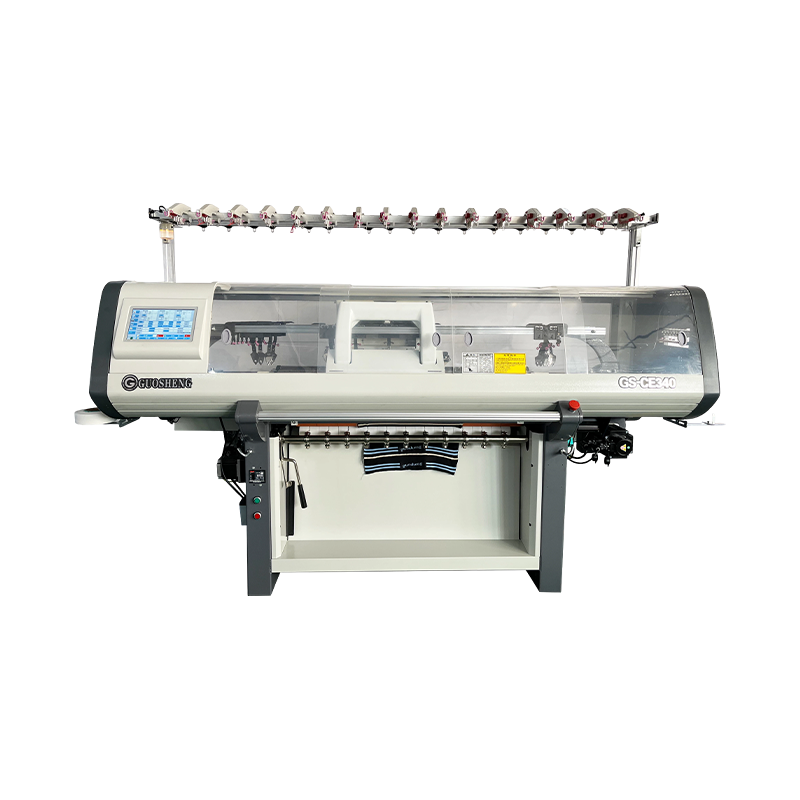
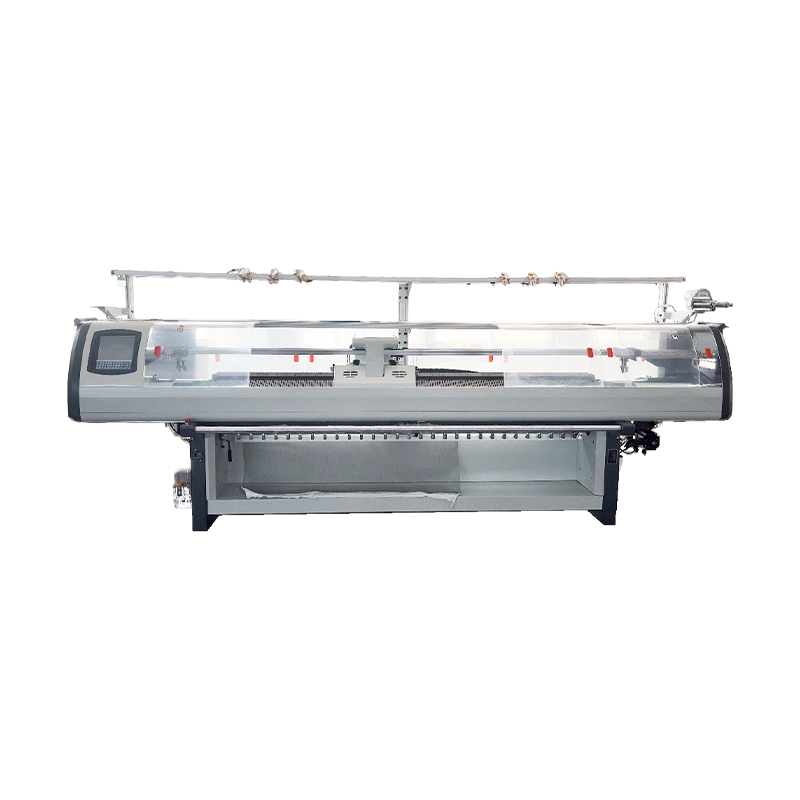
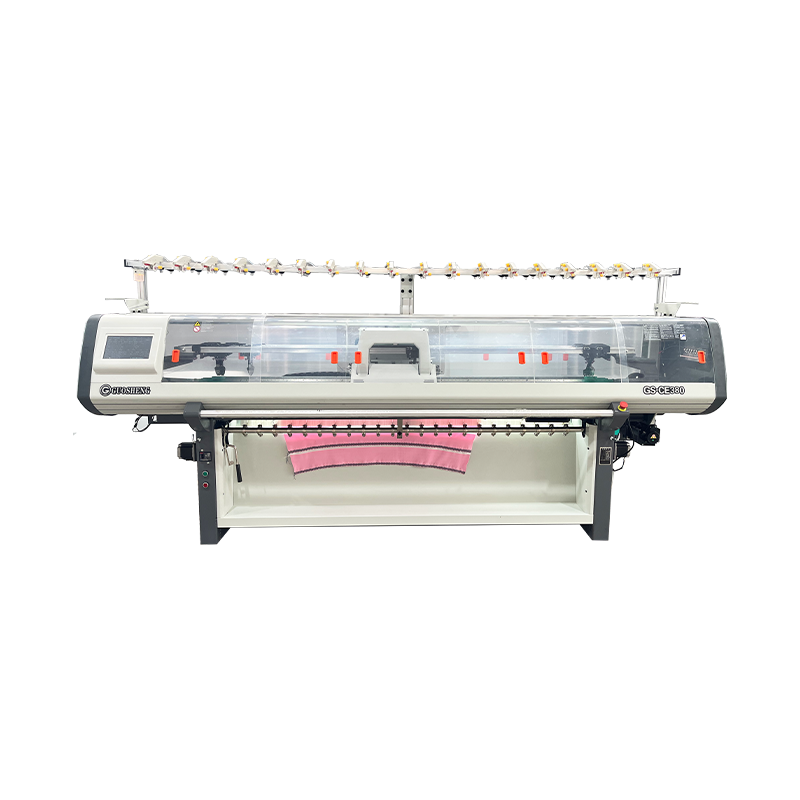
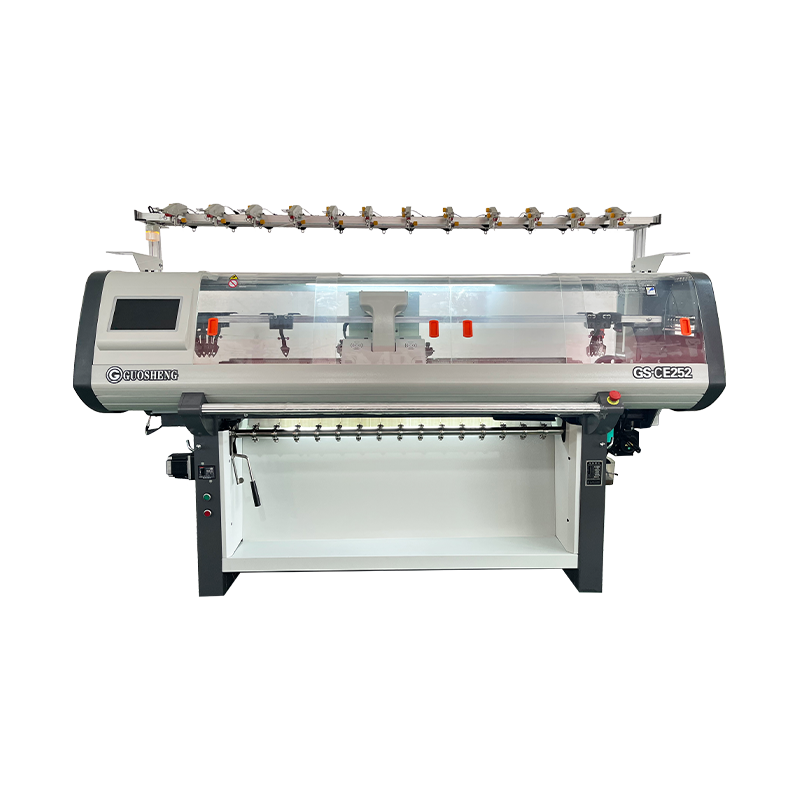
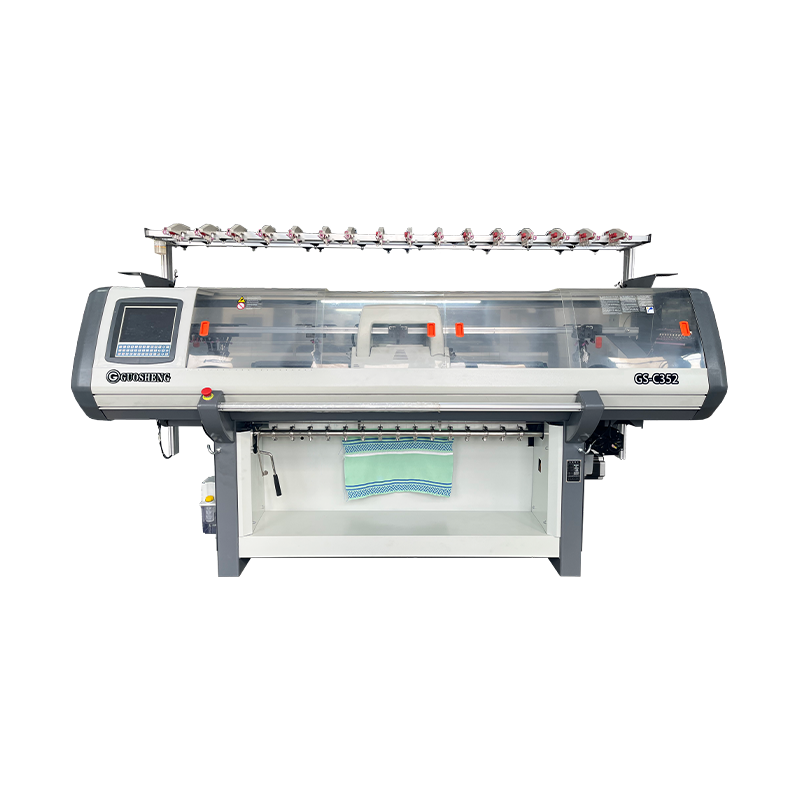
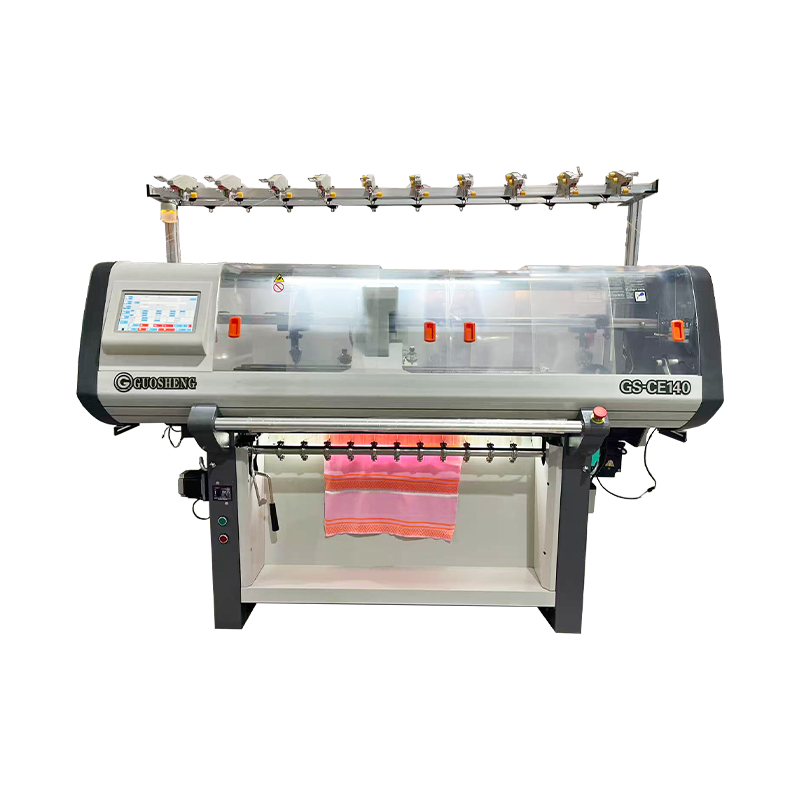
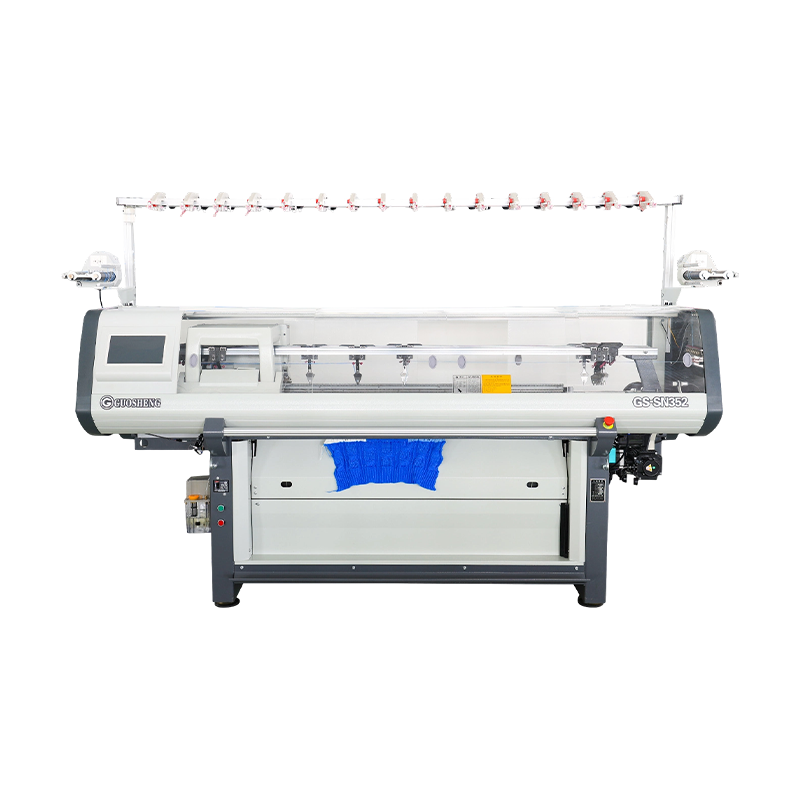
GS-CE340 40-Inch Economic Three System Collar Knitting Machine
3. Variable Stitch Density for More Valuable Collar Products
Many conventional collar products are manufactured with a relatively fixed stitch density. Although fixed density is appropriate for certain basic applications, it limits the ability to create controlled changes in surface texture and fabric structure. The GS-CE340 includes a variable stitch density function that allows stitch length to be adjusted during knitting.
By changing stitch density in selected areas, manufacturers can produce transitions between tighter and more open structures. This may create visual layering, dimensional effects, controlled texture changes, or different hand-feel zones within the same collar design. Such effects can make a collar appear more sophisticated and can improve its compatibility with fashion-oriented garment collections.
The variable density function is particularly valuable when used together with jacquard. Color changes define the visual pattern, while stitch-density changes add depth and structural variation. The result can be more expressive than a flat, uniform collar surface created with fixed-density knitting.
Applications of density variation
Variable stitch density can support several product strategies:
First, it can be used to create stronger visual separation between border areas and central pattern zones. A tighter edge may help define the collar outline, while a different density in the central area can produce a contrasting texture.
Second, it can support premium fashion details. Subtle density gradients may create a three-dimensional appearance without adding a separate finishing process.
Third, it may help manufacturers develop product families. The same basic pattern can be offered in different structural versions, allowing brands to create standard, premium, and customized ranges with a related design language.
Fourth, stitch-density changes can be used to adapt fabric behavior to different yarns and garment requirements. While final performance depends on yarn selection, programming, and finishing, adjustable density gives technicians more control over the knitted structure.
Commercial value of structural flexibility
Product differentiation is increasingly important in the knitwear market. Factories that compete only on low production cost may face pressure from regional competitors and large-scale producers. Machinery that supports more distinctive products can help a factory compete through quality, design, responsiveness, and customization.
The GS-CE340 helps connect technical capability with commercial value. A factory can use the machine to produce standard collars during high-volume orders and then switch to patterned or structurally differentiated products for higher-margin programs. This flexibility may improve the return on equipment investment by allowing one machine to support multiple levels of product complexity.
4. Multi-Stage Needle Selection Jacquard System
The GS-CE340 uses a computer-controlled electromagnetic needle selection system with multi-stage selection capability. This replaces the traditional high-low needle approach used by older collar machines. The change is important because traditional high-low systems may require more mechanical adjustment and may offer less flexibility when manufacturers need to create varied patterns.
Multi-stage electronic selection allows the machine to determine needle actions through programmed instructions. Depending on the design, needles can be selected for plain knitting, transfer, tuck, or jacquard operations. This provides a more direct path from digital design data to knitted output.
Electronic needle selection can also support more consistent batch production. When a design is stored and correctly configured, the same selection instructions can be reproduced across production lots. This can reduce dependence on manual mechanical settings and help improve repeatability from one order to the next.
Advantages over high-low mechanical selection
A high-low needle system can be effective for limited pattern requirements, but it may become less convenient when a factory needs frequent pattern changes. Mechanical components may require adjustment, inspection, or replacement, particularly when operating conditions are demanding. Pattern changes can also involve longer preparation time.
The computer-controlled system used in the GS-CE340 provides a more adaptable alternative. Pattern instructions can be prepared, stored, recalled, and adjusted through the control system. This supports a more efficient workflow when producing multiple designs in one production schedule.
The system also helps reduce the risk of pattern instability caused by inconsistent mechanical settings. Stable needle selection is essential for maintaining clean jacquard edges, accurate repeats, and reliable pattern placement. While yarn quality, programming, and operator skill remain important, precise selection provides a strong technical foundation.
Multiple knitting functions
The machine supports flat, transfer, tuck, and jacquard knitting. These functions cover a broad range of collar structures. Flat knitting can be used for basic and clean rib constructions. Transfer operations support structural movement and design effects. Tuck knitting can add surface texture and thickness. Jacquard knitting enables color-based pattern development.
Because these functions are available on the same machine platform, factories can respond to changing customer requirements without necessarily needing separate machines for each basic structure. This can simplify sample development, production scheduling, and operator training.
5. High-Precision Insert Needle Bed
The needle bed is one of the most critical components in any knitting machine. Its precision affects needle movement, stitch formation, fabric flatness, and long-term operating stability. The GS-CE340 uses a high-precision insert needle bed with insert needles and notched sinkers.
The needle bed is designed with high hardness, accurate manufacturing tolerances, and tight needle density. These characteristics help maintain consistent needle positioning during continuous operation. When the machine is running at high speed or executing complex three-system actions, a stable needle bed is essential for minimizing fabric irregularities and maintaining production quality.
A precise needle bed also contributes to the appearance of the finished collar. Uneven needle alignment may cause irregular loops, inconsistent fabric surfaces, or visible distortion in jacquard areas. By providing a firm and accurately produced working foundation, the insert needle bed supports more uniform fabric formation.
Durability and maintenance considerations
High hardness and wear-resistant construction can extend the useful operating life of the needle bed. Reduced wear is important because needle bed deterioration may gradually affect stitch consistency and increase maintenance requirements. It can also lead to more frequent production interruptions if components must be adjusted or replaced.
For factories operating multiple shifts, durable needle bed construction may help lower the long-term cost of ownership. The value is not only measured by the initial purchase price but also by the machine’s ability to maintain performance over time, reduce unplanned downtime, and preserve product consistency.
Routine inspection and correct maintenance remain necessary. Operators should still monitor needle condition, sinker condition, lubrication, yarn cleanliness, and signs of abnormal resistance. However, a precision and wear-resistant needle bed gives maintenance teams a more reliable base from which to manage these tasks.
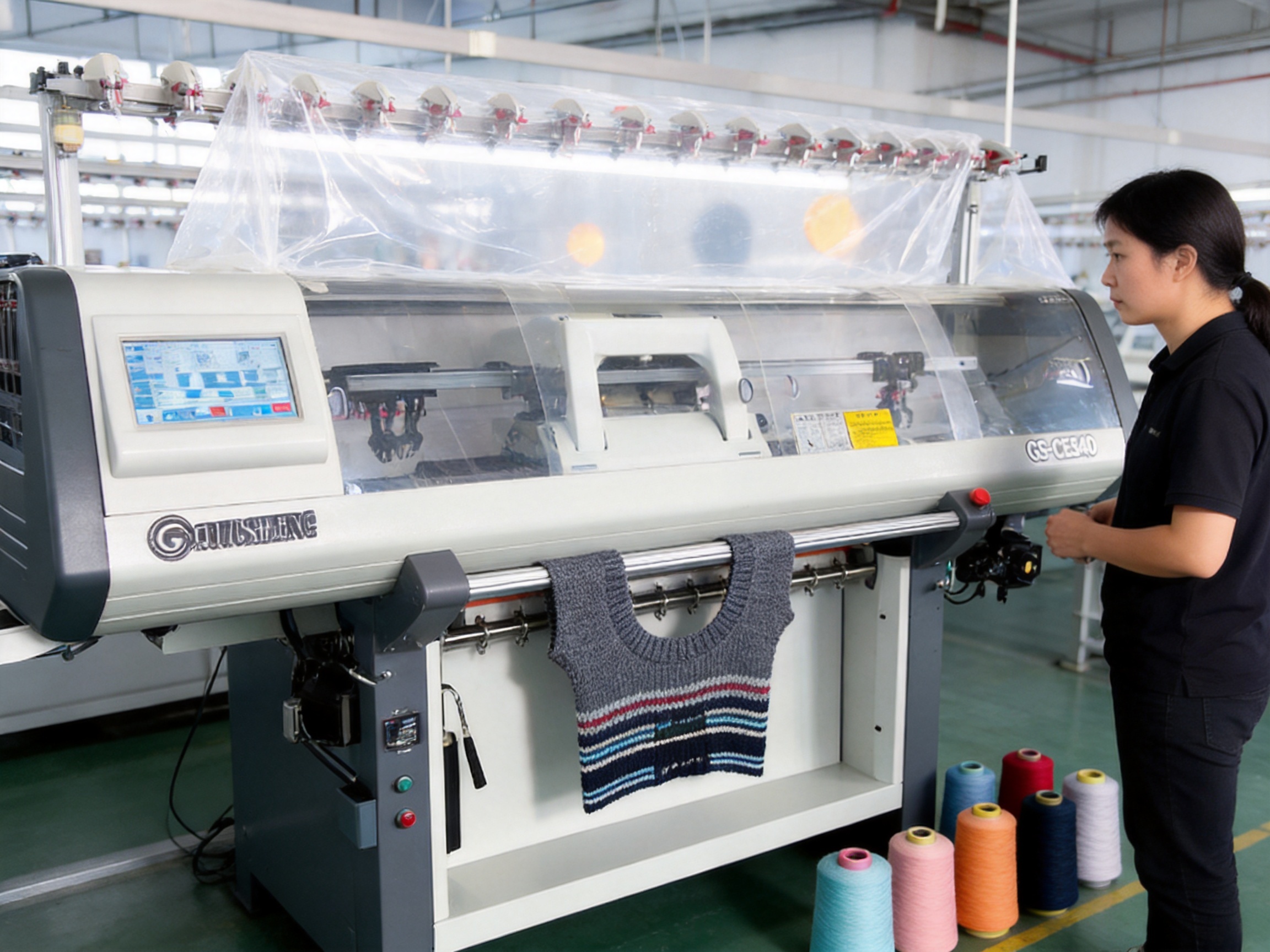
6. Upper-Lower Composite Traction System
Even when needle selection and stitch formation are accurate, poor take-down can damage the final fabric. Uneven pulling force may cause edge curling, twisting, width variation, or dimensional differences across the knitted piece. These problems can become more noticeable in wide fabrics and in products made from yarns with different elasticity levels.
The GS-CE340 uses an upper-lower composite traction system. The coordinated upper and lower traction components apply pulling force more evenly across the fabric width. This arrangement is designed to improve fabric movement after the knitting zone and help maintain stable tension during production.
The high-position roller increases the overall traction force, while the thickened lower roller reinforces the pulling effect. A specially formulated wear-resistant roller cover supports longer service life under repeated operation.
Benefits for collar quality
Stable traction can help reduce dimensional variation between the center and edges of the fabric. It can also support flatter fabric delivery, which is valuable when collars are later cut, joined, folded, or sewn to garment bodies.
For elastic or blended yarns, tension control is especially important. Such yarns may react differently to pulling force, speed changes, and density adjustments. A composite take-down system gives the operator a more controlled mechanism for managing the fabric as it leaves the knitting area.
The traction system also works together with the variable stitch density function. If stitch density changes across a collar and fabric pulling is inconsistent, the finished structure may not reflect the programmed design accurately. Coordinated stitch and traction control therefore help preserve both appearance and dimensional stability.
7. Compact Fully Motorized Cam System
The machine is equipped with a compact small-head fully motorized cam system. Motor-driven cam actuation allows the machine to control cam movement with precision and rapid response. This is particularly important in a three-system machine, where multiple knitting actions may occur within a single carriage passage.
A compact head can contribute to efficient machine movement and a practical overall layout. The fully motorized design reduces reliance on manual mechanical cam adjustment during normal operation. It also supports accurate action control when the machine changes between knitting functions or follows complex programmed instructions.
Fast and accurate cam response helps maintain stability during continuous production. When cams do not respond consistently, the machine may experience knitting faults, pattern errors, or unnecessary interruptions. Motorized control helps reduce these risks by coordinating cam action with the computerized knitting program.
Operational reliability
For a production factory, reliability is closely connected to output. Every interruption can affect delivery schedules, labor utilization, and material consumption. A motorized cam system designed for continuous operation can help improve production continuity when combined with suitable maintenance and correct operating procedures.
The system also supports a more modern maintenance approach. Operators can monitor machine behavior through the control interface and identify abnormal conditions more quickly. This can help maintenance personnel respond before a minor issue develops into a major mechanical or quality problem.
8. Yarn Carrier Configuration for Complex Patterns
The GS-CE340 includes 2×8 yarn carriers on each side of four guide rails. This configuration gives the machine a broad yarn-handling capability for three-color jacquard and other multi-yarn structures.
The carriers can shift at any needle position. This flexibility is important for detailed patterns because a yarn may need to enter or leave the knitting zone at a location that is not limited to a fixed carrier position. Free positioning helps improve pattern fluency and gives programmers more freedom when developing designs.
Multiple yarn carriers can also support efficient production changes. Different colors or yarn types can be prepared on the machine, reducing the need for repeated manual carrier replacement during certain production programs. The actual number of carriers used will depend on the design, yarn arrangement, and programming requirements, but the available configuration provides a strong foundation for multi-color work.
When combined with the three-system architecture and electronic needle selection, the yarn carrier system allows factories to develop more complex collar products without relying entirely on additional sewing, printing, or decorative processes.
9. Control System and Production Management
The control system includes an LCD display, USB input, 256MB memory, real-time parameter adjustment, and multilingual operation support. These features help connect machine operation with modern digital production practices.
The USB input allows design files and production data to be transferred efficiently. A 256MB memory capacity provides space for storing a substantial number of design files, reducing the need to reload commonly used patterns during routine production. This is useful for factories that manufacture multiple customer designs or operate frequent small-batch orders.
The monitoring menu displays operating parameters and allows adjustments while the machine is running. Real-time access to settings can help technicians fine-tune stitch density, take-down tension, racking, and other parameters in response to yarn behavior or product requirements.
Stitch density control
Stitch density is controlled by a stepping motor. The system supports 128 or 32 selectable levels through subdivision technology across a range of 0 to 650. This provides a fine adjustment structure for technicians who need to match fabric formation to yarn type, gauge, pattern, and desired hand feel.
Fine control is important because small differences in stitch length can affect fabric weight, elasticity, coverage, and appearance. The appropriate setting depends on the specific yarn and product, but the machine gives operators a broad adjustment range rather than restricting them to a small number of mechanical positions.
Take-down tension control
The take-down roller is programmed through a stepping motor and provides 128-section level selection across an adjustable range of 0 to 100. This enables production teams to control fabric pulling with greater precision.
The ability to coordinate stitch density and take-down tension is particularly useful when manufacturing collars with different yarn weights or elastic behavior. A setting that works for a standard synthetic yarn may not be suitable for a wool blend, cotton blend, or elasticated structure. Electronic adjustment helps reduce the time required to test and optimize these combinations.
Racking and drive system
Racking is controlled by an AC servo motor with a two-inch range and fine-tuning capability. The synchronous belt drive and AC servo system provide stable and coordinated machine movement.
Servo control is valuable because it supports accurate positioning and smooth response. Racking accuracy can influence the alignment of transferred stitches and pattern structures. A stable drive system also helps reduce vibration and irregular movement during continuous operation.
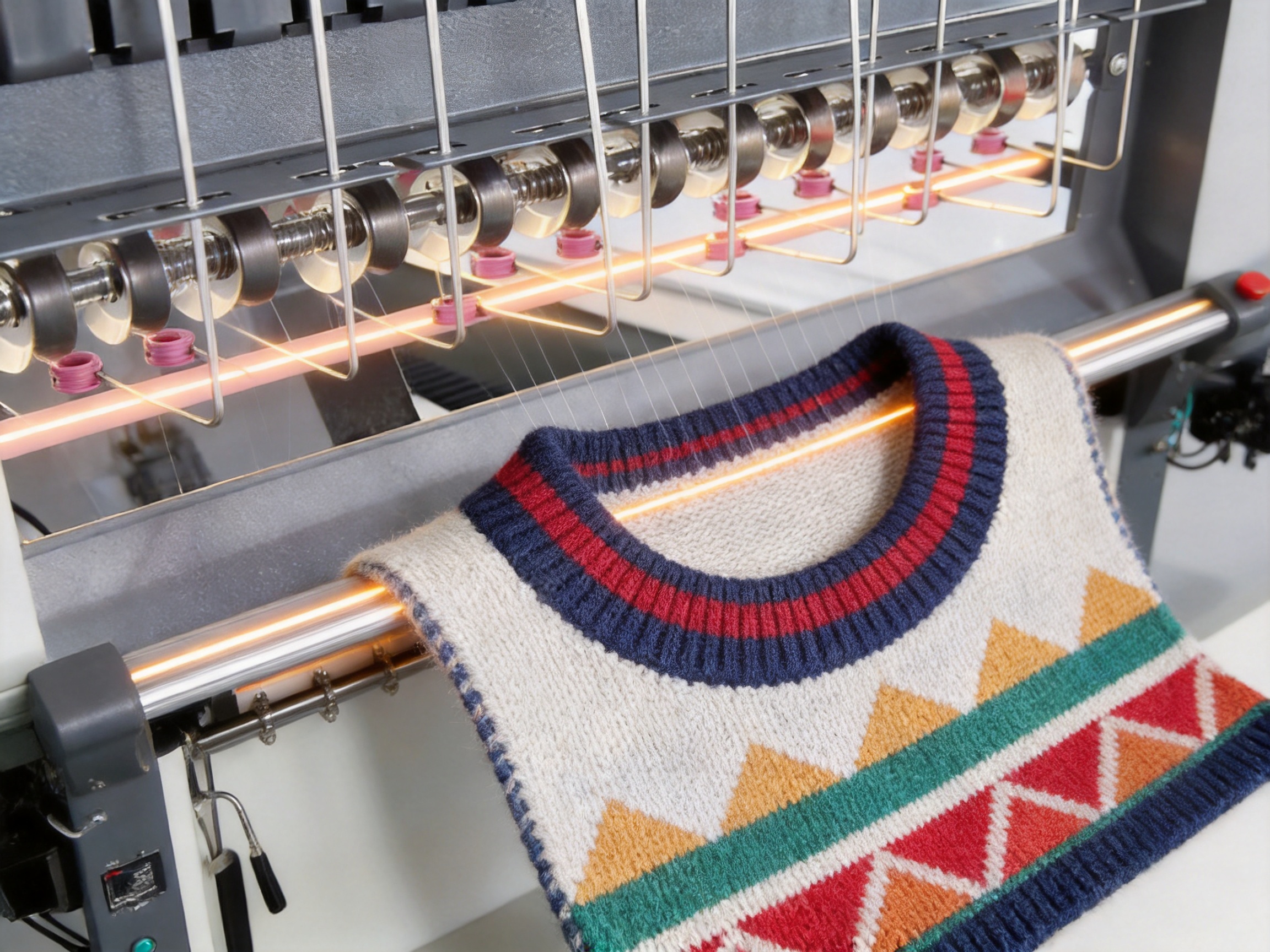
10. Comprehensive Protection and Safety Functions
Production reliability depends not only on performance but also on the machine’s ability to identify abnormal conditions. The GS-CE340 includes protection functions that automatically alarm and stop the machine when selected faults occur.
Protected conditions include yarn breakage, float yarn, rewinding faults, end of knitting, racking failure, needle breakage, safety door events, and programming errors. Automatic detection helps prevent a minor problem from developing into a larger fabric defect or mechanical failure.
For example, yarn breakage can create missing stitches or incorrect pattern areas if the machine continues to run. A float yarn condition may indicate that a yarn has not been properly knitted into the structure. Racking faults and needle-related problems can affect fabric formation and may cause damage if not stopped quickly.
Automatic alarms also support easier operator supervision. The machine can alert personnel to investigate a fault rather than requiring continuous visual inspection of every operation. This is especially helpful in factories with multiple machines operating simultaneously.
Power-off memory
The machine operates with 220V single-phase power and includes a power-off memory function. If an unexpected interruption occurs, production data and operating information can be protected so that the machine can recover more efficiently after power is restored.
Power interruptions can create significant waste if designs, parameters, or production positions are lost. Memory protection helps reduce the risk of restarting from the beginning and can support more orderly recovery. The exact recovery procedure should follow the factory’s operating instructions, but the function provides an important layer of production security.
11. Product Specifications at a Glance
| Specification | GS-CE340 Configuration |
|---|---|
| Machine type | Economic three-system collar knitting machine |
| Carriage structure | Single carriage |
| Available gauges | 12G, 14G, 16G, 18G, and 20G |
| Knitting width | 40 inches |
| Maximum knitting speed | 1.5 meters per second |
| Knitting functions | Flat, transfer, tuck, and jacquard |
| Jacquard capability | Three-color jacquard |
| Stitch density range | 0–650 with stepping motor control and subdivision technology |
| Stitch adjustment | 128 or 32 selectable levels |
| Take-down control | Stepping motor control with 128 selectable levels across 0–100 |
| Racking system | Computer-controlled AC servo system with a two-inch range |
| Yarn carriers | 2×8 yarn carriers on each side of four guide rails |
| Control interface | LCD display with USB input |
| System memory | 256MB |
| Power supply | 220V, single-phase |
| Language support | Chinese, English, and other language versions |
12. Comparison with Conventional Collar Machines
The GS-CE340 is positioned between basic economic equipment and more expensive full-function machines. Its advantages become clearer when compared with conventional collar machines that may have fewer systems, limited color capability, fixed stitch density, or mechanical high-low needle selection.
Higher efficiency than single-system platforms
A single-system machine may be appropriate for straightforward products, but it generally requires more carriage actions to complete structures that can be processed more efficiently on a three-system machine. The GS-CE340’s three-system architecture can therefore provide greater productivity potential, particularly for complex designs and multi-operation structures.
Broader pattern capability than basic two-color machines
Two-color jacquard can satisfy many requirements, but three-color jacquard offers more pattern depth and design freedom. The GS-CE340 is better suited to manufacturers that want to develop premium or fashion-oriented collar collections rather than remain limited to basic color combinations.
More flexible than fixed-density machines
Fixed-density machines may produce consistent basic fabric, but they offer less control over structural variation. Variable stitch density allows the GS-CE340 to create more differentiated surfaces and adjust fabric behavior for different yarns and products.
More adaptable than high-low needle systems
Computerized multi-stage needle selection provides greater flexibility for pattern development and repeat production. It can reduce the need for mechanical high-low adjustments and support quicker changes between stored designs.
Practical investment level
Not every factory requires the complete specification of a premium full-function machine. The GS-CE340 provides selected high-value functions, including three-system knitting, three-color jacquard, electronic selection, variable stitch density, and servo control, while remaining positioned as an economic collar machine. This balance can be attractive to factories seeking capability expansion without unnecessary over-specification.
13. Manufacturing Strengths and Engineering Approach
The performance of a knitting machine depends on the quality of its individual parts and on how those parts are integrated. A machine may have a powerful control system, but if the needle bed lacks precision or the traction system is unstable, the final product may still suffer. The GS-CE340 demonstrates an engineering approach that combines mechanical precision, electronic control, and production practicality.
Its high-precision insert needle bed provides a stable knitting foundation. The motorized cam system coordinates knitting actions. The AC servo drive supports racking and machine movement. Stepping motors control stitch density and take-down adjustment. The computerized needle selection system transforms design instructions into controlled needle action. The composite traction system stabilizes fabric delivery.
This coordinated design is important because no single component determines the entire production result. Quality depends on the interaction of needle movement, yarn feeding, stitch formation, take-down tension, carriage movement, and software instructions.
Integration of mechanical and electronic systems
Modern knitting production requires mechanical durability and intelligent control. Mechanical components must withstand repeated movement and production loads. Electronic systems must deliver accurate instructions and provide operators with useful information. The GS-CE340 combines these requirements through motorized actuation, sensor-based protection, stored design data, and real-time parameter management.
This integration also supports process standardization. Once a design has been tested and its parameters have been optimized, the settings can be recorded and reused. Such standardization can help factories improve repeatability and reduce dependence on individual operator memory.
Support for international production environments
The multilingual control system, including English and other language versions, is useful for factories operating with international teams. Clear interface access can reduce training barriers and support communication between operators, technicians, and production managers.
USB design input and memory storage also fit common digital workflows. Factories can organize design files, assign product codes, and create internal procedures for pattern verification and machine setup.
14. Recommended Applications
The GS-CE340 is suitable for manufacturers producing a wide range of knitted collar products. Its 40-inch width and available gauge range allow it to address both standard garment components and more specialized products.
Potential applications include sweater collars, ribbed neckbands, decorative collar panels, sportswear collars, children’s garment collars, uniform components, fashion jacquard collars, and multi-color knitted trims.
Manufacturers serving brand customers may benefit from its ability to produce customized patterns and color combinations. Factories focused on volume production may value its three-system productivity and automated protection functions. Small-batch and development-oriented producers may find the stored design capability and flexible needle selection useful for fast sample changes.
Product suitability will depend on the yarn, gauge, collar dimensions, pattern complexity, and required finishing method. A factory should conduct sample trials before committing to large-scale production, especially when using unfamiliar yarns or highly elastic materials.
15. Production Workflow Recommendations
To obtain the best results from the machine, manufacturers should establish a structured workflow covering design preparation, yarn selection, machine setup, sample verification, production monitoring, and quality inspection.
Design preparation
Design files should be checked for gauge compatibility, color allocation, pattern repeat, needle selection logic, and intended stitch-density changes. Three-color jacquard designs should be reviewed carefully to ensure that yarn carriers can move through the programmed sequence without unnecessary conflicts.
Yarn preparation
Yarn should be checked for linear density, elasticity, cleanliness, winding quality, and compatibility with the selected gauge. Consistent yarn preparation is essential because uneven yarn tension can affect the machine even when the mechanical settings are correct.
Sample verification
Before full production, technicians should verify stitch density, take-down tension, racking position, color registration, edge appearance, and dimensional stability. Sample evaluation provides an opportunity to adjust parameters and record a reliable production recipe.
In-process monitoring
Operators should monitor yarn behavior, fabric surface, roller contact, needle condition, and alarm messages during production. Early identification of irregularities can prevent large quantities of defective collars.
Quality inspection
Finished collars should be checked for width, length, elasticity, pattern accuracy, color consistency, edge stability, and visible knitting faults. Quality standards should be established according to the customer’s garment specifications and sewing process.
16. Maintenance and Long-Term Performance
Regular maintenance is essential for preserving the advantages of a precision knitting machine. Operators should follow recommended cleaning, lubrication, inspection, and component replacement procedures. Particular attention should be given to needles, sinkers, yarn carriers, guide rails, rollers, cams, drive belts, sensors, and electrical connections.
The needle bed should be kept clean and protected from accumulated lint or foreign matter. Yarn carriers and guide rails should move smoothly. Take-down rollers should be inspected for surface wear and contamination. Abnormal noise, vibration, resistance, or repeated alarms should be investigated promptly.
Software and design files should also be managed carefully. Factories can improve reliability by maintaining backup copies of approved programs, documenting parameter changes, and restricting unauthorized modifications to production files.
Preventive maintenance is generally more economical than corrective maintenance after a serious failure. It can reduce downtime, improve product consistency, and extend the service life of major machine components.
17. Questions and Answers
Q1: What is the main advantage of the GS-CE340?
The main advantage is its combination of three-system productivity, three-color jacquard capability, variable stitch density, and computerized needle selection in an economic collar machine platform. It gives factories more production and design capability than many basic collar machines without requiring the full investment of a premium machine.
Q2: Can the machine produce plain collars as well as jacquard collars?
Yes. The machine supports flat, transfer, tuck, and jacquard knitting. It can therefore be used for simple plain ribbed collars as well as more complex multi-color patterned products.
Q3: What does variable stitch density do?
Variable stitch density allows the stitch length to change during knitting. This can create differences in texture, thickness, structure, and visual depth within the same collar design.
Q4: How many colors can the machine use for jacquard knitting?
The three-system configuration supports three-color jacquard knitting. The 2×8 yarn carrier arrangement on each side of four guide rails provides the carrier flexibility required for multi-color production.
Q5: What gauges are available?
The machine is available in 12G, 14G, 16G, 18G, and 20G configurations. The correct gauge should be selected according to the yarn, fabric structure, product specification, and desired appearance.
Q6: What is the maximum knitting speed?
The maximum specified knitting speed is 1.5 meters per second. Actual production speed depends on the design, yarn, gauge, knitting structure, stitch density, and operating conditions.
Q7: How does the machine improve pattern consistency?
Computer-controlled multi-stage needle selection, stored design data, motorized cam action, and real-time parameter management help improve repeatability. Proper yarn preparation, programming, and maintenance are also necessary for consistent results.
Q8: Is the machine suitable for small-batch production?
Yes. Its USB input, memory capacity, multilingual interface, and flexible knitting functions can support factories that frequently change designs or produce multiple customer patterns. Sample testing and organized design-file management are recommended.
Q9: What protection functions are included?
The machine can alarm and stop for conditions such as yarn breakage, float yarn, rewinding faults, end of knitting, racking failure, needle breakage, safety door events, and programming errors.
Q10: What power supply does the machine use?
The specified power supply is 220V, single-phase. The machine also includes a power-off memory function to help protect production data during unexpected interruptions.
Q11: How does the composite traction system help fabric quality?
The upper and lower traction components work together to provide more even pulling force across the fabric width. This can help reduce edge curling, twisting, and dimensional variation during production.
Q12: Who is the machine best suited for?
It is suited to sweater and knitwear factories, collar specialists, garment component suppliers, sportswear manufacturers, and other producers that need efficient three-system knitting with multi-color jacquard and flexible structural control.
18. Conclusion
The GS-CE340 40-Inch Economic Three-System Collar Knitting Machine is designed for factories seeking a practical upgrade in collar production. Its three-system single-carriage architecture increases production potential, while three-color jacquard expands design possibilities. Variable stitch density adds structural flexibility, and computer-controlled multi-stage needle selection improves pattern control and repeatability.
The machine’s high-precision insert needle bed, upper-lower composite traction system, fully motorized cam, servo-controlled racking, and programmable take-down system address the mechanical requirements of stable production. Its LCD control interface, USB input, 256MB memory, multilingual operation, and protective alarm functions support a more organized and responsive manufacturing process.
Compared with basic collar machines, the GS-CE340 offers more systems, more colors, more structural options, and greater digital control. Compared with fully specified premium machines, it provides a more economically focused route to advanced collar production. This balance makes it a suitable choice for manufacturers that want to improve efficiency, broaden their product range, and create higher-value knitted collar products.
With appropriate yarn preparation, programming, maintenance, and quality control, the machine can support reliable production across a wide range of collar applications. Its combination of performance, flexibility, and practical investment value provides a strong foundation for factories competing in an increasingly design-driven and quality-sensitive knitwear market.
References
1. Product technical specifications for the GS-CE340 40-Inch Economic Three-System Collar Knitting Machine.
2. Internal product descriptions covering three-system knitting, jacquard selection, stitch-density control, traction, and machine protection functions.
3. General principles of computerized flat knitting machine operation and electronic needle selection.
4. Technical guidance on knitted collar construction, stitch density, yarn tension, and fabric dimensional stability.
5. Manufacturing practices for textile machinery maintenance, production monitoring, and preventive equipment care.
Product: GS-CE340 40-Inch Economic Three System Collar Knitting Machine

Ready to Begin?
Product Categories
- Sweater Knitting Machine (Economic SE)
- Sweater Knitting Machine (Full Function S)
- Collar Knitting Machine (Economic CE)(Fabric)
- Collar Knitting Machine (Full-Function C)
- Blanket Knitting Machine(Fabric)
- Shoe Upper Knitting Machine
- Ready To Wear Sweater Knitting Machine
- Ready To Wear Glove Knitting Machine
- Ready To Wear Hat Knitting Machine
- Knee Pad Knitting Machine
- Metal Mesh Knitting Machine
Contact Information
-
 Email: gs@guoshengchina.cn
-
 Phone: +86-0512-52690511
-
 Address: No. 18, Hupu Pujiang Road, Bixi New District, Changshu City, Jiangsu Province, China
QR Code
