


 English
 Español
 русский
 عربى
 中文简体

Zhao Yutong — After-Sales Service Manager
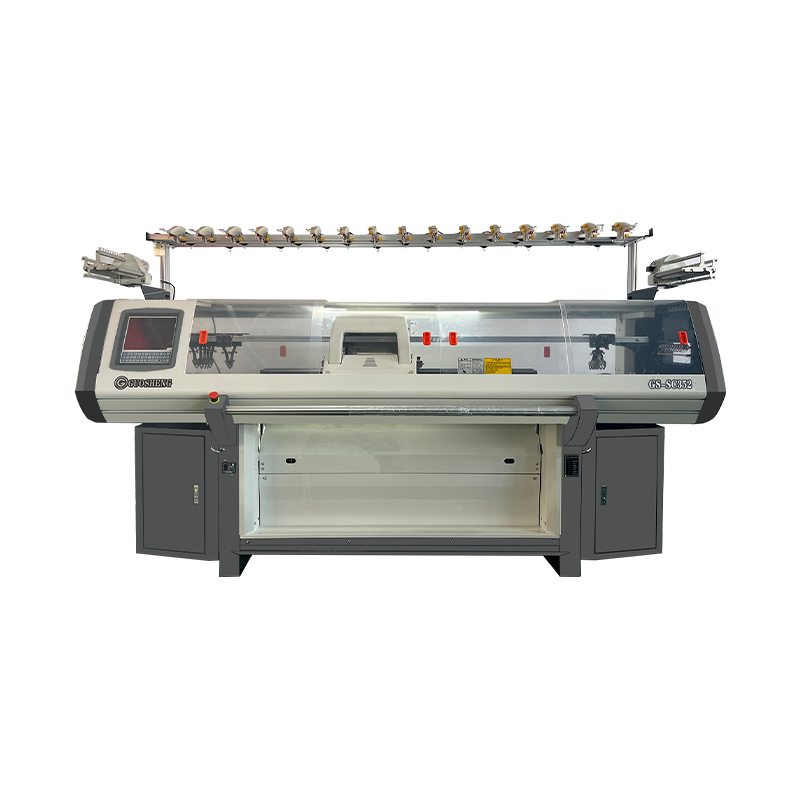
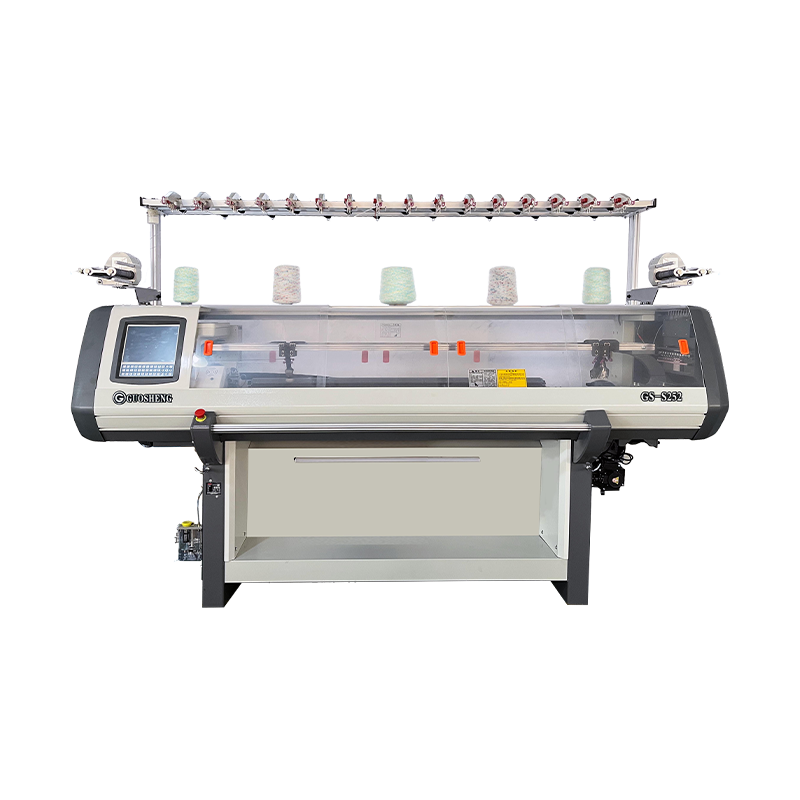
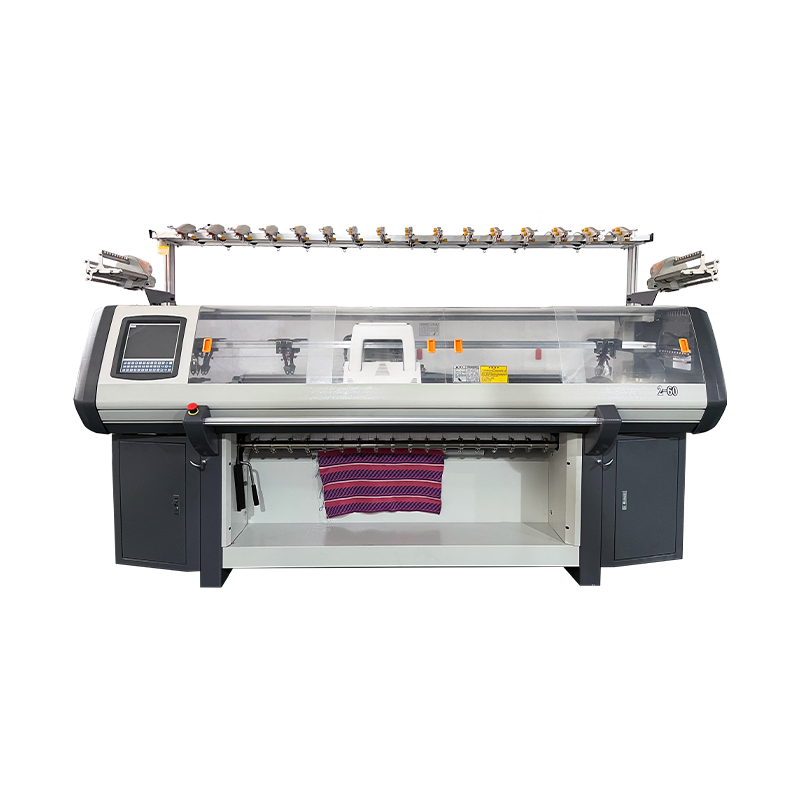
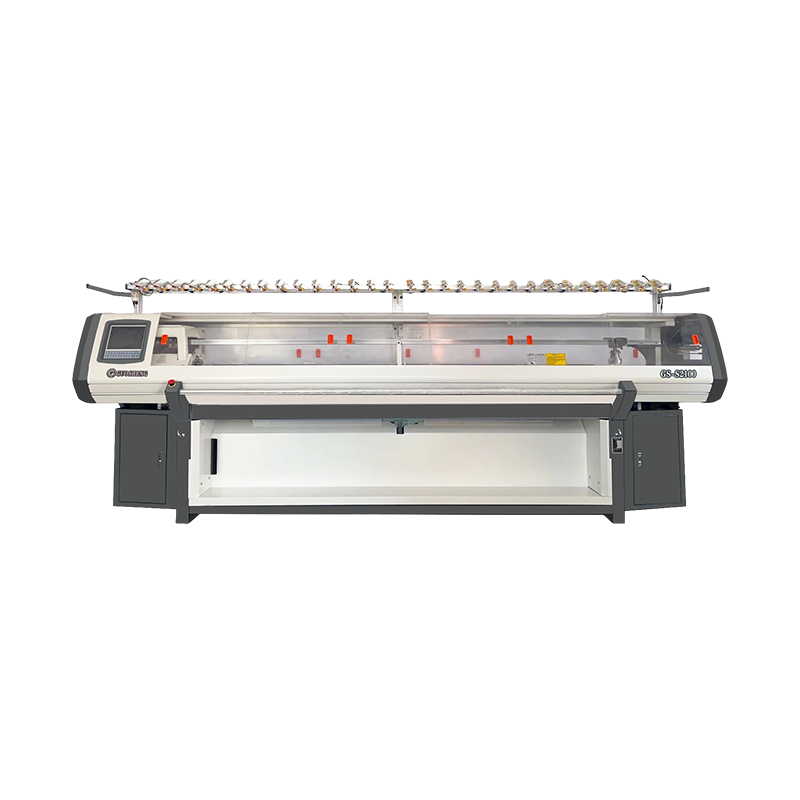
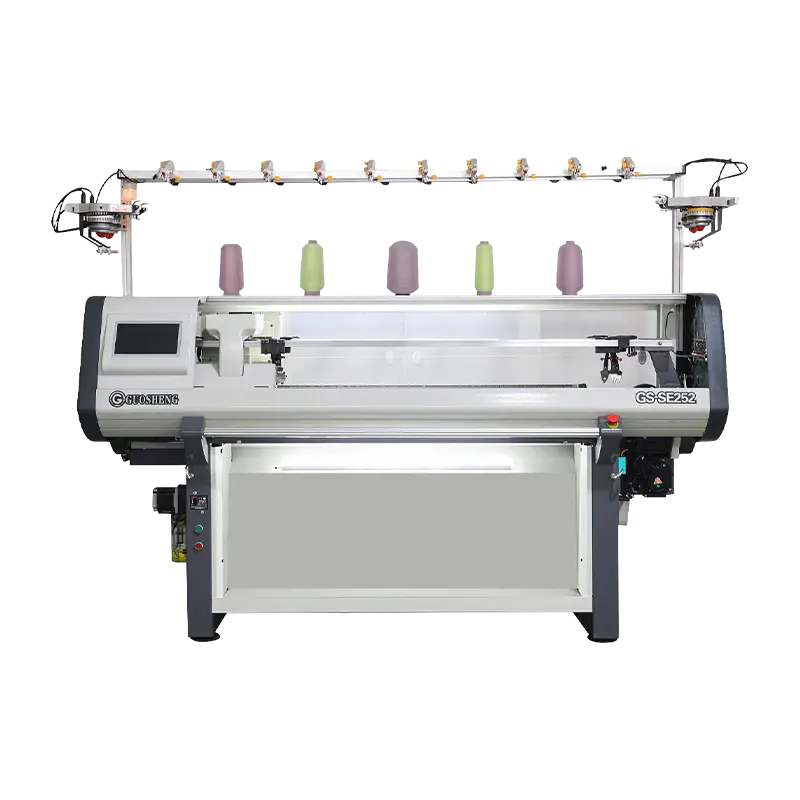
GS-SE152 12G 52-Inch Single-System Sweater Knitting Machine for Flexible, High-Quality Production
Date:Sep 28, 2026
Content
- 1 1. Product Positioning and Main Application Value
- 2 2. Key Technical Specifications
- 3 3. High-Speed Operation Through Synchronous Belt Transmission
- 4 4. Broad Knitting Functions for Commercial Product Development
- 5 5. Fine Stitch Density Control for Different Fabrics
- 6 6. Servo-Controlled Racking and Accurate Needle Selection
- 7 7. Multi-Carrier Yarn Handling and Color Flexibility
- 8 8. Intelligent Take-Down for Stable Fabric Formation
- 9 9. Protection and Fault-Monitoring Functions
- 10 10. Control System, Digital Files, and Production Management
- 11 11. Power-Off Memory and Operational Continuity
- 12 12. Advantages Compared with Basic or Conventional Alternatives
- 13 13. Manufacturing Strengths and Engineering Capabilities
- 14 14. Quality-Oriented Production Process
- 15 15. Installation, Training, and Daily Operation
- 16 16. Selecting the Correct Gauge and Width
- 17 17. Commercial Applications
- 18 18. Production Efficiency and Total Operating Value
- 19 19. Recommended Purchasing Evaluation
- 20 20. Frequently Asked Questions
- 20.1 What products can the GS-SE152 manufacture?
- 20.2 What does the 12G specification mean?
- 20.3 Is the GS-SE152 available in other gauges?
- 20.4 What is the advantage of a 52-inch knitting width?
- 20.5 How fast can the machine knit?
- 20.6 Does the machine support fully fashioned knitting?
- 20.7 Can it produce jacquard and intarsia designs?
- 20.8 How is stitch density adjusted?
- 20.9 What does the protection system monitor?
- 20.10 Does the machine retain its program after a power interruption?
- 20.11 What type of power supply does it use?
- 20.12 How much pattern memory is available?
- 20.13 Is the machine suitable for small-batch production?
- 20.14 What should customers confirm before ordering?
- 21 Conclusion
- 22 References
- 23 Product: GS-SE152 12G 52-inch Single system Sweater Knitting Machine
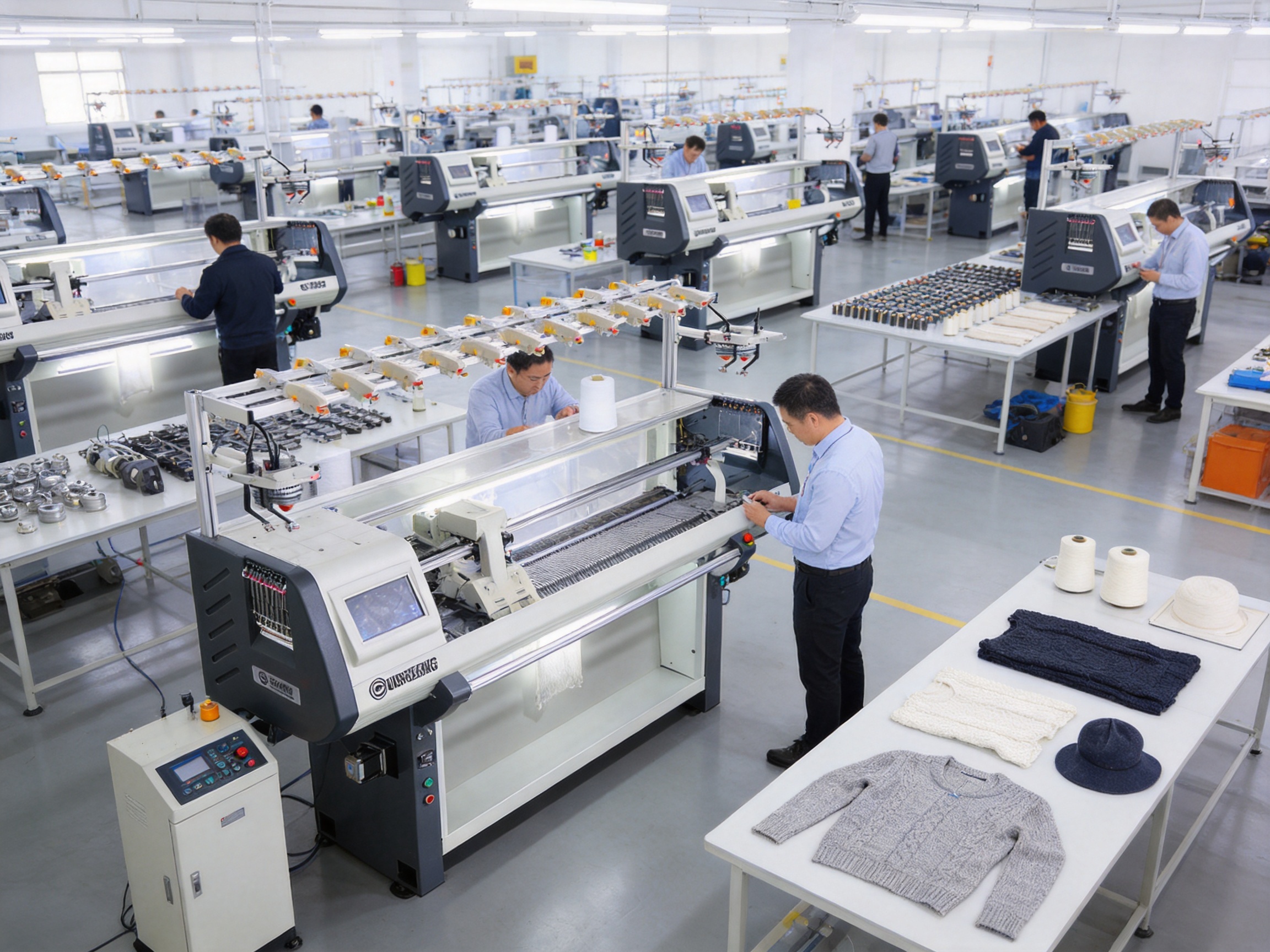
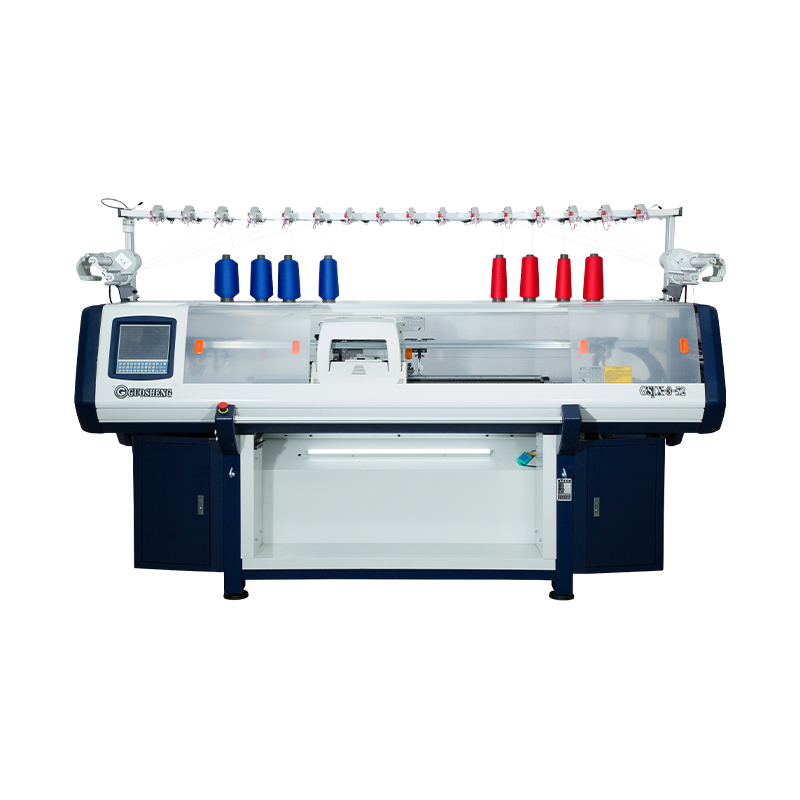
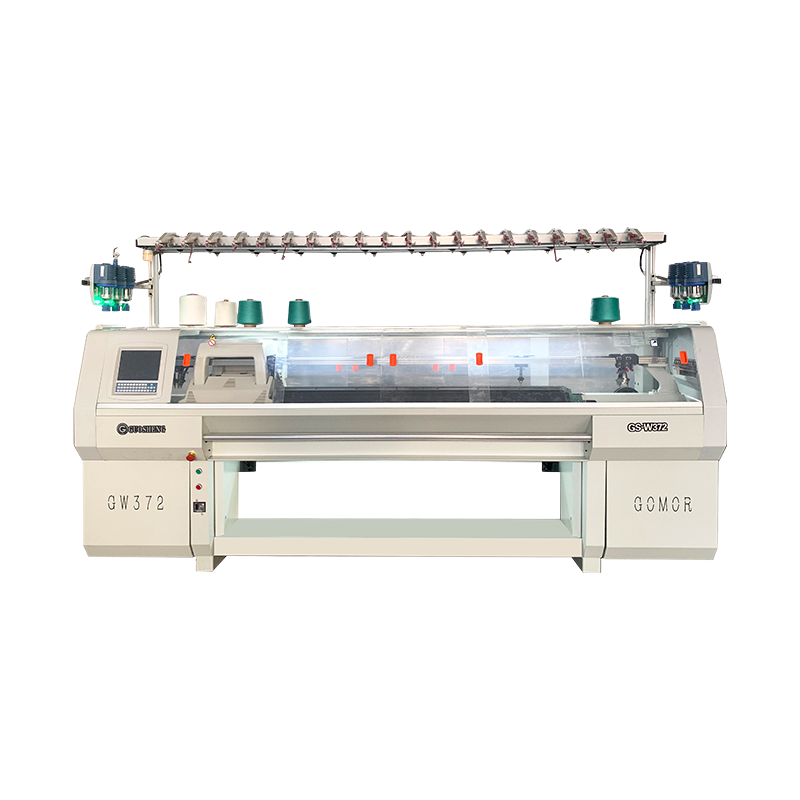
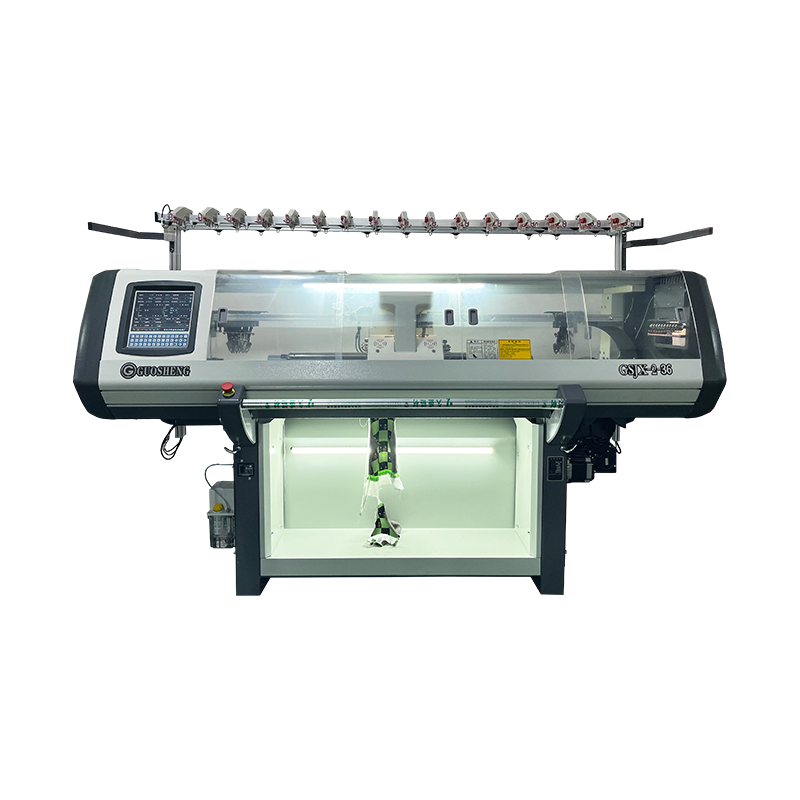
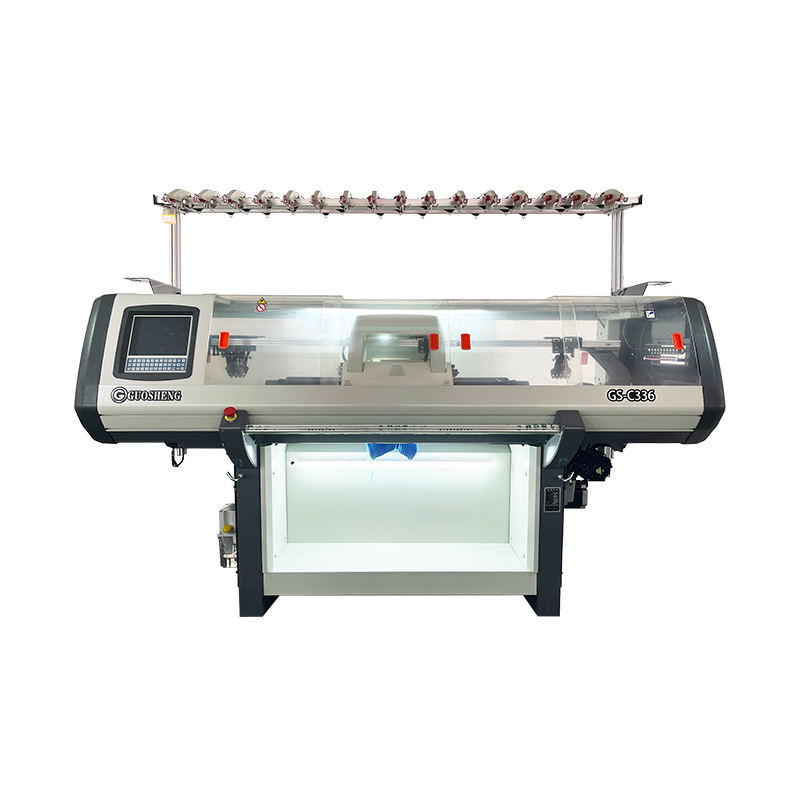
The GS-SE152 12G 52-inch single-system sweater knitting machine is designed for manufacturers seeking a practical balance between production efficiency, knitting flexibility, operating precision, and investment value. As a computerized flat knitting machine for batch production, it is suitable for sweaters, cardigans, scarves, hats, fully fashioned panels, and other knitted products that require dependable dimensional control and repeatable quality.
With a maximum knitting speed of 1.5 meters per second, a synchronous belt drive, computer-controlled needle selection, programmable stitch density, and a broad selection of knitting functions, the machine is built to support modern apparel production. Its 52-inch knitting width provides generous working space for medium- and large-sized panels, while the available gauge range from 5G to 16G allows manufacturers to select a configuration for different yarn counts, fabric weights, and product categories.
The machine is part of a wider range of computerized knitting equipment manufactured by Guosheng Wonderful Intelligent Technology (Changshu) Co., Ltd. The company specializes in the research, development, manufacturing, and international supply of computerized flat knitting machines, collar knitting machines, and flyknit shoe upper knitting machines. Its manufacturing base in Changshu, Jiangsu Province, benefits from access to China’s established textile machinery supply chain and engineering resources.
For manufacturers comparing economical single-system equipment, the GS-SE152 offers an appealing combination of essential computerized functions and practical production features. It is not limited to basic plain knitting. Transfer, tuck, miss, jacquard, intarsia, and fully fashioned shaping functions are integrated into the machine’s operating capabilities, enabling one platform to support a broad range of commercial designs.
1. Product Positioning and Main Application Value
The GS-SE152 is positioned as an economic single-system sweater knitting machine for manufacturers that need reliable computerized production without necessarily moving to a more complex multi-system platform. A single-system, single-carriage design can be especially suitable for factories producing standard sweater bodies, fashion panels, accessories, and repeatable small- to medium-batch orders.
Its 52-inch knitting width is a useful production specification for manufacturers handling adult garments, wide body panels, larger fashion pieces, and certain accessory products. The same machine family is available in multiple knitting widths, including 36, 44, 52, 60, 66, 72, and 80 inches. This allows customers to select a configuration that corresponds more closely to their factory layout, product dimensions, yarn requirements, and expected order profile.
The 12G version is appropriate for a wide selection of medium-fine knitted fabrics. Gauge selection is an important purchasing decision because it influences needle spacing, fabric appearance, yarn compatibility, production speed, and the type of garments that can be manufactured efficiently. In addition to 12G, the GS-SE152 series supports 5G, 6G, 7G, 8G, 9G, 10G, 13G, 14G, 15G, and 16G configurations.
This broad range gives the product family greater adaptability than a machine restricted to one narrow yarn or fabric category. A coarse-gauge version can be selected for heavier sweaters and woolen products, while finer gauges can be used for lighter fashion knitwear, refined textures, and more delicate structures. The specific output depends on yarn characteristics, programming, stitch settings, finishing requirements, and operator experience.
The machine is intended for batch production, but its computerized design also supports frequent style changes. A factory may use the same equipment for basic jersey, textured panels, shaped garment parts, color designs, and accessory items. This flexibility can help manufacturers respond to changing customer requirements, seasonal collections, and smaller orders without relying on separate machines for every product type.
2. Key Technical Specifications
| Specification | GS-SE152 Configuration |
|---|---|
| Product type | Computerized single-system sweater knitting machine |
| Gauge options | 5G, 6G, 7G, 8G, 9G, 10G, 12G, 13G, 14G, 15G, and 16G |
| Knitting system | Single system with single carriage |
| Knitting width options | 36, 44, 52, 60, 66, 72, and 80 inches |
| Featured configuration | 12G, 52-inch knitting width |
| Maximum knitting speed | Up to 1.5 meters per second |
| Knitting functions | Transfer, tuck, miss, jacquard, intarsia, hidden or apparent fully fashioned shaping |
| Stitch density | Stepping motor control, 128 or 32 adjustable levels, range 0–650 |
| Drive system | Synchronous belt drive with AC servo system |
| Racking | Computer-controlled electric motor system with fine adjustment |
| Yarn carrier arrangement | Multi-carrier configuration on guide rails, shiftable to required needle positions |
| Take-down control | Stepping motor control with 128 selectable tension levels and a 0–100 adjustment area |
| Control interface | LCD display with USB input and 256MB system memory |
| Power supply | 220V, single phase |
| Protection functions | Monitoring for yarn breakage, float yarn, rewinding errors, knitting completion, racking errors, needle breakage, programming errors, and safety conditions |
| Memory function | Power-off memory for retaining the current working state |
3. High-Speed Operation Through Synchronous Belt Transmission
One of the most important mechanical features of the GS-SE152 is its synchronous belt drive system controlled by an AC servo motor. The drive system is responsible for moving the carriage accurately and consistently across the needle bed. In computerized knitting, carriage movement must remain synchronized with needle selection, yarn feeding, transfer operations, and program instructions.
Compared with conventional chain-based transmission, synchronous belt transmission can reduce the maintenance issues associated with chain lubrication, elongation, and mechanical slack. A properly tensioned belt can provide smooth power transfer and stable movement while producing lower vibration during operation. This is valuable when the machine is running at high carriage speeds or producing patterns that require precise timing.
The maximum stated knitting speed is 1.5 meters per second. Actual production speed will vary according to gauge, yarn type, stitch structure, fabric width, pattern complexity, carriage acceleration, and safety settings. Nevertheless, the combination of a servo-controlled drive and a synchronous transmission system provides a strong foundation for consistent production performance.
Stable carriage movement has a direct relationship with fabric quality. Irregular movement can contribute to inconsistent stitch formation, uneven transfer results, or pattern inaccuracies. By using an AC servo system, the GS-SE152 is designed to provide controlled movement and repeatability across the needle bed. This can be particularly beneficial for manufacturers producing garments that must match approved samples over multiple production batches.
The belt-driven structure also supports a cleaner and more organized machine layout. Reduced dependence on exposed chain mechanisms can simplify routine inspection and help operators focus on essential maintenance tasks such as checking belt tension, cleaning the needle bed, inspecting yarn paths, and verifying lubrication requirements recommended by the manufacturer.
4. Broad Knitting Functions for Commercial Product Development
The value of a computerized flat knitting machine is determined not only by speed, but also by the range of structures it can produce. The GS-SE152 supports transfer, tuck, miss, jacquard, intarsia, and hidden or apparent fully fashioned shaping. These functions allow manufacturers to move beyond simple uniform jersey fabrics.
Transfer Knitting
Transfer knitting moves stitches from one needle position to another. It can be used to create fully fashioned shapes, decorative openings, ribs, crossed structures, and engineered fabric details. Accurate transfer depends on coordinated needle selection, racking, carriage motion, and yarn control. The machine’s computerized controls help make these operations programmable and repeatable.
Tuck and Miss Structures
Tuck stitches retain a loop on a needle while a new yarn is introduced, creating additional texture, volume, and visual interest. Miss stitches allow the machine to pass selected needles without forming a new loop, which can contribute to open structures, float effects, and decorative patterns. These functions are useful for fashion fabrics, breathable panels, and engineered textures.
Jacquard Production
Jacquard knitting allows multiple colors or programmed stitch arrangements to be used within a design. It is suitable for logos, geometric motifs, seasonal graphics, and multicolor fashion patterns. A computerized jacquard function can reduce manual intervention and improve repeatability when the same design must be produced across many garment panels.
Intarsia Knitting
Intarsia creates separate color areas within a knitted fabric while controlling yarn usage in each design zone. It is commonly used for large motifs, geometric color blocks, letters, and other designs that require clearly defined color boundaries. The multi-carrier arrangement of the GS-SE152 supports efficient yarn handling for color-intensive production.
Fully Fashioned Shaping
Hidden and apparent fully fashioned shaping functions allow garment components to be produced closer to their final shape. This can reduce cutting waste and limit the amount of sewing or trimming required after knitting. Shaping may be applied to armholes, necklines, shoulders, sleeve sections, side edges, and other garment features.
Fully fashioned production also supports a more controlled approach to garment sizing. Instead of manufacturing a large rectangular panel and removing excess material later, the knitting program can form contours during production. This can improve material utilization and help maintain a consistent relationship between body panels and finishing operations.
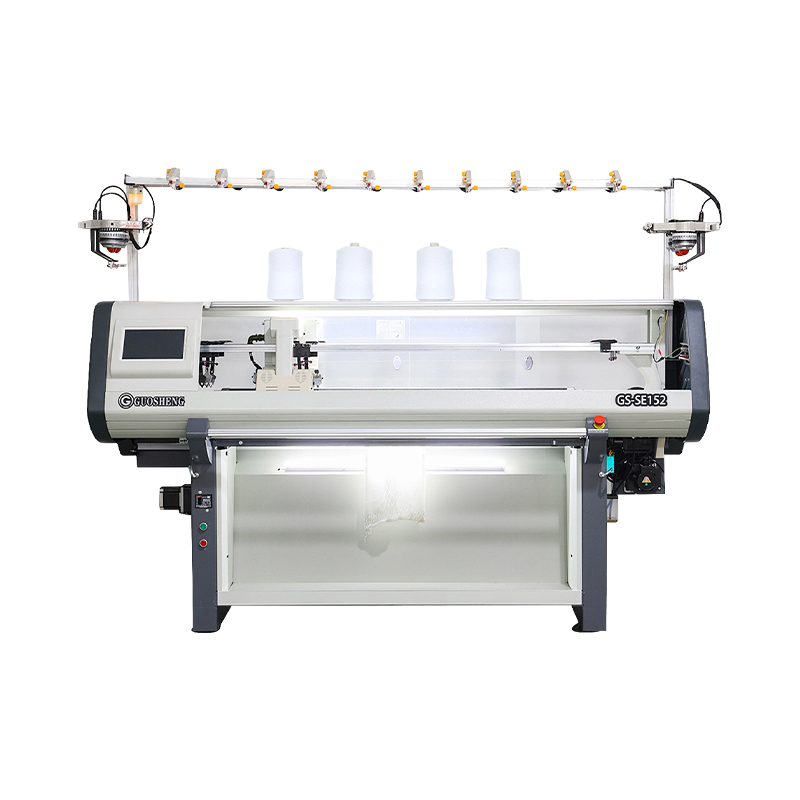
GS-SE152 12G 52-inch Single system Sweater Knitting Machine
5. Fine Stitch Density Control for Different Fabrics
Stitch density has a major influence on fabric weight, elasticity, handle, appearance, dimensions, and recovery. The GS-SE152 uses a stepping motor system with subdivision technology to provide 128 adjustable levels, with a 32-level setting also available. The stated adjustment range is 0 to 650.
Such a broad control range enables operators to fine-tune the machine for different yarns and structures. A heavier woolen yarn may require a different stitch setting from a fine synthetic blend, even when both are knitted at the same gauge. Similarly, a plain jersey fabric, a tuck structure, and a jacquard pattern may require different density values to achieve the desired appearance and dimensions.
Fine adjustment is important because fabric specifications are usually approved through samples. Once a customer confirms a sample, the production team must be able to reproduce its size, weight, softness, and visual structure. The ability to adjust stitch density in small increments can make it easier to correct minor differences without changing the entire production concept.
Stepping motor control also supports repeatability between programmed sections. A garment may require different densities at the body, cuffs, collar, shoulder, or decorative areas. With suitable programming, these zones can be managed more precisely than with a basic mechanical adjustment system.
Manufacturers should still validate density settings through physical testing. Yarn composition, moisture, finishing, washing, steaming, and relaxation can all affect the final result. The machine provides the control platform, while experienced technicians remain responsible for sampling, measurement, and process verification.
6. Servo-Controlled Racking and Accurate Needle Selection
Racking is essential for transfer operations, shaping, rib structures, and many decorative knitting techniques. The GS-SE152 uses a computer-controlled racking system with a range of up to two inches and a fine-tuning function. This allows the needle beds or related knitting positions to move according to the instructions contained in the knitting program.
Accurate racking helps maintain the positional relationship between stitches. If racking movement is inconsistent, transfer patterns may become distorted, edges may fail to align, and complex structures may produce defects. Servo control and fine adjustment are therefore important advantages for manufacturers producing engineered panels and fashion details.
The needle selection system is computer-controlled and uses an electric magnet or motor-based selection arrangement. This system determines which needles participate in knitting, tucking, missing, or transferring operations. Efficient needle selection supports high design flexibility and reduces the need for manual adjustment during normal production.
Computerized needle selection also helps make pattern changes more practical. Instead of mechanically rebuilding the needle selection arrangement for every design, operators can load and manage digital pattern instructions through the control system. This is particularly valuable for factories producing many styles or serving customers with frequently changing collections.
When combined with stitch density control, racking, and carriage synchronization, accurate needle selection gives the GS-SE152 the ability to execute complex structures with a high level of repeatability. The machine is therefore suitable not only for basic production but also for manufacturers developing products with engineered texture, shaping, or color placement.
7. Multi-Carrier Yarn Handling and Color Flexibility
Color changes and yarn management are important considerations in sweater manufacturing. The GS-SE152 uses multiple yarn carriers mounted on guide rails and designed to shift to required needle positions. The product information describes a multi-carrier arrangement supporting color changes for intarsia and multicolor jacquard work.
The detailed configuration may vary according to the selected machine arrangement, and the supplied specifications refer to several carrier and guide-rail details. Customers should confirm the exact carrier quantity and layout for the ordered model and gauge before final purchase. In practical terms, the system is intended to give the operator flexible access to multiple yarn feeds across the needle bed.
Movable yarn carriers can reduce unnecessary carriage stoppages during color-intensive production. They allow different yarns to be positioned near the areas where they are required, supporting more efficient color changes and reducing the time associated with manual yarn repositioning. This can be helpful for small-batch production, where rapid style changeover directly affects machine utilization.
For intarsia, carrier positioning is especially important because each color zone must receive the correct yarn without creating unwanted floats across unrelated sections. For jacquard, the yarn handling arrangement must support the programmed interaction of multiple colors and the desired fabric structure. Careful yarn preparation and correct carrier setup remain necessary to achieve clean results.
Yarn quality also influences carrier performance. Uneven yarn, excessive hairiness, unstable tension, knots, or poor winding can create interruptions even when the machine is correctly adjusted. The GS-SE152 combines programmable control with monitoring and protection functions, but production teams should also maintain appropriate yarn storage, preparation, and tension-control procedures.
8. Intelligent Take-Down for Stable Fabric Formation
The take-down system pulls the knitted fabric away from the needle area at a controlled tension. If take-down force is too high, the fabric may stretch excessively, distort, or suffer from loop-related defects. If it is too low, the fabric may not clear the knitting area consistently, potentially affecting stitch formation and fabric stability.
The GS-SE152 uses a stepping motor-controlled take-down roller with 128 selectable tension levels and an adjustment area from 0 to 100. This provides a broad range for matching take-down settings to fabric thickness, yarn behavior, stitch structure, and production stage.
Different sections of a garment may require different take-down conditions. For example, a ribbed cuff, a dense waistband, a loose body structure, and a shaped neckline do not necessarily respond to the same tension. Programmable take-down control allows the production team to coordinate fabric movement with the knitting instructions.
Stable take-down can also contribute to more consistent fabric dimensions. When the knitted material is removed from the needle bed under controlled conditions, the risk of uneven width or irregular loop formation can be reduced. This supports more reliable downstream operations such as linking, sewing, washing, steaming, and inspection.
As with stitch density, take-down settings must be verified through sampling. Yarn elasticity, fabric structure, machine gauge, and finishing conditions all affect the final dimensions. The machine’s adjustment range gives technicians the flexibility to optimize the process rather than relying on one fixed tension value.
9. Protection and Fault-Monitoring Functions
Unplanned machine stoppages can damage needles, fabric, yarn, or mechanical components. The GS-SE152 includes a protection system that monitors several operating conditions and automatically generates an alarm or stops the machine when an abnormal event is detected.
Monitored conditions include yarn breakage, knots or float yarn, rewinding errors, completion of knitting, racking return failure, needle breakage, programming errors, and safety-related conditions. The system is intended to identify faults early, allowing operators to correct the cause before a minor issue becomes a larger production problem.
Yarn breakage detection is important because a broken yarn can interrupt a fabric section or create a visible defect. Float-yarn monitoring can help identify situations in which yarn is not being formed into the intended loops. Needle-breakage detection can protect the needle bed and prevent additional damage caused by continuing operation with a damaged needle.
Racking protection helps verify that the racking system has returned or moved as instructed. This is particularly important when the next carriage movement depends on a precise needle-bed position. Safety-door monitoring provides an additional layer of protection for operators and equipment.
These functions do not eliminate the need for routine inspection. Operators should still check yarn paths, needles, carriage components, sensors, cleaning conditions, and program data. However, automatic monitoring can shorten response time and reduce the likelihood that an unnoticed error will continue through a large section of fabric.
10. Control System, Digital Files, and Production Management
The GS-SE152 is equipped with an LCD control interface, USB input, and 256MB of system memory. This enables the machine to store a substantial number of pattern files and operating programs. Digital file storage is especially useful for factories managing multiple customers, seasonal collections, sample developments, and repeat orders.
A machine with accessible internal memory can reduce the time required to load designs between production runs. Operators can select the appropriate file, verify operating parameters, and prepare the machine for the next style. This is more efficient than relying on separate external records or repeatedly rebuilding a program from the beginning.
The monitoring menu displays operating parameters and allows adjustments while the machine is running. Real-time parameter management can be useful when technicians need to fine-tune stitch density, take-down settings, or other process values after observing the fabric. Adjustments should be made according to established factory procedures so that changes remain controlled and traceable.
The visual design system is intended to be straightforward for operators. Multi-language support, including Chinese and English, can assist factories with international workforces and help reduce communication barriers during training and daily operation.
USB input is also useful for integrating the machine into a digital pattern workflow. Designers and technicians can prepare pattern files, transfer them to the machine, and organize production instructions more efficiently. A structured naming and backup system is recommended so that approved programs are protected and easily retrieved.
Digital production management can improve style repeatability. When an approved pattern file is stored with its associated gauge, yarn, density, take-down, and finishing notes, the factory has a stronger basis for reproducing the same product in later orders. This supports quality control and reduces dependence on individual operator memory.
11. Power-Off Memory and Operational Continuity
The machine operates on a 220V single-phase power supply and includes a power-off memory function. If an unexpected interruption occurs, the system can preserve the current working state and assist with resuming production after power is restored.
Power interruptions can result in wasted yarn, incomplete panels, operator intervention, and schedule delays. A memory function helps reduce the risk of losing the machine’s current position and program status. It can also make recovery more organized, provided that the operator checks the fabric, yarn paths, needle condition, and safety status before restarting.
Operational continuity is particularly important in batch manufacturing. A factory may be running a long panel or a design with multiple color changes when an interruption occurs. Retaining the working state can reduce the need to discard the entire piece or restart the program from the beginning.
Factories should still use appropriate electrical protection and follow local installation requirements. Stable power quality, proper grounding, suitable circuit capacity, and professional commissioning are important for the safe operation of computerized machinery.
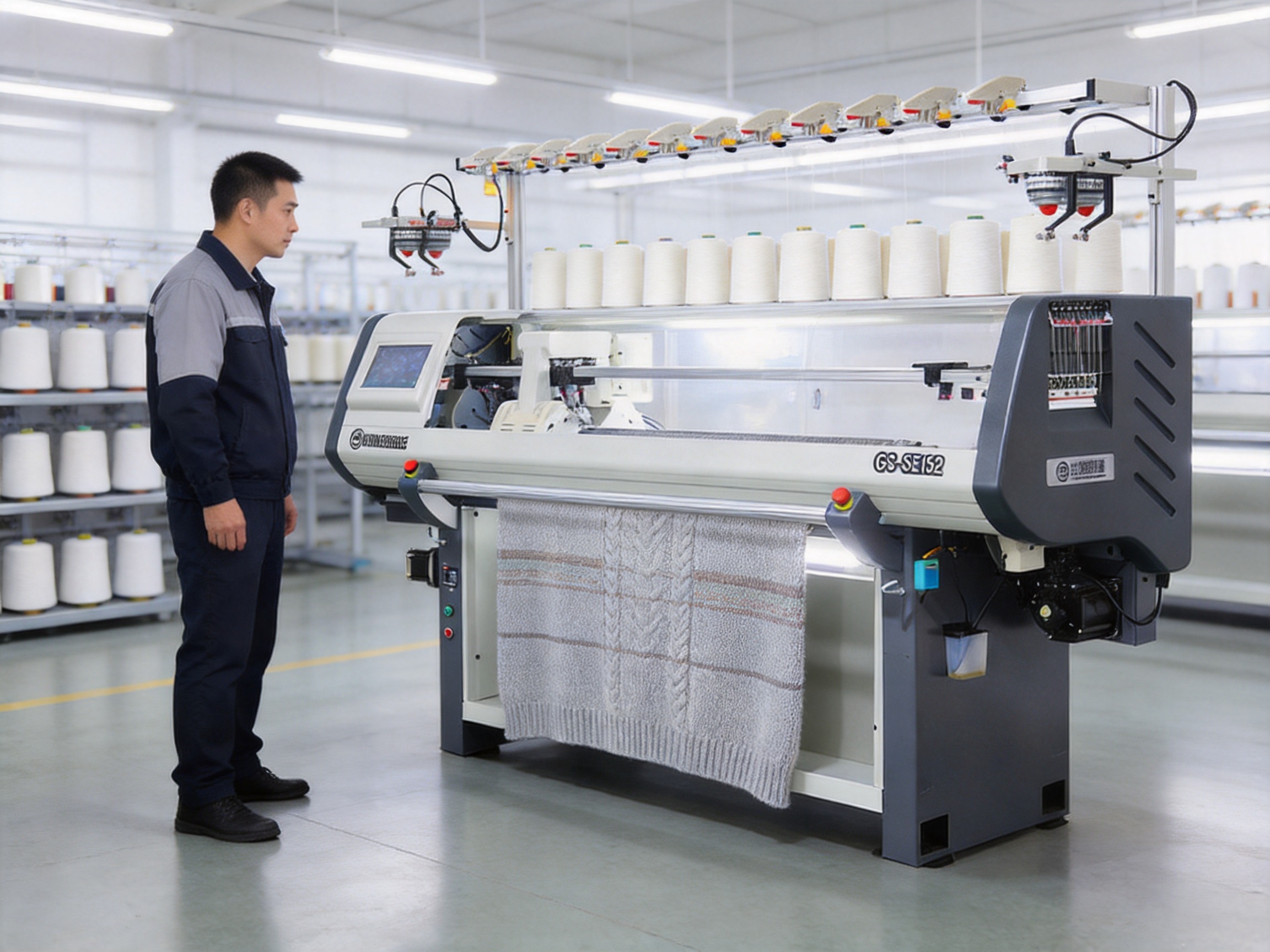
12. Advantages Compared with Basic or Conventional Alternatives
When compared with basic manual, semi-mechanical, or less integrated computerized knitting equipment, the GS-SE152 provides several practical advantages. These advantages relate to productivity, design flexibility, quality control, maintenance, and factory management.
Higher Control Precision
The combination of AC servo carriage drive, computerized needle selection, stepping motor stitch control, and programmable take-down creates a more integrated control environment than a machine that relies primarily on fixed mechanical settings. This allows the operator to manage more variables directly through the control system.
More Flexible Product Development
Transfer, tuck, miss, jacquard, intarsia, and shaping functions allow manufacturers to develop a broader product range. A factory can produce basic commercial sweaters while also accepting orders for color-blocked designs, textured panels, shaped components, and fashion details.
Better Suitability for Small-Batch Orders
Digital pattern storage and movable yarn carriers can support efficient changeovers. This is useful for manufacturers that do not operate only long, repetitive production runs. The ability to change styles more efficiently can improve equipment utilization and help factories serve brands with varied collections.
Reduced Dependence on Manual Adjustment
Computerized controls reduce the need to manually set every needle selection or reshape every panel. While skilled operators remain essential, the machine can execute more of the production sequence automatically, helping reduce variation caused by repeated manual intervention.
Improved Protection Against Production Errors
Automatic detection of yarn, needle, racking, programming, and safety issues can help prevent small faults from becoming major defects. This contributes to material protection, reduced rework, and improved machine safety.
More Consistent Reproduction of Approved Styles
Stored pattern files and programmable process settings make it easier to reproduce an approved sample. Consistency is especially important for export production, private-label manufacturing, and customers that require strict size and appearance tolerances.
These advantages should be evaluated according to the manufacturer’s specific requirements. A machine’s real performance depends on yarn preparation, operator training, preventive maintenance, program quality, and factory conditions. The GS-SE152 provides a strong technical platform, but successful production remains a combination of equipment and process management.
13. Manufacturing Strengths and Engineering Capabilities
Guosheng Wonderful Intelligent Technology (Changshu) Co., Ltd. is focused on the development and manufacture of computerized knitting machinery. Its product portfolio includes computerized flat knitting machines, collar knitting machines, and flyknit shoe upper knitting machines. This product coverage indicates experience across several related knitting applications rather than dependence on a single product category.
The company is located in Changshu, Jiangsu Province, an area associated with textile machinery manufacturing and textile production. Access to an established industrial ecosystem can support the sourcing of mechanical components, electrical systems, machining services, engineering talent, and textile-industry knowledge.
The company’s manufacturing strength is reflected in the integration of mechanical and electronic systems within the GS-SE152. The machine combines servo drive technology, stepping motor control, computerized needle selection, digital pattern storage, programmable take-down, yarn-carrier movement, and fault monitoring. Effective integration is important because a knitting machine must coordinate all of these subsystems in real time.
Advanced manufacturing in this field is not limited to assembling visible machine components. It also involves accurate machining, alignment of needle beds, reliable installation of sensors, correct calibration of motors, stable electrical connections, software integration, and systematic testing before delivery. Each of these areas can influence knitting quality and machine service life.
The company’s engineering approach focuses on practical requirements from textile manufacturers: stable operation, flexible structures, efficient production, and consistent quality. Such requirements are especially important for customers operating in competitive export markets, where production interruptions and inconsistent dimensions can affect delivery schedules and customer relationships.
Research and development in computerized knitting machinery must address both mechanical durability and software usability. A machine may have advanced hardware, but operators also need a control interface that is understandable, pattern files that are manageable, and parameter adjustments that can be performed without excessive complexity. The GS-SE152’s LCD interface, multi-language support, USB input, and visual design system are intended to support this practical operating environment.
Manufacturing strength should also be evaluated through after-sales support, spare-parts availability, technical communication, installation guidance, and operator training. Customers purchasing industrial knitting equipment should discuss these services with the supplier before ordering and confirm the support arrangement for their destination market.
14. Quality-Oriented Production Process
A reliable computerized knitting machine requires quality control throughout its manufacturing process. The machine’s needle bed and carriage must be assembled with careful attention to alignment. The drive system must be adjusted so that movement remains smooth and accurately synchronized. Sensors, motors, yarn devices, and control boards must operate together as an integrated system.
Mechanical inspection should include the condition and alignment of the needle bed, carriage tracks, racking mechanism, take-down rollers, guide rails, and protective covers. Electrical inspection should include wiring, connectors, motor response, sensor signals, emergency functions, and control-panel operation.
Software and pattern-control functions should be tested using representative knitting operations. A complete test may include plain knitting, transfer, tuck, miss, color changes, shaping, racking, take-down adjustment, alarm response, and recovery after a simulated power interruption. Testing these functions together helps identify integration issues before the machine is installed at the customer’s factory.
Calibration is another important manufacturing step. Stitch density, carriage movement, racking position, needle selection, yarn-carrier travel, and take-down response should correspond to the machine’s programmed instructions. Accurate calibration can reduce the time required for commissioning and help operators reach stable production more quickly.
Factory acceptance procedures should verify that the delivered machine matches the customer’s order. This includes gauge, knitting width, power supply, software language, carrier configuration, accessories, and documentation. Customers should also confirm the recommended installation environment and maintenance schedule.
Because textile production involves different yarns and fabric constructions, no machine can be optimized for every product without adjustment. A quality-oriented supplier therefore provides a platform that can be configured and fine-tuned for the customer’s applications. The GS-SE152’s programmable controls and broad adjustment ranges support this type of application-based commissioning.
15. Installation, Training, and Daily Operation
Proper installation is essential for obtaining the expected performance from the GS-SE152. The machine should be placed on a stable, level foundation with adequate working space around the control area, yarn supply, carriage, take-down section, and maintenance points. The electrical supply should meet the machine’s requirements and local safety regulations.
Before production begins, technicians should verify needle condition, yarn routing, carrier position, sensor operation, drive movement, racking return, and take-down response. A gradual start-up procedure is recommended, beginning with simple fabric structures before moving to complex jacquard, intarsia, or fully fashioned programs.
Operator training should cover program loading, parameter adjustment, yarn preparation, alarm interpretation, safe stopping, needle inspection, cleaning, and basic troubleshooting. Operators should understand the difference between a mechanical fault, a yarn problem, a programming error, and an incorrect process setting.
Daily maintenance normally includes removing lint and yarn waste, checking the needle bed, inspecting yarn carriers, confirming take-down roller condition, observing belt and carriage operation, and reviewing alarm history. The exact maintenance schedule should follow the manufacturer’s technical documentation.
Preventive maintenance is generally more economical than waiting for a major breakdown. Regular checks can identify worn needles, abnormal noise, loose connections, belt-tension problems, or sensor contamination before these issues cause larger interruptions. A maintenance record can also help the factory identify recurring problems and improve its production procedures.
16. Selecting the Correct Gauge and Width
The featured product is a 12G, 52-inch configuration, but customers should select gauge and width according to the intended products. Gauge selection should consider yarn count, fiber composition, target fabric weight, desired texture, and customer specifications. A manufacturer producing heavy winter sweaters may prefer a coarser gauge, while a producer of lightweight fashion garments may choose a finer configuration.
Knitting width should be selected according to the maximum practical panel size and the factory’s production mix. A 52-inch model offers a useful balance for many adult sweater applications. However, a smaller width may be more economical for narrow products or limited floor space, while a wider model may be appropriate for large panels, blankets, or specialized production.
Customers should consider not only the largest product they intend to make, but also how the machine will be used most of the time. A machine that is too wide for the normal product range may occupy unnecessary space and consume more resources. A machine that is too narrow may require additional linking, panel division, or production planning.
The best configuration is determined by the relationship between product range, order volume, yarn inventory, operator skills, floor space, power availability, and future business plans. The GS-SE152 family gives manufacturers several options rather than forcing every customer into one fixed specification.
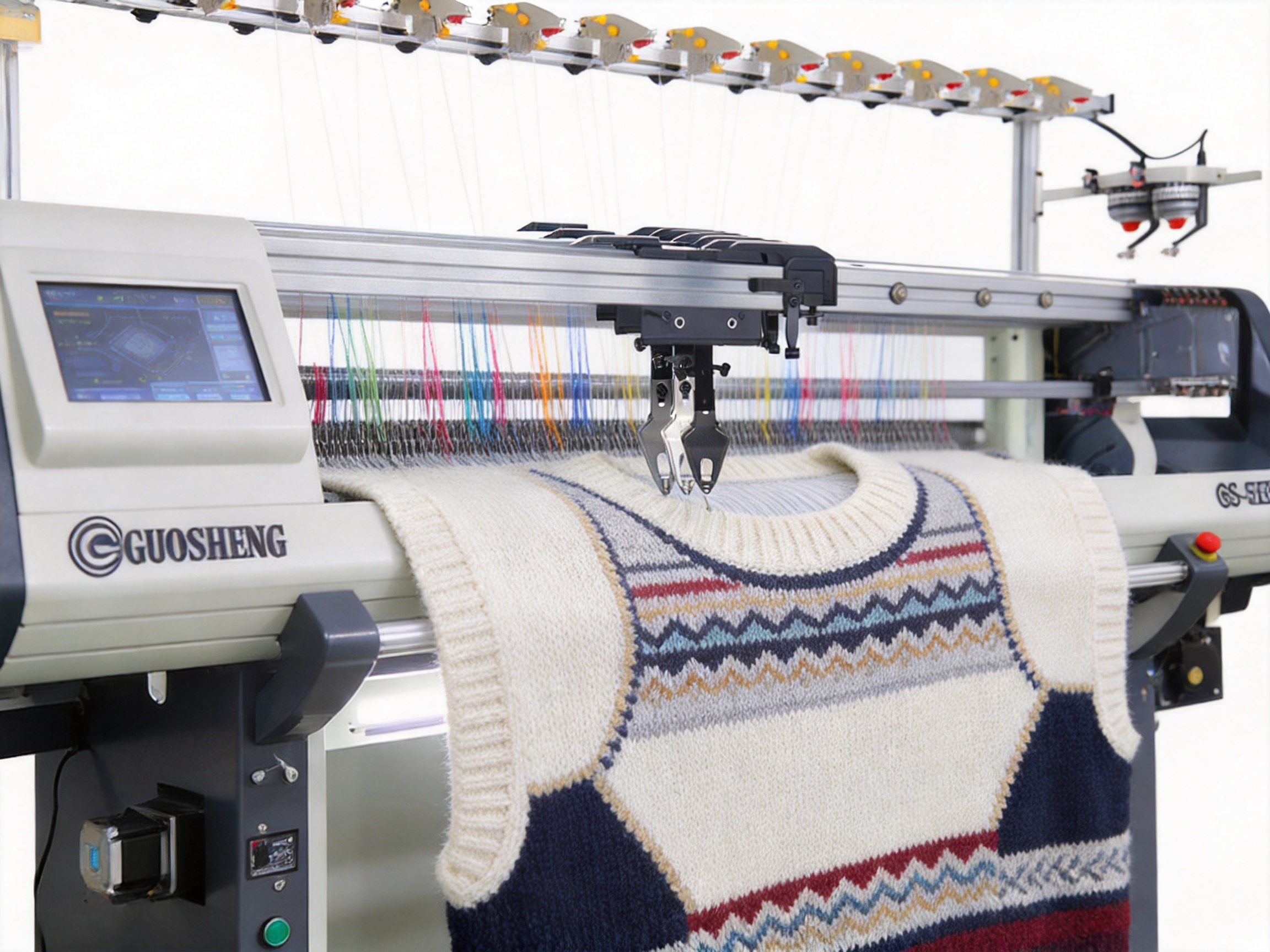
17. Commercial Applications
The GS-SE152 can support a broad range of knitted product categories. Its primary application is sweater production, including men’s, women’s, and children’s garments. Fully fashioned shaping can be used for body panels, sleeves, shoulders, necklines, cuffs, and waist sections.
Cardigans and open-front garments can benefit from programmable shaping and color placement. The machine can also be used for scarves, hats, and selected accessories, especially when the chosen gauge and width match the dimensions of the product.
Fashion manufacturers may use transfer, tuck, miss, jacquard, and intarsia functions to create seasonal textures and decorative patterns. Uniform manufacturers can use stored programs for repeatable production of standard items. Small and medium garment factories can use the machine to manage varied customer orders without investing in a separate platform for each design technique.
Because the machine supports multiple gauges across its product family, it can also serve different market segments. Heavy-gauge products may emphasize warmth and volume, while fine-gauge products may emphasize drape, softness, and refined surface appearance. The final capability depends on the selected configuration and process setup.
18. Production Efficiency and Total Operating Value
Equipment value should be considered over the entire operating period rather than judged only by initial purchase price. A machine with flexible programming, reliable movement, manageable maintenance, and effective protection can provide value through improved productivity and reduced waste.
The GS-SE152 supports operating efficiency through high carriage speed, digital pattern storage, movable yarn carriers, programmable stitch density, and controlled take-down. These features can reduce setup time, support faster style changes, and improve the repeatability of approved designs.
Material efficiency is also important. Fully fashioned shaping can reduce the amount of fabric removed during cutting, while fault monitoring can help prevent long sections of defective fabric. Accurate density and take-down control can reduce the need for repeated sampling and adjustment once the production parameters have been established.
Maintenance value is supported by the synchronous belt drive and computerized monitoring systems. Reduced mechanical slack and clear fault signals can help operators identify problems more efficiently. Nevertheless, customers should include consumables, needles, training, electricity, maintenance labor, software management, and possible spare parts when calculating total operating cost.
For manufacturers serving international customers, consistency may be one of the most important forms of value. A machine that helps produce stable dimensions and repeatable patterns can support customer approval, reduce claims, and improve confidence in future orders.
19. Recommended Purchasing Evaluation
Before purchasing the GS-SE152, customers should define the products they expect to manufacture during the first several years of operation. The evaluation should include garment types, yarn ranges, fabric weights, panel dimensions, color complexity, order quantities, and expected style frequency.
A sample-production evaluation is recommended. Customers can provide representative yarns and designs and request trial knitting or technical confirmation. This allows them to examine stitch quality, shaping accuracy, color handling, fabric dimensions, machine noise, operating interface, and the suitability of the selected gauge.
Customers should also confirm the exact configuration of yarn carriers, guide rails, knitting width, gauge, software language, electrical requirements, accessories, packing, commissioning, and training. Product specifications can vary by configuration, so written confirmation is important before final order approval.
Service arrangements should be discussed in detail. Important questions include the availability of spare needles and wear parts, remote technical support, installation assistance, response time, software updates, operator training, maintenance documentation, and warranty conditions.
By evaluating both technical performance and service support, manufacturers can make a more informed decision. The GS-SE152 is most suitable for customers who value a practical computerized platform, diverse knitting functions, programmable control, and flexibility across sweater and accessory production.
20. Frequently Asked Questions
What products can the GS-SE152 manufacture?
The machine is designed primarily for sweaters, cardigans, fully fashioned garment panels, scarves, hats, and other knitted products. The actual product range depends on the selected gauge, knitting width, yarn, program, and finishing process.
What does the 12G specification mean?
12G refers to the machine’s needle gauge, or the needle spacing used by the knitting system. It is generally suited to medium-fine knitted fabrics, but the appropriate yarn and fabric result depend on the specific application and process settings.
Is the GS-SE152 available in other gauges?
Yes. The product family supports 5G, 6G, 7G, 8G, 9G, 10G, 12G, 13G, 14G, 15G, and 16G configurations. Customers should select the gauge according to yarn, fabric weight, product design, and market requirements.
What is the advantage of a 52-inch knitting width?
A 52-inch width provides sufficient working space for many adult sweater panels and other medium- to large-sized knitted components. It offers a practical balance between product capacity and machine footprint, although the best width depends on the factory’s product range.
How fast can the machine knit?
The maximum stated knitting speed is 1.5 meters per second. Actual operating speed depends on gauge, yarn, fabric structure, pattern complexity, carriage movement, and production settings.
Does the machine support fully fashioned knitting?
Yes. The GS-SE152 supports hidden and apparent fully fashioned shaping. This allows selected garment sections to be shaped during knitting, potentially reducing cutting waste and later sewing or trimming work.
Can it produce jacquard and intarsia designs?
Yes. Jacquard and intarsia are included among the supported knitting functions. The multi-carrier yarn arrangement helps manage color changes, while the computerized control system executes the programmed design.
How is stitch density adjusted?
Stitch density is controlled by a stepping motor system using subdivision technology. The system provides up to 128 adjustable levels, with a 32-level option, across a stated range from 0 to 650.
What does the protection system monitor?
The protection system can monitor conditions such as yarn breakage, float yarn, rewinding errors, completion of knitting, racking return failure, needle breakage, programming errors, and safety-door status. When an abnormal condition is detected, the machine can issue an alarm and stop operation.
Does the machine retain its program after a power interruption?
The machine includes a power-off memory function designed to retain the current working state. After power is restored, the operator should inspect the machine and fabric before restarting production.
What type of power supply does it use?
The stated power supply is 220V, single phase. Customers should confirm local electrical requirements and installation conditions with the supplier before delivery.
How much pattern memory is available?
The control system includes 256MB of system memory and USB input. This allows a large number of pattern files to be stored and transferred, subject to file size and system management practices.
Is the machine suitable for small-batch production?
It can be suitable for small- and medium-batch production because digital pattern storage, programmable settings, and movable yarn carriers support style changes. Production efficiency will depend on the complexity of each design and the operator’s preparation procedures.
What should customers confirm before ordering?
Customers should confirm gauge, knitting width, yarn-carrier configuration, power requirements, software language, accessories, installation, training, warranty, spare parts, and after-sales support. They should also provide representative product information for technical evaluation.
Conclusion
The GS-SE152 12G 52-inch single-system sweater knitting machine is a versatile computerized platform for manufacturers that need stable production, flexible pattern capability, and accurate process control. Its synchronous belt and AC servo drive support smooth carriage movement, while computerized needle selection, servo-controlled racking, stepping motor stitch adjustment, and programmable take-down provide a coordinated production system.
The machine’s support for transfer, tuck, miss, jacquard, intarsia, and fully fashioned shaping allows it to serve a wide range of sweater and knitted-accessory applications. Its LCD control system, USB input, 256MB memory, multi-language interface, automatic protection functions, and power-off memory further support practical factory operation.
Compared with simpler alternatives, the GS-SE152 offers greater design flexibility, improved parameter control, better support for repeatable production, and a more organized digital workflow. Its value is strengthened by the manufacturing and engineering capabilities of Guosheng Wonderful Intelligent Technology (Changshu) Co., Ltd., a specialist supplier of computerized knitting machinery based in Changshu, Jiangsu Province.
For customers selecting industrial knitting equipment, the correct choice should be based on actual products, yarns, gauges, widths, order volumes, and technical support requirements. When properly configured, installed, programmed, and maintained, the GS-SE152 can serve as a dependable production tool for modern sweater manufacturing and diversified knitted-product development.
References
1. GS-SE152 Product Technical Specification Sheet, computerized single-system sweater knitting machine.
2. Manufacturer-provided information on knitting functions, stitch density, racking, drive control, yarn carriers, take-down, protection systems, and control software.
3. Manufacturer-provided company profile for Guosheng Wonderful Intelligent Technology (Changshu) Co., Ltd.
4. General technical principles of computerized flat knitting, fully fashioned garment production, stitch-density control, and programmed yarn handling.
5. General textile machinery maintenance practices covering needle beds, carriage systems, yarn paths, take-down rollers, sensors, electrical systems, and preventive inspection.
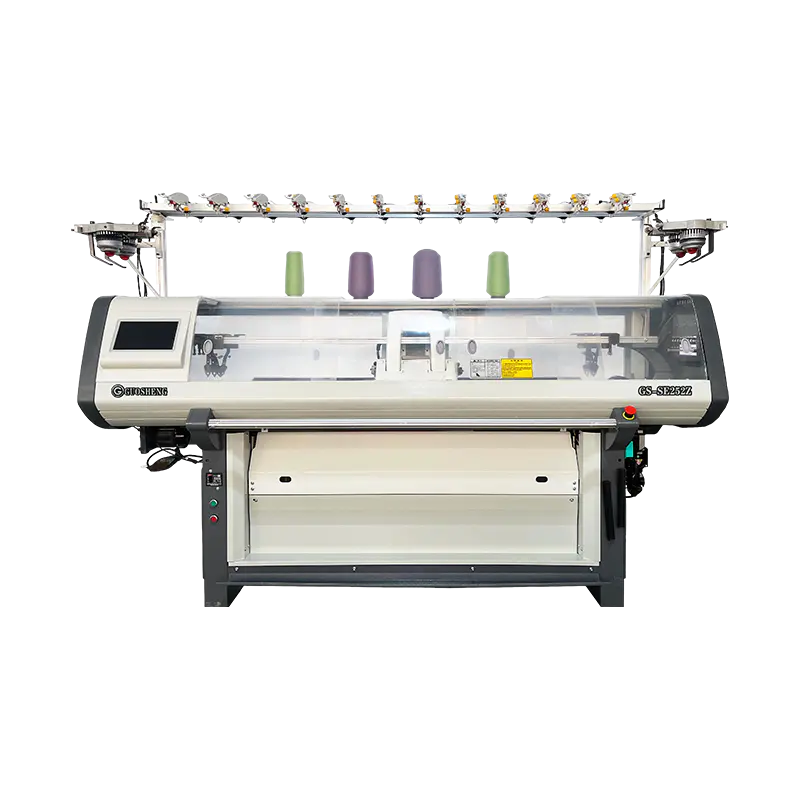
Product: GS-SE152 12G 52-inch Single system Sweater Knitting Machine

Ready to Begin?
Product Categories
- Sweater Knitting Machine (Economic SE)
- Sweater Knitting Machine (Full Function S)
- Collar Knitting Machine (Economic CE)(Fabric)
- Collar Knitting Machine (Full-Function C)
- Blanket Knitting Machine(Fabric)
- Shoe Upper Knitting Machine
- Ready To Wear Sweater Knitting Machine
- Ready To Wear Glove Knitting Machine
- Ready To Wear Hat Knitting Machine
- Knee Pad Knitting Machine
- Metal Mesh Knitting Machine
Contact Information
-
 Email: gs@guoshengchina.cn
-
 Phone: +86-0512-52690511
-
 Address: No. 18, Hupu Pujiang Road, Bixi New District, Changshu City, Jiangsu Province, China
QR Code
