


 English
 Español
 русский
 عربى
 中文简体
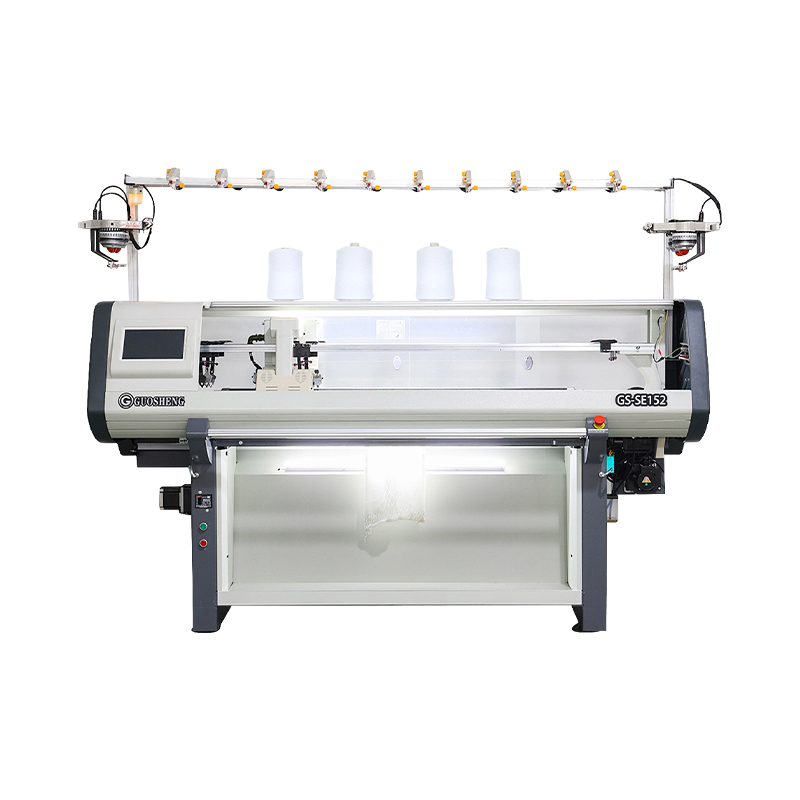
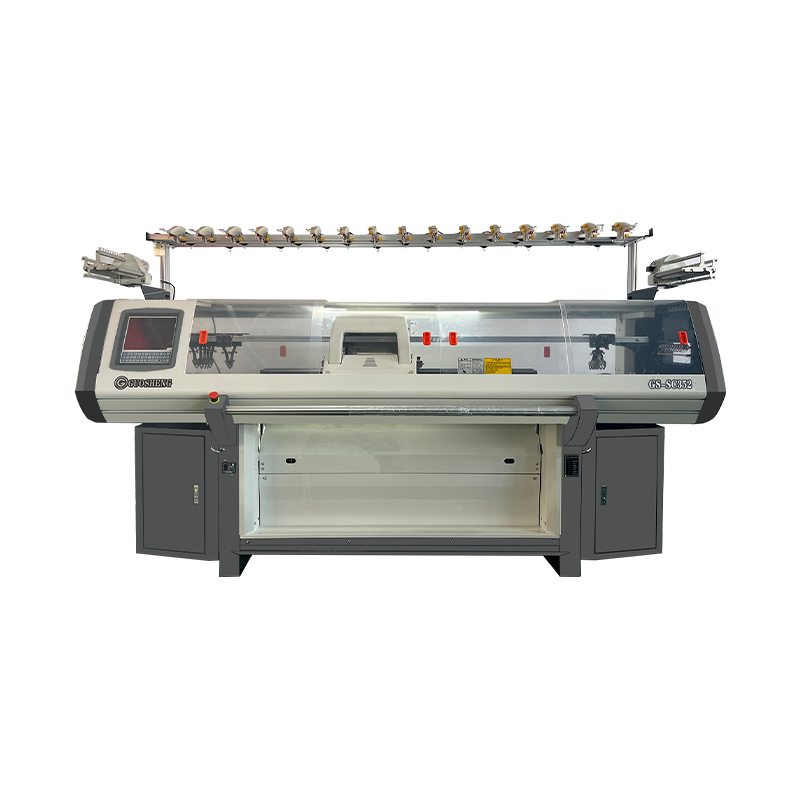
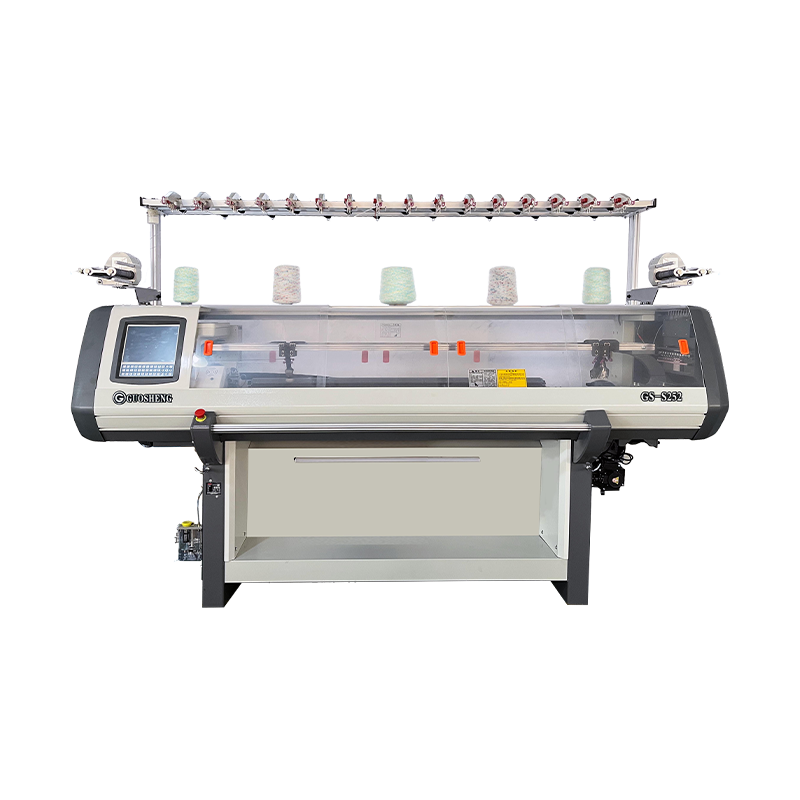
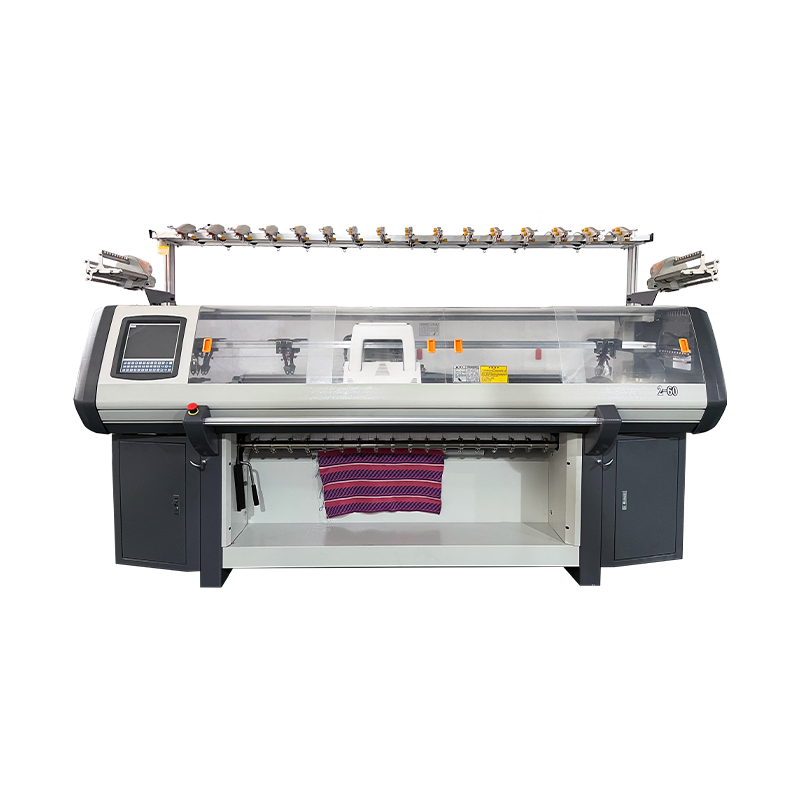

Zhao Yutong — After-Sales Service Manager
Why Three-System Full-Function Flat Knitting Technology Is Advancing Modern Sweater Production
Date:Nov 21, 2026
Content
- 1 1. The Role of Intelligent Flat Knitting Machines in Modern Textile Production
- 2 2. Product Overview and Core Configuration
- 3 3. Three-System Performance and Competitive Position
- 4 4. Full-Function Knitting Capabilities
- 5 5. Precision Motion and Mechanical Stability
- 6 6. Yarn Management and Waste Reduction
- 7 7. Take-Down Control and Fabric Handling
- 8 8. Intelligent Protection and Operational Safety
- 9 9. Computerized Control and Digital Pattern Management
- 10 10. Materials and Product Applications
- 11 11. Manufacturing Strengths of the Supplier
- 12 12. Maintenance, Reliability, and Long-Term Value
- 13 13. Production Planning and Best-Practice Operation
- 14 14. Advantages for Different Types of Knitting Enterprises
- 15 15. Comparing the Machine with Alternative Configurations
- 16 16. Quality Control Considerations
- 17 17. Sustainability and Resource Efficiency
- 18 18. Installation and Training Requirements
- 19 19. Frequently Asked Questions
- 19.1 Q1: What type of machine is the GS-S3525C?
- 19.2 Q2: What is the maximum knitting width?
- 19.3 Q3: What is the maximum knitting speed?
- 19.4 Q4: Which knitting functions does the machine support?
- 19.5 Q5: Which yarn materials can be used?
- 19.6 Q6: How does the three-system configuration compare with a two-system machine?
- 19.7 Q7: Why might a manufacturer choose this machine instead of a four-system model?
- 19.8 Q8: How many yarn carriers are available?
- 19.9 Q9: Does the machine include automatic alarms?
- 19.10 Q10: Can operators adjust production parameters while the machine is running?
- 19.11 Q11: Does the machine support digital pattern storage?
- 19.12 Q12: What power supply does the machine use?
- 19.13 Q13: Is the machine suitable for small-batch production?
- 19.14 Q14: What maintenance is required?
- 19.15 Q15: What makes the supplier suitable for international customers?
- 20 20. Conclusion
- 21 References
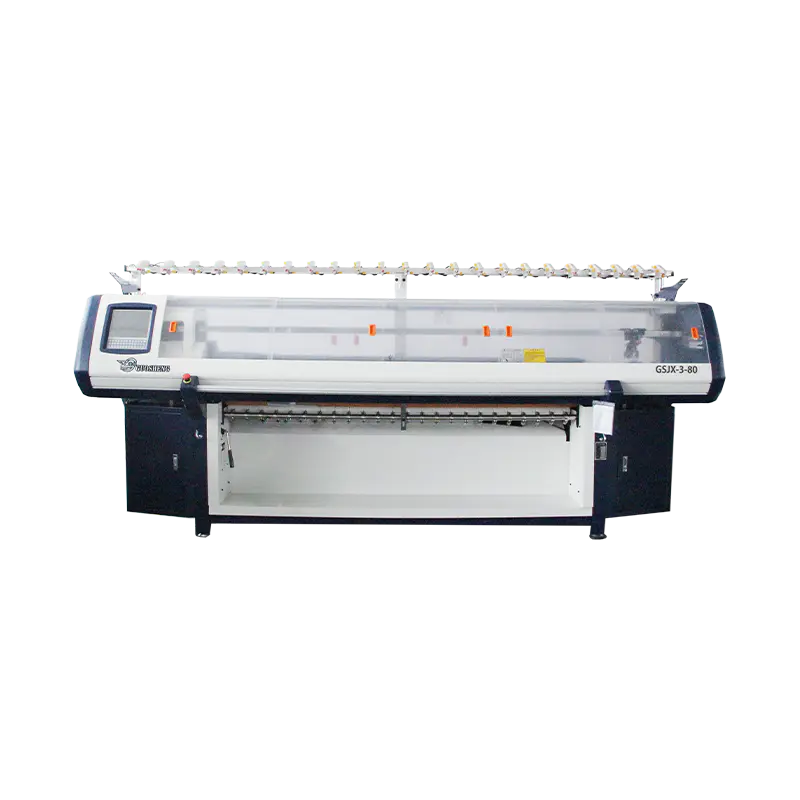
- 22 Product: GS-S3525C Orange Handle Three System Sweater Knitting Machine (Full Function S)
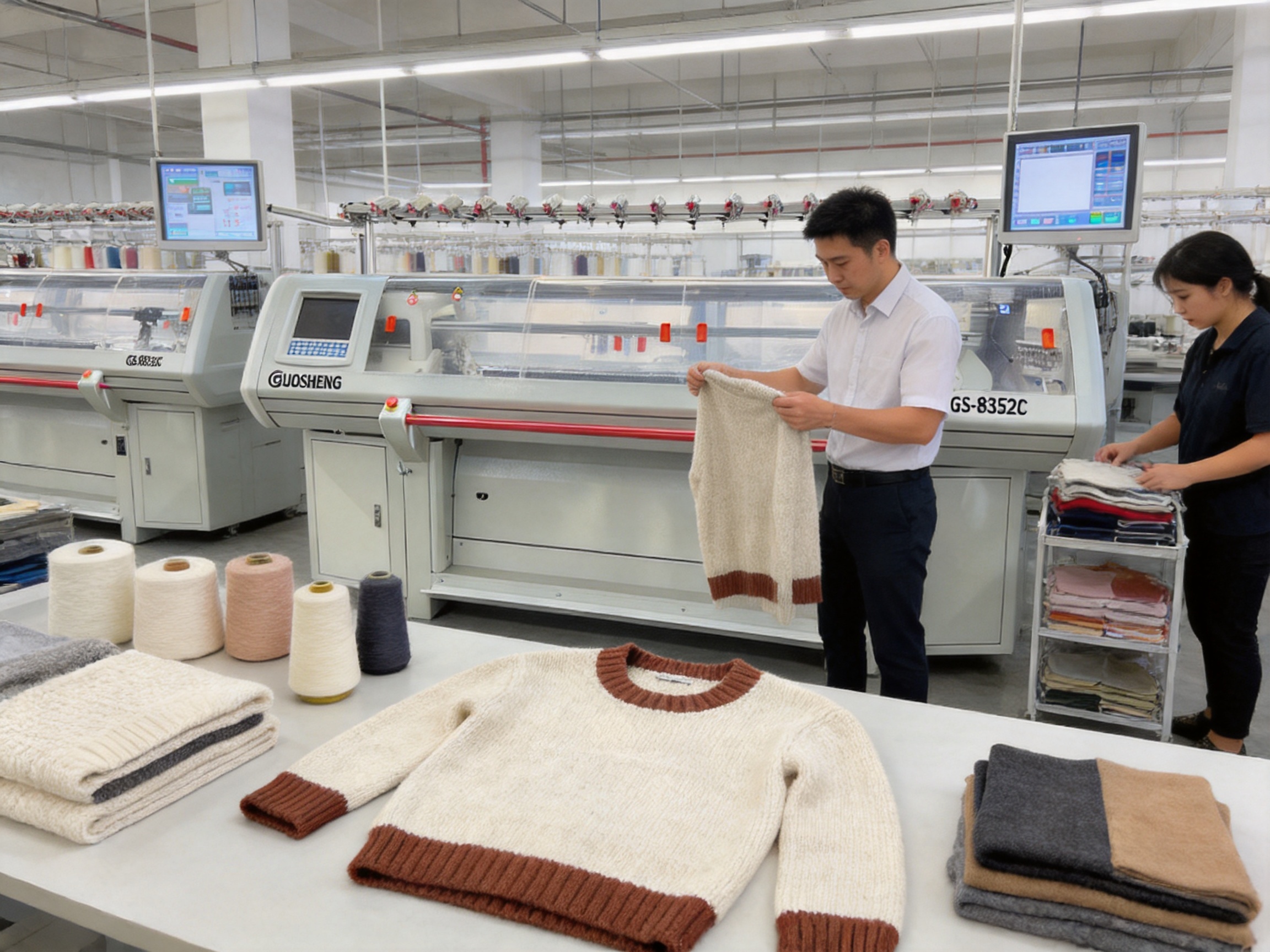
The development of computerized flat knitting machinery has transformed the way sweaters, fashion garments, and other knitted products are designed and manufactured. Modern producers are expected to deliver more styles, shorter sampling cycles, consistent quality, and competitive production costs at the same time. These requirements have made intelligent flat knitting machines an essential part of advanced textile manufacturing.
The GS-S3525C Orange Handle Three System Sweater Knitting Machine is designed for manufacturers that need a practical balance between productivity, precision, flexibility, and investment efficiency. As a three-system, single-carriage, full-function “S” series machine, it provides a wide range of knitting capabilities while maintaining a structure suitable for daily industrial production. Its 52-inch knitting width, maximum speed of 1.5 meters per second, programmable stitch density, electronic needle selection, automatic protection functions, and computerized control system make it suitable for a broad selection of sweater manufacturing applications.
Unlike a basic knitting machine designed for a limited number of structures, the GS-S3525C supports transfer, tuck, miss, jacquard, intarsia, and needle transfer functions. This combination allows manufacturers to create both essential commercial styles and more sophisticated fashion constructions. The machine can work with wool, cashmere, cotton, acrylic, polyester, viscose, and blended yarns, giving production teams the flexibility to respond to changing material trends and customer requirements.
This article examines the product’s technical configuration, production advantages, application value, intelligent control features, manufacturing strengths, and suitability for modern knitting enterprises. It also explains how a three-system configuration compares with traditional two-system and more expensive four-system alternatives.
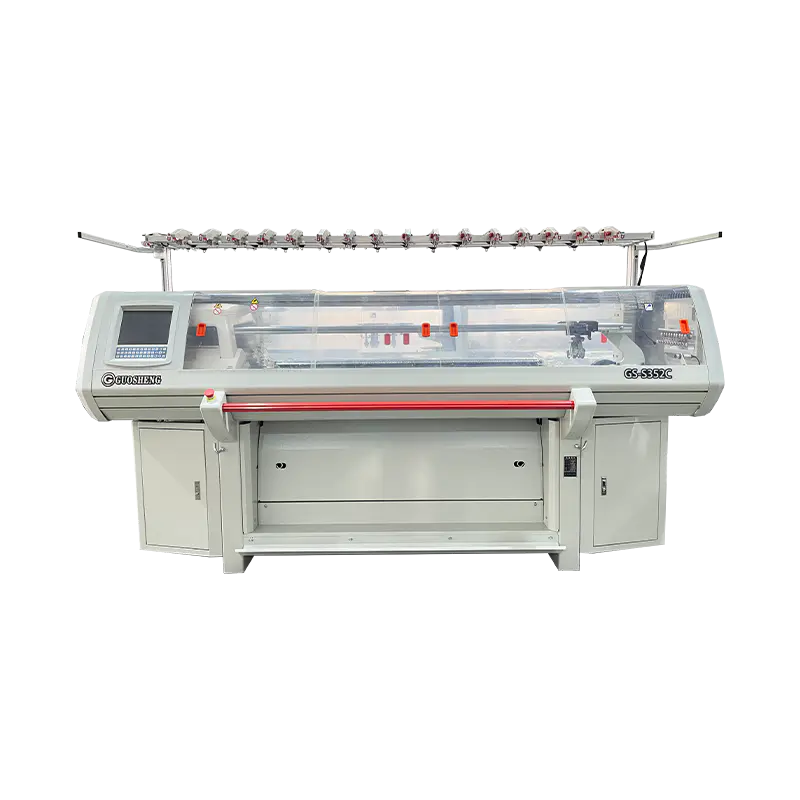
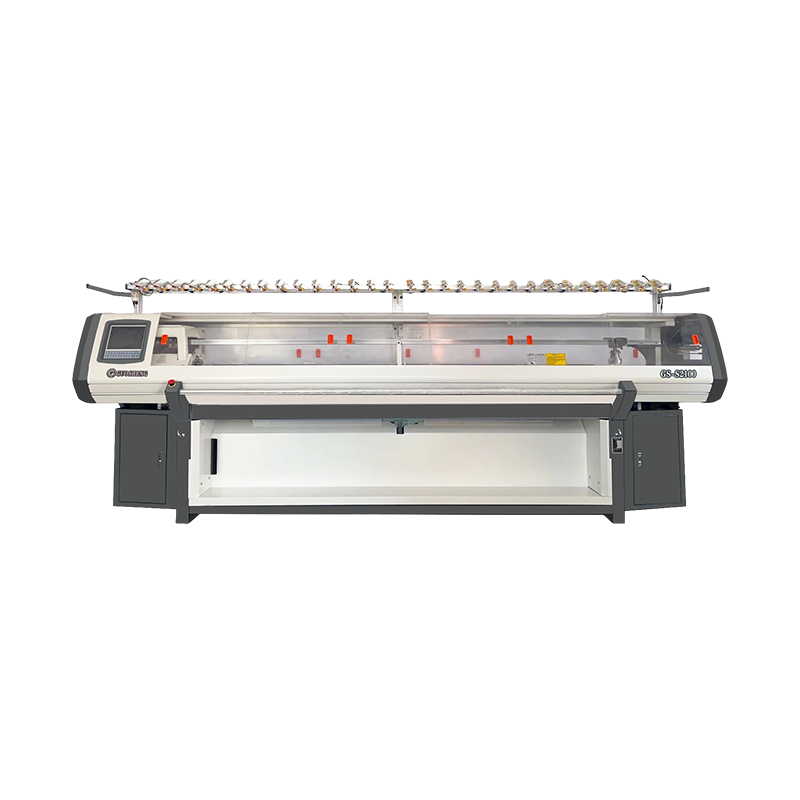
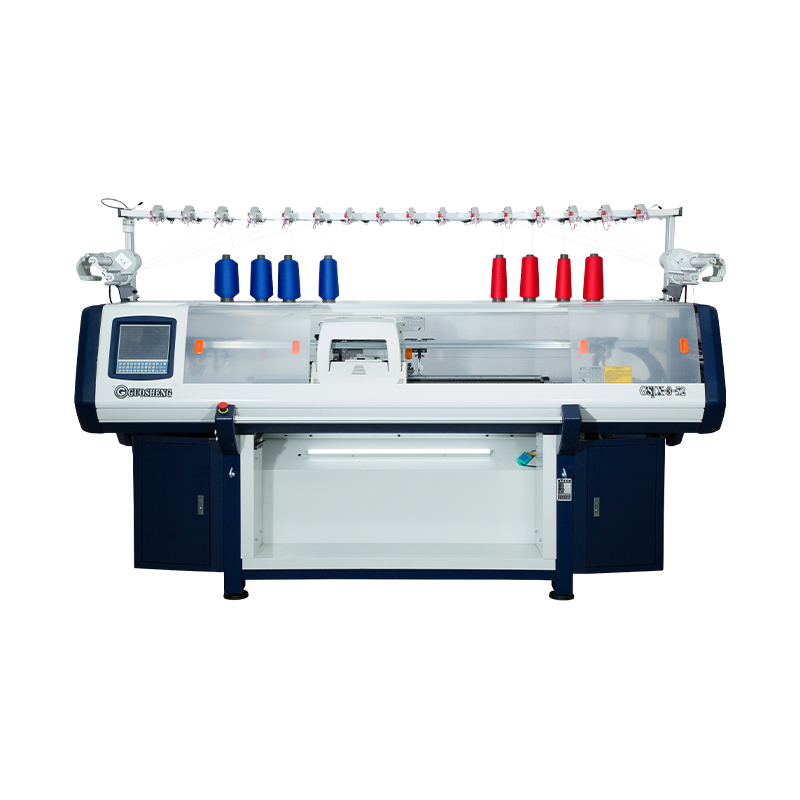
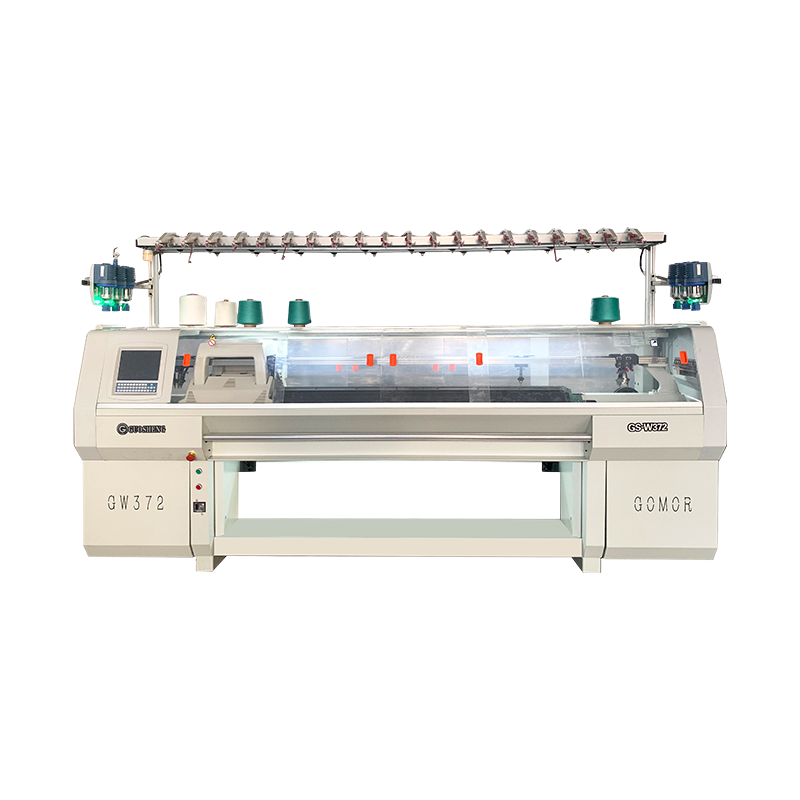
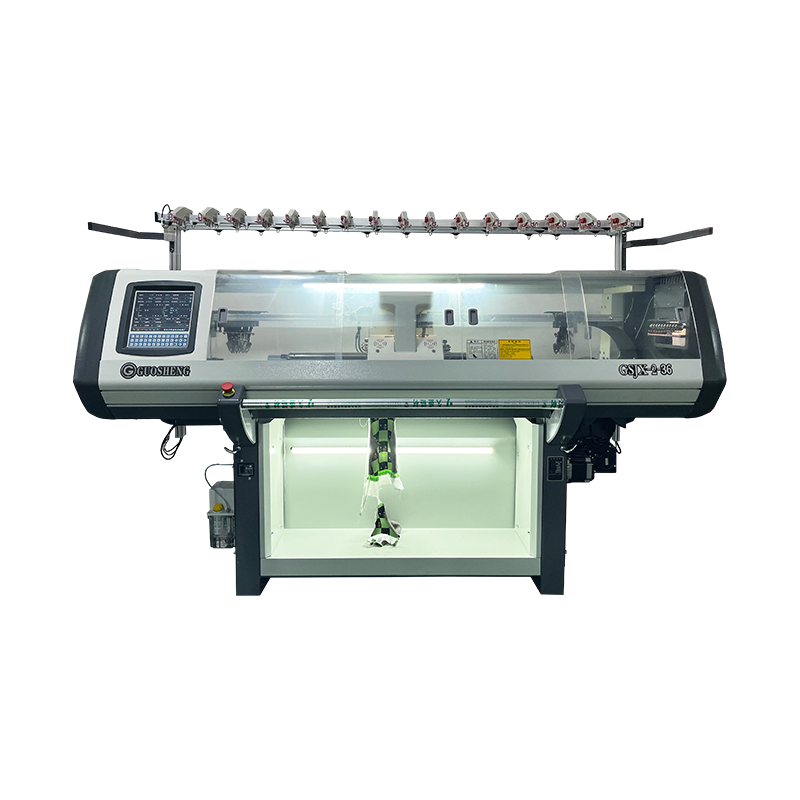
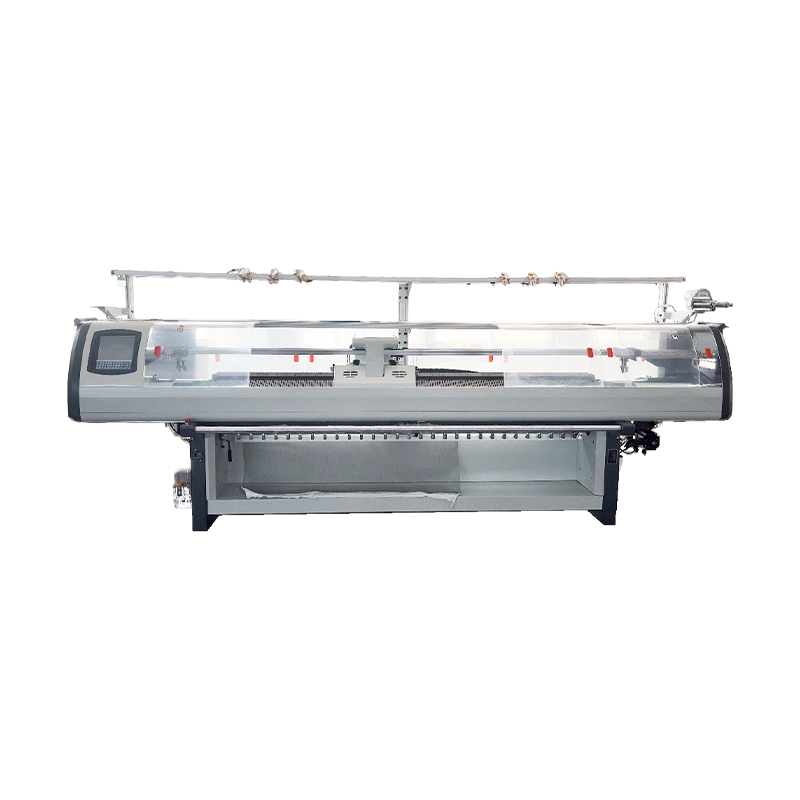
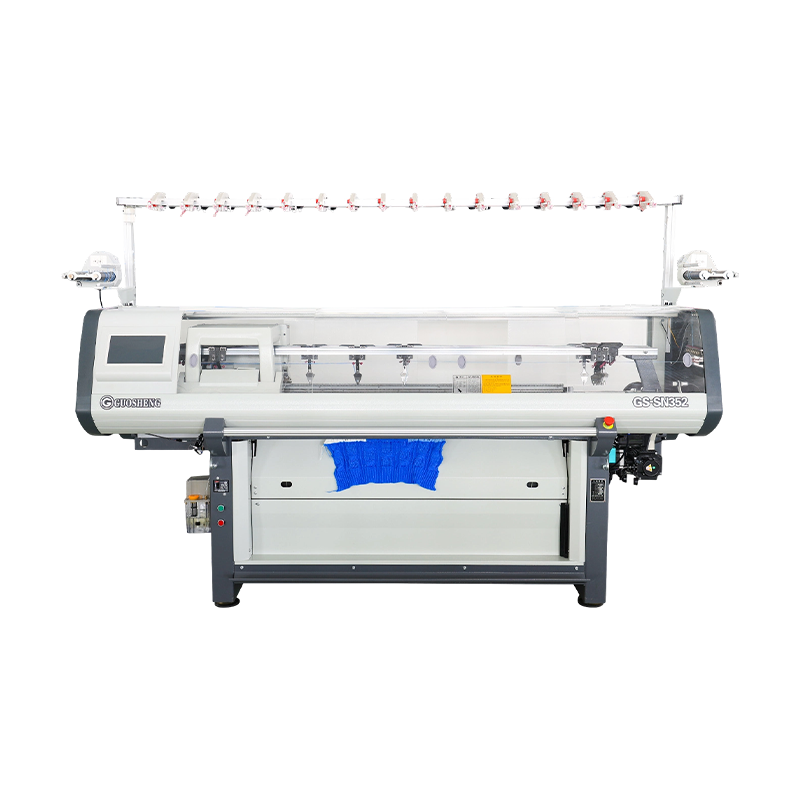
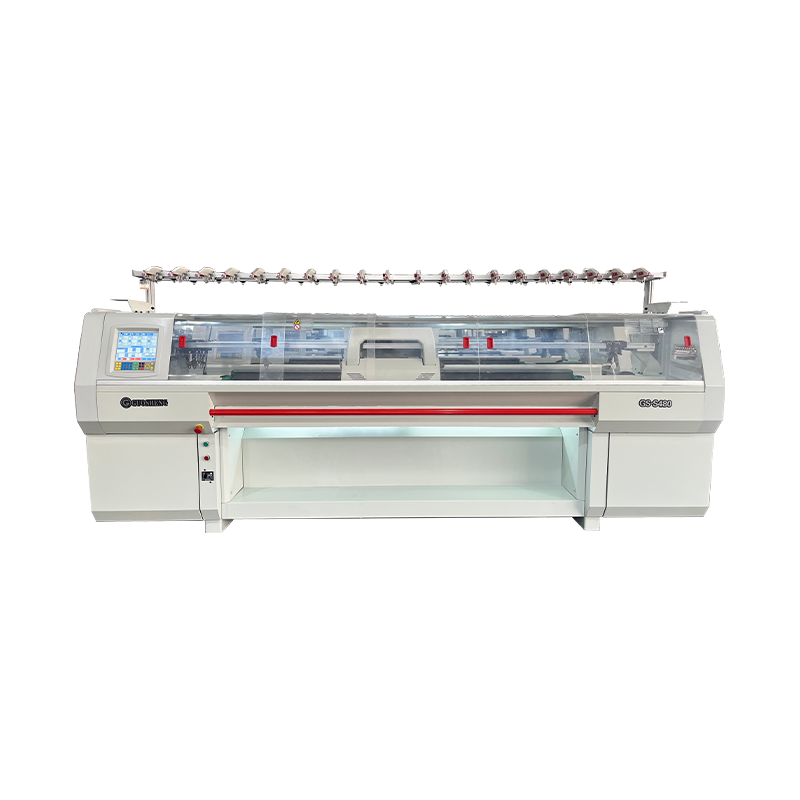
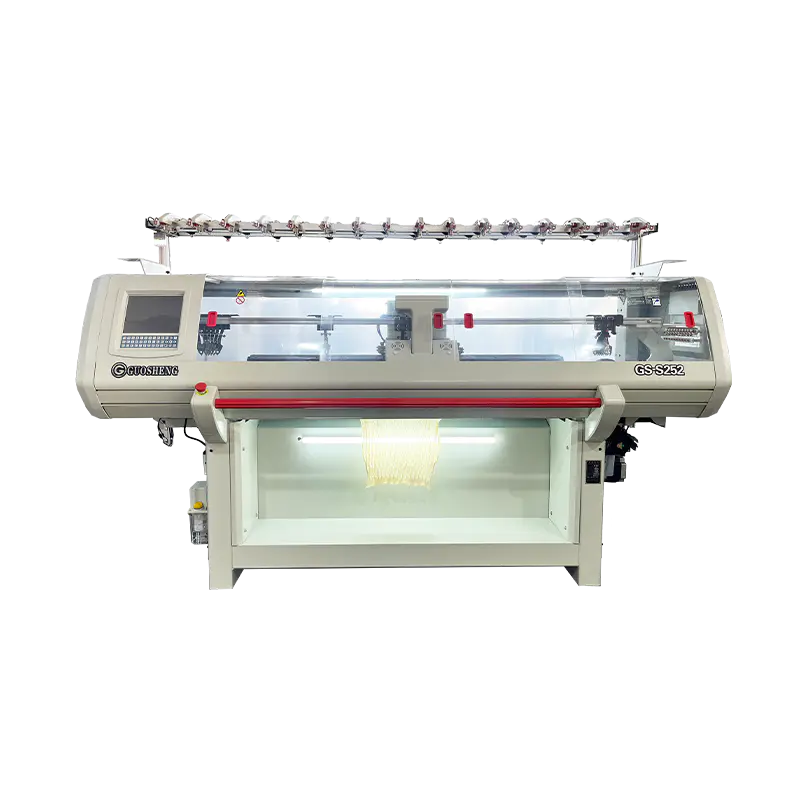
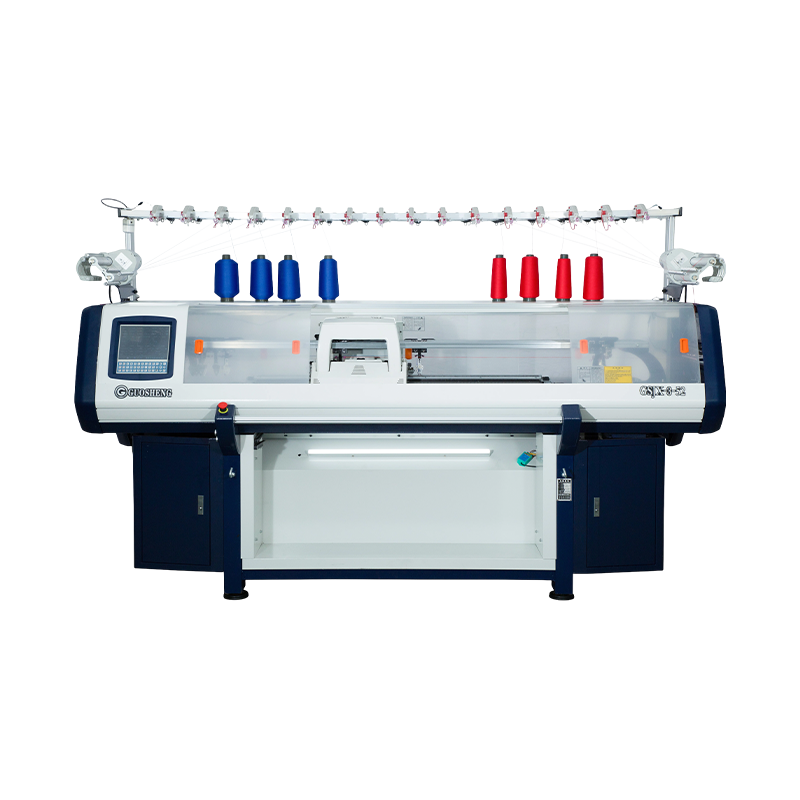
GS-S3525C Orange Handle Three System Sweater Knitting Machine (Full Function S)
1. The Role of Intelligent Flat Knitting Machines in Modern Textile Production
Flat knitting machines are used to produce knitted panels, sweater components, collars, cuffs, fashion structures, and other textile products. In earlier production environments, many operations depended heavily on manual intervention. Operators had to make frequent adjustments, transfer programs between systems, and manage production interruptions with limited digital assistance. While traditional equipment remains useful for some applications, it can be difficult to maintain consistent quality and rapid style changes when market demand becomes more dynamic.
Computerized flat knitting machines address these challenges by integrating mechanical motion, electronic needle selection, programmable stitch control, yarn management, and digital pattern systems. The result is a production platform that can execute complex instructions with a high level of repeatability. This is especially important for sweaters and other garments in which small differences in density, pattern alignment, edge formation, or tension can affect the appearance and fit of the finished product.
Modern apparel buyers also expect frequent product updates. Seasonal collections may include multiple colors, structures, gauges, and decorative effects. Manufacturers therefore need equipment that can change from one design to another without extensive mechanical reconfiguration. A computerized machine can store multiple design files and make program-based adjustments, reducing the time required for sampling and production preparation.
The GS-S3525C is positioned within this development. It combines a three-system knitting arrangement with a full-function design, allowing it to support a wide range of knitting actions. Its control system is intended to help operators monitor working parameters, adjust settings during operation, and manage design files through digital input. This makes the machine appropriate for enterprises moving toward more flexible and intelligent production.
2. Product Overview and Core Configuration
The GS-S3525C is a three-system sweater knitting machine in the full-function S series. It uses a single carriage and provides a 52-inch knitting width. This width is suitable for producing many standard sweater panels and garment components while offering sufficient working space for a wide variety of designs.
The machine is available across a broad gauge range, including 3-5G, 5G, 6G, 7G, 8G, 9G, 10G, 12G, 13G, 14G, 15G, 16G, and 18G configurations. Gauge selection influences the fineness, density, texture, and application range of the knitted fabric. Coarser gauges can be used for heavier and more substantial knitted structures, while finer gauges are suitable for lightweight garments, delicate details, and refined fashion products.
Its maximum knitting speed is specified at 1.5 meters per second. Actual production speed may vary according to yarn characteristics, knitting structure, gauge, stitch density, pattern complexity, and operating conditions. Nevertheless, the speed specification demonstrates the machine’s ability to support high-efficiency production when the process is correctly configured.
The three-system, single-carriage configuration allows several knitting systems to work collaboratively within one machine structure. Compared with many traditional two-system machines, this arrangement can complete more knitting actions during a carriage pass or coordinate operations more efficiently. This can help reduce unnecessary idle movement and improve output, especially in designs that require several knitting functions.
The full-function configuration includes transfer, tuck, miss, jacquard, intarsia, and needle transfer. These functions are important for manufacturers that need to produce more than simple plain-knit fabric. They make it possible to develop textured surfaces, color effects, shaped panels, decorative motifs, and engineered garment components with greater design freedom.
| Item | Specification | Production Significance |
| Model | GS-S3525C | Identifies the three-system full-function S series machine |
| Machine type | Computerized flat knitting machine | Supports programmable and repeatable textile production |
| Knitting system | Three systems, single carriage | Improves collaborative knitting efficiency and production flexibility |
| Knitting width | 52 inches | Suitable for a broad range of sweater panels and garment components |
| Gauge options | 3-5G to 18G, depending on configuration | Supports coarse, medium, and fine knitted structures |
| Maximum knitting speed | 1.5 meters per second | Provides a high-speed operating capability for industrial production |
| Knitting functions | Transfer, tuck, miss, jacquard, intarsia, needle transfer | Enables varied structures, patterns, and decorative effects |
| Drive system | Synchronous belt drive and AC servo system | Supports stable motion, accurate positioning, and responsive control |
| Stitch density | Stepping-motor control with adjustable digital range | Helps operators regulate fabric compactness and appearance |
| Yarn carriers | 16 yarn carriers on each side of four guide rails | Supports multicolor and multi-yarn production arrangements |
| Power supply | 220V, single-phase | Suitable for facilities using compatible single-phase power |
3. Three-System Performance and Competitive Position
The number of knitting systems is one of the important factors influencing the productivity and functional capacity of a flat knitting machine. A two-system machine may be adequate for basic structures and straightforward garment programs, but manufacturers can encounter limitations when designs require more coordinated operations. A three-system machine offers an additional knitting system without necessarily requiring the investment associated with a four-system model.
The GS-S3525C is designed to occupy this practical middle position. Its three-system configuration can increase collaborative knitting efficiency compared with traditional two-system models. Additional system capacity may allow the machine to complete more operations in a coordinated sequence, reducing the frequency of repeated carriage movement. For high-volume production, the cumulative effect can contribute to improved output and better use of machine time.
At the same time, a three-system machine may be more economical and more broadly adaptable than a four-system alternative for manufacturers whose production does not require the maximum possible system count. Four-system machines can provide substantial capacity, but they may involve higher equipment costs, greater space requirements, and different maintenance or operating considerations. A three-system configuration can therefore provide a balanced solution for enterprises that want improved productivity while maintaining careful control over capital investment.
The competitive advantage of the GS-S3525C is not based only on the number of systems. Its value also comes from the combination of system capacity, full-function capability, programmable control, wide gauge availability, yarn carrier arrangement, and production protection features. A machine that offers high speed but limited functions may not be suitable for diversified sweater production. Conversely, a highly complex machine that is expensive to operate may not be ideal for manufacturers focused on cost efficiency. The GS-S3525C seeks to combine the two priorities.
Its 52-inch width also supports practical production planning. Manufacturers can use the machine for complete panels, shaped components, collars, cuffs, and other pieces depending on the chosen gauge, yarn, and program. This can reduce the need to maintain separate machines for every product category and can improve equipment utilization across different orders.
3.1 Output Efficiency
Output efficiency depends on more than nominal speed. It is influenced by carriage movement, pattern complexity, yarn changes, needle selection, stitch density, take-down control, and the time required to correct production interruptions. The GS-S3525C addresses several of these factors through its three-system structure, electronic control, programmable yarn carrier arrangement, and automatic monitoring functions.
The machine’s maximum speed of 1.5 meters per second provides an efficient operating ceiling. In practice, production managers can select a suitable speed for each design. Basic structures may be produced at a higher speed, while complex intarsia, jacquard, transfer, or fine-gauge structures may require a more controlled setting. This adjustable approach helps protect fabric quality while maintaining productivity.
3.2 Product Versatility
Product versatility is particularly important for contract manufacturers and fashion-oriented businesses. A manufacturer may need to produce basic pullovers during one period, textured sweaters during another, and fine-gauge or multicolor products for a new collection. A full-function machine can accommodate these changes with software and process adjustments rather than requiring a completely different equipment platform.
The GS-S3525C is compatible with a range of common yarn materials. Wool and cashmere can be used for warm and premium garments, while cotton, acrylic, polyester, viscose, and blends support different price points, performance characteristics, and seasonal applications. Material compatibility must always be confirmed through process testing, because yarn size, elasticity, lubrication, twist, strength, and surface friction influence machine settings. However, the broad material range gives manufacturers a strong foundation for product diversification.
4. Full-Function Knitting Capabilities
The machine’s knitting functions are central to its application value. Each function contributes to a different type of fabric construction or design effect, and their combination allows producers to create more sophisticated garments.
4.1 Transfer
Transfer operations move loops from one needle position to another. They are used to create shaped structures, decorative openings, rib transitions, cables, neckline details, and other three-dimensional effects. Accurate transfer control is essential because poorly coordinated transfers can cause dropped stitches, uneven surfaces, or fabric distortion.
With computerized control and electronic needle selection, transfer instructions can be integrated into a digital pattern program. This helps improve repeatability across panels and production batches. Operators can also adjust related process parameters when working with yarns that behave differently during transfer.
4.2 Tuck
Tuck knitting holds an existing loop while adding a new yarn movement. It can increase fabric thickness, create raised textures, and contribute to decorative structures. Tuck patterns are common in textured sweaters and fashion garments that require surface relief without adding separate materials.
Because tuck structures can influence fabric weight and elasticity, the ability to adjust stitch density and take-down conditions is important. The GS-S3525C provides programmable controls intended to help manufacturers match the fabric structure to the selected yarn and garment design.
4.3 Miss
Miss knitting, also known as float knitting in some contexts, allows the yarn to pass without forming a stitch on selected needles. This function can be used for visual effects, controlled floats, and certain patterned constructions. Proper programming and monitoring are necessary to prevent excessive float length or yarn entanglement.
4.4 Jacquard
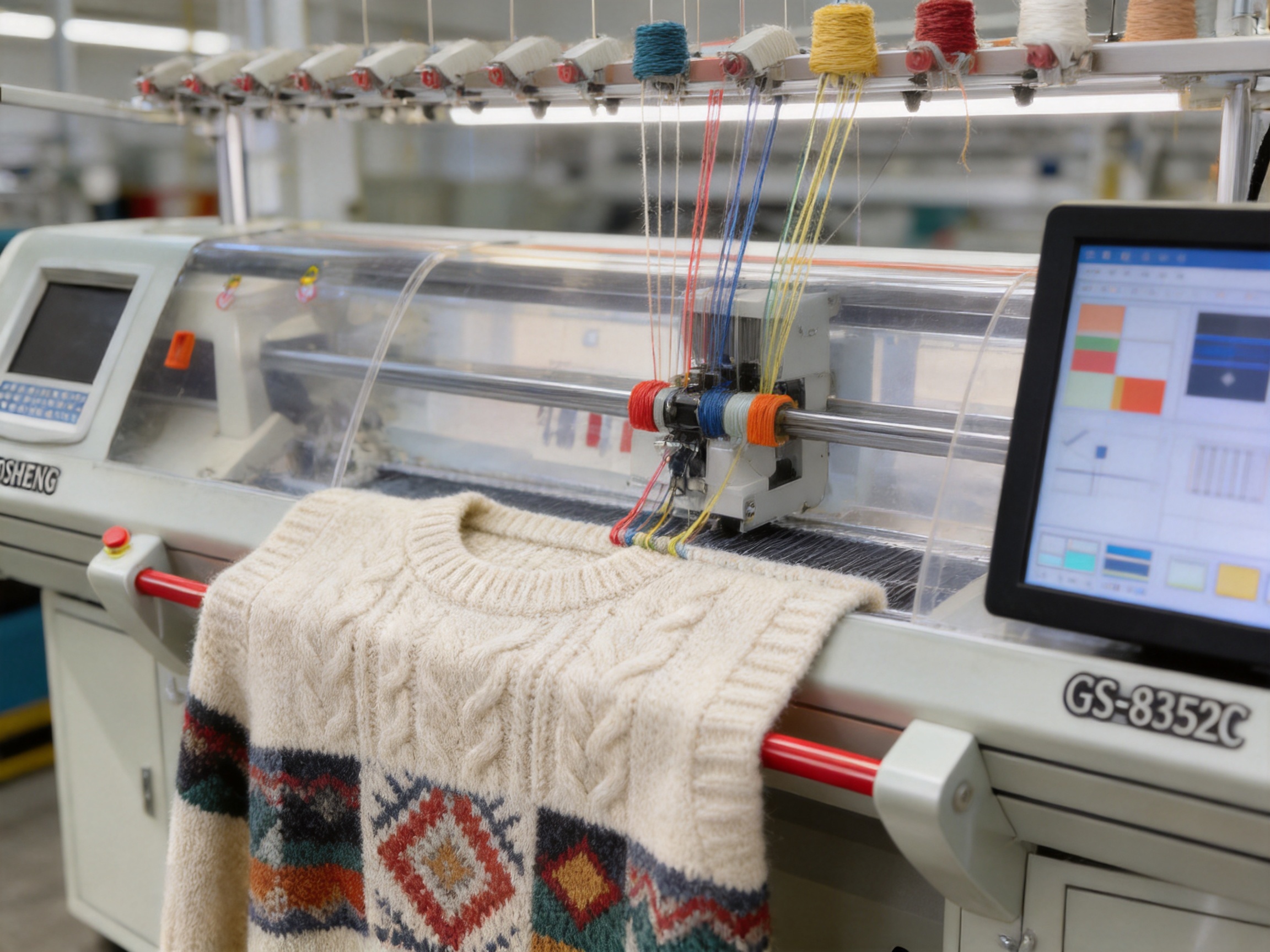
Jacquard knitting creates color or structure patterns through selective needle and yarn control. It is widely used for logos, geometric motifs, seasonal graphics, and decorative sweater surfaces. The machine’s digital pattern capability can support the preparation and adjustment of jacquard designs, helping shorten the path from concept to sample.
Jacquard production often requires careful attention to yarn tension, color sequence, fabric density, and back-side appearance. The machine’s yarn carrier arrangement, with multiple carriers on four guide rails, provides a flexible platform for managing different yarns and color combinations. The final arrangement depends on the design, gauge, and process requirements.
4.5 Intarsia
Intarsia produces areas of separate color without carrying an unwanted yarn across the entire back of the fabric. It is useful for large color blocks, artwork, geometric patterns, and premium fashion designs. Intarsia requires accurate yarn carrier positioning and well-organized program instructions. The ability to shift carriers to any needle position supports the creation of varied color zones and complex layouts.
4.6 Needle Transfer
Needle transfer functions support shaping and structural changes within a knitted panel. They are useful for garment contours, necklines, armholes, shoulder areas, and decorative patterns. Consistent needle selection and mechanical positioning are important for achieving clean transitions. The machine’s electronic control architecture is designed to coordinate these operations with repeatable accuracy.
5. Precision Motion and Mechanical Stability
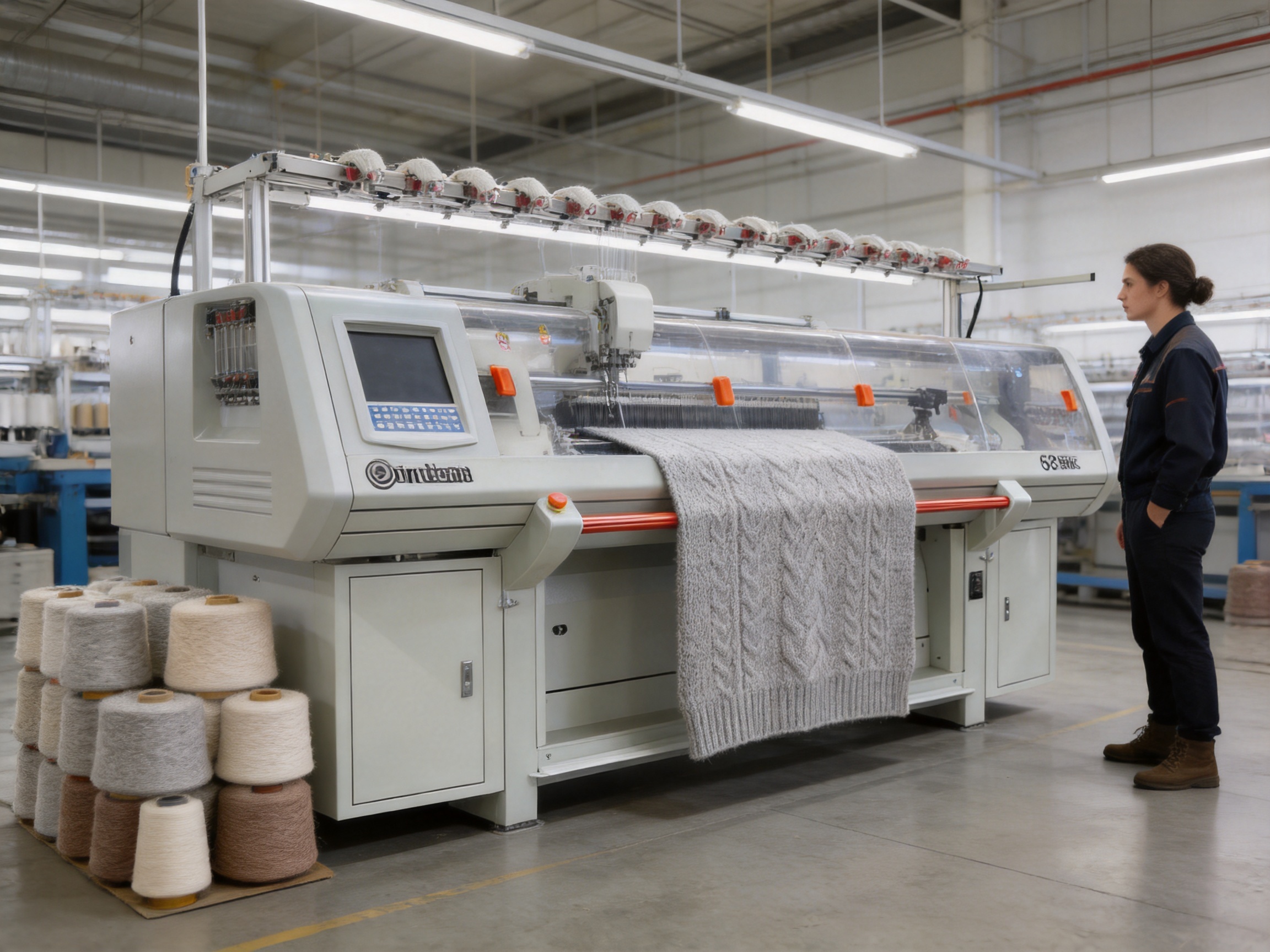
Knitting quality depends on the coordinated movement of the carriage, needles, yarn carriers, racking mechanism, take-down roller, and other mechanical components. Even a small deviation in timing or positioning can influence loop formation and fabric appearance. For this reason, advanced flat knitting machines require both accurate electronic control and a stable mechanical transmission structure.
The GS-S3525C uses a high-precision servo drive system and synchronous belt drive. An AC servo system can provide responsive motion control, accurate positioning, and stable speed regulation. The synchronous belt drive helps transmit motion in a coordinated manner while reducing the risk of unwanted slippage associated with less precise transmission arrangements.
Stable mechanical operation is also important for long production runs. A machine that maintains consistent movement can reduce variations in fabric width, stitch formation, and pattern alignment. Lower operating noise and simplified maintenance can further improve the working environment and reduce the burden on production personnel.
Mechanical stability does not eliminate the need for routine maintenance. Needle beds, needles, sinkers, yarn carriers, belts, sensors, lubrication points, and electrical components must be inspected according to an appropriate maintenance schedule. However, a well-designed transmission system can make preventive maintenance more manageable and help support long-term operating reliability.
5.1 Racking and Needle Selection
The racking mechanism moves the needle bed or coordinates needle-bed positioning to support transfers and other structural operations. In the GS-S3525C, racking is controlled by the computer, while the electric magnet or motor needle selection system supports efficient selection of needles.
Computer-controlled racking can improve repeatability in patterns that require precise needle-bed relationships. Electronic needle selection also allows the machine to execute detailed design instructions without relying on extensive manual adjustment. Together, these features contribute to improved production consistency and make it easier to reproduce approved samples.
5.2 Stitch Density Control
Stitch density affects the compactness, weight, stretch, handle, and appearance of knitted fabric. Different yarns and garments require different density settings. Fine-gauge cashmere, medium-gauge wool, cotton structures, and synthetic blends may all require distinct process parameters.
The machine uses a stepping motor to control the stitch system and provides a digitally adjustable range supported by subdivision technology. The stated control range is 0 to 650, with a 128-section or 32-section adjustment structure depending on the applicable control mode. This gives operators a detailed method for tuning fabric density and making controlled process changes.
Precise stitch adjustment is valuable during sampling. A designer or technician may need to make small changes to achieve the correct hand feel, dimensions, or visual effect. Digital adjustment can reduce the need for lengthy mechanical intervention and helps create a more systematic relationship between a design file and its production settings.
6. Yarn Management and Waste Reduction
Yarn management has a direct influence on product quality, production cost, and operating stability. Yarn carriers must move accurately, maintain suitable positioning, and coordinate with the knitting action. The GS-S3525C provides 16 yarn carriers on each side of four guide rails, with the carriers shiftable to any needle position.
This arrangement supports multicolor production, intarsia layouts, jacquard patterns, and programs that require several yarns. It also allows manufacturers to plan yarn changes more flexibly. The exact number of carriers used in a production program depends on the pattern and process requirements, but the available configuration provides substantial room for design development.
The machine also includes left and right scissors and clips that can be synchronized or operated separately according to program instructions. This feature can help manage yarn ends and reduce unnecessary yarn waste. In high-volume production, small savings in yarn consumption can accumulate into meaningful reductions in material costs.
Waste reduction also depends on correct program preparation. Yarn carrier routes, cutting points, clamp timing, and pattern transitions should be reviewed during sampling. By combining intelligent instructions with appropriate operator training, manufacturers can reduce avoidable yarn loss while maintaining reliable knitting conditions.
7. Take-Down Control and Fabric Handling
The take-down system draws the knitted fabric away from the needle area. Consistent take-down is essential because excessive or insufficient pulling force can affect loop formation, fabric density, edge quality, and dimensional stability. Different structures often require different take-down settings.
The GS-S3525C uses a stepping motor and programmed instructions to control the take-down roller. The system provides 128 section levels and an adjustable area from 0 to 100. This allows the take-down process to be modified according to different sections of a garment or different stages of a design.
Programmable take-down control is particularly useful for shaped garments and complex structures. A sweater panel may require different handling at the body, armhole, neckline, or hem. By coordinating take-down changes with the pattern program, manufacturers can improve control over fabric dimensions and reduce the need for excessive post-knitting correction.
8. Intelligent Protection and Operational Safety
Unplanned stoppages can reduce productivity and cause material loss. A modern knitting machine should therefore provide monitoring and alarm functions that help operators identify problems quickly. The GS-S3525C includes automatic alarms for conditions such as yarn breakage, floating yarn, rewinding, completion of knitting, racking faults, needle breakage, and programming errors.
These functions are valuable for both quality protection and equipment preservation. For example, a yarn break that is not detected promptly can create an incomplete or defective section. A needle break may damage the fabric or affect nearby components if production continues. A programming error may result in an unintended structure or an incorrect sequence of actions. Early alarm intervention helps limit the impact of such conditions.
Protection systems also support operator efficiency. Instead of continuously checking every possible operating condition manually, the operator can rely on the machine’s monitoring functions while still performing appropriate visual inspections. This does not replace skilled supervision, but it provides an additional layer of process control.
In a professional production environment, alarms should be supported by clear procedures. Operators need to understand the cause of each alarm, how to stop the machine safely, how to inspect the relevant area, and when to request technical assistance. Training and maintenance remain important even when the machine includes advanced protection functions.
9. Computerized Control and Digital Pattern Management
The GS-S3525C uses an LCD screen and digital input system. USB connectivity allows design files and production programs to be transferred to the machine. The system has 256 MB of memory, providing storage capacity for a substantial number of design files depending on file size and program format.
A digital control system can improve production organization in several ways. It can help manufacturers store approved programs, separate files by customer or product line, and retrieve designs for repeat orders. It also reduces the need to recreate programs manually, which can lower the risk of errors when producing the same style in a later season.
The machine’s monitoring menu displays operating parameters and allows adjustments while the machine is running. This capability can be useful when a technician needs to fine-tune stitch density, speed, take-down, or another process setting. Adjustments should be made carefully and recorded when they affect an approved production standard.
The visual design system is intended to be easy to understand and upgrade. A clear interface is important because the machine may be operated by personnel with different levels of experience. Multi-language support, including Chinese and English, can also help international customers train staff and communicate operating procedures more effectively.
9.1 Faster Sampling
Sampling speed has become a major competitive factor in the garment industry. Buyers and brands may request several revisions before approving a final design. If each revision requires lengthy manual preparation, a manufacturer can lose valuable time and may miss a commercial opportunity.
Intelligent pattern design software helps reduce this delay by supporting rapid pattern editing, program conversion, and process adjustment. Designers can modify colors, structures, dimensions, and other instructions digitally before sending the program to the machine for testing. The machine’s flexible knitting functions then allow the sample to reflect a broad range of design intentions.
Shorter sampling cycles can help manufacturers respond more quickly to seasonal demand, small-batch orders, and customized products. They can also improve communication between designers, technicians, and production managers because changes can be documented through digital files rather than relying only on verbal instructions or handwritten notes.
9.2 Digitalized Production Management
Digital pattern storage is one part of a broader transition toward intelligent manufacturing. As companies build libraries of tested designs and standardized process parameters, they can improve repeatability and reduce the time needed to prepare future orders.
Digital files can also support traceability. A production team may record which program version, yarn, gauge, stitch density, and take-down settings were used for a specific sample. This information can help diagnose quality issues and reproduce successful results. The GS-S3525C provides the machine-level control foundation for this type of organized production approach.
10. Materials and Product Applications
The GS-S3525C is compatible with many commonly used sweater yarns, including wool, cashmere, cotton, acrylic, polyester, viscose, and blended yarns. Each material has different properties, so production settings must be selected according to yarn count, twist, elasticity, friction, hairiness, strength, and moisture sensitivity.
Wool yarns are widely used for warm sweaters, textured garments, and seasonal collections. Cashmere is associated with lightweight softness and premium apparel, but it may require careful handling and controlled tension. Cotton is suitable for breathable garments and transitional-season products, while acrylic and polyester can provide durability, color consistency, and cost flexibility. Viscose and blended yarns are often selected for drape, softness, or improved performance characteristics.
Typical products may include pullovers, cardigans, knitted tops, children’s garments, fashion sweaters, patterned panels, cuffs, collars, and other shaped components. The exact application depends on the selected gauge, design program, yarn, and finishing process.
The machine’s full-function capability supports both basic and advanced product categories. Plain structures can be combined with tuck details, transfer lines, intarsia motifs, or jacquard graphics. This allows one production platform to serve multiple market segments rather than being limited to a single type of sweater.
11. Manufacturing Strengths of the Supplier
Guosheng Wonderful Intelligent Technology (Changshu) Co., Ltd. is a specialized manufacturer focused on the research, development, production, and global supply of computerized knitting machinery. Its product portfolio includes computerized flat knitting machines, collar knitting machines, and flyknit shoe upper knitting machines.
The company is located in Changshu, Jiangsu Province, an important textile machinery manufacturing area in China. This regional industrial environment provides access to engineering resources, component suppliers, technical labor, and manufacturing experience. Such an ecosystem can support the development of machines that require close coordination between mechanical structures, electronic controls, software, and textile process knowledge.
The company’s manufacturing strength is reflected in its focus on both machine construction and intelligent control. A computerized flat knitting machine is not simply a mechanical frame with needles. It is an integrated system that includes drive mechanisms, electronic selection, sensors, software, yarn handling, take-down control, safety monitoring, and user-interface design. Successful production requires these elements to work together reliably.
11.1 Research and Development Orientation
Modern knitting requirements change continuously. Customers may request faster operation, more complex patterns, lower yarn waste, easier maintenance, improved fabric consistency, and stronger compatibility with digital production systems. A manufacturer must therefore continue optimizing machine structure and control performance rather than treating a machine model as a static product.
Guosheng’s stated focus on research and development supports this need. By combining equipment engineering with practical textile applications, the company can develop solutions aimed at stable operation, flexible knitting structures, efficient production, and consistent quality. The GS-S3525C reflects this approach through its combination of three-system performance, full-function knitting, programmable control, and protection features.
11.2 Integrated Manufacturing Considerations
Reliable machinery depends on manufacturing discipline. Components must be produced to suitable tolerances, assembled accurately, tested under operating conditions, and supported with appropriate documentation. Mechanical alignment, carriage movement, needle selection, belt tension, sensor response, and software operation all influence final performance.
A manufacturer with experience in several categories of knitting machinery can also gain broader knowledge of different textile applications. Flat knitting, collar knitting, and shoe upper knitting each present specific requirements, but they share important principles involving yarn control, needle selection, digital patterning, and precision motion. This cross-application experience can contribute to a more complete understanding of customer production needs.
11.3 International Supply Capability
Guosheng supplies knitting machines to customers in multiple international markets. International equipment supply requires more than shipping a machine. It involves technical communication, documentation, installation coordination, operator training, spare-parts planning, and after-sales support. Language options in the control system can assist with international operation, while digital files and standardized procedures can make communication more efficient.
For buyers, a manufacturer’s international orientation is important because the machine may become part of a long-term production system. Customers need access to operating guidance, maintenance recommendations, and technical assistance. They also need confidence that the supplier understands different production environments and can communicate clearly across borders.
12. Maintenance, Reliability, and Long-Term Value
Equipment investment should be evaluated over its full operating life rather than only by its purchase price. A machine that is reliable, adaptable, and maintainable can provide greater value than a lower-cost machine with limited functions or frequent interruptions.
The GS-S3525C is designed with a premium mechanical transmission structure, AC servo drive, and computerized monitoring. These features are intended to support stable operation, low noise, and convenient maintenance. The machine’s protection system can also help identify abnormal conditions before they create more extensive problems.
Routine maintenance should include cleaning lint and yarn residue, inspecting needles and needle beds, checking yarn carriers, examining belts and drive components, verifying sensor operation, reviewing electrical connections, and applying lubrication where specified. The exact maintenance schedule should follow the manufacturer’s technical guidance and the intensity of production.
Operator behavior also affects service life. Sudden changes to settings, continued operation after an alarm, incorrect yarn installation, and inadequate cleaning can increase wear or create quality problems. Proper training helps protect the equipment and improves production consistency.
The machine’s broad application range can further improve long-term value. If a manufacturer’s product mix changes, the machine may continue to be useful because it can work with different yarns, gauges, and knitting structures. This adaptability reduces the risk that equipment becomes obsolete when a single product line is discontinued.
13. Production Planning and Best-Practice Operation
To obtain the best performance from the GS-S3525C, manufacturers should approach production as a complete process rather than relying only on machine specifications. The yarn, design, gauge, speed, stitch density, take-down, carrier arrangement, and finishing requirements must be considered together.
The first stage should be material testing. Operators can examine yarn behavior, tension stability, surface friction, elasticity, and breakage tendency. A small sample helps identify suitable stitch density and take-down values before full production begins.
The second stage is digital pattern preparation. The design should be checked for needle selection, transfer instructions, yarn carrier movement, color changes, shaping, and end-of-knitting procedures. Simulating or reviewing the program in advance can reduce avoidable errors.
The third stage is sample knitting. The first sample should be inspected for dimensions, pattern alignment, fabric weight, surface appearance, edge quality, and finishing response. Adjustments may be made to speed, stitch density, take-down, or yarn tension.
The fourth stage is process standardization. Once the sample is approved, the final program and machine settings should be recorded. This creates a repeatable production reference and helps reduce variation between batches or shifts.
The fifth stage is ongoing monitoring. Operators should review alarms, fabric appearance, yarn consumption, machine noise, and mechanical behavior during production. Early action is usually more efficient than waiting until a defect becomes extensive.
14. Advantages for Different Types of Knitting Enterprises
14.1 Large and Medium-Sized Sweater Factories
Medium-sized and large sweater factories can use the GS-S3525C to improve production flexibility across multiple product lines. The three-system configuration supports efficient output, while the full-function structure allows the same machine category to produce both basic and advanced designs.
Factories with several machines can also organize production according to gauge, yarn, or product category. Digital pattern storage can help standardize programs across equipment, provided that machine configuration and process parameters are properly matched.
14.2 Fashion and Sampling Departments
Fashion manufacturers and sampling departments can benefit from the machine’s broad design functions and computerized editing capabilities. Intarsia, jacquard, transfer, and tuck structures can be tested without requiring separate specialized equipment for each design concept.
Shorter sample development cycles can improve communication with buyers and designers. When a pattern must be changed quickly, a digital workflow can reduce the time between design revision and physical evaluation.
14.3 Customized and Small-Batch Production
Small-batch and customized production often requires frequent style changes. In this environment, flexibility may be more important than maximum theoretical output. The GS-S3525C can provide a useful combination of programmable control, multiple knitting functions, and material adaptability.
Manufacturers can use stored programs for repeat orders while creating new files for customized designs. This supports a production model in which variety, response time, and quality consistency are all important.
14.4 Export-Oriented Manufacturers
Export-oriented manufacturers must satisfy different specifications, price levels, and style preferences across markets. A versatile flat knitting machine can help them adapt product development to different customers. Multi-language control support and international supply experience may also simplify training and communication.
15. Comparing the Machine with Alternative Configurations
When selecting a flat knitting machine, buyers should compare complete capabilities rather than focusing on one specification. A two-system machine may have a lower initial cost, but it may require more carriage movement for complex designs and may offer less production flexibility. A four-system machine may provide higher system capacity, but its higher investment may not be justified for every factory or product mix.
The GS-S3525C offers a three-system alternative for manufacturers that want a practical balance. It provides more collaborative knitting capability than many two-system designs while avoiding the potentially higher cost and complexity of a four-system platform. Its full-function capabilities also make it more versatile than a basic machine configured primarily for plain knitting.
Other comparison factors include gauge availability, working width, control interface, pattern storage, yarn carrier capacity, take-down adjustment, alarm functions, maintenance requirements, and supplier support. A machine should be evaluated according to the customer’s actual product range, production volume, available operators, facility conditions, and future development plans.
| Comparison Factor | Traditional Two-System Approach | GS-S3525C Three-System Approach | Four-System Alternative |
| System capacity | Suitable for many basic and moderately complex programs | Improved collaborative knitting capacity | Very high system capacity for demanding programs |
| Investment balance | Usually lower initial investment | Balanced productivity and cost control | Potentially higher investment |
| Product flexibility | Depends strongly on machine functions | Full-function capability with multiple structures | Typically broad, depending on configuration |
| Pattern development | May be adequate for standard designs | Supports digital editing and complex patterns | Supports advanced production programs |
| Suitable users | Basic production and cost-sensitive operations | Factories seeking balanced efficiency and versatility | High-capacity operations with demanding workloads |
16. Quality Control Considerations
Consistent knitting quality begins with stable machine settings and suitable raw materials. Before production, the operator should verify needle condition, yarn path, carrier movement, program selection, stitch density, take-down, and alarm status. These checks can prevent many common defects.
During knitting, quality personnel should inspect fabric for dropped stitches, uneven density, missed selections, incorrect color changes, needle lines, excessive floats, edge distortion, and dimensional variation. Some defects are visible immediately, while others become apparent during steaming, washing, linking, or final garment assembly.
Digital programs should be version-controlled. If a setting is changed during production, the change should be recorded so that the approved version is not accidentally overwritten. This is particularly important for manufacturers producing the same style for multiple customers or seasons.
Quality control should also consider yarn waste and machine downtime. A garment may meet visual standards but still be commercially inefficient if yarn consumption is excessive or if the production line experiences frequent interruptions. The GS-S3525C’s programmable carrier, scissor, clamp, and protection functions can support efforts to improve both quality and operating efficiency.
17. Sustainability and Resource Efficiency
Textile manufacturers are increasingly required to control material consumption, energy use, and production waste. A computerized knitting machine can contribute to more efficient manufacturing by reducing unnecessary yarn loss, improving first-sample accuracy, and supporting precise production instructions.
The GS-S3525C’s synchronized or separately controlled scissors and clips can help reduce yarn waste when correctly programmed. Digital sampling can also reduce the number of physical trials needed before a design is approved. Better stitch and take-down control may help manufacturers produce fabric closer to the required dimensions, reducing cutting or rework losses.
Sustainability is not determined by the machine alone. Yarn selection, garment design, maintenance, production planning, finishing, packaging, and recycling practices all contribute to the overall environmental impact. However, equipment that supports accurate, flexible, and low-waste production can form an important part of a more responsible manufacturing system.
18. Installation and Training Requirements
Before installation, the customer should confirm that the facility provides suitable floor space, power supply, ventilation, lighting, and environmental conditions. The GS-S3525C uses a 220-volt, single-phase power supply with a power-off memory function. Electrical compatibility should be verified locally before commissioning.
Operators should receive training in machine startup, yarn threading, carrier positioning, program loading, parameter adjustment, alarm handling, cleaning, and routine inspection. Technicians should receive additional instruction in mechanical alignment, sensor checks, drive components, electrical systems, and software-related troubleshooting.
Training is especially important when the machine is used for intarsia, jacquard, transfer, or other advanced functions. The operator must understand not only how to start a program but also how to identify abnormal behavior and protect the fabric and machine during interruptions.
A well-organized training program can shorten the learning curve and improve equipment utilization. It also helps standardize production practices among different shifts and reduces dependence on a single experienced operator.
19. Frequently Asked Questions
Q1: What type of machine is the GS-S3525C?
The GS-S3525C is a computerized flat knitting machine designed for sweater and other knitted product manufacturing. It is a three-system, single-carriage, full-function machine in the S series.
Q2: What is the maximum knitting width?
The machine has a knitting width of 52 inches. The usable width for a specific product depends on the garment design, gauge, yarn, and process program.
Q3: What is the maximum knitting speed?
The specified maximum knitting speed is 1.5 meters per second. Actual operating speed should be selected according to the yarn, gauge, pattern complexity, stitch density, and required fabric quality.
Q4: Which knitting functions does the machine support?
The machine supports transfer, tuck, miss, jacquard, intarsia, and needle transfer. These functions allow manufacturers to produce plain, textured, multicolor, shaped, and decorative knitted structures.
Q5: Which yarn materials can be used?
The machine is compatible with wool, cashmere, cotton, acrylic, polyester, viscose, and various blended yarns. Each yarn should be tested and matched with suitable tension, density, take-down, speed, and carrier settings.
Q6: How does the three-system configuration compare with a two-system machine?
The three-system configuration provides additional collaborative knitting capacity and can reduce unnecessary idle travel in suitable production programs. It is intended to improve output while maintaining a practical balance between performance and investment.
Q7: Why might a manufacturer choose this machine instead of a four-system model?
A three-system machine may offer a more balanced cost and product adaptability profile for manufacturers that do not require the maximum capacity of a four-system platform. It can provide broad full-function capability while helping control equipment investment.
Q8: How many yarn carriers are available?
The machine provides 16 yarn carriers on each side of four guide rails. The carriers can be shifted to any needle position, supporting a wide range of multicolor and multi-yarn patterns.
Q9: Does the machine include automatic alarms?
Yes. The protection system can provide alarms for conditions including yarn breakage, floating yarn, rewinding, completion of knitting, racking faults, needle breakage, and programming errors.
Q10: Can operators adjust production parameters while the machine is running?
The monitoring menu allows operating parameters to be displayed and adjusted during operation. Any adjustment should be made by trained personnel and recorded when it affects an approved production standard.
Q11: Does the machine support digital pattern storage?
Yes. The control system uses an LCD screen, USB input, and 256 MB of system memory for storing and managing design files. The digital workflow can support pattern editing, program conversion, and process adjustments.
Q12: What power supply does the machine use?
The specified power supply is 220 volts, single-phase. Facility compatibility should be confirmed before installation, including local electrical safety requirements.
Q13: Is the machine suitable for small-batch production?
Yes. Its programmable control, broad knitting functions, material compatibility, and digital pattern management make it suitable for manufacturers that need frequent style changes, customized products, or short production runs.
Q14: What maintenance is required?
Routine maintenance includes cleaning yarn residue and lint, checking needles and needle beds, inspecting belts and drive components, verifying sensors and yarn carriers, reviewing electrical connections, and lubricating components according to technical instructions.
Q15: What makes the supplier suitable for international customers?
Guosheng Wonderful Intelligent Technology specializes in computerized knitting machinery and supplies products to multiple international markets. Its portfolio, engineering focus, multi-language control support, and experience with different textile applications can assist customers with international equipment adoption.
20. Conclusion
The GS-S3525C Orange Handle Three System Sweater Knitting Machine is designed for manufacturers seeking a practical combination of productivity, precision, flexibility, and cost control. Its three-system, single-carriage configuration provides improved collaborative knitting capability compared with many traditional two-system machines, while its full-function structure supports a broad selection of sweater designs and knitted products.
The machine’s 52-inch knitting width, maximum speed of 1.5 meters per second, broad gauge options, programmable stitch density, servo drive, synchronous belt transmission, electronic needle selection, multi-carrier arrangement, programmable take-down, and automatic protection system contribute to its industrial value. Its support for transfer, tuck, miss, jacquard, intarsia, and needle transfer enables manufacturers to move beyond basic knitting and develop more distinctive, market-responsive products.
Its digital control system is equally important. USB input, memory capacity, monitoring menus, visual software, multi-language support, and pattern editing capabilities can shorten sampling cycles and support more organized production management. These features help manufacturers respond to changing fashion requirements while improving repeatability and process control.
The supplier’s focus on research and development, mechanical precision, intelligent controls, and international textile machinery supply strengthens the overall value proposition. Guosheng Wonderful Intelligent Technology combines experience in computerized flat knitting, collar knitting, and shoe upper knitting machinery with an understanding of the practical requirements faced by modern textile manufacturers.
For factories that need a versatile machine for sweaters, fashion garments, patterned panels, and other knitted products, the GS-S3525C represents a balanced equipment choice. It is especially relevant for enterprises that want to increase production efficiency, expand design capability, reduce sampling time, and build a more intelligent and adaptable knitting operation.
References
1. Product technical specification sheet for the GS-S3525C three-system full-function sweater knitting machine.
2. General principles of computerized flat knitting machine operation and maintenance.
3. Textile engineering references covering stitch density, transfer knitting, tuck structures, jacquard, and intarsia production.
4. Industrial guidance on servo drive systems, synchronous belt transmission, and electronic needle selection.
5. Best-practice materials for digital pattern development and computerized garment production.
6. Manufacturer information concerning computerized knitting machinery, product development, and international textile equipment supply.
Product: GS-S3525C Orange Handle Three System Sweater Knitting Machine (Full Function S)

Ready to Begin?
Product Categories
- Sweater Knitting Machine (Economic SE)
- Sweater Knitting Machine (Full Function S)
- Collar Knitting Machine (Economic CE)(Fabric)
- Collar Knitting Machine (Full-Function C)
- Blanket Knitting Machine(Fabric)
- Shoe Upper Knitting Machine
- Ready To Wear Sweater Knitting Machine
- Ready To Wear Glove Knitting Machine
- Ready To Wear Hat Knitting Machine
- Knee Pad Knitting Machine
- Metal Mesh Knitting Machine
Contact Information
-
 Email: gs@guoshengchina.cn
-
 Phone: +86-0512-52690511
-
 Address: No. 18, Hupu Pujiang Road, Bixi New District, Changshu City, Jiangsu Province, China
QR Code
