


 English
 Español
 русский
 عربى
 中文简体
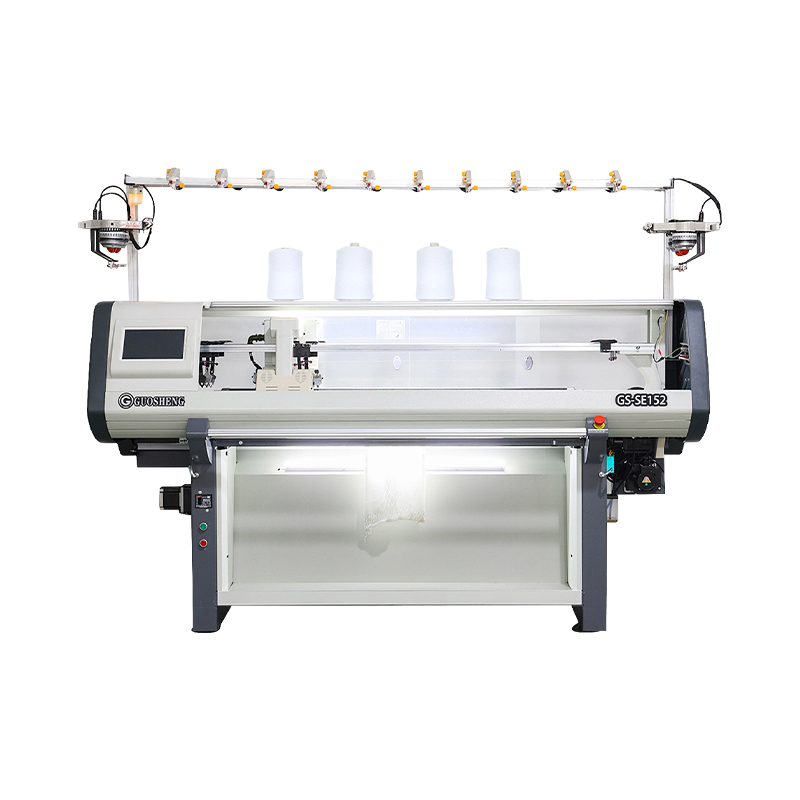
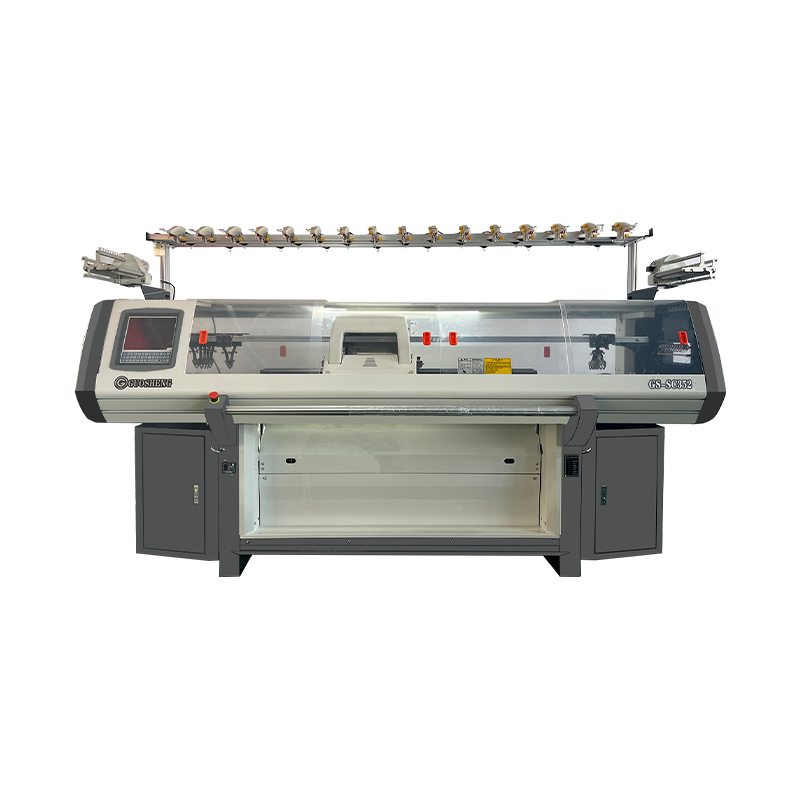
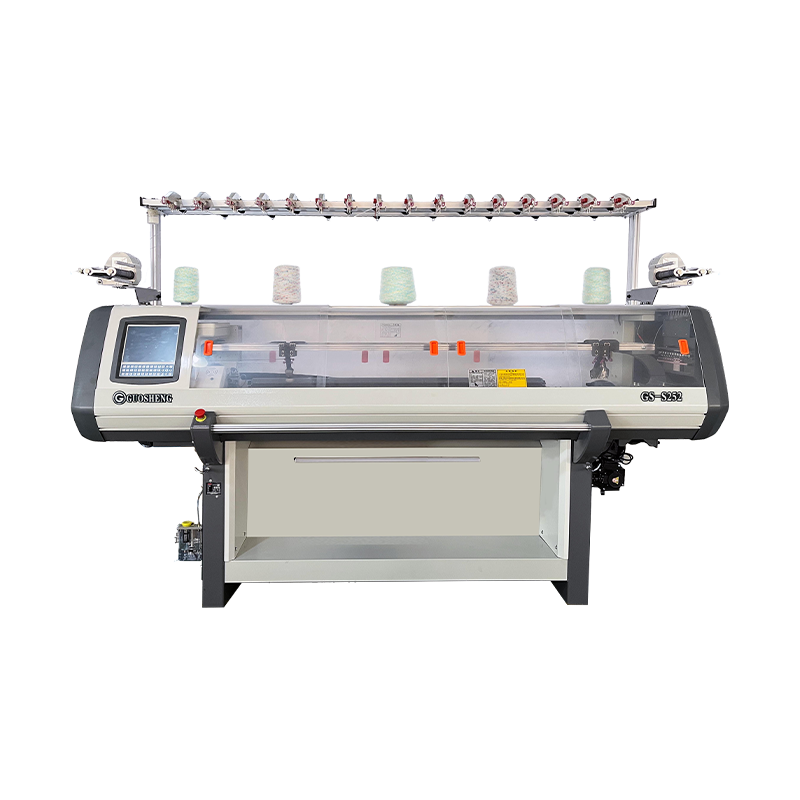
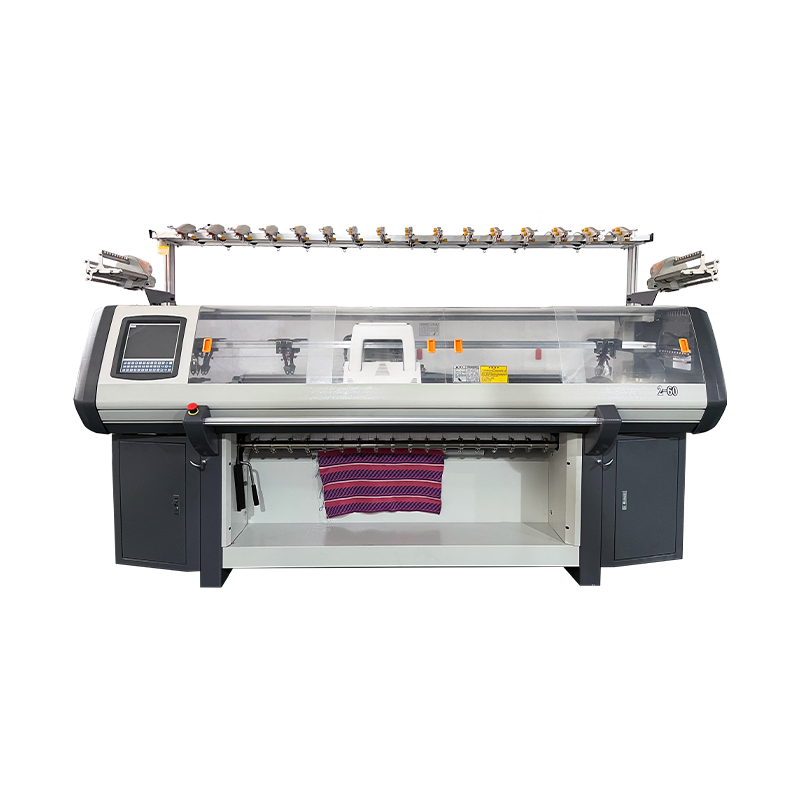

Lin Yuxi — International Product Sales Manager
52-Inch Three-System Intelligent Yarn Feeder Sweater Knitting Machine: Advanced Productivity, Flexibility, and Precision
Date:Oct 06, 2026
Content
- 1 1. Product Positioning and Manufacturing Value
- 2 2. Independent Intelligent Yarn Feeder System
- 3 3. Competitive Advantages Over Conventional Knitting Machines
- 4 4. Double Racking Design and Fabric Construction
- 5 5. Dynamic Stitch Density Control
- 6 6. Steel Wire No-Waste-Yarn Comb
- 7 7. Three-System Fully Motorized Cam Platform
- 8 8. Gauge and Width Selection
- 9 9. Computerized Control and Production Management
- 10 10. Stitch Density and Take-Down Precision
- 11 11. Comprehensive Protection and Operational Safety
- 12 12. Manufacturing Strengths of the Producer
- 13 13. Application Areas
- 14 14. Improving Factory Productivity with the Machine
- 15 15. Economic Benefits and Return on Investment
- 16 16. Quality Control Considerations
- 17 17. Why the 52-Inch Configuration Is Significant
- 18 18. Purchasing and Configuration Guidance
- 19 19. Q&A
- 19.1 Q1: What is the main difference between the GS-SA352C and a conventional sweater knitting machine?
- 19.2 Q2: What types of patterns can the machine produce?
- 19.3 Q3: Is the machine suitable for small-batch fashion production?
- 19.4 Q4: How does the intelligent yarn feeder improve efficiency?
- 19.5 Q5: What is the benefit of the double racking design?
- 19.6 Q6: What does dynamic stitch density do?
- 19.7 Q7: Does the machine require waste yarn during cast-on?
- 19.8 Q8: Which gauges are available?
- 19.9 Q9: Which knitting widths are available?
- 19.10 Q10: What is the maximum knitting speed?
- 19.11 Q11: How does the protection system work?
- 19.12 Q12: What type of power supply does the machine use?
- 19.13 Q13: Is the machine suitable for oversized products?
- 19.14 Q14: What should a factory consider before purchasing?
- 20 20. Conclusion
- 21 References
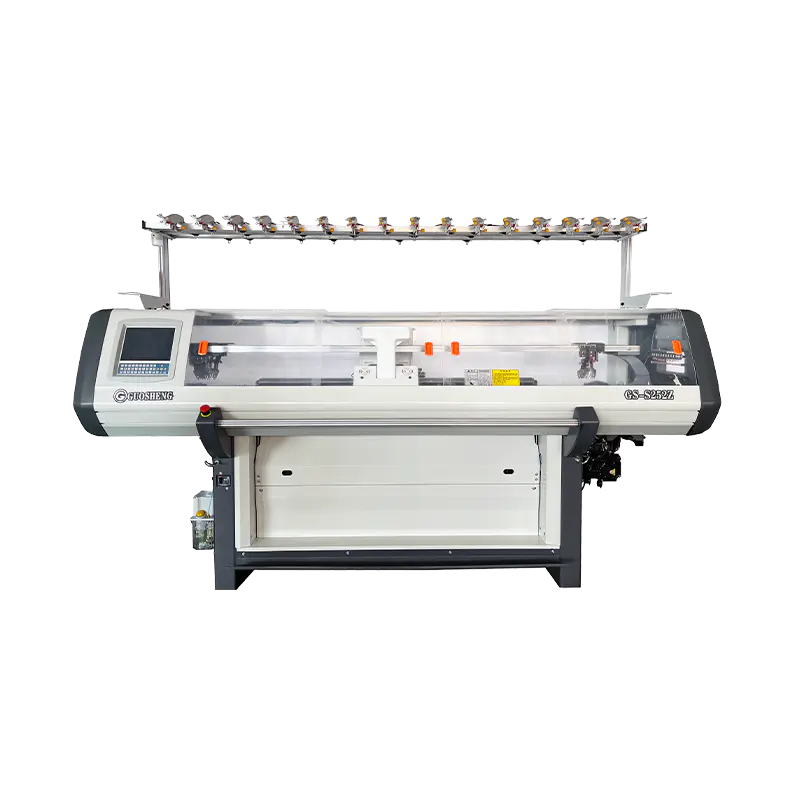
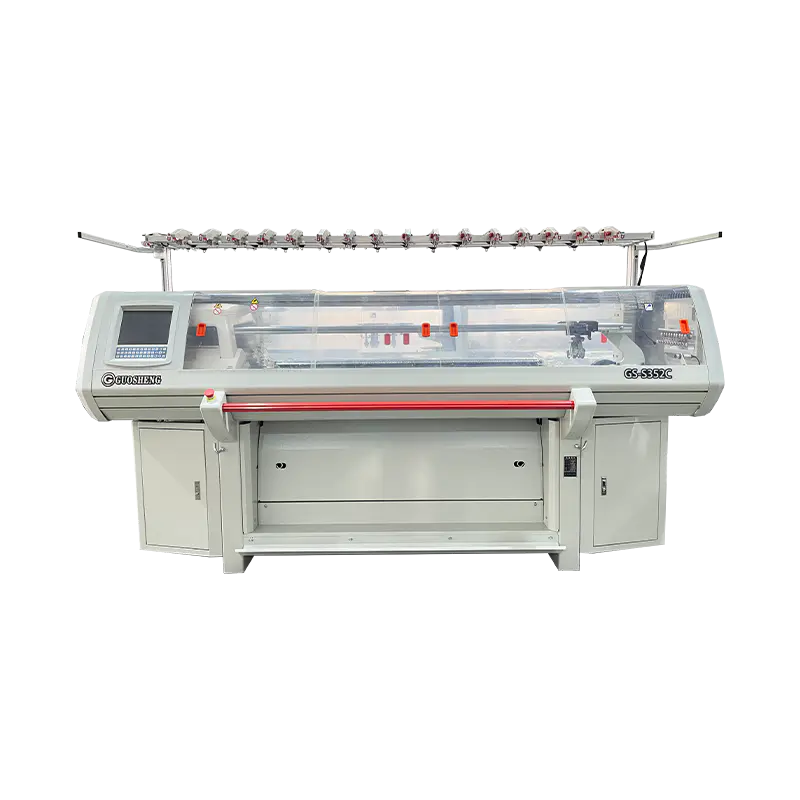
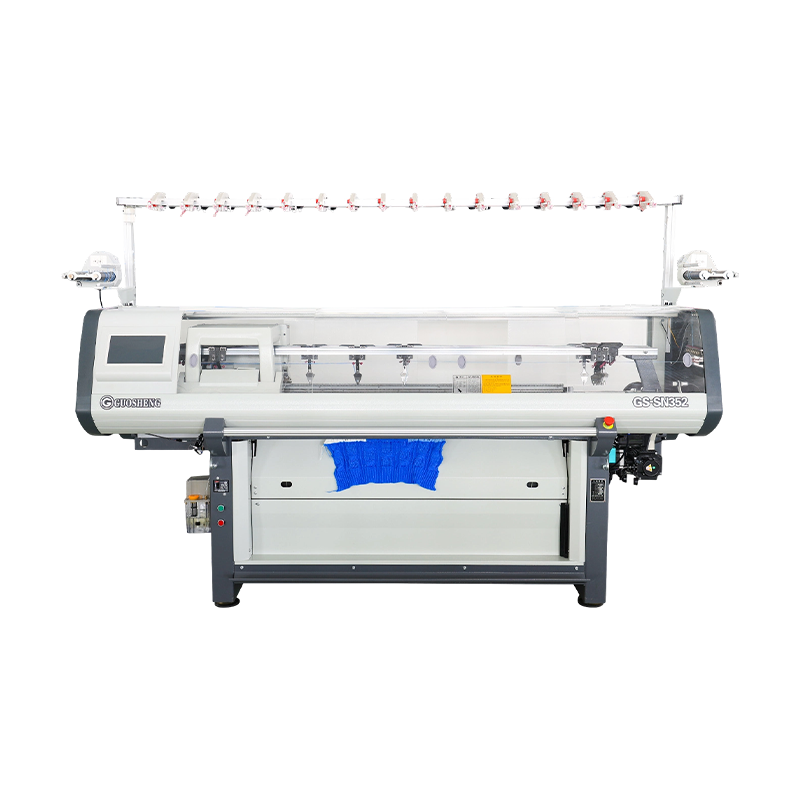
- 22 Product: GS-SA352C 52-Inch Three System Intelligent Yarn Feeder Sweater Knitting Machine
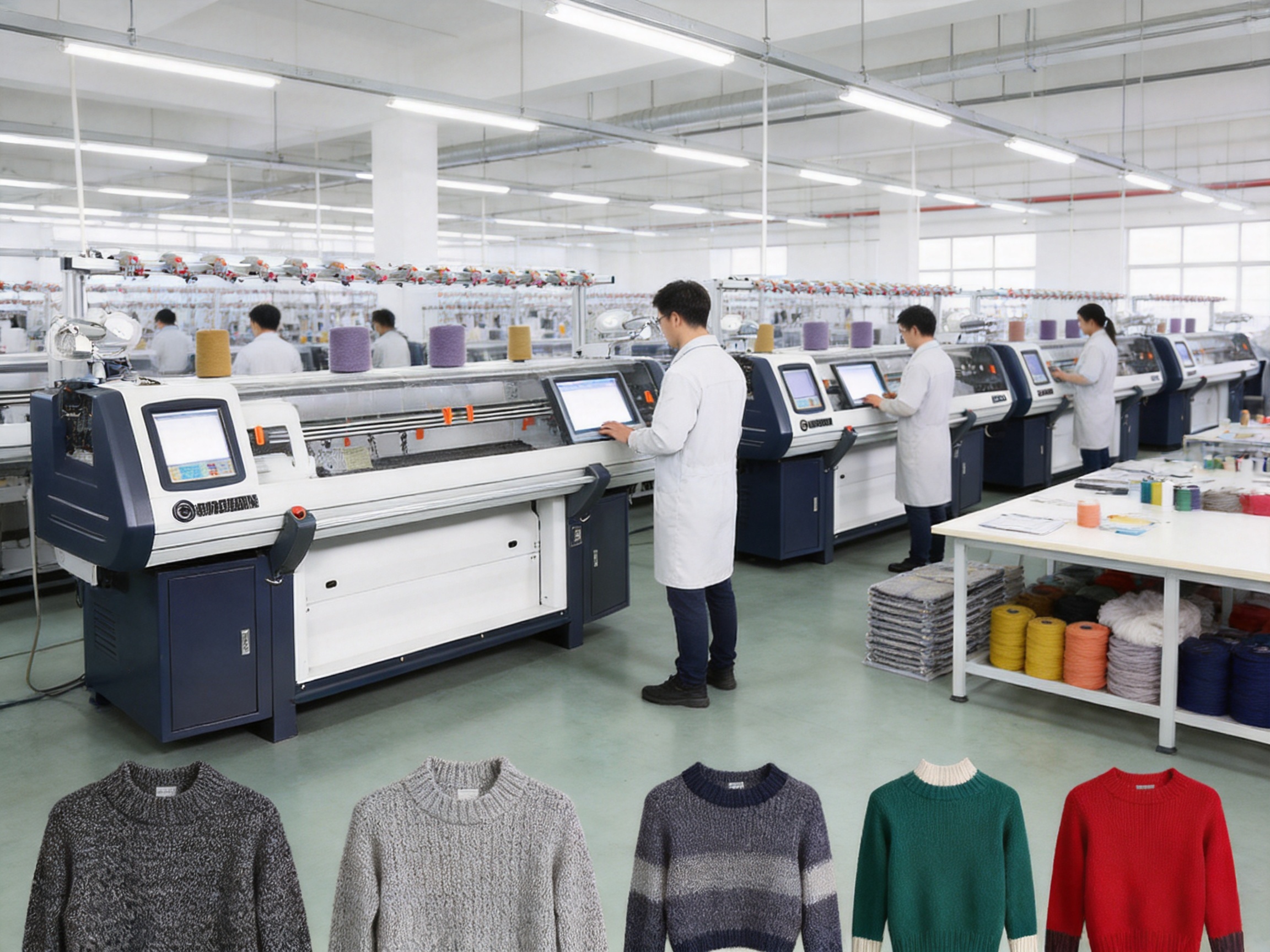
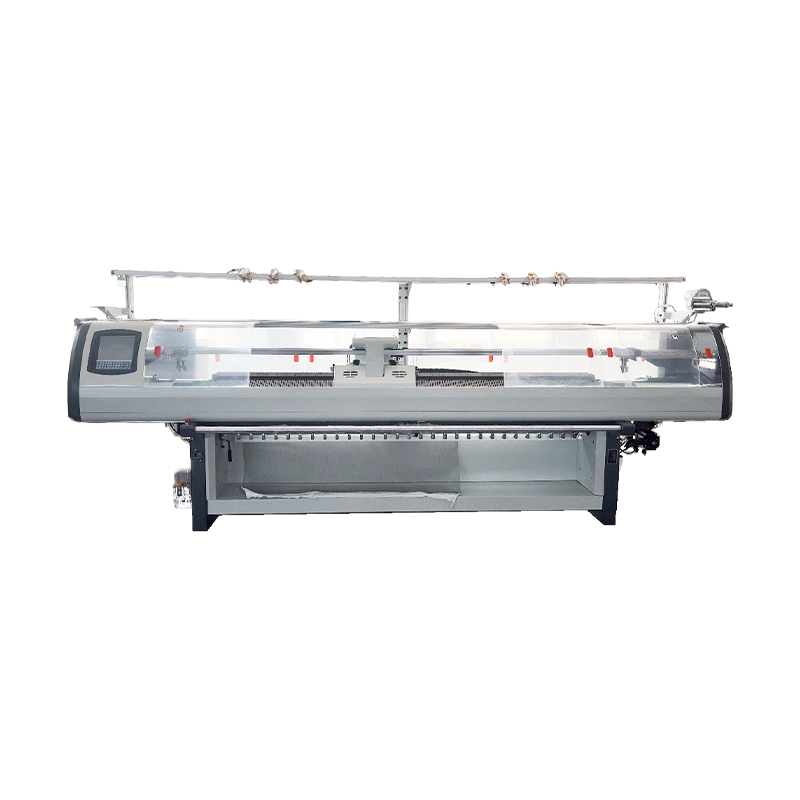
The GS-SA352C 52-Inch Three-System Intelligent Yarn Feeder Sweater Knitting Machine is designed for knitwear manufacturers that require more than basic flat knitting performance. It combines a three-system knitting platform, independently servo-driven yarn feeders, double racking, dynamic stitch density control, and no-waste-yarn starting technology in one advanced production solution. This combination enables factories to produce a broader range of garments and knitted structures while improving machine utilization, reducing material waste, and supporting more automated production management.
Modern sweater manufacturing is increasingly influenced by short fashion cycles, customized designs, multi-color patterns, complex surface effects, and pressure to control production costs. Traditional machines can produce many standard structures, but they may become less efficient when handling frequent color changes, intricate intarsia, partial jacquard, different stitch densities, or products that require repeated racking. The GS-SA352C addresses these production challenges through a machine architecture in which yarn feeding, carriage movement, stitch formation, take-down, and pattern control are coordinated electronically.
With available knitting widths of 46, 52, 60, 80, and 100 inches and gauge options from 3G to 16G, the platform can be configured for different product categories. It is suitable for chunky sweaters, medium-gauge fashion garments, fine knitwear, accessories, oversized garments, home textile products, and selected specialty knitted materials. Its 52-inch configuration offers a practical balance between production capacity and factory floor requirements, making it an important option for manufacturers seeking a versatile full-function sweater knitting machine.
1. Product Positioning and Manufacturing Value
The GS-SA352C belongs to the three-system full-function sweater knitting machine category. Its purpose is not limited to producing simple panels. It is engineered to support more complex and commercially valuable knitted products that require multiple knitting actions, color management, transfer operations, variable stitch density, and accurate fabric handling.
A three-system machine can execute more knitting actions during each carriage pass than a conventional double-system machine. This makes it possible to improve output without relying only on higher carriage speed. In actual production, efficiency depends on several factors: the number of knitting systems, the stability of yarn feeding, the time required for racking, the frequency of empty carriage movements, pattern complexity, fabric take-down, and the amount of manual intervention. The GS-SA352C addresses these factors as part of an integrated design rather than treating carriage speed as the only measure of performance.
The machine is especially valuable for factories that need to move between standard sweaters and higher-value fashion products. Its supported functions include intarsia, partial jacquard, multi-color intarsia, reverse yarn addition, transfer, tuck, miss, jacquard, and needle transfer. These functions provide designers and production engineers with a broad technical foundation for developing varied fabrics and garment constructions.
From a business perspective, this flexibility can reduce dependence on a narrow product category. A factory operating only standard single-color sweater programs may face strong price competition. By contrast, a factory able to produce engineered patterns, multi-color structures, textured surfaces, oversized knitted components, or specialty accessories can pursue more differentiated orders. The GS-SA352C is therefore positioned as a capability-expansion investment as well as a production machine.
2. Independent Intelligent Yarn Feeder System
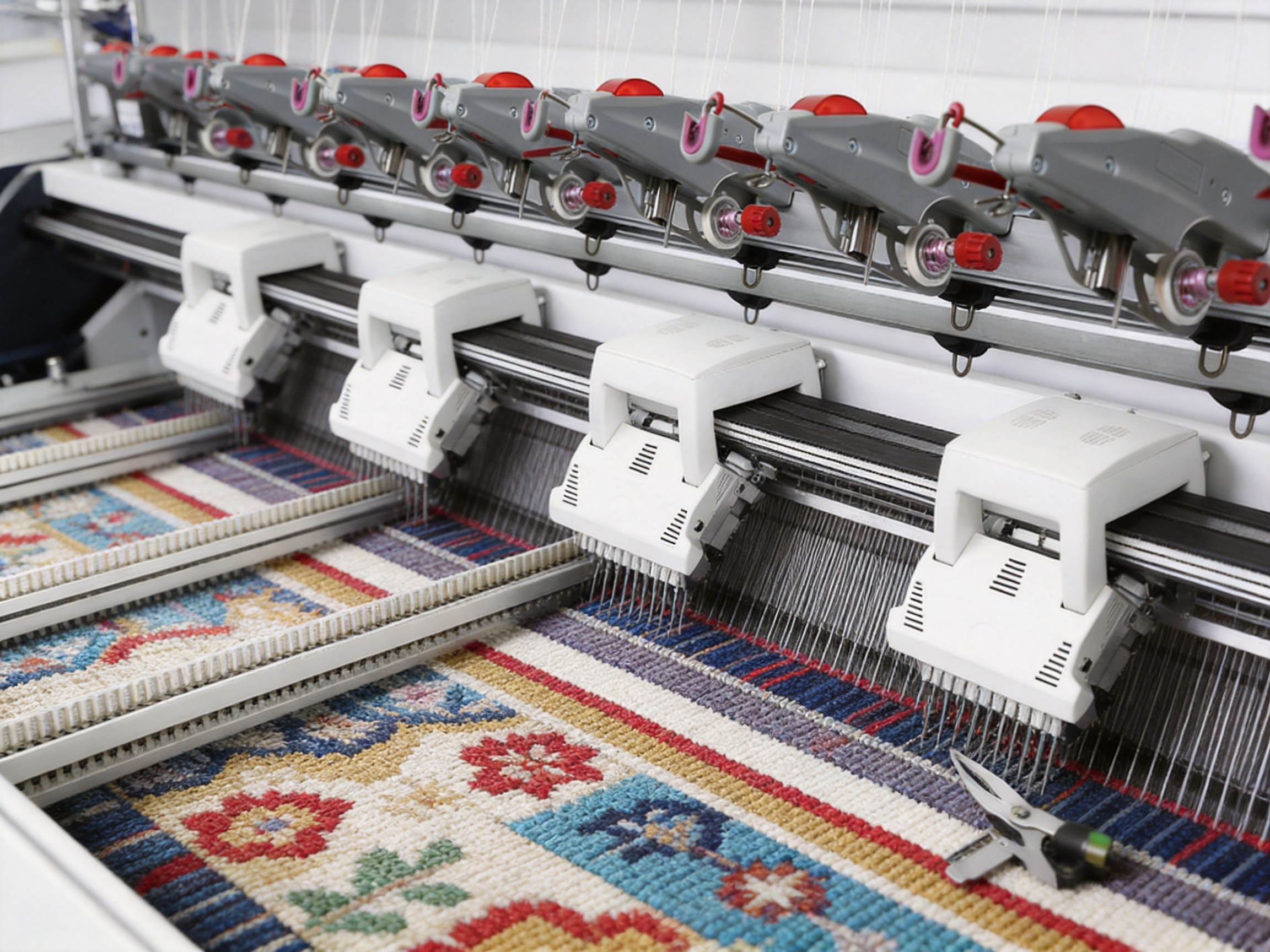
The central innovation of the GS-SA352C is its intelligent yarn feeder system. The machine uses 16 yarn feeders, with each feeder driven by an independent servo motor. This arrangement allows the feeders to move horizontally without remaining physically tied to the carriage in the same way as conventional carriage-linked systems.
In a traditional arrangement, yarn feeder movement is strongly associated with carriage travel. When a pattern requires a feeder to be repositioned, the carriage may need to perform additional movements or empty passes. These movements consume time without directly forming fabric. They may also limit the complexity of color arrangements and reduce the practical efficiency of intarsia or other multi-color structures.
The independently driven architecture separates yarn feeder movement from the carriage. Each feeder can move to its required position according to programmed instructions, while high-precision encoder feedback helps confirm its position. This closed-loop control approach improves stopping accuracy and enables the yarn feeders to coordinate more effectively with needle selection and carriage operation.
The practical advantage is most visible in complex pattern production. Intarsia, partial jacquard, multi-color intarsia, and reverse yarn addition can require multiple yarn sources to be positioned accurately at different times. Independent feeder control helps reduce unnecessary carriage movement and allows the machine to manage these yarn paths more efficiently. According to the supplied product specifications, pattern knitting efficiency may improve by up to 75% in suitable applications, while overall knitting efficiency may increase by more than 20% to 50%, depending on the design and production conditions.
These figures should always be evaluated against the specific pattern, yarn, gauge, stitch density, operator settings, and production environment. Nevertheless, the underlying technical advantage is clear: the machine has more freedom to coordinate yarn supply with the actual knitting requirement. This is particularly important when manufacturers produce many small batches or frequently change patterns.
Independent servo control also supports more consistent operation. A feeder that stops at an accurate programmed position is less likely to create yarn placement errors, unnecessary yarn tension changes, or pattern alignment problems. Encoder feedback allows the control system to monitor movement instead of relying only on open-loop commands. This contributes to repeatability in production and supports more dependable operation when complex programs are used.
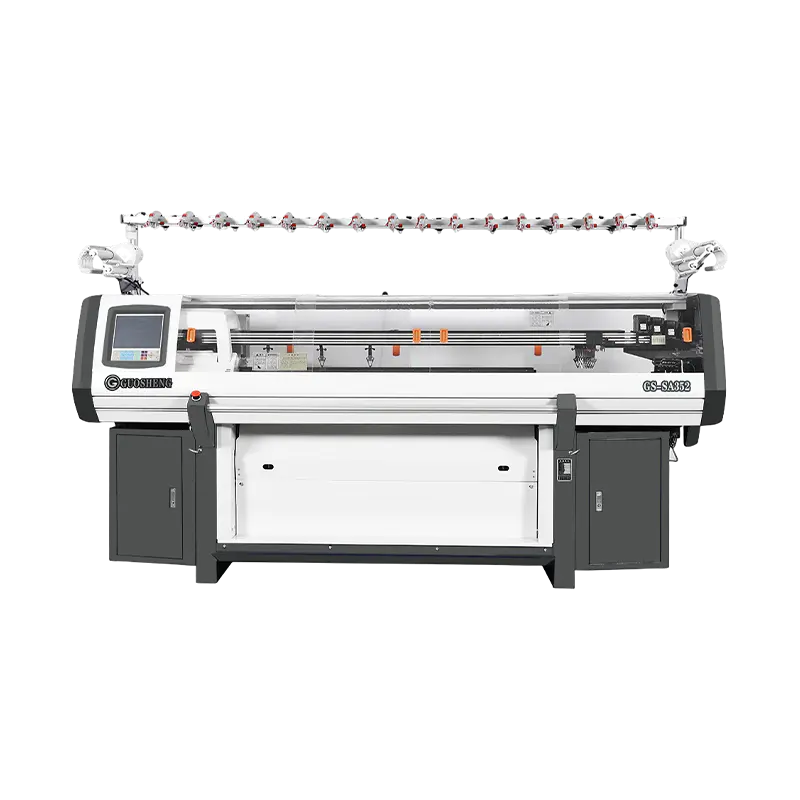
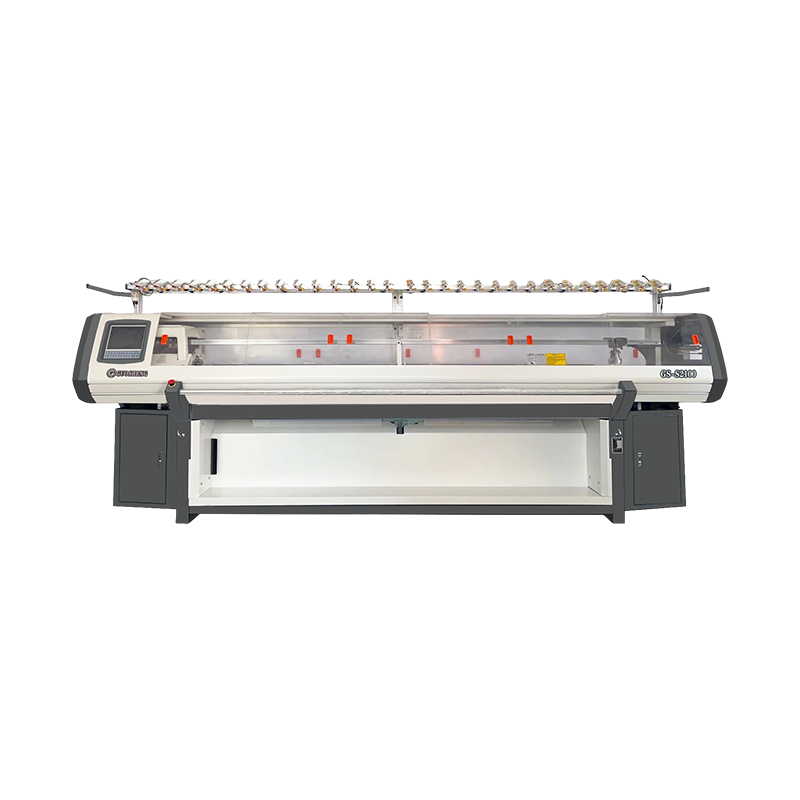
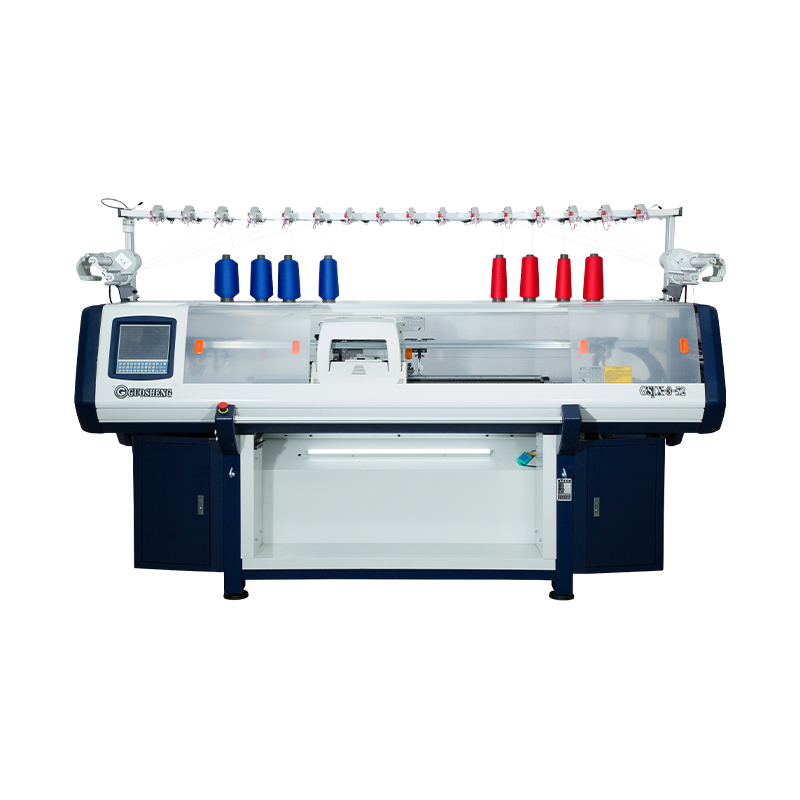
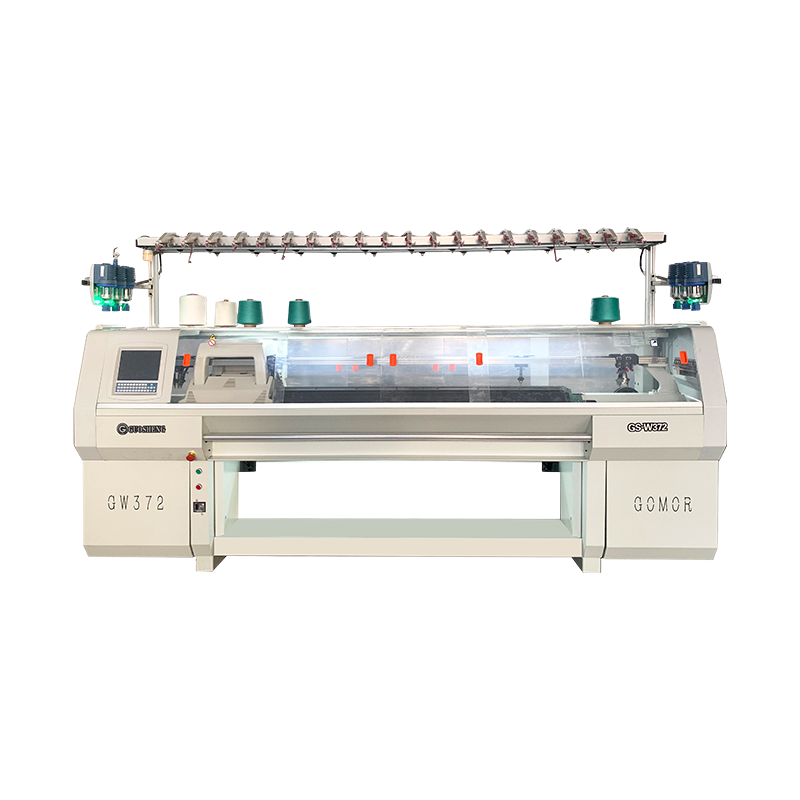
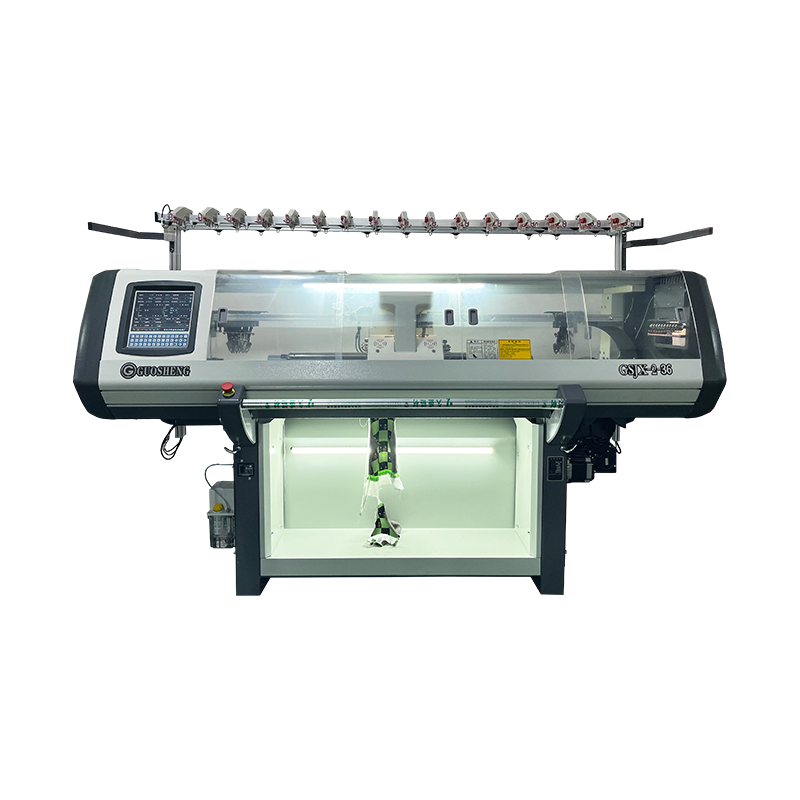
GS-SA352C 52-Inch Three System Intelligent Yarn Feeder Sweater Knitting Machine
3. Competitive Advantages Over Conventional Knitting Machines
3.1 More Efficient Complex Pattern Production
Many conventional flat knitting machines can perform intarsia, jacquard, transfer, and tuck operations, but the practical speed and efficiency of these functions can vary significantly. A machine may technically support a function while still requiring many empty carriage passes, manual yarn handling steps, or long feeder repositioning movements.
The GS-SA352C is designed to improve the efficiency of these operations through the combination of independent yarn feeders, a three-system carriage, and computerized needle selection. The machine can coordinate multiple yarn feeders with the selected needles while reducing unnecessary movements. This gives the operator a better platform for producing complex color blocks, engineered patterns, decorative motifs, and multi-structure fabrics.
3.2 Higher Utilization of the Carriage
The three-system platform allows more knitting actions to be completed in a single carriage pass. The carriage uses a 5.2-inch fully motorized cam structure, and each motor provides real-time position feedback. This arrangement supports responsive cam actuation and stable operation across different knitting functions.
Compared with a two-system machine, the three-system configuration can provide greater effective output when the design contains multiple knitting actions. It may reduce the number of carriage passes required for a given section and improve the productivity of complex patterns. The result is not merely a higher nominal specification; it is a more productive relationship between machine movement and actual fabric formation.
3.3 Faster Racking and Reduced Waiting Time
Racking is essential for many knitting structures, including transfer patterns, fashion textures, shaping, and certain jacquard or garment construction processes. In a conventional single-racking arrangement, the front and back needle beds may need to move sequentially. The carriage can be forced to wait while the beds complete their movement.
The GS-SA352C uses a double racking design that allows the front and back needle beds to operate simultaneously. This reduces carriage waiting time and improves the overall continuity of knitting. The available racking range is within two inches, and the racking system is controlled by an AC servo motor with fine adjustment capability.
The specified racking speed improvement is approximately 50% compared with traditional designs. The benefit is especially meaningful in patterns that require frequent racking actions. Faster racking can shorten cycle time, improve output per shift, and reduce the productivity penalty associated with intricate fabric structures.
3.4 Wider Product Development Possibilities
A machine that supports only a limited range of gauges or widths may force a factory to purchase different equipment for different product families. The GS-SA352C offers twelve gauge options: 3G, 3.5G, 5G, 6G, 7G, 8G, 9G, 10G, 12G, 13G, 14G, and 16G.
Coarse gauges can be used for heavyweight sweaters, thick accessories, textured fabrics, and chunky fashion items. Medium gauges are suitable for many conventional sweaters and knitwear products. Fine gauges can support lightweight fashion garments and more detailed fabric surfaces. The wide gauge range allows a manufacturer to select the appropriate machine configuration for its target product area.
Available knitting widths include 46, 52, 60, 80, and 100 inches. The 52-inch format is suitable for a broad selection of sweater production requirements, while the larger configurations may support oversized garments, wide panels, blankets, home textile products, and special industrial knitted materials. This range gives factories the option to develop a machine fleet around different production objectives rather than being restricted to one standard width.
4. Double Racking Design and Fabric Construction
The double racking mechanism is more than a speed-enhancement feature. It also supports the production of structures that depend on accurate and repeated needle-bed displacement. Racking changes the relative position of the front and rear needle beds, allowing manufacturers to create transfers, decorative lines, relief effects, shaping details, and other fabric constructions.
When racking is slow or requires frequent carriage stops, complex designs can become expensive to produce. A designer may avoid a visually attractive structure because the required racking sequence would reduce output too severely. By improving bed movement and reducing waiting time, the GS-SA352C can make more complex structures commercially practical.
The AC servo-controlled racking system also contributes to positioning accuracy. Fine adjustment is important when a pattern requires precise alignment between transferred stitches, color regions, and structural details. Accurate racking helps reduce faults such as uneven transfer, distorted motifs, misplaced stitches, or inconsistent fabric geometry.
In production planning, the advantage of faster racking can be considered in terms of both productivity and product value. A simple fabric may not require frequent racking, so the difference may be less visible. However, a premium fashion fabric with repeated transfers and surface effects can place significant demands on the racking system. The GS-SA352C is designed to maintain efficiency in this more demanding production environment.
5. Dynamic Stitch Density Control
Conventional stitch density control often applies a fixed setting across a section of fabric. While this is suitable for many standard products, it limits the ability to vary fabric compactness within a single row. The GS-SA352C adds a dynamic stitch density function controlled by a power motor, allowing multiple density levels to be woven within one row.
The system supports a dynamic density value change of 1 millimeter within a 4-millimeter range, with independent fine adjustment available for both sides of the fabric. This enables the machine to create controlled changes in fabric structure, thickness, surface appearance, and elasticity.
Dynamic density control can be used to develop three-dimensional visual effects, subtle relief patterns, alternating compact and open sections, and localized changes in hand feel. It may also support design solutions where different parts of a fabric require different structural behavior. For example, a garment panel could include a denser area for visual definition and a more relaxed area for softness or flexibility.
This capability provides a competitive advantage in fashion-oriented manufacturing. Standard fixed-density knitting can produce reliable fabrics, but it may require additional processes or more complicated programming to achieve varied surface effects. Dynamic density control brings more of these effects directly into the knitting process.
It can also help reduce the need for separate finishing treatments in some applications. Whether a manufacturer can eliminate a secondary process depends on the product specification, yarn, design, and quality requirements. However, the ability to build variation into the knitted structure creates opportunities for more integrated and efficient product development.
6. Steel Wire No-Waste-Yarn Comb
The GS-SA352C incorporates a steel wire no-waste-yarn comb designed to initiate knitting without traditional waste yarn. In conventional cast-on operations, waste yarn may be used to establish the initial knitting condition before the actual product yarn is introduced. That waste yarn must later be removed or manually managed.
By beginning the knitting process without waste yarn, the machine can reduce the consumption of auxiliary material and shorten the time required to prepare each piece. The benefit becomes more significant in production runs involving many individual components, small garment panels, collars, cuffs, or products that are automatically separated after completion.
The no-waste-yarn system works together with the scissor-and-clamp mechanism. The left and right scissors can operate synchronously or separately according to programmed instructions. After a knitted piece is completed, the fabric can drop automatically, reducing the need for an operator to pull waste yarn between pieces.
Material savings are only one part of the benefit. Removing waste yarn from the workflow can reduce manual handling, simplify production preparation, and improve operator productivity. If one operator can supervise more machines, the factory may achieve better labor utilization without compromising process control.
Reduced waste also supports more responsible material management. Yarn prices vary by fiber type, color, and quality, and premium yarns can make waste especially costly. Eliminating unnecessary auxiliary yarn helps manufacturers control direct material cost while improving the cleanliness and organization of the production process.
7. Three-System Fully Motorized Cam Platform
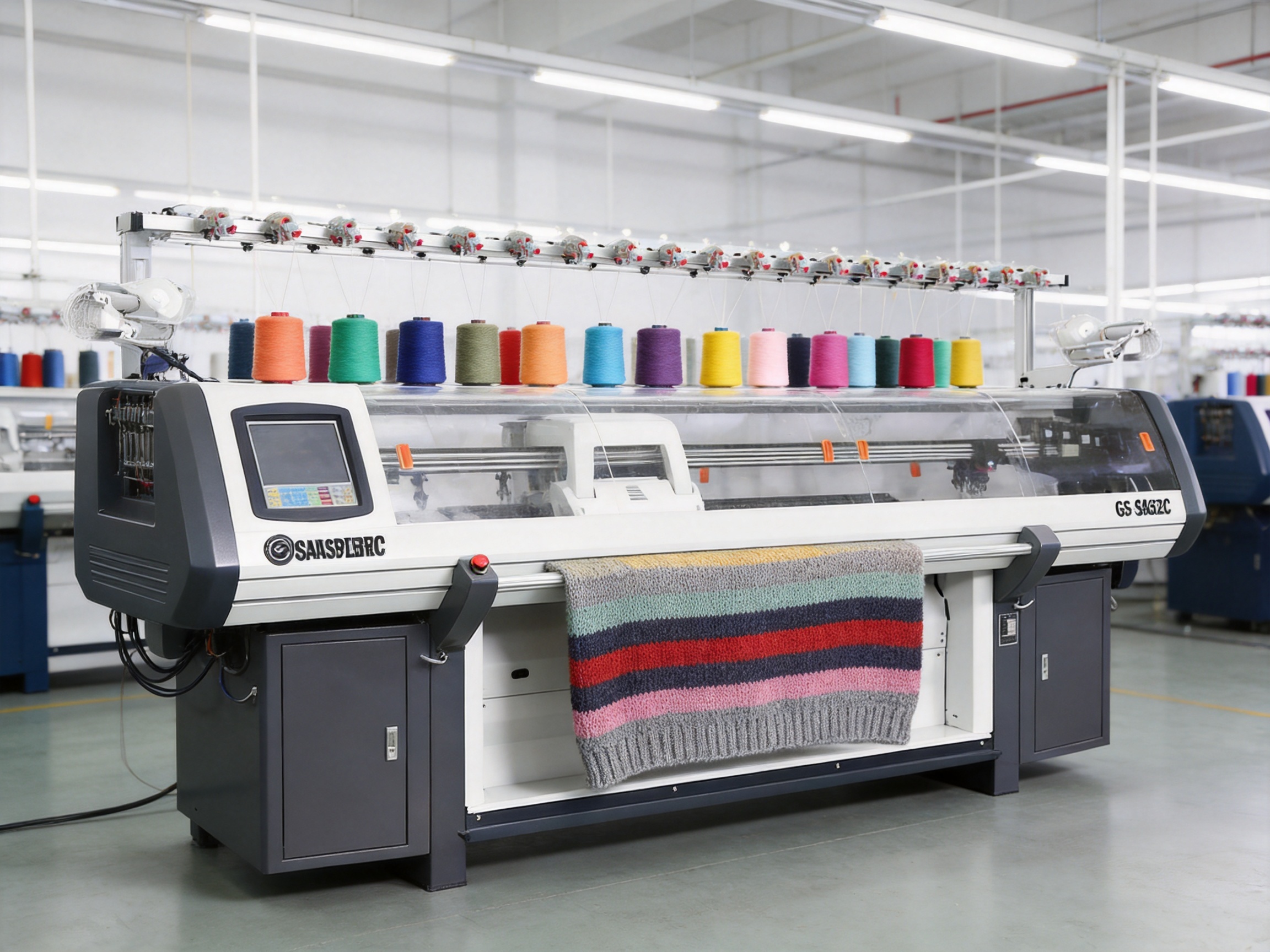
The machine uses a three-system, 5.2-inch small carriage with a fully motorized cam. The cam structure has been optimized for different knitting actions, and the position of each motor can be monitored through real-time feedback. This provides a responsive operating foundation for knitting, transfer, tuck, miss, and other programmed functions.
A motorized cam system can adjust knitting actions electronically and accurately according to the program. Compared with mechanical systems that rely more heavily on fixed physical arrangements, a motorized platform can provide greater flexibility in pattern execution and easier parameter management through the control interface.
The small carriage design helps reduce the moving mass associated with each pass. When combined with a servo-driven synchronous belt transmission, it supports smooth and responsive operation. The maximum specified speed is 1.4 meters per second. Actual operating speed may vary according to gauge, yarn type, stitch structure, carriage action, pattern complexity, and safety settings.
The three knitting systems contribute to effective output by allowing several actions to be completed during one pass. This is especially useful when a program contains sequences of knitting, transfer, tuck, or miss operations. The machine can therefore achieve higher practical productivity than a comparable double-system model in suitable applications.
8. Gauge and Width Selection
| Specification | Available Options or Performance | Production Significance |
| Gauge | 3G, 3.5G, 5G, 6G, 7G, 8G, 9G, 10G, 12G, 13G, 14G, 16G | Supports coarse, medium, and fine knitted products |
| Knitting system | Three systems, single carriage | Increases knitting actions per carriage pass |
| Knitting width | 46, 52, 60, 80, and 100 inches | Supports standard panels, oversized products, and wide knitted materials |
| Maximum knitting speed | Up to 1.4 meters per second | Provides a high-speed platform for suitable production programs |
| Yarn feeder | 16 independently servo-driven intelligent yarn feeders | Improves feeder positioning and complex multi-color knitting efficiency |
| Racking | AC servo-controlled, within 2 inches, with fine adjustment | Supports accurate transfer and textured fabric construction |
| Stitch density | 128 selectable levels, adjustable range from 0 to 650 | Allows detailed fabric compactness control |
| Take-down roller | 128 selectable levels, adjustable range from 0 to 100 | Supports programmed fabric tension and take-down management |
| Control memory | 256 MB with USB input | Stores a substantial quantity of design files and production parameters |
| Power supply | 220V, single-phase, with power-off memory | Protects production data and supports stable restart after interruption |
The availability of multiple gauges allows manufacturers to plan a more versatile machine fleet. A coarse-gauge machine configuration may be selected for thick yarns and structured garments, while fine-gauge versions can be used for lightweight products and detailed patterns. The 52-inch width is particularly useful for general sweater production, but the broader platform also allows the same product family to be adapted for wider or narrower applications.
9. Computerized Control and Production Management
The GS-SA352C uses an LCD control system with USB input and 256 MB of memory. The interface is designed to display operating conditions and allow production parameters to be adjusted while the machine is running. The system supports Chinese, English, and other language versions, which is valuable for international users and multinational production teams.
Real-time parameter adjustment can help operators respond to changes in yarn behavior, fabric tension, stitch formation, or pattern requirements. Instead of stopping the entire production sequence for every small adjustment, the operator can make controlled changes through the machine interface when the program permits it.
The system can display operating information and provide access to monitoring menus. This supports more direct supervision of stitch density, take-down settings, racking parameters, and other production conditions. A visual control environment can also make training easier because operators can work with clearly organized parameters rather than relying only on mechanical adjustments.
USB input simplifies the transfer of design files and production programs. The available memory allows many files to be stored within the machine system, reducing the need to reload commonly used programs repeatedly. File organization, naming, backup, and version control should still be managed carefully by the factory to avoid production errors.
Power-off memory is another practical feature. Unexpected power interruptions can create operational and data risks. A memory function helps preserve production information and supports a more controlled recovery process. The exact restart procedure should follow the factory’s operating instructions, but retaining machine data can reduce downtime and the possibility of repeating an entire production section.
10. Stitch Density and Take-Down Precision
Stitch density is controlled by a stepping motor and provides 128 selectable sections across an adjustable range of 0 to 650. This level of adjustment supports detailed control of fabric compactness, appearance, elasticity, and weight. Different yarns and structures often require different density settings, and a wide adjustment range helps operators optimize the machine for each product.
The take-down roller is also controlled by programmed instructions through a stepping motor. It provides 128 selectable levels across an adjustable range from 0 to 100. Take-down control is essential because the fabric must be pulled away from the needle beds at a suitable rate and tension. An incorrect setting can cause loose loops, tight fabric, uneven rows, distortion, or difficulty during knitting.
Coordinating stitch density and take-down is especially important for advanced patterns. A change in density may affect fabric formation and tension, while a change in take-down may influence loop size and fabric stability. The computerized system allows these parameters to be managed in relation to the program instead of treating them as isolated manual adjustments.
For production engineers, the combination of fine stitch selection and programmed take-down creates a stronger foundation for repeatable quality. Operators can record successful settings for specific yarns, gauges, and designs, helping the factory build a practical process database over time.
11. Comprehensive Protection and Operational Safety
Automated protection functions help prevent defects and reduce the risk of equipment damage. The machine is designed to prompt and stop automatically when it detects conditions such as yarn breakage, float yarn, rewinding faults, end of knitting, racking problems, needle breakage, needle collision, or safety door events.
Yarn breakage detection is important because continued knitting without proper yarn supply can create large defects and waste production time. Float yarn detection helps identify a condition in which the yarn is not being knitted correctly. Rewinding and end-of-knitting alerts assist with process supervision, while racking and needle-related protection helps prevent mechanical problems caused by abnormal movement or interference.
Safety door protection is essential for operator safety. The machine should not continue operating when the access condition is unsafe. Operators must still follow appropriate procedures for threading, cleaning, inspection, maintenance, and troubleshooting. Automatic protection is a support function, not a replacement for safe working practices.
Early detection can also improve maintenance planning. If a machine repeatedly reports a similar fault, technicians can investigate yarn quality, feeder alignment, needle condition, sensor performance, lubrication, or program settings before the problem develops into a larger production interruption.
12. Manufacturing Strengths of the Producer
Guosheng Wonderful Intelligent Technology (Changshu) Co., Ltd. is a specialized manufacturer focused on the research and development, production, and global supply of computerized knitting machinery. Its product portfolio includes computerized flat knitting machines, collar knitting machines, and flyknit shoe upper knitting machines.
The company is located in Changshu, Jiangsu Province, an area recognized as an important textile machinery manufacturing cluster in China. Access to an established industrial ecosystem can support the sourcing of mechanical parts, electronic components, machining services, control technology, and textile production expertise. It also creates an environment in which engineering teams can interact with suppliers and application specialists during product development.
The GS-SA352C reflects a manufacturing approach that integrates mechanical engineering with electronic control. The machine depends on accurate needle-bed construction, reliable servo motors, stable synchronous belt transmission, precise encoder feedback, controlled cam movement, and coordinated software. A high-performance knitting machine cannot be created by optimizing only one of these elements. The production process must maintain compatibility between structural components, motors, sensors, control boards, and operating software.
The company’s focus on research and development is particularly relevant to intelligent yarn feeding and advanced control. Independent yarn feeder movement requires coordinated design across the feeder mechanism, servo drive, encoder feedback, control logic, and pattern programming. The same principle applies to dynamic stitch density and double racking. These are system-level technologies that require testing and calibration as complete assemblies.
Manufacturing strength also includes the ability to adapt machines to different gauges and widths. A broad configuration range requires controlled engineering changes, appropriate needle-bed specifications, compatible cam arrangements, and carefully matched software parameters. The availability of twelve gauges and five widths demonstrates that the platform has been developed as a flexible product family rather than a single fixed machine format.
For international customers, global supply capability is also important. A knitting machine is a long-term production asset, so the supplier must support communication, configuration selection, technical documentation, installation planning, operator training, and after-sales coordination. Guosheng’s international market orientation allows the company to work with manufacturers in garment, footwear, accessory, and other knitted textile sectors.
13. Application Areas
13.1 Sweaters and Fashion Knitwear
The primary application is sweater and fashion knitwear production. The machine can support plain structures, transfer patterns, jacquard, intarsia, tuck effects, miss structures, and combinations of these techniques. Dynamic stitch density further expands the ability to create textured and three-dimensional surfaces.
13.2 Multi-Color Garments
The intelligent yarn feeder system is particularly suitable for garments with multiple color areas. Independent feeder movement can reduce empty carriage passes and support more efficient color management. This may improve the commercial viability of small-batch fashion orders and seasonal collections.
13.3 Accessories
Depending on the gauge and width configuration, the machine can produce knitted accessories and components such as scarves, cuffs, collars, panels, and other shaped pieces. The no-waste-yarn comb and automatic fabric separation can be especially useful when many small pieces are produced in sequence.
13.4 Oversized Garments and Wide Knitted Materials
The 80-inch and 100-inch configurations can be considered for oversized garment panels, wide home textile products, blankets, and selected industrial knitted materials. The appropriate configuration depends on yarn, structure, product size, and required finishing process.
13.5 Development and Sampling
Because the machine supports multiple gauges, widths, structures, yarn feeders, and density settings, it can also serve product development departments. Designers and engineers can evaluate new patterns, yarn combinations, and surface effects before committing to larger production runs.
14. Improving Factory Productivity with the Machine
The full benefits of the GS-SA352C are achieved when the machine is integrated into a disciplined production system. Factories should organize yarn preparation, design file management, machine setup, first-piece inspection, routine cleaning, needle checks, and preventive maintenance as connected activities.
Before production begins, the operator should verify yarn quality, cone unwinding, feeder threading, needle condition, program selection, gauge compatibility, and take-down settings. Complex patterns should be tested with an initial sample so that stitch density, racking, feeder positions, and color changes can be confirmed before a full batch is started.
Operators should also maintain records of successful settings. A digital or paper production record can include yarn specifications, gauge, stitch density, take-down values, racking parameters, feeder assignments, carriage speed, and known quality points. This reduces setup time when the same product returns to production and helps transfer knowledge between shifts.
Maintenance should include regular inspection of needles, yarn feeders, sensors, cam mechanisms, belts, racking components, take-down rollers, and safety devices. Clean working conditions are important because lint, dust, and yarn fragments can affect moving mechanisms and sensors. Preventive maintenance is generally more economical than waiting for a failure that causes extended downtime.
Production managers should evaluate productivity using multiple indicators rather than speed alone. Useful measurements include pieces per shift, machine utilization, first-pass quality, yarn waste, operator workload, pattern changeover time, downtime, and maintenance frequency. The machine’s intelligent features are most valuable when these indicators are monitored systematically.
15. Economic Benefits and Return on Investment
The financial value of the GS-SA352C comes from several sources. Higher effective output can increase production capacity without requiring the same number of additional machines. Reduced empty carriage movement can shorten cycle times for suitable complex patterns. Faster racking can improve the productivity of designs that require frequent bed movement.
The independent yarn feeder system may also help a factory accept more sophisticated orders. Premium fashion products often generate more value than basic standardized goods, although they may require greater technical capability. By supporting complex pattern structures and multi-color production, the machine can help manufacturers compete on product differentiation instead of price alone.
Material savings are supported by the steel wire no-waste-yarn comb and programmed scissor-and-clamp system. The exact savings depend on product size, production quantity, yarn value, and operating practice. Even a small reduction per piece can become meaningful across large production volumes.
Labor efficiency is another factor. Automatic fabric separation and reduced manual waste-yarn handling can decrease repetitive work. The ability for one operator to supervise more machines depends on factory layout, product complexity, operator skill, and safety requirements, but automation can create opportunities to improve staffing efficiency.
Return on investment should be calculated using realistic production data. Buyers should consider the target product mix, expected machine utilization, local labor cost, yarn cost, maintenance requirements, energy consumption, training needs, and sales value of the products. A machine with more advanced capabilities is most economical when the factory actively uses those capabilities.
16. Quality Control Considerations
High-quality output depends on both machine precision and process discipline. The machine provides accurate control functions, but yarn condition, needle selection, program quality, operator settings, and environmental conditions also influence the final product.
Yarn should be checked for consistent count, winding quality, moisture condition, strength, and unwinding behavior. Inconsistent yarn can cause tension variation, needle faults, color differences, and surface defects. For multi-color products, yarn lots should be managed carefully to maintain consistent appearance.
Needles and transfer elements should be inspected regularly. Worn or damaged needles can produce dropped stitches, uneven loops, holes, and pattern distortion. Since the GS-SA352C supports complex structures, small mechanical problems may become more visible in transfer, jacquard, or intarsia designs.
First-piece inspection should include dimensions, stitch appearance, pattern alignment, fabric weight, elasticity, color placement, edge quality, and joining requirements. When dynamic density is used, the transition between density levels should be checked for smoothness and visual consistency.
Factories should also establish procedures for handling alarms. An alarm should not simply be cleared without identifying the cause. Repeated yarn breakage, float yarn, racking faults, or needle collisions may indicate a deeper issue in yarn preparation, machine condition, or program design.
17. Why the 52-Inch Configuration Is Significant
The 52-inch configuration provides a practical working width for many sweater and garment applications. It offers more usable width than narrow formats while remaining suitable for factories that do not require the floor space or capacity of the widest configurations.
For standard garment panels, the width can support efficient layout planning and reduce the need to divide certain designs into excessive sections. For larger products, the machine may help accommodate wider panels or more generous garment proportions. The final suitability depends on the specific garment dimensions, shaping requirements, and knitting method.
A 52-inch machine can also be a useful central platform in a mixed production fleet. Narrower machines may be assigned to collars, cuffs, or smaller components, while the 52-inch GS-SA352C handles sweater panels and larger structures. Wider machines can be reserved for oversized garments or home textile applications. This allows a factory to match machine capacity to product requirements.
18. Purchasing and Configuration Guidance
When selecting a GS-SA352C configuration, buyers should begin with the intended product range rather than choosing the widest gauge or width automatically. Yarn type, garment weight, fabric structure, production volume, and market requirements should determine the final specification.
Gauge selection should reflect the yarn and fabric target. Coarse gauges are not simply faster or more powerful than fine gauges; they serve different product needs. Fine gauges may be preferred for lightweight garments and detailed patterns, while coarse gauges may be more appropriate for thick yarns and heavy textures.
The required knitting width should be based on the largest regular product and the desired production layout. A wider machine can improve flexibility for large products, but it may require more floor space and different planning. The 52-inch option is a balanced choice for many general sweater applications.
Buyers should discuss the planned use of intarsia, partial jacquard, multi-color intarsia, transfer, tuck, miss, dynamic density, and reverse yarn addition with the supplier. This ensures that the selected machine configuration, programming workflow, and operator training match the factory’s intended production.
Training should cover machine operation, yarn feeder setup, pattern file management, stitch density adjustment, take-down control, racking operation, alarm handling, cleaning, and basic troubleshooting. Proper training improves utilization and helps protect the machine investment.
19. Q&A
Q1: What is the main difference between the GS-SA352C and a conventional sweater knitting machine?
The main difference is the integration of 16 independently servo-driven intelligent yarn feeders with a three-system knitting platform. The feeders can move horizontally with greater independence from the carriage, helping the machine handle complex multi-color patterns with fewer unnecessary carriage movements. The machine also adds double racking, dynamic stitch density, and no-waste-yarn starting technology.
Q2: What types of patterns can the machine produce?
The machine supports intarsia, partial jacquard, multi-color intarsia, reverse yarn addition, transfer, tuck, miss, jacquard, and needle transfer. The exact result depends on the program, yarn, gauge, and operator settings.
Q3: Is the machine suitable for small-batch fashion production?
Yes. Independent yarn feeder control, computerized pattern management, multiple gauges, and dynamic fabric adjustment make the machine suitable for varied designs and shorter production runs. Factories can use its flexibility to develop differentiated fashion products instead of relying only on repetitive basic styles.
Q4: How does the intelligent yarn feeder improve efficiency?
Each of the 16 yarn feeders is controlled by its own servo motor and encoder feedback system. This allows feeders to move to programmed positions more independently and accurately, reducing empty carriage passes and improving the efficiency of complex color and yarn arrangements.
Q5: What is the benefit of the double racking design?
The front and rear needle beds can operate simultaneously, reducing carriage waiting time. The design provides a racking range within two inches and can improve racking speed by approximately 50% compared with traditional single-racking arrangements.
Q6: What does dynamic stitch density do?
Dynamic stitch density allows different density levels to be knitted within a single row. It can create changes in surface texture, compactness, thickness, and visual relief. Both sides of the fabric can be fine-tuned independently within the specified adjustment range.
Q7: Does the machine require waste yarn during cast-on?
The steel wire no-waste-yarn comb is designed to begin knitting without traditional waste yarn. Together with the scissor-and-clamp system, it can reduce auxiliary yarn consumption and manual removal work between pieces.
Q8: Which gauges are available?
The available gauge options are 3G, 3.5G, 5G, 6G, 7G, 8G, 9G, 10G, 12G, 13G, 14G, and 16G.
Q9: Which knitting widths are available?
The platform is available in 46-inch, 52-inch, 60-inch, 80-inch, and 100-inch knitting widths. The 52-inch configuration is designed for a broad range of sweater and garment applications.
Q10: What is the maximum knitting speed?
The specified maximum knitting speed is 1.4 meters per second. Actual speed should be selected according to the yarn, gauge, pattern complexity, stitch density, and quality requirements.
Q11: How does the protection system work?
The machine can automatically prompt and stop when it detects yarn breakage, float yarn, rewinding faults, end of knitting, racking problems, needle breakage, needle collision, or safety door events. Operators should investigate the cause of each alarm before restarting production.
Q12: What type of power supply does the machine use?
The machine operates on 220V single-phase power and includes a power-off memory function to help preserve production information during unexpected interruptions.
Q13: Is the machine suitable for oversized products?
The platform includes 80-inch and 100-inch width options that can support oversized garments, wide home textile products, blankets, and specialty knitted materials. The appropriate width should be selected according to the planned product dimensions and production process.
Q14: What should a factory consider before purchasing?
The factory should evaluate yarn types, target gauges, product widths, pattern complexity, expected production volume, available operator skills, floor space, power requirements, maintenance planning, and the level of technical support required. The most suitable configuration is the one that matches the actual product strategy.
20. Conclusion
The GS-SA352C 52-Inch Three-System Intelligent Yarn Feeder Sweater Knitting Machine represents a significant step beyond conventional carriage-linked flat knitting equipment. Its 16 independent servo-driven yarn feeders provide greater freedom for multi-color and complex pattern production. Its three-system fully motorized cam platform improves knitting capability per carriage pass. Double racking reduces needle-bed movement time, while dynamic stitch density opens new possibilities for textured and three-dimensional fabrics.
The steel wire no-waste-yarn comb and programmable scissor-and-clamp system address practical production concerns by reducing waste, labor, and manual handling. Broad gauge and width options make the platform suitable for different product categories, from chunky sweaters and accessories to fine fashion garments, oversized knitwear, home textile products, and selected specialty materials.
Behind these functions is an integrated manufacturing approach that combines mechanical construction, servo technology, encoder feedback, computerized control, pattern programming, and protection systems. Guosheng Wonderful Intelligent Technology (Changshu) Co., Ltd. brings experience in computerized flat knitting machinery, collar knitting machinery, and flyknit shoe upper knitting machinery, supported by its location in the textile machinery manufacturing environment of Jiangsu Province.
For knitwear manufacturers seeking higher efficiency, greater pattern flexibility, reduced yarn waste, and stronger product differentiation, the GS-SA352C offers a comprehensive production platform. Its greatest value is realized when the factory uses its intelligent functions strategically: selecting appropriate gauges and widths, standardizing production settings, training operators, maintaining equipment carefully, and developing products that take full advantage of its advanced knitting capabilities.
References
1. Product specification and technical information for the GS-SA352C Three-System Intelligent Yarn Feeder Sweater Knitting Machine.
2. Manufacturer-provided information on computerized flat knitting machinery, collar knitting machinery, and flyknit shoe upper knitting machinery.
3. Manufacturer-provided descriptions of intelligent yarn feeder control, encoder feedback, double racking, dynamic stitch density, and no-waste-yarn knitting technology.
4. Manufacturer-provided operating specifications for gauge selection, knitting width, stitch density, take-down control, carriage speed, protection systems, and computerized machine control.
5. General technical principles of computerized flat knitting, servo motor control, needle-bed racking, stitch density regulation, and programmed fabric take-down.
Product: GS-SA352C 52-Inch Three System Intelligent Yarn Feeder Sweater Knitting Machine


Ready to Begin?
Product Categories
- Sweater Knitting Machine (Economic SE)
- Sweater Knitting Machine (Full Function S)
- Collar Knitting Machine (Economic CE)(Fabric)
- Collar Knitting Machine (Full-Function C)
- Blanket Knitting Machine(Fabric)
- Shoe Upper Knitting Machine
- Ready To Wear Sweater Knitting Machine
- Ready To Wear Glove Knitting Machine
- Ready To Wear Hat Knitting Machine
- Knee Pad Knitting Machine
- Metal Mesh Knitting Machine
Contact Information
-
 Email: gs@guoshengchina.cn
-
 Phone: +86-0512-52690511
-
 Address: No. 18, Hupu Pujiang Road, Bixi New District, Changshu City, Jiangsu Province, China
QR Code
