


 English
 Español
 русский
 عربى
 中文简体
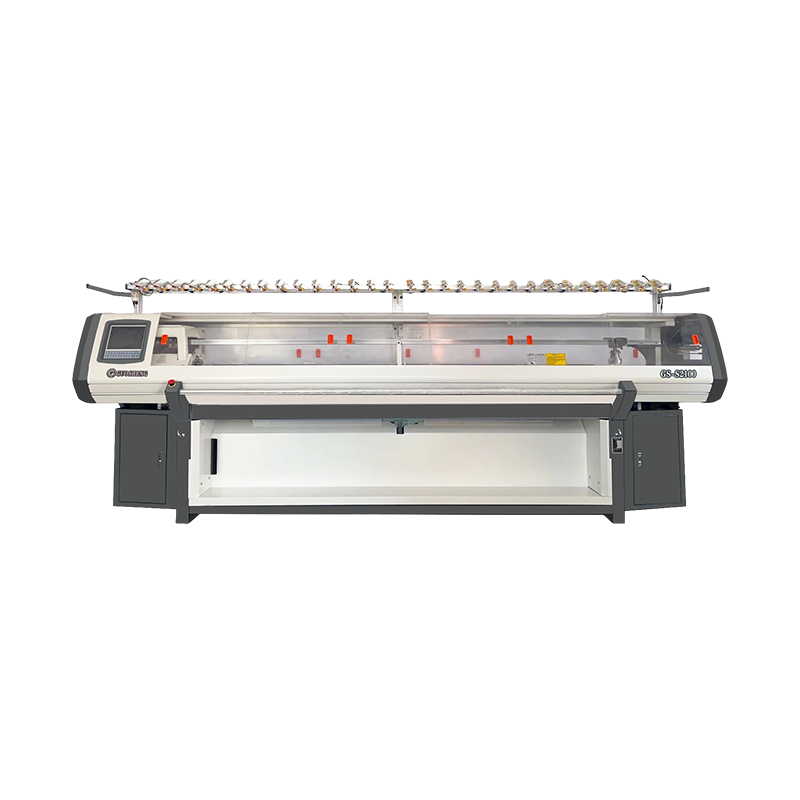
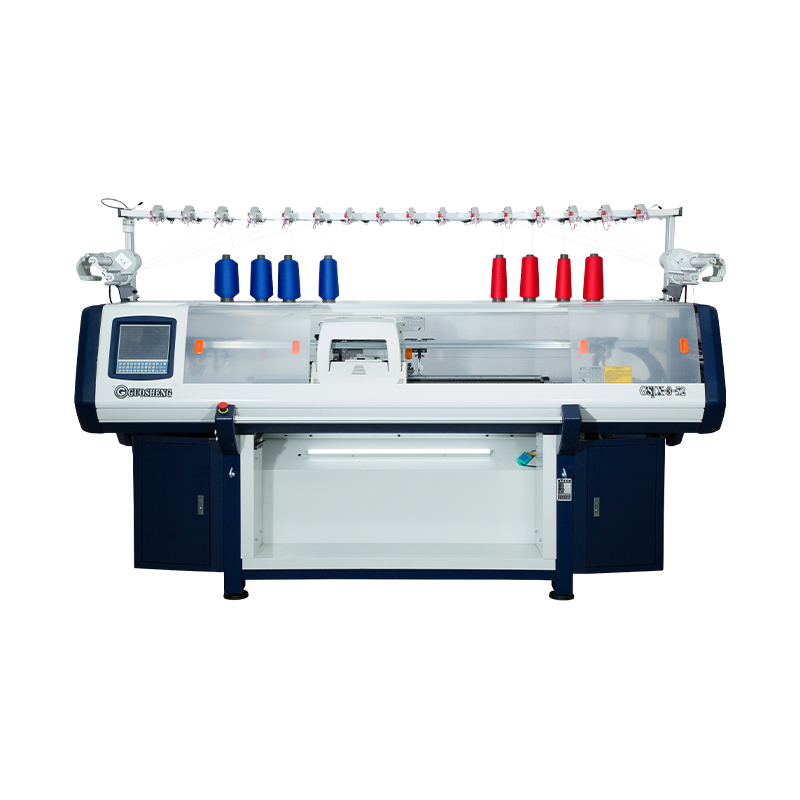
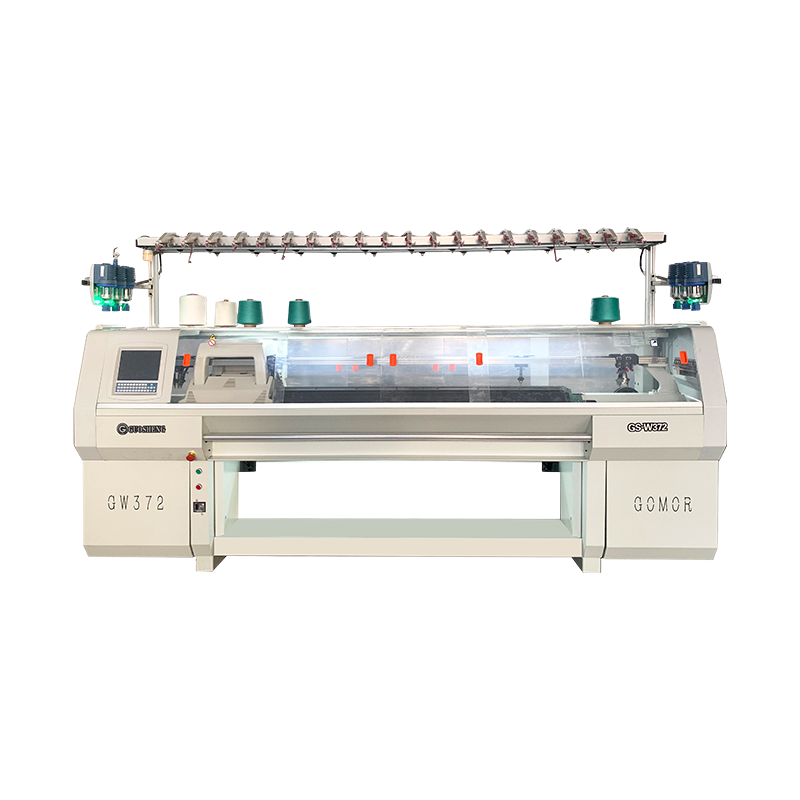
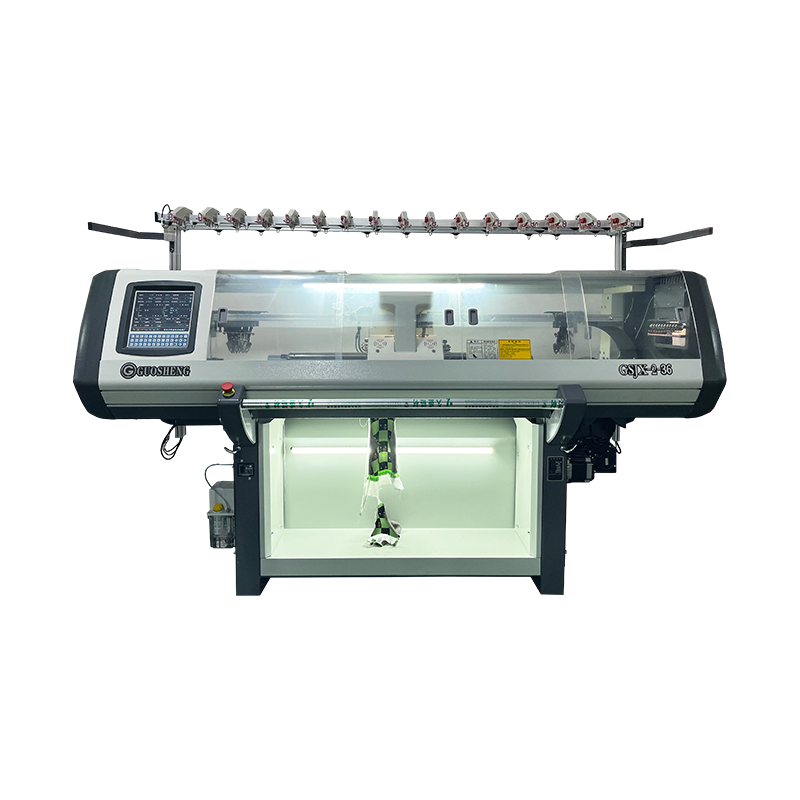

Lin Yuxi — International Product Sales Manager
Computerized Four-System Collar Knitting Machine for High-Efficiency Production
Date:Oct 26, 2026
Content
- 1 Product Overview and Industrial Positioning
- 2 Four-System Architecture and Productivity Advantages
- 3 High-Speed Servo Drive and Compact Carriage Design
- 4 Computerized Control and Electronic Needle Selection
- 5 Knitting Functions and Product Flexibility
- 6 Gauge Options and Material Compatibility
- 7 Precision Yarn Feeding and Intelligent Tension Control
- 8 Stitch Density and Take-Down Control
- 9 Racking and Needle Selection Performance
- 10 Yarn Carrier Configuration
- 11 Protection and Automatic Alarm Functions
- 12 Energy and Electrical Configuration
- 13 Touchscreen Operation and Production Management
- 14 Advantages Compared with Conventional Collar Knitting Equipment
- 15 Manufacturing Strengths and Engineering Capabilities
- 16 Advanced Production Process for Computerized Knitting Machinery
- 17 Quality Control and Reliability Considerations
- 18 Applications in Garment and Textile Manufacturing
- 19 Operational Recommendations
- 20 Technical Specification Summary
- 21 How the Machine Supports Cost Control
- 22 Why the GS-CE440 Is Suited to Large-Scale Production
- 23 Q&A
- 23.1 What is the GS-CE440 designed to produce?
- 23.2 What does the four-system configuration mean?
- 23.3 What is the maximum knitting speed?
- 23.4 Which gauges are available?
- 23.5 Can the machine knit patterned collars?
- 23.6 Which yarn materials can be used?
- 23.7 How does the machine help maintain fabric consistency?
- 23.8 Does the machine provide automatic protection functions?
- 23.9 How much design data can be stored?
- 23.10 Is the control system suitable for international operators?
- 23.11 What is the power requirement?
- 23.12 How does the power-loss memory function help production?
- 23.13 What makes this machine different from a basic collar knitting machine?
- 23.14 What should a buyer consider before selecting a gauge?
- 23.15 Who manufactures the GS-CE440?
- 24 Conclusion
- 25 References
- 26 Product: GS-CE440 4-System Straight Collar Knitting Machine (Economy CE Model)
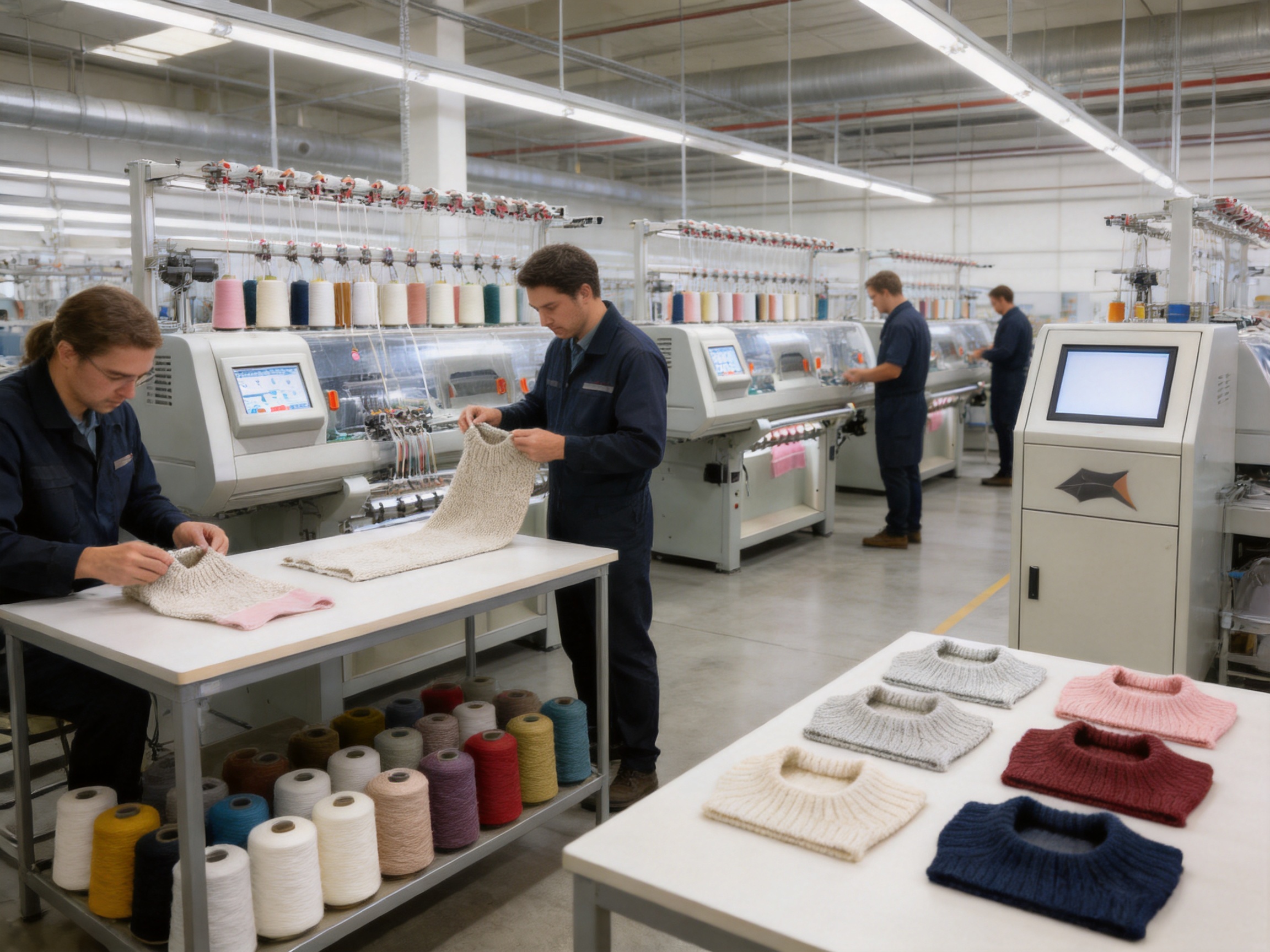
In modern knitwear manufacturing, productivity, repeatable quality, flexible programming, and manageable operating costs are central to commercial success. Collar production is particularly demanding because collars, ribbing, cuffs, waistbands, and other narrow knitted components must maintain consistent dimensions, clean structures, accurate edges, and dependable performance throughout long production runs. The GS-CE440 4-System Straight Collar Knitting Machine is designed to address these requirements through a computerized control platform, a single-carriage four-system configuration, high-speed servo operation, electronic needle selection, and intelligent yarn and take-down management.
Developed for industrial collar and knitted accessory production, the GS-CE440 combines the operating economy of the CE series with a multi-system architecture intended to shorten knitting cycles. Its four knitting systems work synchronously within one carriage, allowing manufacturers to improve machine utilization while reducing unnecessary carriage travel. This structure is especially valuable for factories producing large quantities of collars, ribbing, cuffs, and similar components where cycle time, consistency, and ease of programming directly affect profitability.
The machine is available in gauges from 12G to 20G and provides a 40-inch knitting width. It supports flat knitting, transfer, tuck, and jacquard functions, enabling manufacturers to produce both basic and decorative structures. Its compatibility with wool, cashmere, cotton, acrylic, polyester, viscose, and blended yarns further expands its application range. By combining broad material compatibility with computer-controlled operation, the GS-CE440 can support different product lines without requiring a completely different production platform for every order.
Product Overview and Industrial Positioning
The GS-CE440 belongs to the Economic-Four System Collar Knitting Machine category. The word “economic” in this context refers to the machine’s effort to balance production capability with investment and operating considerations. It is designed for manufacturers that need higher output and intelligent control but also want a practical machine configuration suitable for cost-conscious expansion.
Unlike a basic single-system machine, the GS-CE440 integrates four knitting systems into a single carriage. These systems operate synchronously to help reduce the time required for each knitting cycle. In high-volume production, even a small reduction in carriage travel or idle movement can generate meaningful improvements over an entire shift, week, or production season. The machine therefore addresses one of the most important challenges in collar manufacturing: producing more finished components without proportionally increasing equipment quantity, labor, or floor space.
The machine is intended for straight collar production, but its practical application is broader. Depending on the programmed design, yarn selection, gauge, and finishing requirements, it can be used for knitted collars, ribbed sections, cuffs, narrow accessories, decorative components, and other flat-knitted products. Its transfer, tuck, and jacquard capabilities allow manufacturers to move beyond plain structures and produce components with texture, shaping, patterning, and visual differentiation.
A modern collar production line must also respond quickly to changing orders. Fashion brands, garment factories, and textile suppliers may need several sizes, colors, structures, or patterns within a single production schedule. The GS-CE440 supports this type of flexibility through a visual touchscreen interface, stored design files, adjustable operating parameters, and multi-language control options. These features help operators manage product changes with less dependence on complicated manual intervention.
Four-System Architecture and Productivity Advantages
The defining feature of the GS-CE440 is its economic four-system, single-carriage configuration. A four-system arrangement allows multiple knitting operations to be coordinated within the same carriage movement. This can significantly reduce the time consumed by repeated travel across the needle bed, particularly in continuous production of similar components.
In a conventional lower-system configuration, the carriage may need to make more passes to complete a comparable knitting task. Every additional pass can involve knitting time, reversing time, acceleration, deceleration, and nonproductive movement. The GS-CE440 is designed to reduce these inefficiencies by integrating four synchronized knitting systems. The result is a more compact production cycle and improved utilization of the machine’s working capacity.
The advantage is not limited to nominal speed. Productive output depends on the relationship between knitting speed, carriage movement, setup time, pattern complexity, yarn behavior, and machine availability. A machine that moves quickly but spends excessive time in idle travel may not deliver the same practical output as a machine with a more efficient operating architecture. The GS-CE440 addresses this issue through its combination of four-system knitting, compact carriage design, rapid reversal, and servo-controlled drive technology.
For factories producing large quantities of standard or semi-standard collars, this architecture can improve production planning. More components may be completed within a given shift, making it easier to meet shipment schedules and respond to urgent orders. Higher productivity can also reduce the number of machines required for a given output target, helping manufacturers use factory space more efficiently.
Another benefit is improved equipment utilization. When a machine can complete more operations within each cycle, its working time is used more effectively. This can support a better return on equipment investment, especially in production environments where machines operate for extended hours and orders are repeated over long periods.
The four-system configuration is also relevant to manufacturers that want to increase capacity without immediately expanding their entire workforce. A higher level of automation can reduce the amount of continuous manual intervention required during normal production. Operators can focus more on loading yarn, monitoring machine status, checking quality, managing patterns, and completing routine maintenance rather than repeatedly guiding every knitting operation.
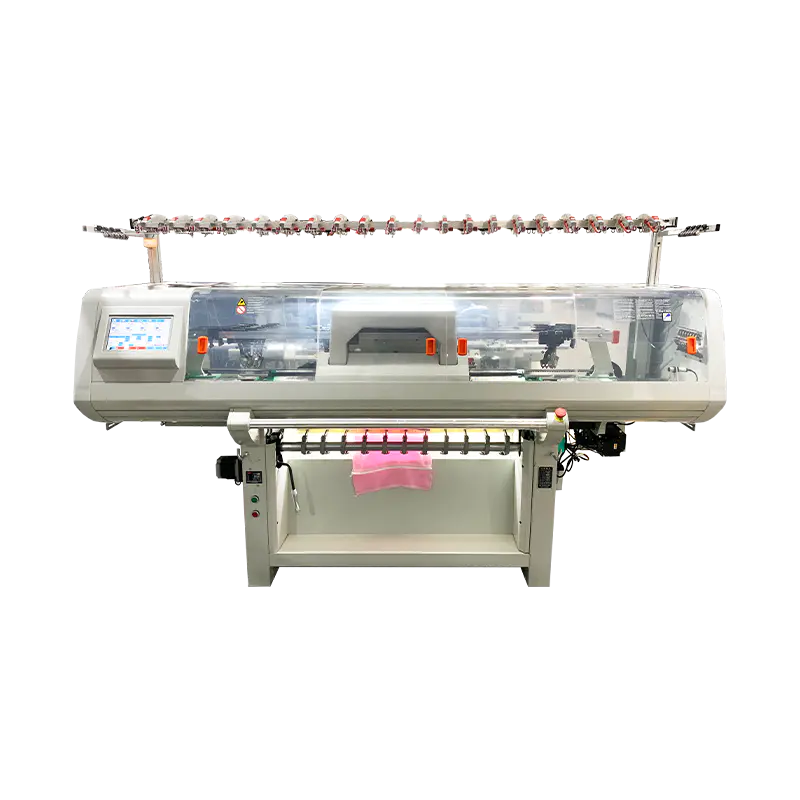
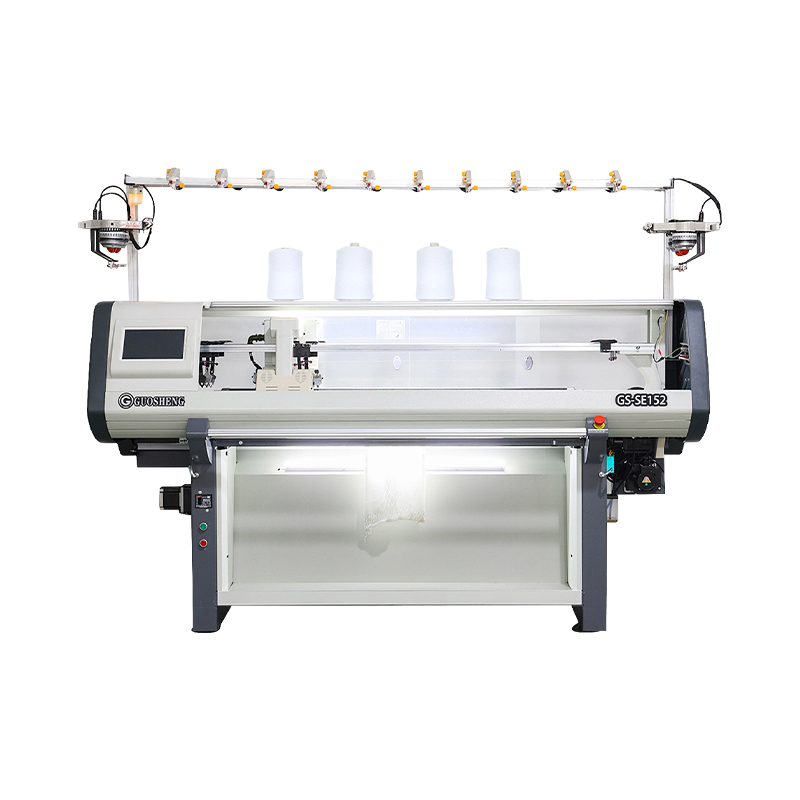
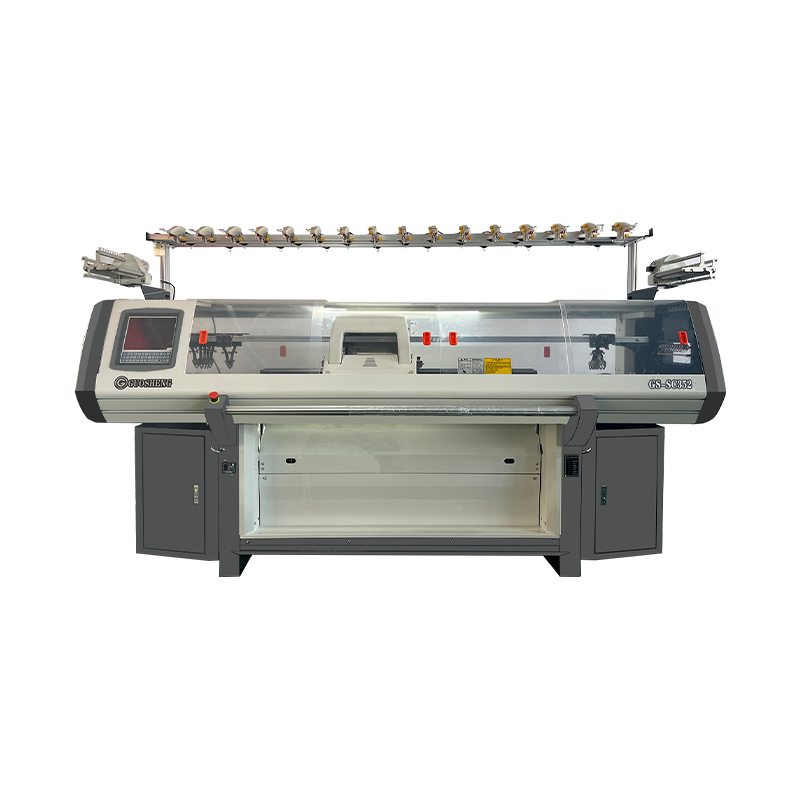
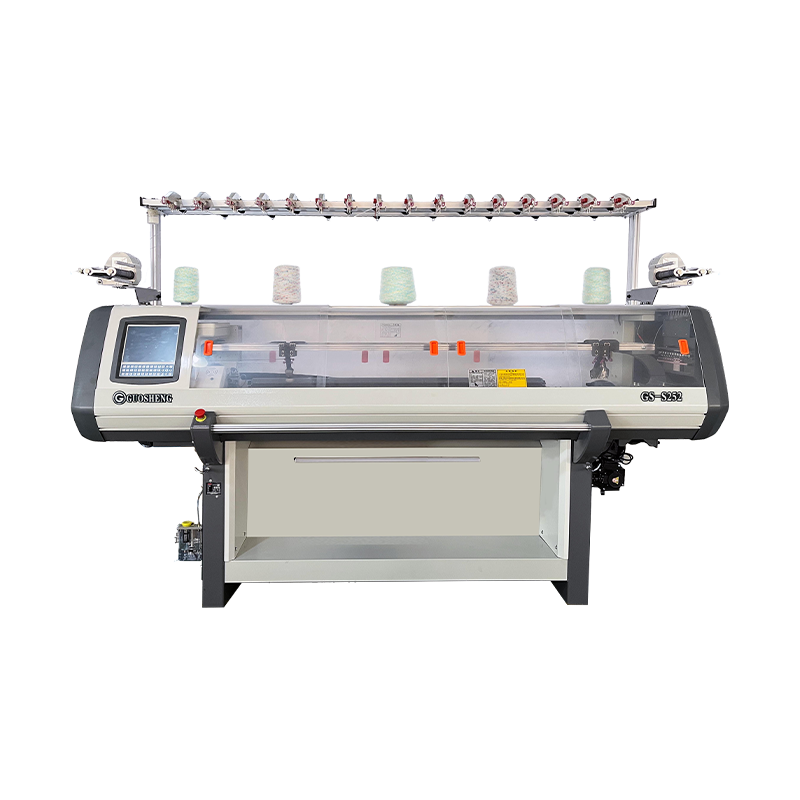
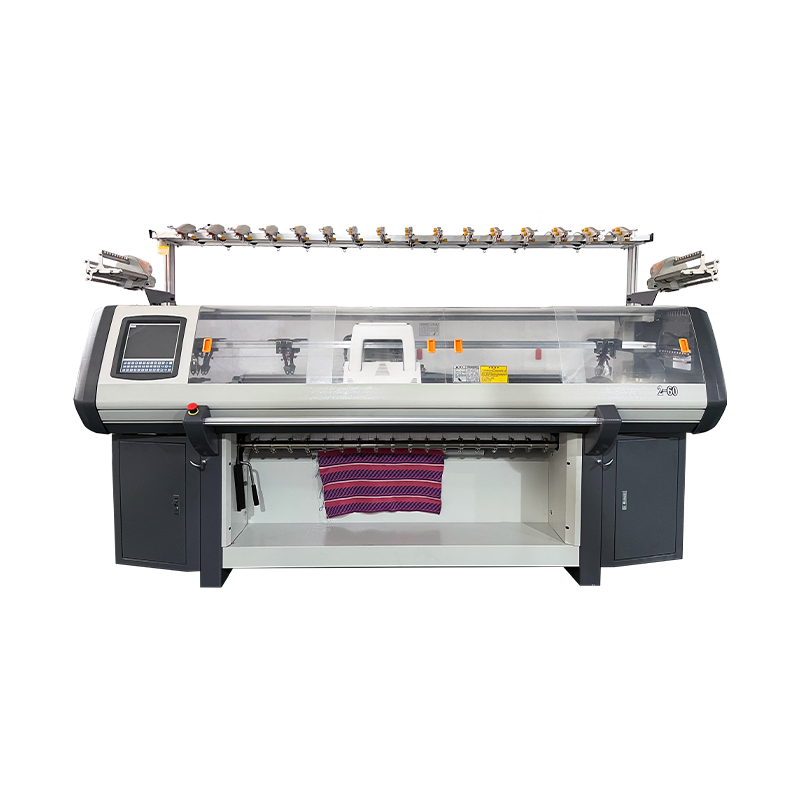
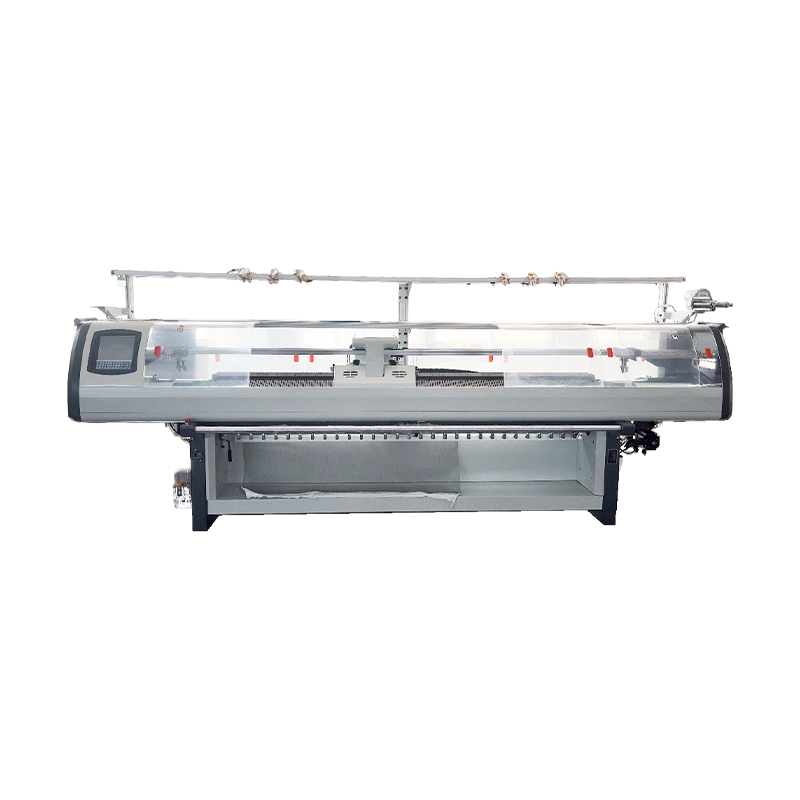
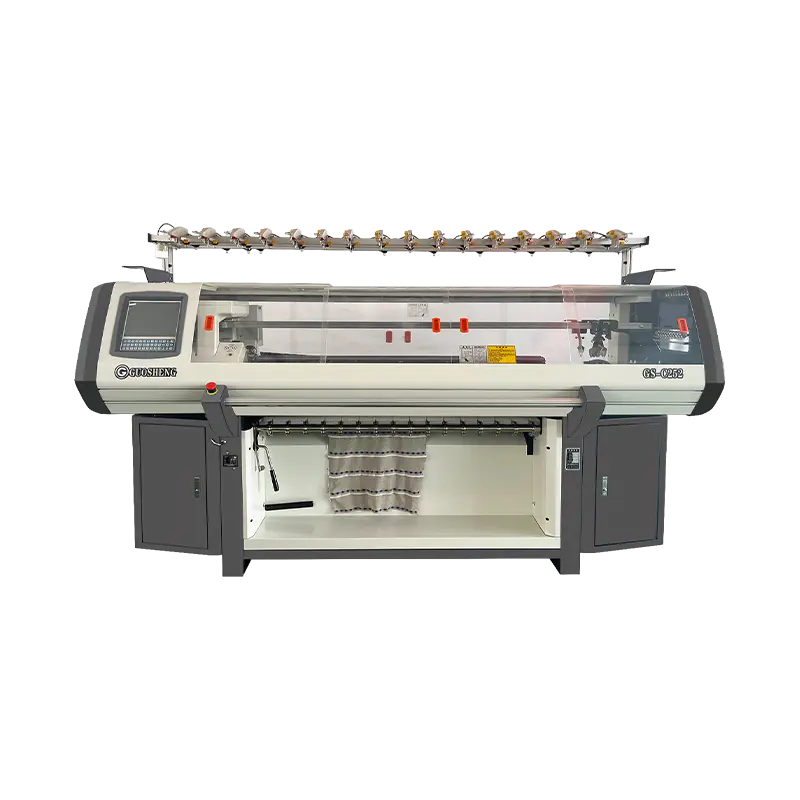
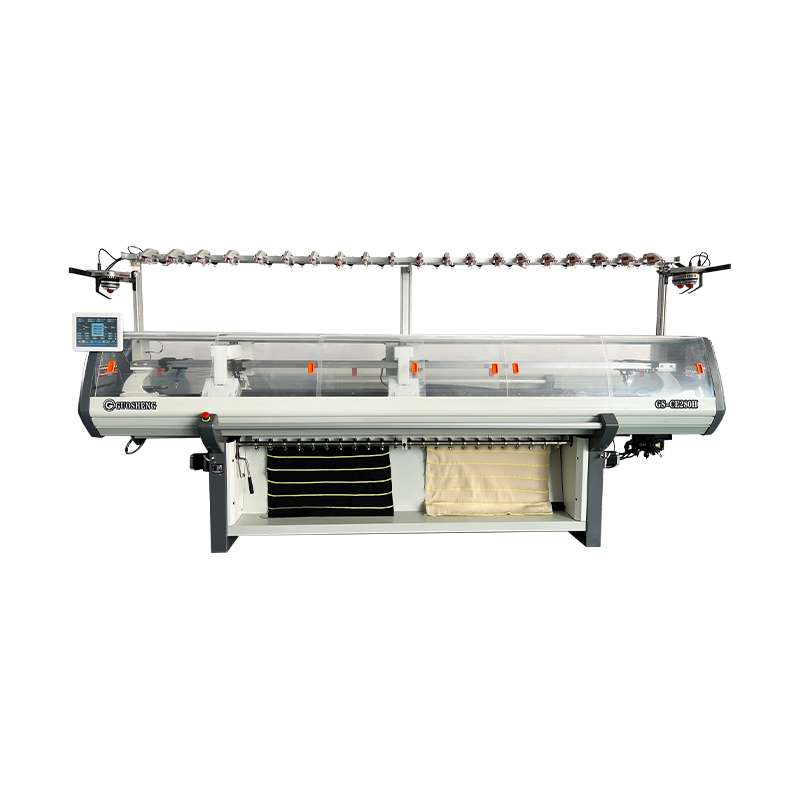
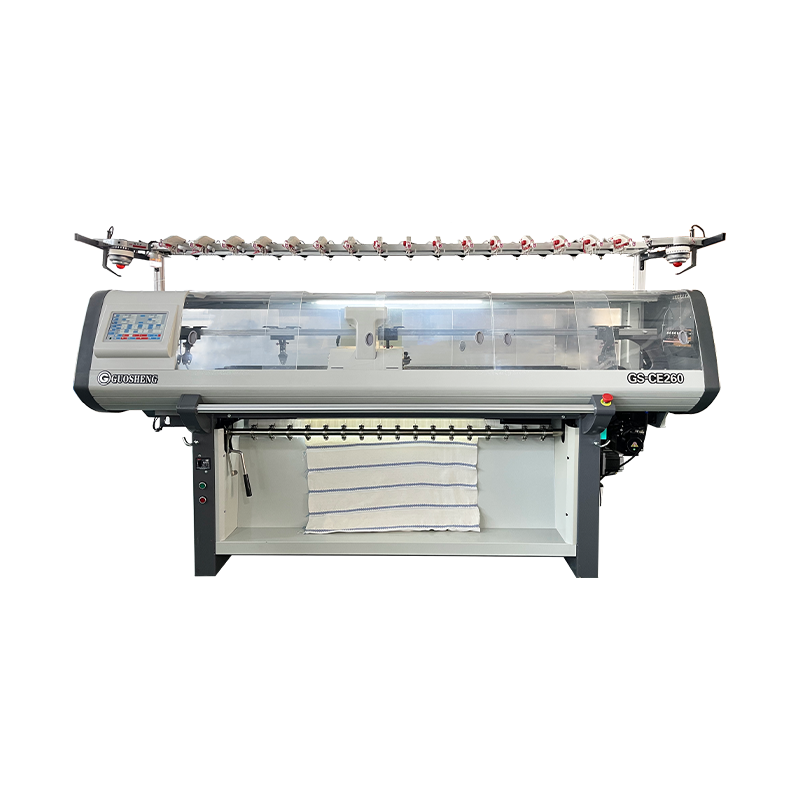
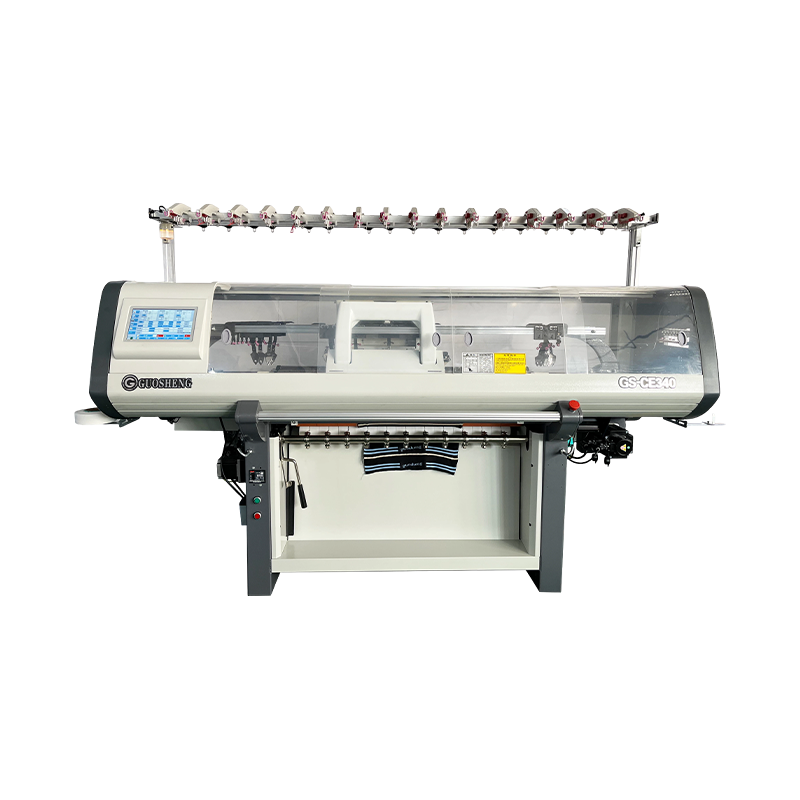
GS-CE440 4-System Straight Collar Knitting Machine (Economy CE Model)
High-Speed Servo Drive and Compact Carriage Design
The GS-CE440 uses a high-speed servo drive system and a synchronous belt drive. Together, these technologies support accurate movement, stable operation, and rapid response during carriage travel. Servo control is particularly important in computerized knitting because the carriage must move at controlled speeds, stop or reverse at precise positions, and coordinate its motion with needle selection, yarn feeding, stitch formation, and take-down functions.
A servo drive system can help the machine respond smoothly to changing operating requirements. During acceleration, deceleration, and reversal, smooth motion reduces mechanical shock and helps maintain consistent knitting conditions. Stable movement also supports the machine’s ability to execute complex patterns and repeated structures accurately.
The compact carriage design contributes to shorter travel distances and faster reversal. A smaller and optimized carriage can reduce the time spent moving between operating positions while maintaining the necessary space for the machine’s four systems. In high-volume collar production, these time savings accumulate across thousands of cycles.
Rapid carriage reversal is especially useful in flat knitting applications because the carriage often changes direction repeatedly. If reversal is slow or inconsistent, it can become a significant source of lost production time. The GS-CE440 is engineered to reduce this delay while maintaining controlled movement. This gives the machine a practical advantage over equipment that may have comparable basic knitting functions but less efficient carriage dynamics.
Accurate carriage positioning is also important for product consistency. Needle selection, yarn carrier movement, transfer operations, and stitch formation must occur at appropriate positions. The combination of servo control and computerized coordination helps maintain repeatability from one cycle to the next, reducing variations caused by imprecise mechanical movement.
From a maintenance perspective, a well-coordinated drive system can support predictable operation. Stable movement reduces unnecessary vibration and helps operators identify abnormal conditions more easily. Although regular inspection and maintenance remain essential, a controlled drive system provides a stronger foundation for long-term production reliability.
Computerized Control and Electronic Needle Selection
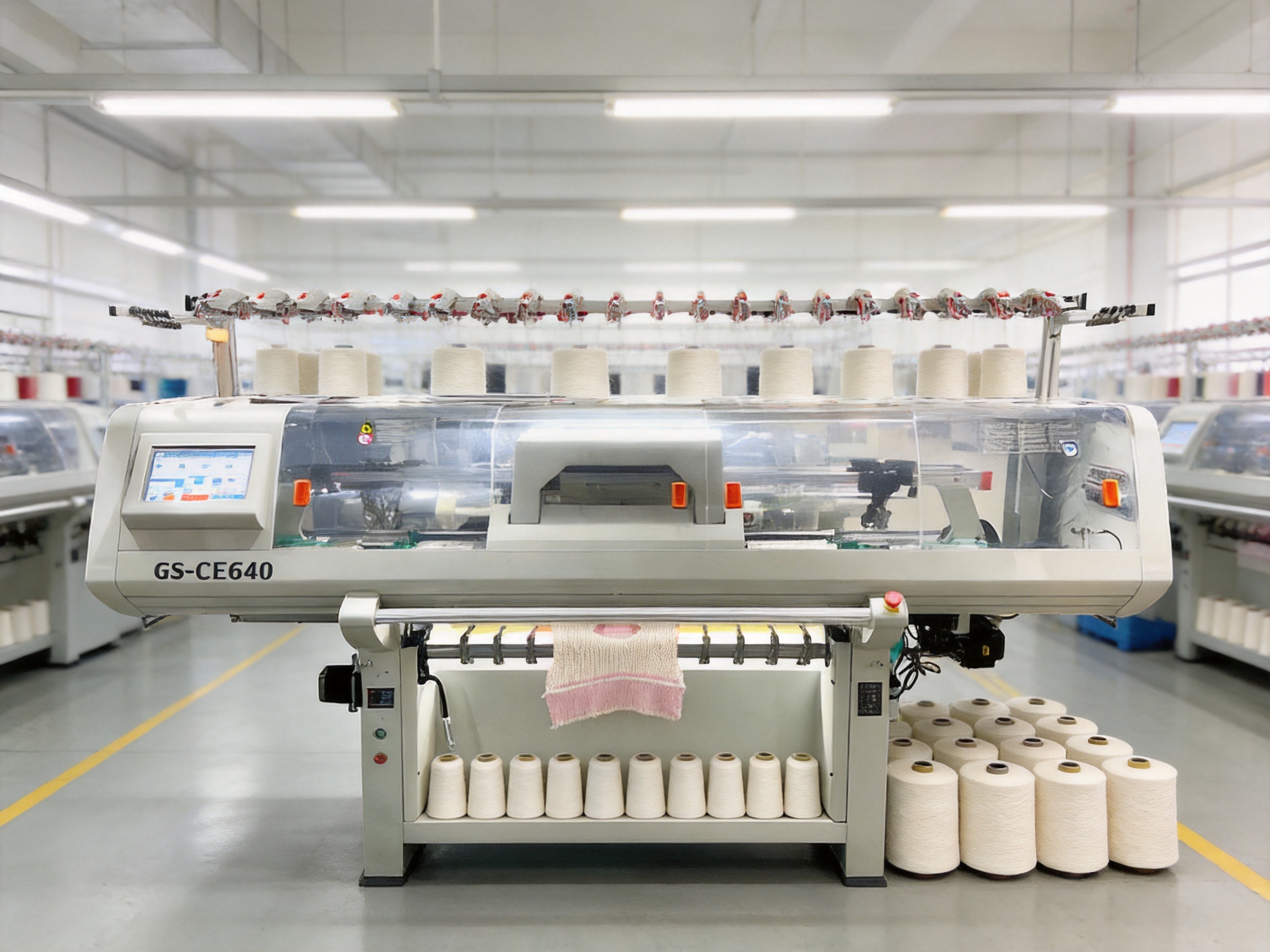
The GS-CE440 is equipped with a computerized control system and electronic needle selection technology. These features transform the machine from a mechanically controlled knitting unit into a programmable production platform. Operators can manage patterns, knitting parameters, and production settings through an LCD touchscreen interface.
Electronic needle selection enables the machine to choose needles with a high level of precision. This is fundamental to producing transfer patterns, tuck structures, jacquard effects, shaped sections, and other programmed designs. Accurate needle selection helps maintain pattern definition and reduces the risk of irregular structures caused by inconsistent mechanical selection.
The control system includes 256 MB of system memory, allowing a large number of design files to be stored. For manufacturers with multiple customers, product sizes, seasonal designs, or recurring orders, local storage can simplify production preparation. Previously used programs can be retrieved when repeat orders are received, reducing the need to recreate patterns from the beginning.
The monitoring menu displays operating parameters and allows adjustments while the machine is running. This makes it easier for operators to observe production conditions and respond to changes in yarn behavior, stitch density, take-down requirements, or other operating factors. Real-time access to parameters can help reduce downtime during fine adjustments and sampling.
The visual design system is intended to be easy to understand and upgrade. A clear interface is important because collar production may involve frequent changes in product specifications. Operators need to locate functions quickly, review settings accurately, and reduce the possibility of programming errors. Multi-language support, including Chinese and English, can also improve accessibility for international production teams.
Computerized control provides an advantage over equipment that relies heavily on manual mechanical adjustment. With digital programming, manufacturers can manage complex patterns more efficiently and preserve repeatable settings. This supports shorter sample development cycles and helps production teams move from approved sample to bulk manufacturing with greater confidence.
Digital control also contributes to traceability within the production process. When design files and parameter settings are organized properly, factories can create more consistent internal production records. These records can assist with repeat orders, quality analysis, and operator training.
Knitting Functions and Product Flexibility
The GS-CE440 supports flat knitting, transfer, tuck, and jacquard functions. This range allows manufacturers to produce both simple and technically differentiated knitted components.
Flat Knitting
Flat knitting is the foundation for many collar, ribbing, cuff, and narrow accessory applications. It allows manufacturers to create stable knitted panels and shaped sections with controlled width and structure. For everyday collar production, reliable flat knitting performance is essential because the finished component must connect cleanly with the garment body and maintain its intended appearance after sewing or assembly.
Transfer Knitting
Transfer functions allow stitches to be moved between needles to create shaping, openwork, structural changes, and decorative effects. In collar production, transfer knitting can be used to create more distinctive textures or to manage changes in width and construction. It can also help manufacturers respond to designs that require more than a basic ribbed appearance.
Tuck Knitting
Tuck knitting creates variations in texture and fabric density by holding selected loops while new yarn is introduced. This can produce raised effects, thicker areas, and visual contrast. Tuck structures may be useful for decorative collars, fashion accessories, and products requiring a more pronounced surface character.
Jacquard Knitting
Jacquard capability supports patterned fabrics and multi-color visual effects. This function can help manufacturers produce branded, seasonal, or decorative collar designs with greater visual complexity. The computerized needle selection system provides the control needed to execute programmed patterns with repeatable results.
The availability of several knitting functions on one machine reduces the need to divide different product types among separate specialized machines. Manufacturers can use the GS-CE440 for a broader range of orders, improving production flexibility and potentially simplifying equipment planning.
Gauge Options and Material Compatibility
The machine is available in 12G, 14G, 16G, 18G, and 20G configurations. Gauge selection allows manufacturers to match the machine to the intended yarn size, fabric appearance, product weight, and design requirements.
Coarser gauges may be suitable for products requiring a fuller texture or heavier visual appearance, while finer gauges can support lightweight, delicate, or more detailed knitted structures. The correct gauge depends on the target product, yarn specification, desired density, and finishing process. Offering several gauge choices allows customers to select a configuration aligned with their product portfolio rather than using a single machine specification for every application.
The GS-CE440 is compatible with wool, cashmere, cotton, acrylic, polyester, viscose, and various blended yarns. This material flexibility is valuable because modern knitwear production often involves several fiber types. Natural fibers may be selected for softness, warmth, or premium positioning, while synthetic and blended yarns may be chosen for durability, color consistency, cost control, or easy-care performance.
Different yarns behave differently during feeding and knitting. Wool and cashmere may require careful tension management because of their softness and surface characteristics. Cotton and viscose can present their own requirements related to smoothness and tension. Acrylic, polyester, and blended yarns may vary in elasticity, friction, and recovery. A machine that combines accurate yarn feeding with intelligent tension control is better positioned to handle this diversity.
Material compatibility also supports seasonal production. A factory may produce wool or cashmere collars for winter collections and cotton, viscose, or synthetic-blend components for spring and summer products. The ability to use different materials on the same machine improves asset flexibility and may help manufacturers maintain more stable utilization throughout the year.
Precision Yarn Feeding and Intelligent Tension Control
Yarn feeding is one of the most important factors in knitted product quality. Irregular yarn delivery can cause uneven loops, inconsistent dimensions, visible defects, and differences in surface appearance. The GS-CE440 uses a high-precision yarn feeding system together with intelligent tension control to support stable knitting conditions.
Consistent yarn tension helps the machine form loops more uniformly. It also helps maintain fabric dimensions throughout the knitted component. This is especially important for collars and ribbing because these parts must often match a specific garment opening or assembly specification. If the collar varies in width, elasticity, or length, the sewing and finishing stages may become more difficult.
Intelligent tension control can also assist when working with different yarn materials. Since yarns have different elastic and friction characteristics, a controlled feeding system allows the machine to adapt more effectively to changing production requirements. While correct yarn preparation and operator setup remain important, precise feeding provides a strong technical basis for repeatable results.
Stable tension may reduce waste caused by knitting irregularities and repeated trial adjustments. Lower waste can contribute to improved material utilization and more predictable production costs. In high-volume operations, small reductions in defective or unusable components can create significant savings over time.
Yarn feeding consistency also affects the appearance of patterns. Jacquard, tuck, and transfer designs can lose definition if yarn delivery fluctuates. By maintaining stable feeding conditions, the machine supports cleaner pattern execution and more uniform visual results.
Stitch Density and Take-Down Control
The GS-CE440 uses a stitch system controlled by a stepping motor. Its stated adjustable range includes 128 or 32 levels supported by subdivision technology, with a control scope from 0 to 650. This allows operators to adjust stitch density with a high level of flexibility according to the selected yarn, gauge, product structure, and required fabric hand.
Stitch density directly affects fabric weight, compactness, elasticity, appearance, and dimensional stability. A denser structure may provide a firmer and more compact component, while a more open structure may create softness, flexibility, or a lighter appearance. The correct setting depends on the design and the performance requirements of the finished collar or accessory.
Fine adjustment of stitch density is particularly useful during sampling. Product developers can evaluate several fabric structures and refine the settings before bulk production. Once an approved setting has been identified, it can be recorded and reused for future orders, improving repeatability.
The programmed take-down roller is controlled by a stepping motor and provides 128 section levels, with an adjustable area from 0 to 100. Take-down control influences how the knitted fabric is drawn away from the needle bed. Proper take-down is essential for maintaining stable fabric formation and consistent dimensions.
Different sections of a collar may require different take-down conditions. For example, a product may include changes in structure, density, shaping, or decorative pattern. Programmable section control allows the machine to respond to these requirements more precisely than a simple fixed take-down arrangement.
Coordinated stitch and take-down control can help reduce problems such as uneven width, distortion, excessive stretching, or irregular edges. It also supports more stable production when the machine is used for several yarn types and product constructions.
Racking and Needle Selection Performance
Racking is computer-controlled on the GS-CE440. The machine also uses an electric magnet or motor needle selection system designed for efficient operation. Computer-controlled racking enables the machine to coordinate needle-bed movement with programmed knitting actions, supporting transfer structures, shaping, and pattern development.
Accurate racking is important when stitches must be transferred or aligned across needle positions. Even small positioning errors can affect pattern clarity and fabric uniformity. By integrating racking control with the machine’s computerized platform, the GS-CE440 helps operators manage complex knitting sequences with greater precision.
The needle selection system is designed for high-efficiency operation. It works together with the electronic control system to identify the needles required for each programmed action. This coordination supports repeatable results across production cycles and helps reduce the risk of errors caused by manual selection.
Racking and needle selection are also important for product differentiation. Manufacturers seeking to offer customized collars, patterned ribbing, or technically detailed accessories need a machine that can execute more than basic uniform knitting. The GS-CE440 provides the control features needed to support this broader product strategy.
Yarn Carrier Configuration
The GS-CE440 is equipped with 2 × 8 yarn carriers on each side of four guide rails. The carriers can be shifted to any needle position. This configuration gives manufacturers flexibility in managing multiple yarns and color arrangements during production.
Multiple yarn carriers support color changes, contrast effects, jacquard patterns, and different yarn combinations. The ability to shift carriers to any needle position helps coordinate yarn delivery with the programmed design. This is especially valuable for collar products that include stripes, logos, decorative bands, or multi-color structures.
Efficient yarn carrier management can also reduce the need for manual repositioning between different product programs. When carrier movement is integrated with the computerized control system, operators can prepare more complex designs while maintaining a consistent production sequence.
The carrier configuration expands the creative and commercial possibilities of the machine. A manufacturer can produce basic single-color collars for volume orders while also using the same equipment for more specialized multi-color or patterned products. This versatility may help factories serve a wider customer base and reduce dependence on one narrow product category.
Protection and Automatic Alarm Functions
Continuous production requires more than high speed. It also requires the ability to identify abnormal conditions quickly and protect the machine from avoidable damage. The GS-CE440 includes an automatic protection and alarm system for conditions such as yarn breakage, floating yarn, rewinding, completion of knitting, racking failure, needle breakage, and programming errors.
Yarn breakage detection can alert operators when the machine no longer receives yarn correctly. Early detection helps prevent extended production of defective fabric and reduces the risk of tangling or secondary mechanical problems. Floating yarn detection is similarly important because an uncontrolled yarn path can affect structure and create visible defects.
Rewinding and end-of-knitting alarms help operators respond to production events without needing to monitor every movement continuously. A racking failure or needle breakage alarm can draw attention to conditions that may require immediate inspection. Programming error alerts can help prevent an incorrect design from continuing through a full production run.
These protective functions support safer and more organized production. They can reduce the time required to identify faults and limit the amount of defective material produced before intervention. They also help operators manage multiple machines more effectively because the control system provides status information when attention is required.
Automatic alarm functions do not replace regular maintenance or operator supervision. Instead, they provide an additional layer of process control. Correct lubrication, needle inspection, yarn preparation, cleaning, software management, and routine mechanical checks remain necessary for reliable long-term operation.
Energy and Electrical Configuration
The GS-CE440 uses a 220V single-phase power supply and includes a memory function for the moment of power loss. The memory function is valuable because unexpected power interruptions can disrupt production schedules and create uncertainty about the machine’s operating state.
When production equipment can preserve relevant operating information during a power interruption, operators may be able to resume work more efficiently after power is restored. This can reduce the need to reconstruct settings or repeat unnecessary preparation steps. It also provides additional convenience in facilities where power stability may vary.
Electrical compatibility should always be verified with the installation environment before commissioning. Manufacturers should confirm voltage, frequency, grounding, protection equipment, and local electrical requirements with qualified technical personnel. Proper installation contributes to safe operation and supports the machine’s intended performance.
Touchscreen Operation and Production Management
The touchscreen interface is designed to simplify program editing, pattern switching, monitoring, and maintenance. An accessible interface can have a direct effect on training time and daily productivity. When operators can understand machine status and locate essential functions quickly, changeovers and adjustments may be completed more efficiently.
Program editing is important for factories that serve multiple customers or produce several styles. A visual control system can help operators review pattern data, adjust knitting parameters, and make controlled modifications. Pattern switching is also useful when several collar specifications must be produced during one shift.
The monitoring menu allows operating parameters to be viewed and adjusted while the machine is running. This gives production staff greater control over the manufacturing process. If a fabric requires a small density or take-down adjustment, the operator can make a controlled change rather than stopping for extensive manual intervention.
Multi-language support can improve communication in international manufacturing environments. English and Chinese options are included, helping different teams access the control system more comfortably. Clear communication is particularly important during operator training, maintenance, and troubleshooting.
The touchscreen also supports a more standardized working method. Production instructions can be organized around digital programs rather than informal manual settings. This may improve consistency between shifts and reduce dependence on individual operator memory.
Advantages Compared with Conventional Collar Knitting Equipment
The GS-CE440 offers several advantages when compared with conventional equipment that uses fewer knitting systems or relies more heavily on manual control.
Higher Practical Productivity
The four-system single-carriage configuration can shorten knitting cycles and reduce idle travel. This provides a practical productivity advantage in high-volume manufacturing. The machine is designed not merely for high movement speed but for more efficient use of each operating cycle.
Broader Product Capability
Flat, transfer, tuck, and jacquard functions allow the machine to address a wider range of products. Manufacturers can produce basic collars and more decorative or technically complex components without requiring separate equipment for every design category.
Improved Repeatability
Computerized control, electronic needle selection, servo movement, programmable stitch density, and take-down management work together to support repeatable production. Consistency is particularly important when collars must match garment specifications across large quantities.
Faster Product Changeovers
Stored design files and a visual touchscreen interface can simplify pattern switching and program management. This helps reduce the time between different orders and supports manufacturers that produce smaller batches or multiple variations.
Better Material Flexibility
Compatibility with natural, synthetic, and blended yarns enables a broader commercial application range. A factory can adjust its product portfolio according to market demand, seasonal requirements, and customer preferences.
Reduced Waste Potential
Accurate yarn feeding, intelligent tension control, and automatic alarms can help reduce waste caused by tension instability, yarn breakage, programming mistakes, and undetected knitting faults. Lower waste improves material utilization and supports more predictable cost management.
Balanced Investment
As part of an economic CE series, the machine is positioned to provide advanced computerized functions without focusing exclusively on the highest possible equipment cost. It is intended for manufacturers that require meaningful productivity and control improvements while maintaining an optimized investment structure.
Manufacturing Strengths and Engineering Capabilities
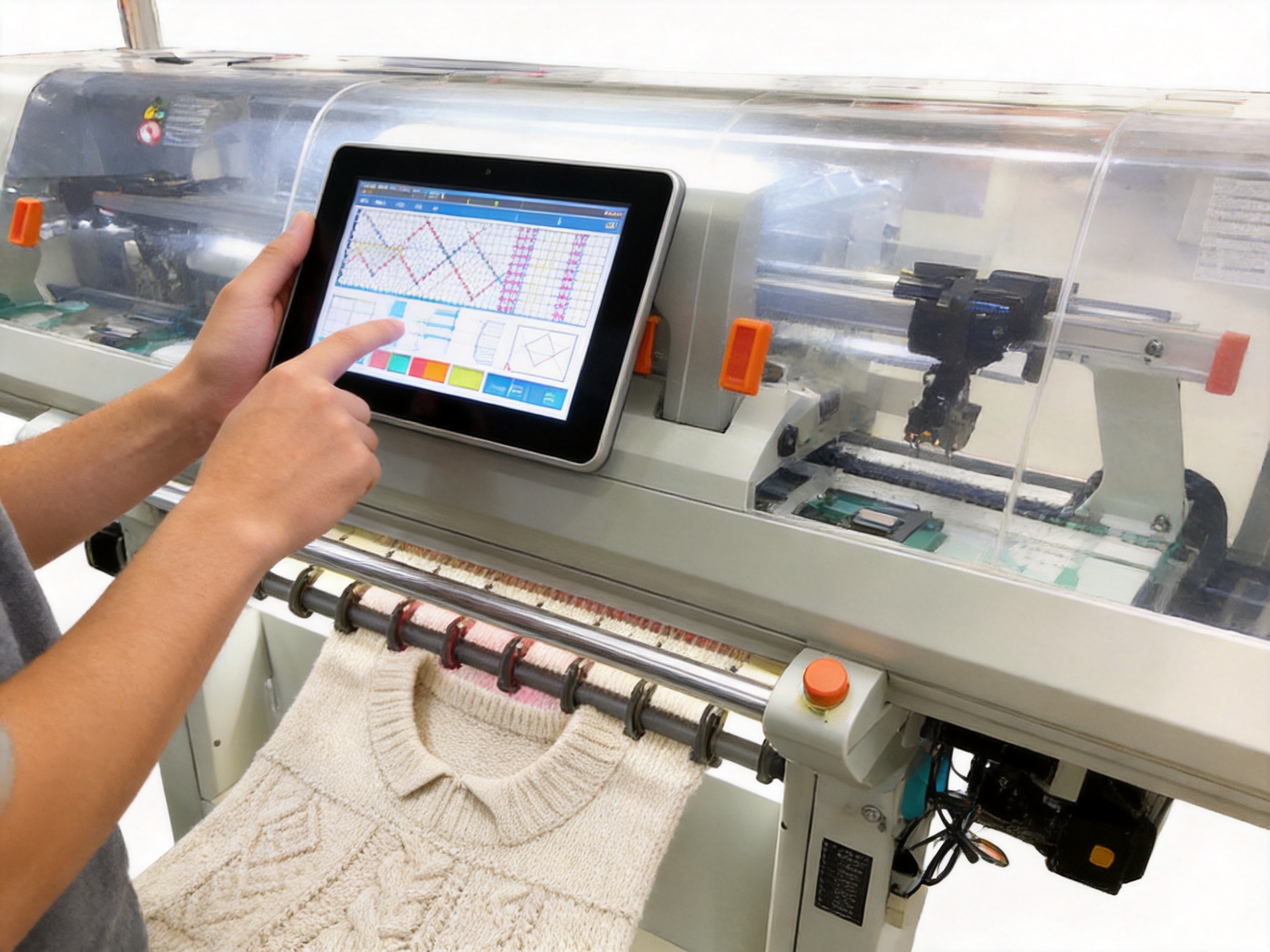
Guosheng Wonderful Intelligent Technology (Changshu) Co., Ltd. is a specialized manufacturer focused on the research, development, manufacturing, and global supply of computerized knitting machinery. The company is located in Changshu, Jiangsu Province, an important textile machinery manufacturing area in China. This regional position provides access to an established industrial ecosystem, engineering resources, component suppliers, and textile machinery experience.
The company’s product portfolio includes computerized flat knitting machines, collar knitting machines, and flyknit shoe upper knitting machines. This range indicates an engineering focus across several related knitting applications rather than a single isolated product. Experience with different knitted product categories can support the development of machines that address varied requirements for structure, speed, control, and material compatibility.
For the GS-CE440, the company combines mechanical design with electronic control development. The machine’s performance depends on the coordination of the carriage, servo drive, synchronous belt, needle selection, yarn carrier, take-down roller, stitch system, racking mechanism, and control software. The ability to integrate these systems is an important manufacturing strength because knitting quality is determined by the performance of the complete machine, not by one component alone.
The company emphasizes practical requirements faced by textile manufacturers, including stable operation, flexible knitting structures, efficient production capability, and consistent quality. This application-oriented approach is important because industrial customers evaluate equipment based on total production results, maintenance needs, usability, and long-term operating value.
Manufacturing a computerized knitting machine requires attention to mechanical precision, electronic coordination, software logic, and final machine adjustment. The company’s stated focus on continuous optimization of machine structure, control performance, and knitting capabilities supports the ongoing development of equipment for changing textile applications.
Advanced Production Process for Computerized Knitting Machinery
The production of a computerized collar knitting machine involves several interconnected stages. The first stage is product engineering. Designers define the machine architecture, gauge options, carriage configuration, needle-bed requirements, drive system, yarn path, control functions, and safety features. For a four-system machine, the engineering process must ensure that all systems operate within the available carriage structure while maintaining accurate synchronization.
The next stage involves the preparation and integration of mechanical assemblies. The needle bed, carriage, guide rails, yarn carrier system, take-down roller, racking components, and drive mechanisms must be assembled with appropriate accuracy. Alignment is critical because small deviations can affect needle movement, yarn delivery, stitch formation, and pattern execution.
Electronic and software systems are then integrated with the mechanical platform. The control system must coordinate servo movement, needle selection, stitch density, take-down, racking, alarm detection, and program storage. This coordination requires systematic testing because a command generated by the software must result in the correct physical action at the correct time.
Drive-system testing is another important part of production. The synchronous belt and AC servo system must be checked for smooth movement, stable acceleration, reliable reversal, and accurate positioning. The compact carriage must operate efficiently without creating excessive vibration or mechanical interference.
Needle selection and racking functions require detailed verification. Test programs can be used to confirm plain knitting, transfer, tuck, jacquard, and multi-section operations. These tests help determine whether the machine can execute different design commands consistently across the needle bed.
Yarn feeding and tension testing are also essential. Various yarn types may be used to evaluate feeding stability, carrier movement, tension response, and fabric formation. Testing with natural, synthetic, and blended materials helps confirm that the machine is suitable for the broad material range intended for production.
Final inspection should include control-system review, alarm verification, power-loss memory confirmation, touchscreen operation, pattern storage, and general machine safety. A complete functional inspection ensures that the machine is ready for installation and supports reliable commissioning at the customer’s facility.
Quality Control and Reliability Considerations
Quality control for computerized knitting machinery should cover both component accuracy and final knitted output. Mechanical parts must be inspected for dimensions, alignment, surface condition, and compatibility with the overall assembly. Electronic components and wiring must be checked for correct connection and stable operation.
Production testing should examine whether the GS-CE440 maintains consistent stitch formation during extended operation. A short demonstration may confirm basic function, but long-duration testing is more informative for identifying carriage stability, yarn feeding behavior, temperature changes, alarm response, and pattern repeatability.
Quality evaluation should also include the appearance and dimensions of test collars. Inspectors may review width, length, edge condition, stitch uniformity, pattern clarity, and structural consistency. These results connect machine performance with the actual requirements of garment manufacturers.
Reliability is influenced by the machine design as well as operating practices. Correct yarn preparation, appropriate gauge selection, suitable parameter settings, routine cleaning, needle inspection, and timely maintenance all contribute to long-term performance. The machine’s automatic protection system provides support, but production personnel remain essential to maintaining good operating conditions.
Applications in Garment and Textile Manufacturing
The GS-CE440 is suitable for garment manufacturers, knitted accessory producers, textile subcontractors, and specialized collar suppliers. Its primary application is the production of straight collars and ribbed components, but its functions support a broader range of flat-knitted products.
In sweater production, the machine can be used to produce collars that must match the body garment in color, structure, and dimensions. For sportswear, it may support ribbed or patterned components requiring a combination of elasticity and visual definition. For fashion garments, transfer, tuck, and jacquard functions can help create more distinctive designs.
The machine can also support the production of cuffs, waistbands, narrow knitted panels, decorative bands, and other accessories. Its compatibility with several yarn types enables manufacturers to serve products positioned at different price and quality levels.
For suppliers serving multiple garment factories, the machine’s stored programs and flexible gauge options can simplify repeat orders. A supplier may maintain digital production files for different customers and retrieve the relevant program when a similar order returns. This can improve response speed and reduce the risk of inconsistent reproduction.
Operational Recommendations
Before production begins, operators should select the appropriate gauge, yarn, stitch density, take-down setting, and pattern program. The yarn should be prepared properly and installed according to the recommended feeding path. Incorrect yarn preparation can affect even an advanced machine’s performance.
A sampling process should be used when introducing a new yarn, pattern, or product structure. Operators can begin with controlled settings, inspect the knitted result, and adjust stitch density, tension, take-down, or pattern parameters as needed. Once the approved result is obtained, the program and settings should be recorded for future production.
During operation, staff should monitor the touchscreen status display, fabric formation, yarn behavior, carriage movement, and alarm messages. Any abnormal sound, irregular pattern, repeated yarn breakage, or change in fabric dimensions should be investigated promptly.
Routine maintenance should include cleaning, inspection of needles and yarn paths, checking of moving parts, review of drive-system condition, and verification of electrical connections. Maintenance intervals should follow the manufacturer’s technical guidance and the actual intensity of factory use.
Operators should also be trained in safe stopping procedures, fault response, program selection, and restart procedures after a power interruption. Proper training improves machine utilization and reduces the risk of damage caused by incorrect intervention.
Technical Specification Summary
| Model | GS-CE440 |
| Machine Type | Four-system straight collar knitting machine |
| Configuration | Economic four-system, single carriage |
| Available Gauges | 12G, 14G, 16G, 18G, 20G |
| Knitting Width | 40 inches |
| Maximum Knitting Speed | 1.5 meters per second |
| Knitting Functions | Flat, transfer, tuck, jacquard |
| Stitch Density | Stepping-motor controlled; 128 or 32 adjustable levels supported by subdivision technology; control scope 0–650 |
| Racking | Computer-controlled |
| Drive System | Synchronous belt drive with AC servo system |
| Needle Selection | Computer-controlled electric magnet or motor selection system |
| Yarn Carriers | 2 × 8 yarn carriers on each side of four guide rails |
| Yarn Carrier Movement | Shiftable to any needle position |
| Take-Down Roller | Stepping-motor controlled; 128 section levels; adjustable area 0–100 |
| Control Interface | LCD touchscreen |
| System Memory | 256 MB |
| Protection Functions | Automatic alarms for yarn breakage, floating yarn, rewinding, end of knitting, racking failure, needle breakage, programming errors, and related conditions |
| Power Supply | 220V, single-phase |
| Power Interruption Feature | Memory function at the moment of power loss |
How the Machine Supports Cost Control
Cost control in collar production involves more than the initial equipment price. Manufacturers must consider output, labor requirements, yarn waste, changeover time, maintenance, quality consistency, and the ability to accept different orders. The GS-CE440 addresses these factors through its four-system structure and computerized operating platform.
Higher cycle efficiency can improve output per machine. When more components are completed during a shift, fixed equipment and facility costs may be distributed across a larger production volume. This can strengthen the economic performance of the production line.
Reduced idle movement may also improve energy and time utilization. Although actual consumption depends on operating conditions, production schedule, yarn, speed, and factory environment, a machine that spends less time in nonproductive travel can support more efficient use of its available operating hours.
Stored programs and easier pattern switching can reduce setup labor. Faster changeovers are particularly valuable for factories handling multiple small and medium orders. They allow manufacturers to remain flexible without sacrificing excessive time between product styles.
Improved quality consistency can reduce the cost of rework, sorting, and rejected components. Precise yarn feeding, controlled stitch density, programmed take-down, and automatic alarms all contribute to more stable production conditions.
The machine’s broad material and function compatibility may also reduce the need for separate equipment purchases. A manufacturer can use one platform for several related product categories, provided the selected gauge and configuration match the application requirements.
Why the GS-CE440 Is Suited to Large-Scale Production
Large-scale production requires equipment that can maintain stable performance over repeated cycles. The GS-CE440 is designed around this requirement. Its four-system configuration supports efficient cycles, while the servo drive and compact carriage support rapid and controlled movement.
High-volume manufacturers also need predictable programming. The computerized system allows patterns and parameters to be stored, reviewed, and reused. This supports consistent production across repeat orders and different shifts.
Large factories often employ multiple operators with different experience levels. A visual touchscreen, monitoring menu, and multi-language support can make it easier to standardize operation and reduce the learning barrier for new staff.
Automatic fault alarms are another important factor. In a large production environment, a problem that remains undetected can create significant waste. Early notification allows the operator or maintenance team to respond more quickly and protect both material and equipment.
Finally, the range of supported functions gives large manufacturers more commercial flexibility. The machine can produce basic high-volume components while also supporting patterns and structures that help customers differentiate their products.
Q&A
What is the GS-CE440 designed to produce?
The GS-CE440 is designed primarily for straight collars, ribbing, cuffs, knitted accessories, and related flat-knitted components. Its flat, transfer, tuck, and jacquard functions allow it to support both basic and decorative products.
What does the four-system configuration mean?
The four-system configuration means that the machine has four coordinated knitting systems within a single carriage. This arrangement is intended to shorten knitting cycles, reduce unnecessary carriage travel, and improve productivity in continuous production.
What is the maximum knitting speed?
The stated maximum knitting speed is 1.5 meters per second. Actual production speed depends on gauge, yarn, pattern complexity, stitch density, take-down settings, product dimensions, and operating conditions.
Which gauges are available?
The available gauge options are 12G, 14G, 16G, 18G, and 20G. The appropriate gauge should be selected according to the desired fabric structure, yarn specification, product weight, and design requirements.
Can the machine knit patterned collars?
Yes. The machine supports transfer, tuck, and jacquard functions, in addition to flat knitting. Its computerized needle selection system and multiple yarn carriers support programmed patterns and decorative structures.
Which yarn materials can be used?
The machine is compatible with wool, cashmere, cotton, acrylic, polyester, viscose, and various blended yarns. Correct setup and parameter adjustment are required because different yarns have different feeding, tension, and knitting characteristics.
How does the machine help maintain fabric consistency?
Fabric consistency is supported by the high-precision yarn feeding system, intelligent tension control, computerized stitch-density adjustment, programmed take-down roller, servo drive, and electronic needle selection system.
Does the machine provide automatic protection functions?
Yes. It can automatically issue alarms for conditions including yarn breakage, floating yarn, rewinding, end of knitting, racking failure, needle breakage, and programming errors.
How much design data can be stored?
The control system includes 256 MB of memory. This allows a substantial number of design files and production programs to be stored for later retrieval.
Is the control system suitable for international operators?
The control system offers multi-language versions, including Chinese and English. The touchscreen and visual design interface are intended to simplify program editing, monitoring, and maintenance.
What is the power requirement?
The machine uses a 220V single-phase power supply. Installation should be checked by qualified personnel to confirm compatibility with the local electrical environment and safety requirements.
How does the power-loss memory function help production?
The memory function preserves relevant machine information at the moment of power loss. This can help operators resume production more efficiently after power is restored, although restart procedures should always follow the applicable technical guidance.
What makes this machine different from a basic collar knitting machine?
Its key differences include the four-system single-carriage architecture, high-speed AC servo drive, compact carriage, computerized needle selection, programmable stitch and take-down control, multiple knitting functions, broad yarn compatibility, and automatic protection features.
What should a buyer consider before selecting a gauge?
A buyer should consider the target product, yarn count and material, desired fabric weight, stitch structure, pattern detail, elasticity, and finishing requirements. A gauge should be selected according to the actual production portfolio rather than speed alone.
Who manufactures the GS-CE440?
The machine is manufactured by Guosheng Wonderful Intelligent Technology (Changshu) Co., Ltd., a China-based developer and supplier of computerized knitting machinery, collar knitting machines, flat knitting machines, and flyknit shoe upper knitting machines.
Conclusion
The GS-CE440 4-System Straight Collar Knitting Machine is designed for manufacturers that need efficient, flexible, and computerized production of collars and knitted accessories. Its four-system single-carriage architecture provides a clear productivity advantage by reducing carriage travel and shortening knitting cycles. The compact carriage, rapid reversal, AC servo drive, and synchronous belt transmission further support stable and efficient operation.
Its value extends beyond speed. Computerized needle selection, programmable stitch density, controlled take-down, intelligent yarn tension, multiple yarn carriers, and broad material compatibility help manufacturers produce consistent knitted components across different orders. Flat, transfer, tuck, and jacquard functions also provide the flexibility required for basic, decorative, and technically differentiated products.
The machine is supported by automatic protection functions, touchscreen operation, stored design files, multi-language control, and power-loss memory. These features help improve usability, reduce avoidable production interruptions, and support more standardized factory operations.
Behind the product is a company focused on the research, development, manufacturing, and international supply of computerized knitting machinery. Its location in Changshu, Jiangsu Province, provides access to a strong textile machinery manufacturing environment, while its product portfolio reflects experience across flat knitting, collar knitting, and shoe upper knitting applications.
For manufacturers seeking to increase collar production capacity while maintaining control over investment, quality, and product flexibility, the GS-CE440 represents a balanced industrial solution. Its combination of four-system productivity, intelligent control, material adaptability, and practical manufacturing support makes it suitable for high-volume garment production and diversified knitted accessory manufacturing.
References
1. GS-CE440 Product Technical Information, including machine configuration, gauge options, knitting functions, control system, drive system, yarn carrier arrangement, and protection features.
2. Industrial Flat Knitting Equipment Principles, covering stitch formation, needle selection, carriage movement, racking, take-down control, and yarn feeding.
3. Textile Machinery Production and Maintenance Practices, covering equipment commissioning, mechanical alignment, electrical inspection, lubrication, cleaning, and preventive maintenance.
4. Computerized Knitting Technology Guidelines, covering digital pattern management, electronic needle selection, stitch-density control, jacquard knitting, transfer knitting, and operator interface design.
5. Knitted Garment Manufacturing Quality Principles, covering fabric dimensions, loop consistency, yarn tension, pattern accuracy, production inspection, and defect prevention.
6. Textile Production Management References, covering machine utilization, production cycle efficiency, changeover management, waste reduction, operator training, and equipment investment evaluation.
Product: GS-CE440 4-System Straight Collar Knitting Machine (Economy CE Model)


Ready to Begin?
Product Categories
- Sweater Knitting Machine (Economic SE)
- Sweater Knitting Machine (Full Function S)
- Collar Knitting Machine (Economic CE)(Fabric)
- Collar Knitting Machine (Full-Function C)
- Blanket Knitting Machine(Fabric)
- Shoe Upper Knitting Machine
- Ready To Wear Sweater Knitting Machine
- Ready To Wear Glove Knitting Machine
- Ready To Wear Hat Knitting Machine
- Knee Pad Knitting Machine
- Metal Mesh Knitting Machine
Contact Information
-
 Email: gs@guoshengchina.cn
-
 Phone: +86-0512-52690511
-
 Address: No. 18, Hupu Pujiang Road, Bixi New District, Changshu City, Jiangsu Province, China
QR Code
