


 English
 Español
 русский
 عربى
 中文简体

Lin Yuxi — International Product Sales Manager
GS-S480 Four-System Full-Function Computerized Flat Knitting Machine for High-Efficiency Sweater Production
Date:Oct 20, 2026
Content
- 1 Introduction
- 2 Product Positioning and Core Design
- 3 Four-System Productivity Advantage
- 4 Full-Function Knitting Capability
- 5 Automatic Stitch Density Control
- 6 Intelligent Programming and User Control
- 7 Yarn Carrier and Take-Down Performance
- 8 Protection and Fault Monitoring
- 9 Technical Specifications
- 10 Advantages Compared with Conventional Equipment
- 11 Manufacturing Strengths and Engineering Approach
- 12 Applications in Sweater and Fabric Manufacturing
- 13 Energy, Labor, and Production Efficiency Considerations
- 14 Recommended Implementation Process
- 15 Q&A
- 16 Product: GS-S480 Single Head Four-System Full-Function Computerized Flat Knitting Sweater Machine (Full-Function S)
Introduction
Modern knitwear manufacturing requires more than a machine that can form stitches. Producers must achieve high output, stable quality, flexible design capability, efficient yarn utilization, rapid product development, and dependable operation over long production cycles. These requirements are especially important for manufacturers producing sweater panels, full-piece fabric rolls, patterned knit fabrics, and large-volume orders. The GS-S480 Single Head Four-System Full-Function Computerized Flat Knitting Sweater Machine is designed to address these requirements through a combination of four-system knitting technology, intelligent control, flexible stitch programming, and a compact single-carriage structure.
As part of the Full-Function S Series, the GS-S480 is intended for manufacturers that need a versatile computerized flat knitting solution rather than a machine limited to basic plain knitting. It supports knitting, tuck, miss, transfer, jacquard, intarsia, and shaping operations, allowing production teams to handle a broad range of sweater constructions and knitted fabric designs. Its automatic density adjustment system also helps create more refined textures and better-defined fabric layers according to the programmed stitch structure.
The machine combines a single carriage with four knitting systems. This configuration enables several knitting operations to be completed during a single carriage movement, reducing unnecessary travel and improving equipment utilization compared with conventional dual-system equipment. With a maximum knitting speed of up to 1.5 meters per second, a compact 5.2-inch carriage, programmable take-down control, and computer-managed needle selection, the machine is built to support high-efficiency production while maintaining stitch consistency.
This article examines the working characteristics, technical advantages, production applications, intelligent functions, manufacturing strengths, and practical value of the GS-S480. It also explains why a well-engineered four-system computerized flat knitting machine can provide a competitive advantage for sweater factories, fabric producers, and textile manufacturers seeking to improve productivity and move toward more intelligent manufacturing.
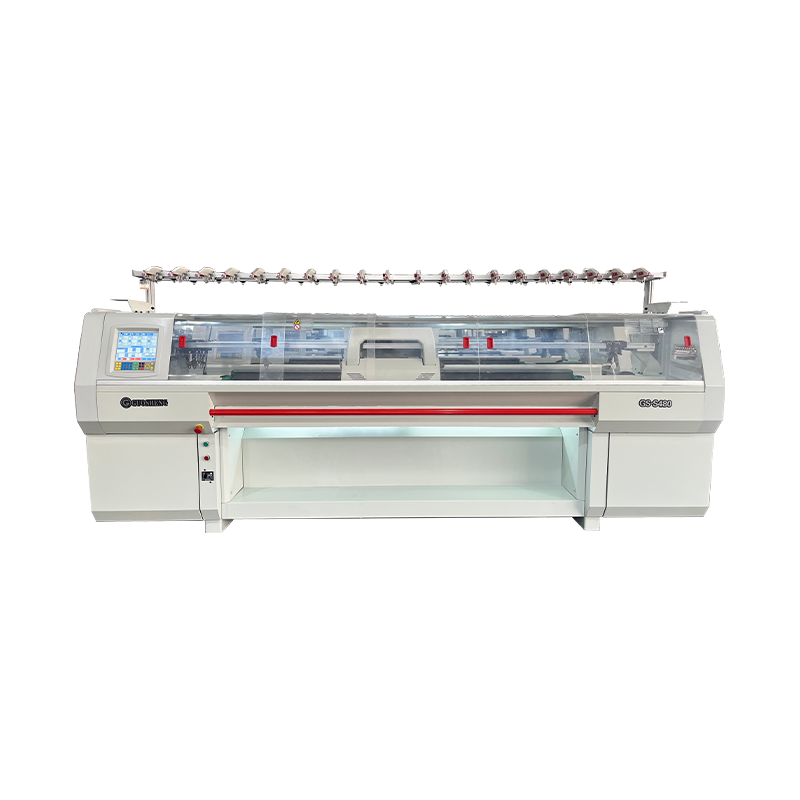
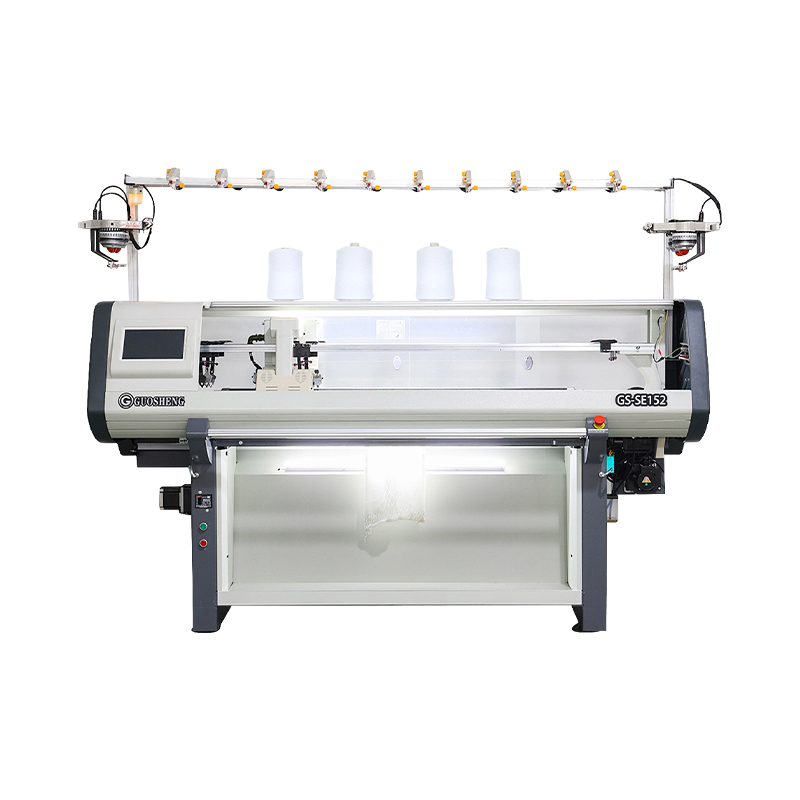
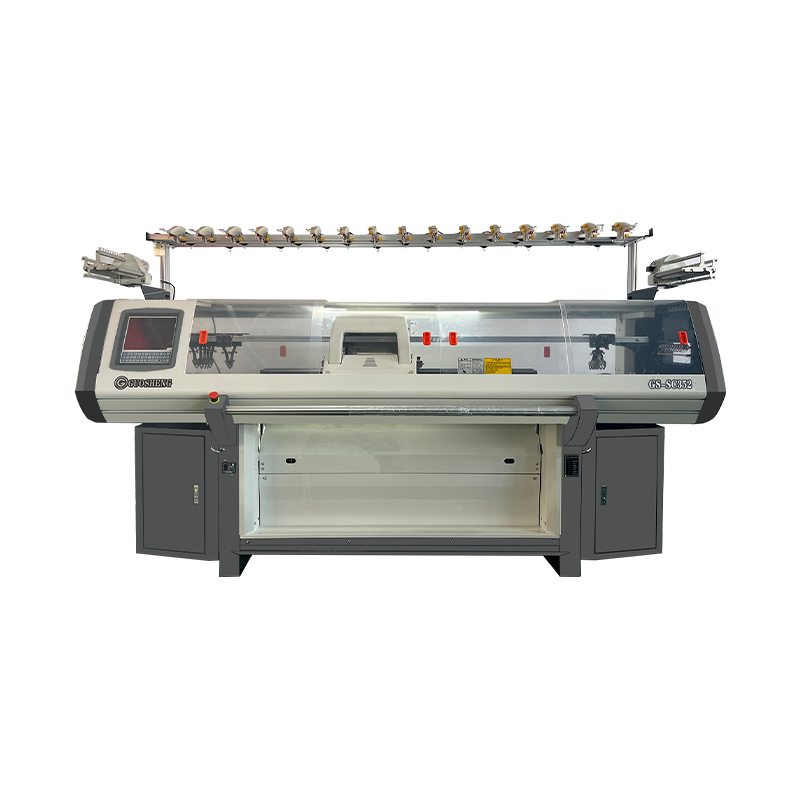
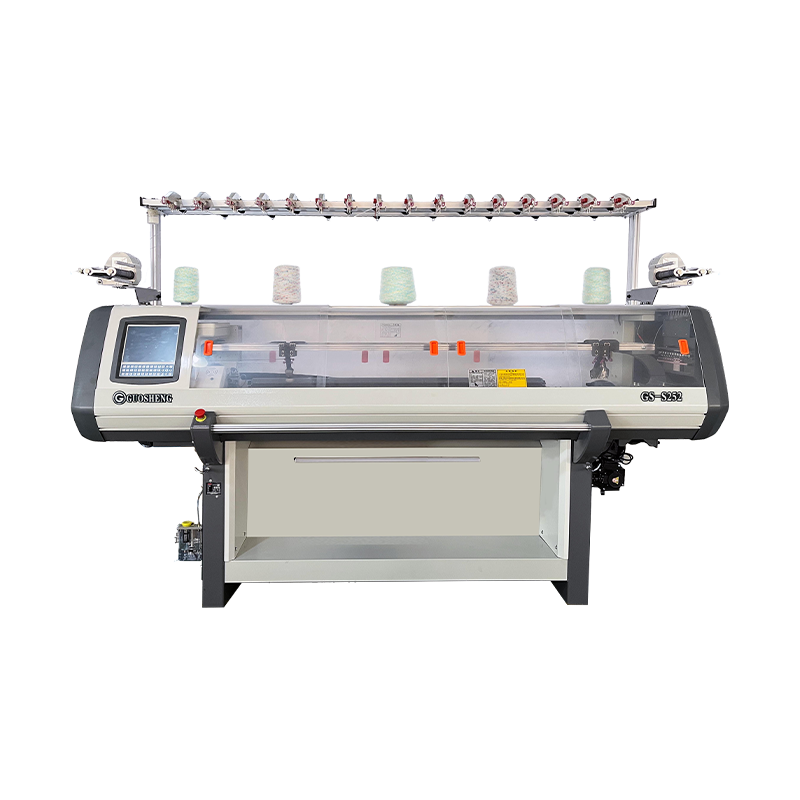
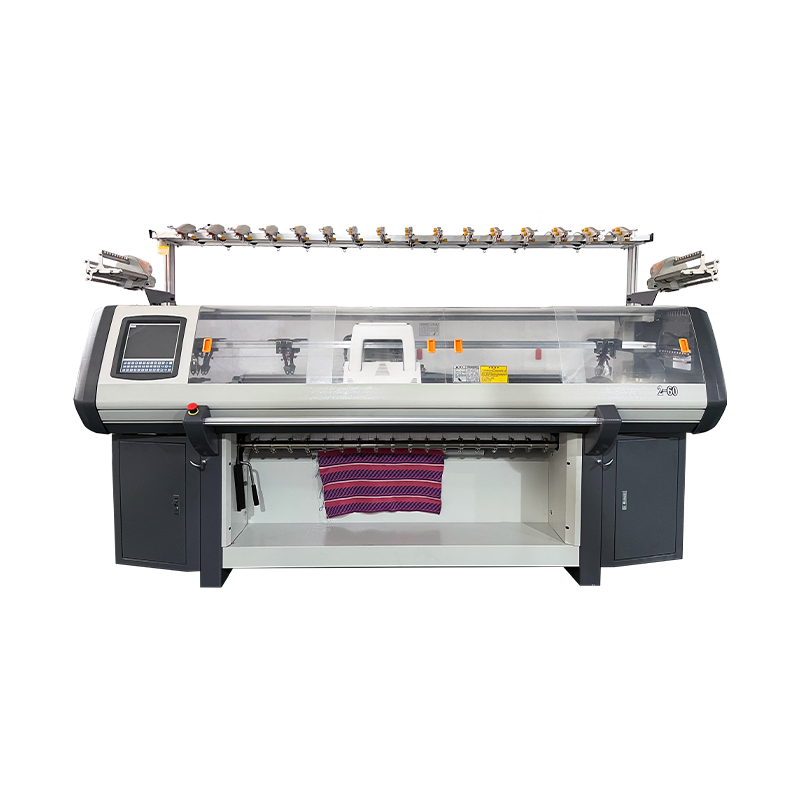
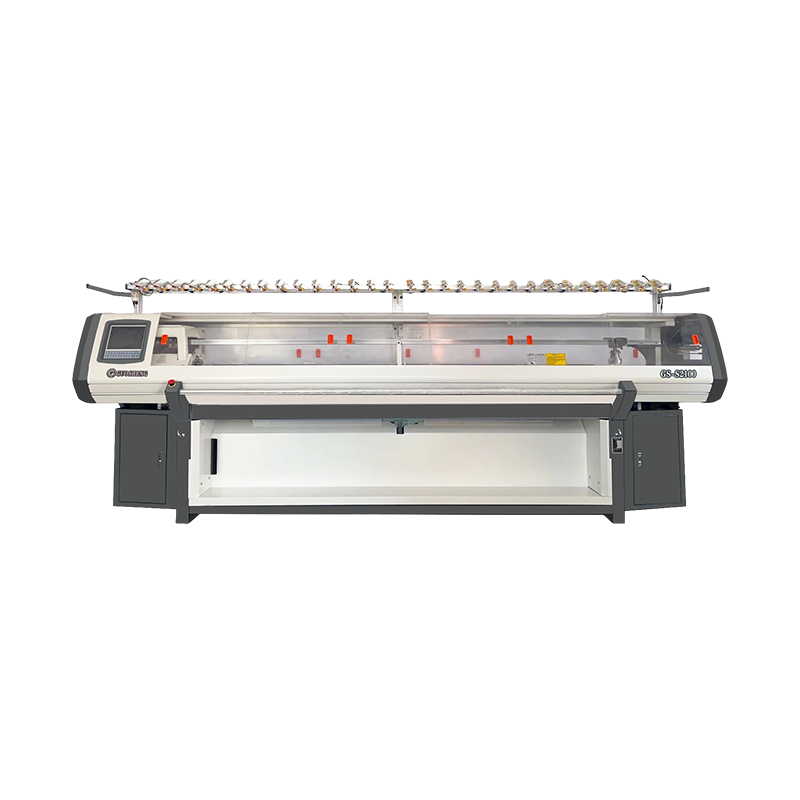
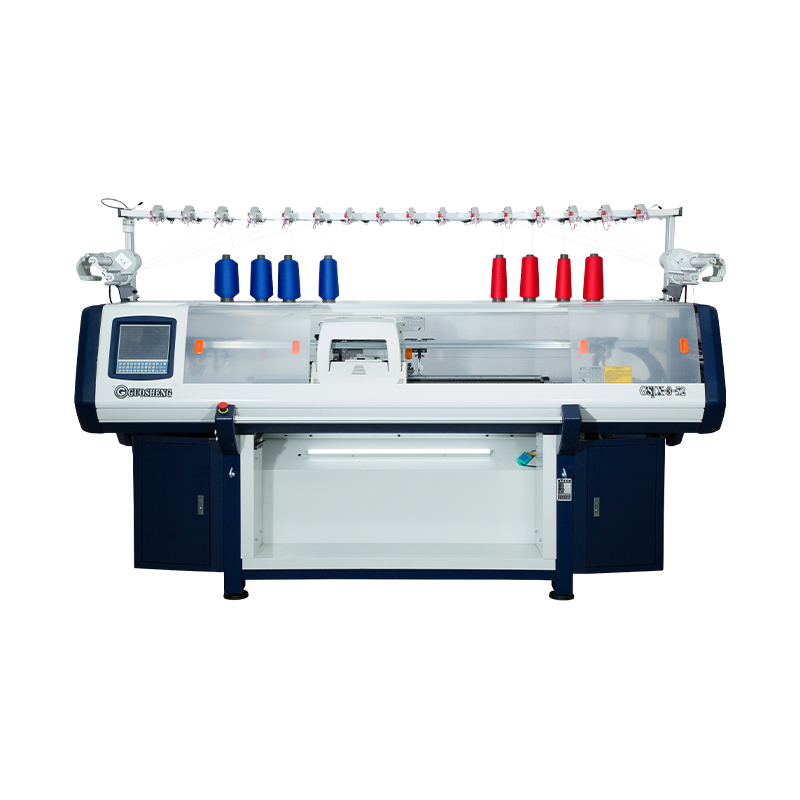
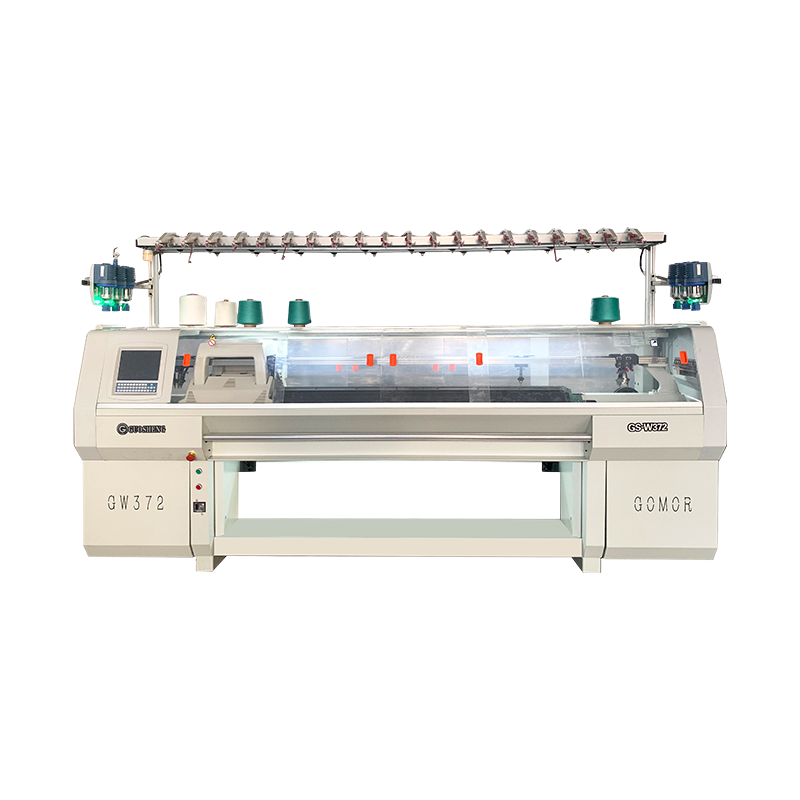
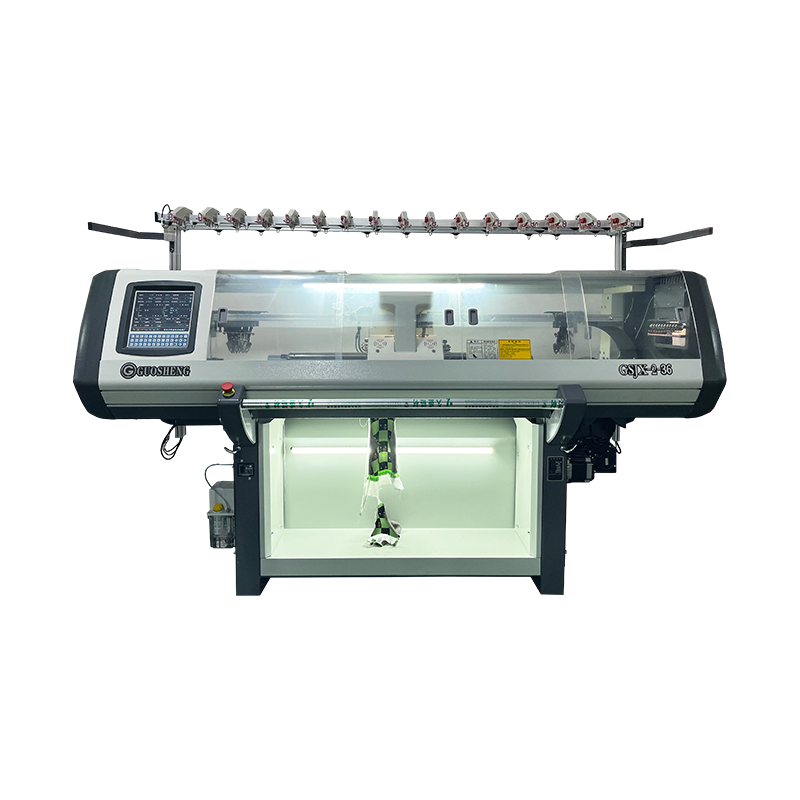
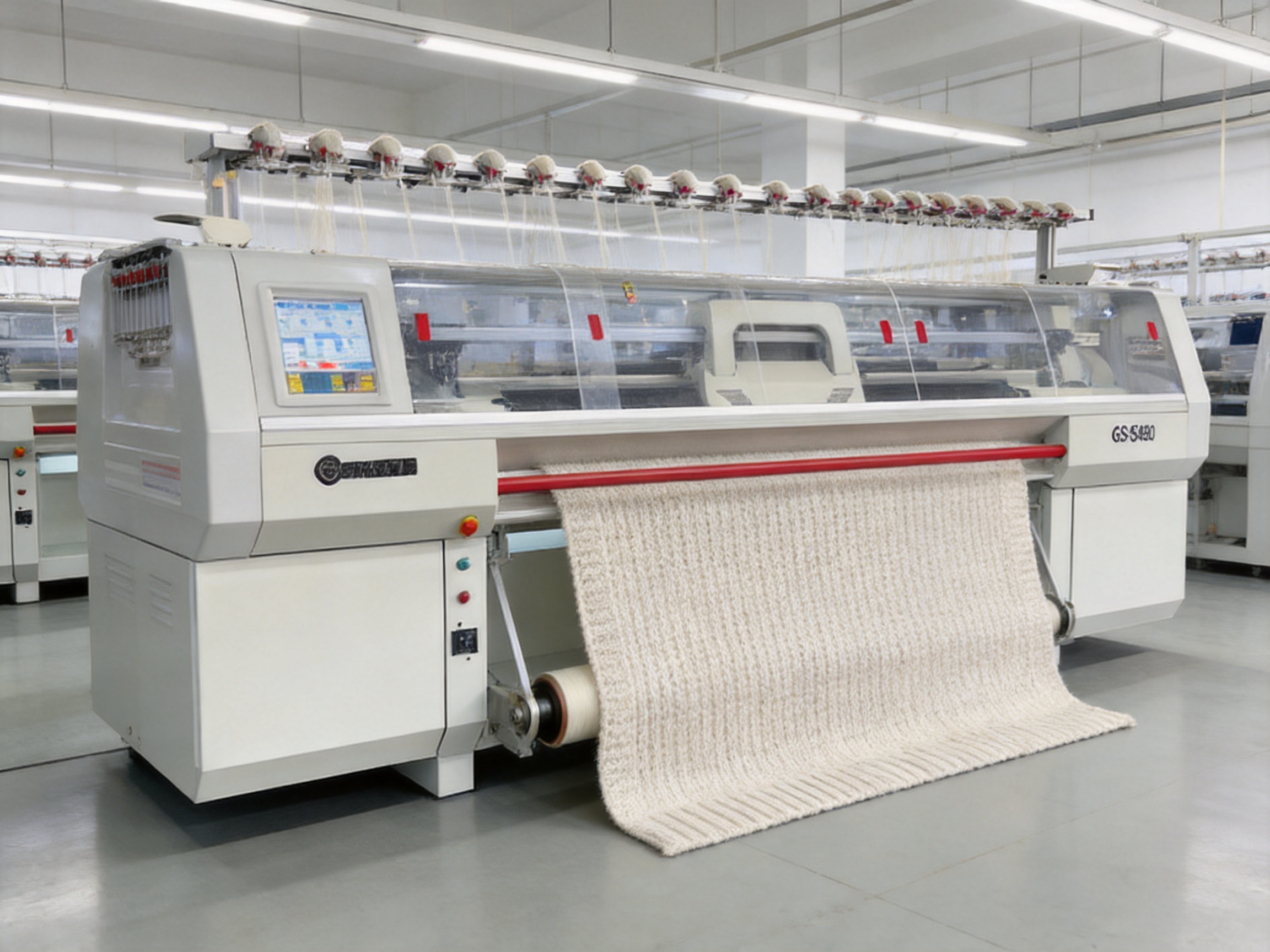
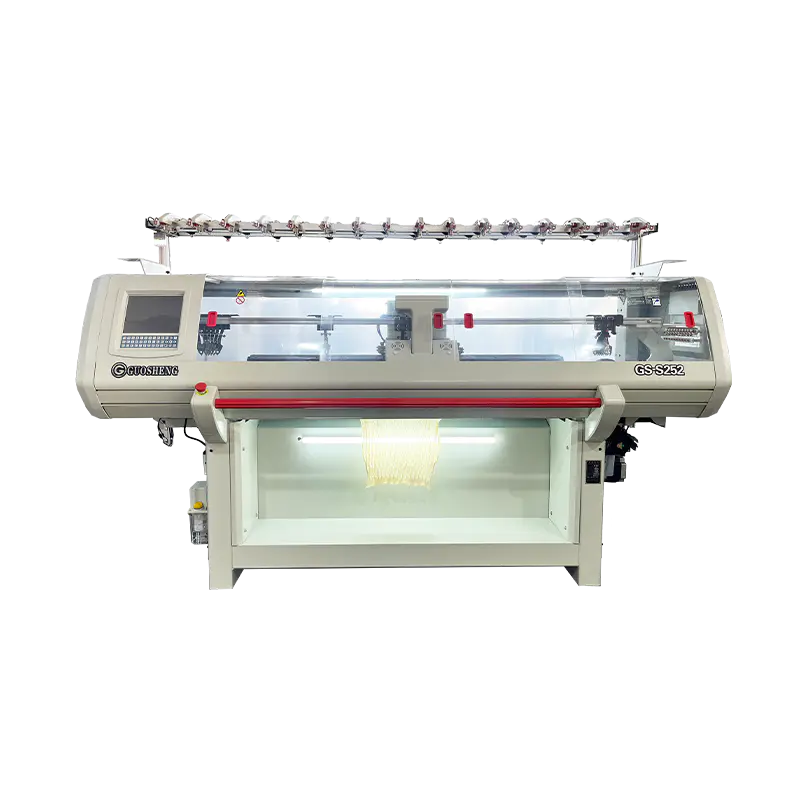
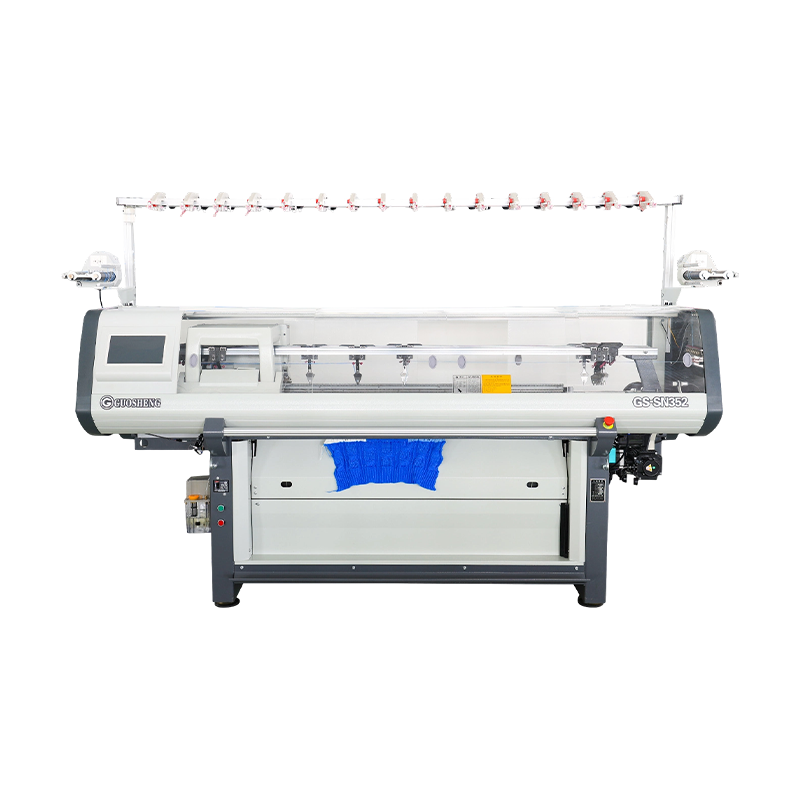
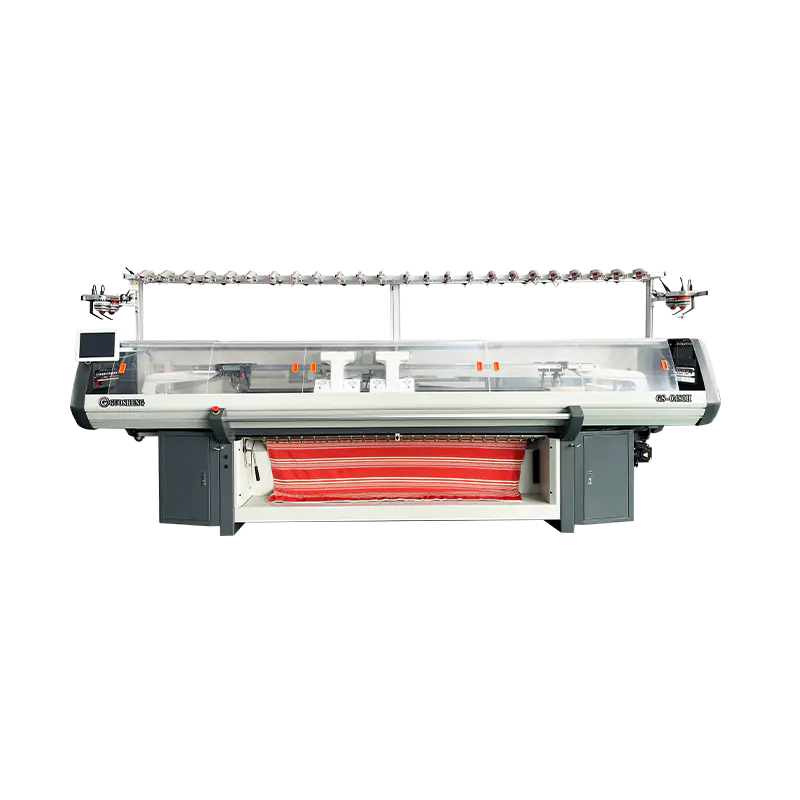
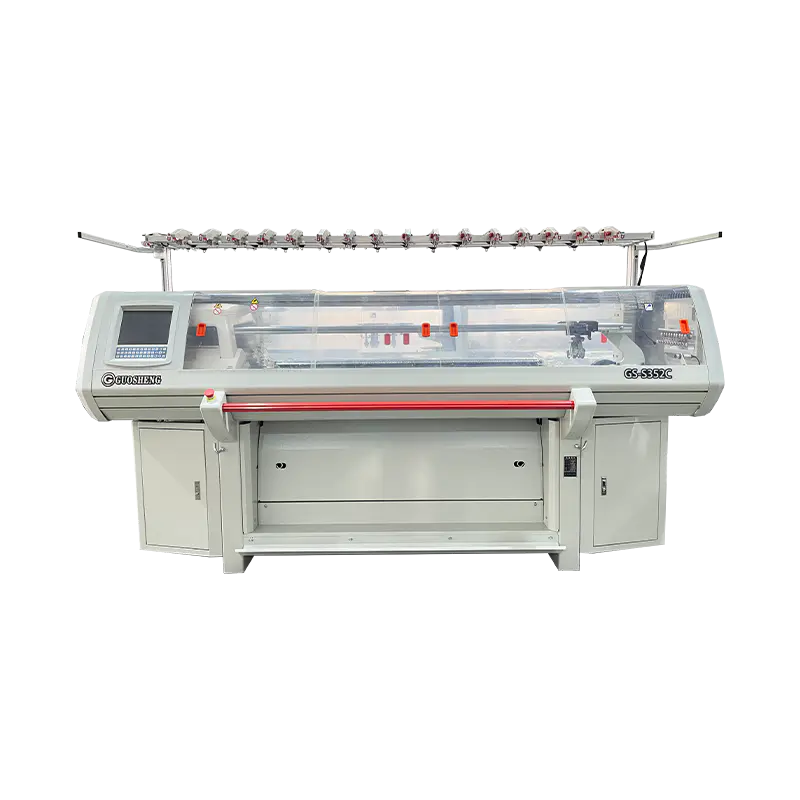
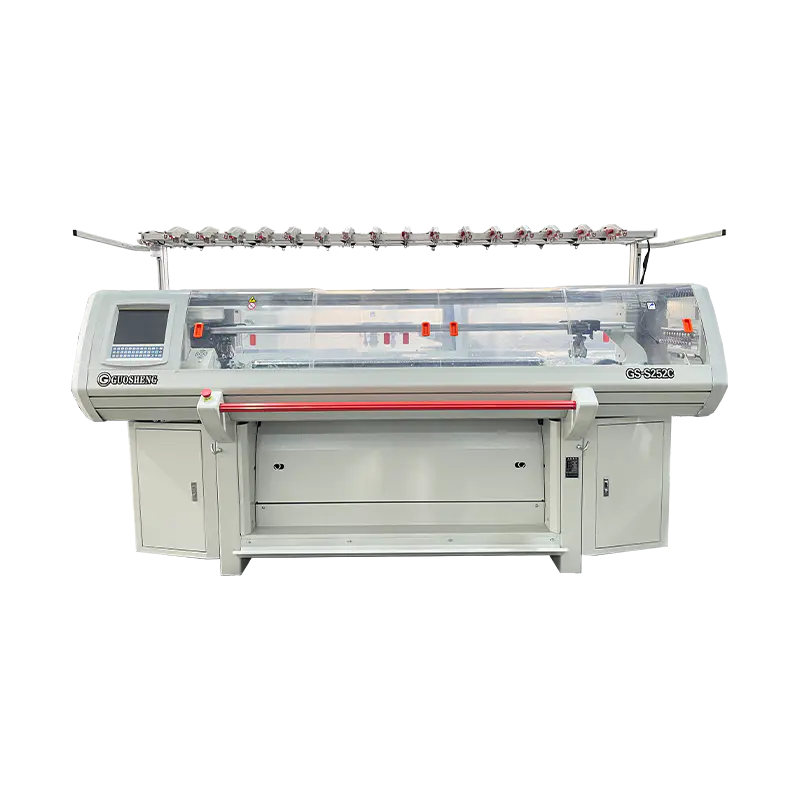
GS-S480 Single Head Four-System Full-Function Computerized Flat Knitting Sweater Machine (Full-Function S)
Product Positioning and Core Design
The GS-S480 is a single-head, four-system, full-function computerized flat knitting machine. Its core purpose is to provide a productive and adaptable platform for manufacturing knitted fabrics and sweater-related products. The machine is suitable for operations that demand frequent pattern changes, different stitch structures, controlled fabric density, and stable production across extended working periods.
The term “single head” refers to the machine’s single-carriage arrangement. Instead of using multiple independent carriages, the GS-S480 integrates four knitting systems into one compact carriage. This design helps reduce the amount of idle movement required during knitting. When a carriage completes one operation, the machine can make better use of its return movement by coordinating multiple systems within the same carriage structure.
The four-system configuration is one of the machine’s most important productivity features. Traditional dual-system machines may require additional carriage travel to complete comparable knitting operations. This can increase non-knitting movement, extend production time, and reduce effective machine utilization. By contrast, the four-system design allows more knitting operations to take place during each cycle, making the machine particularly suitable for full-piece fabric rolls, continuous knitted materials, and large-volume sweater production.
The compact carriage also contributes to high-speed operation. A smaller moving structure can support rapid reversal and smoother carriage travel when properly matched with the drive system, guide rails, needle selection mechanism, and control software. In the GS-S480, the carriage is designed to operate with a synchronous belt drive and AC servo system, supporting accurate movement and stable operation at production speed.
The machine is not restricted to one standard gauge or one product category. It can be supplied in multiple gauge configurations, including 3-5G, 5G, 7G, 8G, 9G, 10G, 12G, 13G, 14G, 15G, 16G, and 18G options. This range enables manufacturers to select a configuration that matches the yarn type, fabric weight, stitch definition, product style, and target market.
Key Product Characteristics
The GS-S480 combines the following major characteristics:
1. A single carriage with four knitting systems for improved production efficiency.
2. A compact 5.2-inch carriage designed for rapid reversal and high-speed operation.
3. Computer-controlled needle selection and racking functions.
4. Support for knitting, tuck, miss, transfer, jacquard, intarsia, and shaping.
5. Automatic density adjustment based on the programmed stitch structure.
6. Stepping-motor control for stitch density and take-down roller operation.
7. Up to sixteen yarn carriers on each side of four guide rails.
8. Programmable take-down with 128 selectable levels.
9. Automatic alarms for yarn breakage, floating yarn, rewinding, needle damage, programming errors, and other abnormal conditions.
10. An LCD control interface with USB input, multilingual support, and 256 MB of system memory.
These features make the machine appropriate for both routine production and more complex knitted designs.
Four-System Productivity Advantage
In flat knitting production, actual productivity is influenced by more than the nominal carriage speed. Carriage travel, reversal time, system utilization, pattern complexity, yarn carrier movement, take-down performance, and machine stoppages all affect the final output. A machine that can perform more useful knitting work during each cycle may provide a stronger production advantage than a machine that only increases travel speed.
The GS-S480 addresses this issue through its four-system configuration. The four systems work together within a single carriage, allowing multiple knitting operations to be performed in coordination. This reduces idle carriage travel and can increase the proportion of time spent forming fabric. For manufacturers producing high quantities of similar or continuously repeated articles, the resulting improvement in utilization can contribute to higher daily output and lower production costs per unit.
The four-system structure is especially valuable in full-piece fabric production. Fabric rolls often require extended, consistent knitting operations and efficient handling of repeated structures. A machine that reduces unnecessary travel can help shorten production cycles while maintaining the required stitch pattern. It is also useful for large sweater orders in which many pieces share similar construction parameters.
Compared with a traditional dual-system machine, the GS-S480 can complete more system-related work within a carriage cycle. This does not mean that every fabric style will achieve the same percentage increase in output. Actual results depend on gauge, stitch structure, yarn properties, fabric width, pattern complexity, machine settings, and operator programming. Nevertheless, the four-system architecture provides a strong technical foundation for improved efficiency, particularly in high-volume and full-piece production.
Higher effective utilization can produce several business benefits. Manufacturers may be able to meet delivery schedules with fewer machines, increase order capacity without proportionally increasing floor space, reduce labor allocation per unit, and improve the return on equipment investment. For factories managing seasonal demand or short delivery periods, these benefits can be particularly important.
Efficient Carriage Movement
The GS-S480 uses a compact carriage that supports rapid reversal. Fast reversal helps reduce non-productive time at the end of each knitting section. The synchronous belt drive provides a coordinated method of transferring motion, while the AC servo system supports controlled acceleration, deceleration, and positioning.
Stable carriage movement is essential for maintaining consistent stitch formation. Sudden vibration, irregular acceleration, or inaccurate stopping can influence fabric appearance and may contribute to defects. A properly synchronized drive system helps the carriage move smoothly and repeatably, supporting stable operation across different knitting programs.
The machine’s computer-controlled racking system also contributes to efficient carriage operation. Racking is used to shift the needle bed in relation to the other components, enabling different structural effects and shaping operations. Computer management allows the programmed racking sequence to be executed accurately and repeatedly, which is important for patterned sweaters, shaped panels, and advanced knit constructions.
Full-Function Knitting Capability
A major advantage of the GS-S480 is its ability to perform a broad range of knitting functions. The machine supports knitting and tuck in the same line, transfer, tuck, miss, jacquard, intarsia, and both hide and apparent shaping. This functional range enables manufacturers to produce more than simple uniform fabric.
Knitting and Tuck
Basic knitting forms the foundation of most sweater and fabric production. Tuck stitches allow selected needles to retain loops while receiving additional yarn, creating changes in thickness, openness, texture, and surface effect. The ability to combine knitting and tuck operations in the same line gives designers greater control over fabric structure and appearance.
Transfer
Transfer functions move loops from one needle position to another. This operation is used to create cables, openwork details, shaped structures, decorative lines, and other three-dimensional effects. Accurate transfer control is essential because incomplete or incorrect loop movement can cause visible defects. The GS-S480 uses computer-managed needle selection and racking control to support repeatable transfer operations.
Miss Stitching
Miss stitching allows the machine to pass selected needles without forming a new stitch in the normal manner. It can be used to create surface effects, mesh-like structures, decorative areas, and specific fabric textures. In combination with tuck and standard knitting, miss stitching expands the range of fabric designs available to the producer.
Jacquard
Jacquard knitting is used to produce color patterns and structured visual designs. The machine’s programmable control system allows production teams to manage pattern information and assign knitting actions according to the design file. This is valuable for manufacturers that produce branded motifs, geometric designs, seasonal graphics, and multi-color sweater panels.
Intarsia
Intarsia creates distinct color areas with controlled yarn placement. It is commonly used for large motifs, symbols, figures, and clean color blocks. Because intarsia production requires accurate yarn carrier coordination and careful programming, the availability of multiple yarn carriers and flexible guide-rail movement is an important advantage.
Shaping
The machine supports hide and apparent shaping. Shaping functions allow sweater panels and knitted components to be formed according to the intended garment silhouette. This can reduce the need for extensive cutting and sewing operations, helping manufacturers improve material efficiency and simplify downstream processing.
Full-function capability also supports product diversification. A factory can use one machine platform for standard sweaters, textured fabrics, decorative panels, fashion knitwear, and other products instead of relying on separate machines for every design category. This flexibility can reduce equipment complexity and make production planning more adaptable.
Automatic Stitch Density Control
Fabric density has a direct effect on appearance, handle, dimensional stability, weight, stretch, and comfort. If density is not controlled consistently, a fabric may show uneven texture, irregular tightness, or differences between production batches. For this reason, intelligent density management is a central function of a modern computerized flat knitting machine.
The GS-S480 automatically adjusts knitting density according to the programmed stitch structure. Its stitch system is controlled by a stepping motor, with a 128-section adjustable scope supported by subdivision technology and a stated adjustment range of 0 to 650. This allows operators to define density changes with fine control across different areas of a design.
Automatic density adjustment is useful when a fabric contains multiple stitch structures. A sweater may combine plain knitting with tuck sections, transfer patterns, rib-like areas, decorative openings, or shaped edges. Each section may require a different setting to produce the desired appearance and physical properties. By managing density through the program, the machine helps reduce reliance on repeated manual intervention.
Controlled density also contributes to richer fabric layering. When the stitch structure and density are matched correctly, designers can create more visible relief, texture, and dimensional contrast. This is particularly useful for fashion sweaters and knitted fabrics that depend on surface effects rather than color alone.
Consistent density can improve production repeatability as well. Once a successful program has been developed and stored, the same parameters can be recalled for future orders or color variations. This supports more reliable quality control and reduces the risk of variation caused by manual adjustments.
Benefits for Product Development
Automatic density control helps shorten the sample development cycle. Designers and technicians can modify stitch and density parameters directly within the programming system, then test the updated file on the machine. This makes it easier to evaluate fabric handle, thickness, elasticity, and visual effect during development.
Faster sampling is particularly important in markets where collections change frequently. A factory that can move quickly from a design concept to a stable sample is better positioned to respond to fashion trends, customer revisions, and short lead times. The GS-S480’s intelligent programming environment is intended to support this development process.
Intelligent Programming and User Control
The control system is designed to make pattern preparation, program editing, and parameter adjustment more accessible. The machine uses an LCD screen and supports USB input, allowing design files to be transferred into the control system. With 256 MB of system memory, the machine can store a substantial number of design files and production programs, depending on file size and system organization.
A monitoring menu displays operating parameters and allows selected settings to be adjusted while the machine is running. This gives operators a clearer view of production conditions and makes it easier to respond to changes in fabric behavior, yarn performance, or order requirements.
The visual design system is intended to be easy to understand and upgrade. A clear interface can reduce the learning burden for operators and help technicians find programming functions more efficiently. The availability of multiple language versions, including Chinese and English, also supports international users and multinational production teams.
Computerized programming changes the role of the operator. Instead of manually controlling every knitting action, the operator prepares or selects a program, verifies the parameters, loads the required yarns, monitors operation, and responds to alarms. This can improve process consistency and allow skilled personnel to focus on optimization, quality inspection, and product development.
The system also supports digital production management. Programs can be organized according to customer, product code, gauge, yarn type, colorway, or order number. When production information is properly managed, the factory can improve traceability and reduce the possibility of loading an incorrect pattern or outdated parameter file.
Yarn Carrier and Take-Down Performance
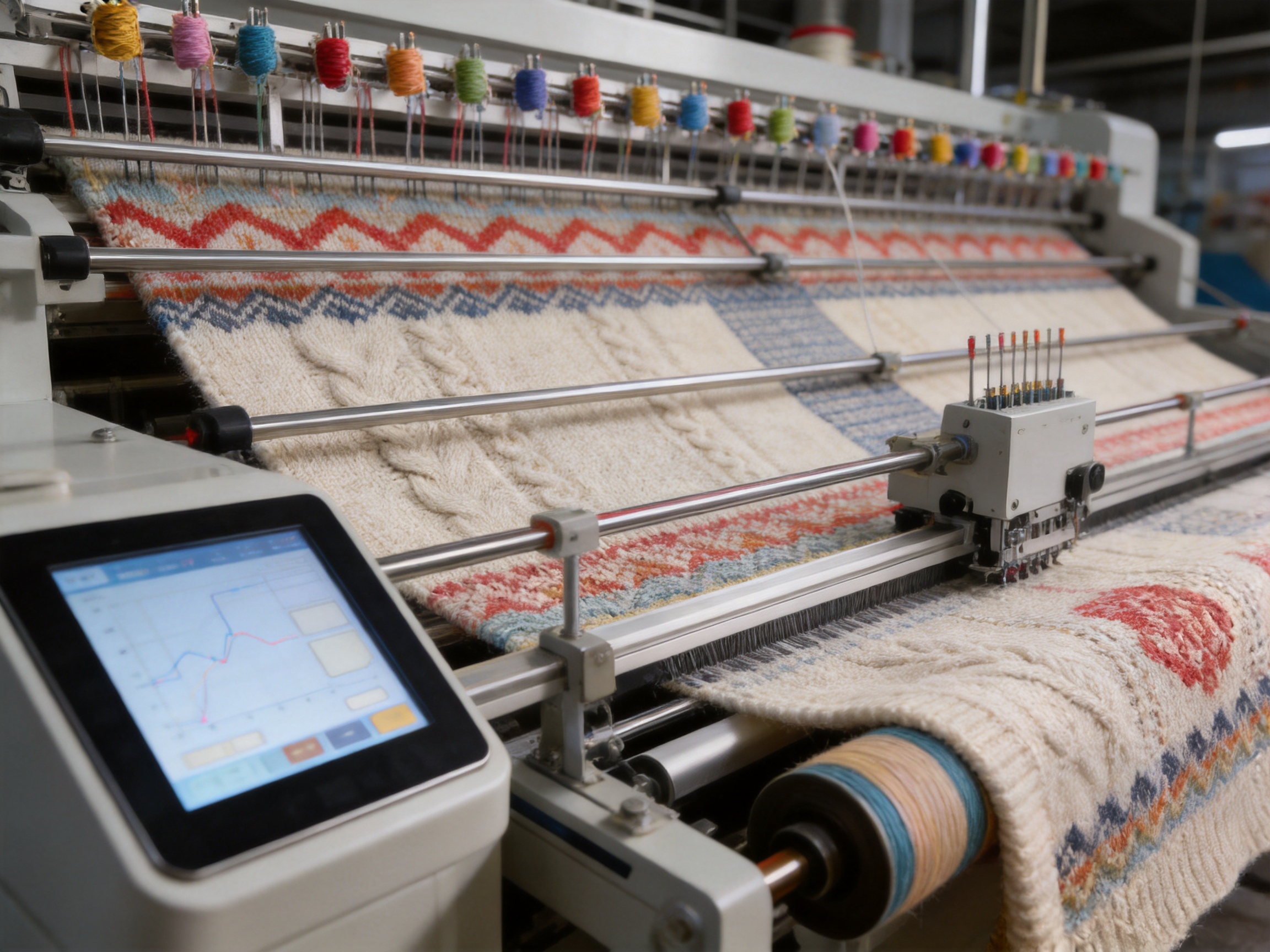
Yarn carrier flexibility is essential for complex knitwear. The GS-S480 is equipped with sixteen yarn carriers on each side of four guide rails. The carriers can shift to any needle position, providing broad flexibility for color changes, intarsia areas, pattern sections, and multi-yarn structures.
Multiple yarn carriers allow the machine to manage different yarns within one design without requiring excessive manual intervention. This is valuable for sweaters that combine several colors, yarn types, textures, or decorative details. The guide-rail arrangement also supports efficient yarn positioning across the knitting width.
Correct yarn carrier movement helps improve color separation and pattern accuracy. In intarsia and jacquard production, the carrier must arrive at the appropriate position and coordinate with the needle selection sequence. Computer-controlled movement can help reduce errors caused by inconsistent manual positioning.
The take-down roller is controlled by programmed instructions and a stepping motor. It provides 128 selectable levels with an adjustable area from 0 to 100. Take-down control determines how the knitted fabric is pulled away from the needle bed. Correct take-down tension is necessary to support stable loop formation, fabric uniformity, and reliable shaping.
Different yarns and stitch structures require different take-down settings. A delicate yarn may require gentle handling, while a dense or heavy structure may require stronger and more consistent pulling force. Programmable take-down allows the machine to coordinate these settings with the knitting program.
Stable take-down performance also supports fabric dimensions. If the pull-down force changes unexpectedly, the fabric may become uneven, stretched, or distorted. By using a stepping motor and stored instructions, the GS-S480 provides a more controlled method for managing this important part of production.
Protection and Fault Monitoring
Unplanned stoppages can reduce output and increase the risk of fabric defects. The GS-S480 includes an automatic protection and alarm system designed to identify several common abnormal conditions. These include yarn breakage, floating yarn, rewinding, end of knitting, racking failure, needle breakage, and programming errors.
Early detection allows the operator to respond before a small issue becomes a larger production problem. For example, a yarn break may cause a visible line or missing section if knitting continues. A needle breakage may damage the fabric or affect neighboring needles. A programming error may create a structural problem that continues across several rows. Alarm functions help draw attention to these conditions quickly.
Protection systems also support equipment safety. Detecting abnormal resistance, racking problems, or incorrect movement can help prevent further mechanical stress. Although alarms do not replace regular inspection and maintenance, they provide an additional layer of operational control.
The end-of-knitting alarm is useful for production planning and operator efficiency. Once a programmed section or complete article is finished, the machine can notify the operator so that the fabric can be removed, inspected, and prepared for the next operation.
Operational Reliability
Reliable production depends on the coordination of mechanical, electrical, and software systems. The GS-S480 combines servo drive technology, stepping-motor control, computer-managed needle selection, programmable racking, and monitoring functions to create an integrated operating platform.
Regular maintenance remains essential. Operators should inspect needles, yarn paths, guide rails, drive components, sensors, take-down parts, and electrical connections according to the equipment maintenance schedule. Proper cleaning, lubrication where required, and timely replacement of worn components can help preserve knitting accuracy and extend service life.
Technical Specifications
The following table summarizes the principal specifications provided for the GS-S480.
| Item | Specification |
|---|---|
| Model | GS-S480 |
| Machine Type | Single-head, four-system computerized flat knitting machine |
| Series | Full-Function S Series |
| Gauge Options | 3-5G, 5G, 7G, 8G, 9G, 10G, 12G, 13G, 14G, 15G, 16G, and 18G |
| Knitting System | Four systems, single carriage |
| Standard Knitting Width | 80 inches |
| Available Width Options | 52, 72, 80, 100, 110, and 120 inches, subject to configuration |
| Maximum Knitting Speed | Up to 1.5 meters per second |
| Knitting Functions | Knitting, tuck, miss, transfer, jacquard, intarsia, hide shaping, and apparent shaping |
| Stitch Density | Stepping-motor controlled; 128-section adjustment, range 0-650 |
| Racking | Computer-controlled, high-efficiency electric magnet or motor needle selection system |
| Drive System | Synchronous belt drive with AC servo system |
| Yarn Carriers | Sixteen yarn carriers on each side of four guide rails |
| Take-Down Roller | Stepping-motor controlled; 128 levels, adjustable range 0-100 |
| Control System | LCD screen, USB input, 256 MB memory, monitoring menu, multilingual interface |
| Power Supply | 220 V, single-phase, with power-off memory function |
Configuration details should be confirmed according to the target product, machine width, gauge, local electrical conditions, and customer production requirements before ordering.
Advantages Compared with Conventional Equipment
The GS-S480 offers several advantages over conventional dual-system or less automated flat knitting machines. These advantages should be considered in relation to the manufacturer’s specific products and production conditions.
Higher Effective Utilization
The four-system structure allows more knitting operations to be completed within one carriage cycle. This can reduce idle movement and improve machine utilization, especially in full-piece fabric and high-volume production.
Greater Product Flexibility
The full-function platform supports a wide range of stitch structures and pattern techniques. A manufacturer can produce basic fabrics, textured sweaters, jacquard articles, intarsia designs, shaped panels, and other products on the same machine platform.
Reduced Development Time
Computerized design editing and programmable density control allow technicians to revise patterns and parameters more efficiently. This can shorten the time required to move from a design idea to a production-ready sample.
Improved Repeatability
Digital programs can store knitting parameters and repeat successful settings. This improves consistency between batches and reduces dependence on manual adjustment.
Better Control of Complex Designs
Computer-managed needle selection, racking, yarn carrier movement, and take-down control provide coordinated operation for intricate patterns and structured fabrics.
Lower Unit Production Cost Potential
Higher output, reduced idle travel, and improved production consistency can help lower the manufacturing cost per unit. Actual savings depend on utilization, labor organization, yarn consumption, energy use, maintenance, and order volume.
Manufacturing Strengths and Engineering Approach
A computerized flat knitting machine must be manufactured as an integrated system. Mechanical accuracy alone is not enough. The needle bed, carriage, drive system, yarn carriers, sensors, control software, racking mechanism, and take-down assembly must work together within precise operating tolerances.
The manufacturer’s specialization in computerized knitting machinery provides an engineering foundation focused on the practical needs of textile producers. Its product portfolio includes computerized flat knitting machines, collar knitting machines, and flyknit shoe upper knitting machines. This broad product experience supports an understanding of different yarn behaviors, fabric constructions, garment applications, and production environments.
Located in Changshu, Jiangsu Province, the manufacturing operation benefits from the region’s established textile machinery supply chain and industrial capabilities. Access to supporting suppliers, engineering resources, machining services, electrical components, and textile production knowledge can help a manufacturer develop and maintain complex equipment more efficiently.
The development of a machine such as the GS-S480 requires cooperation between mechanical design, electronic control, software programming, production assembly, testing, and technical support. Each stage influences the final machine’s performance. A precisely assembled carriage cannot deliver consistent results if the control program is poorly coordinated. Likewise, advanced software cannot compensate for inaccurate mechanical alignment or unstable drive components.
Mechanical and Electrical Integration
The GS-S480 integrates a synchronous belt drive with an AC servo system to support smooth carriage travel and accurate positioning. Stepping motors are used for stitch density adjustment and take-down control, allowing programmed changes to be executed with repeatable movement.
Computer-controlled needle selection and racking help connect the design file with the physical knitting process. These systems must respond accurately to each programmed row and stitch position. Proper integration contributes to clean pattern execution and stable fabric formation.
Software-Oriented Manufacturing
Modern knitting equipment is increasingly defined by its software as well as its mechanical structure. The control system must manage stitch instructions, density values, needle selection, racking, yarn carrier movement, take-down levels, alarm conditions, and machine status information.
The GS-S480’s visual interface, USB input, memory capacity, monitoring menu, and multilingual options reflect this software-oriented approach. These functions help users manage design files and operational parameters more efficiently, supporting factories that are adopting digital workflows.
Production Testing and Quality Focus
Reliable knitting equipment requires testing under practical operating conditions. Testing may involve carriage travel, needle selection, racking accuracy, density adjustment, yarn carrier movement, take-down response, alarm functions, and continuous running stability. Careful testing helps identify inconsistencies before equipment reaches the customer’s production floor.
For textile manufacturers, quality is measured not only by whether a machine can complete a sample, but also by whether it can repeat the same result over many hours and across multiple orders. Stable operation, accessible maintenance, accurate programming, and responsive technical support are therefore important parts of the total equipment value.
Applications in Sweater and Fabric Manufacturing
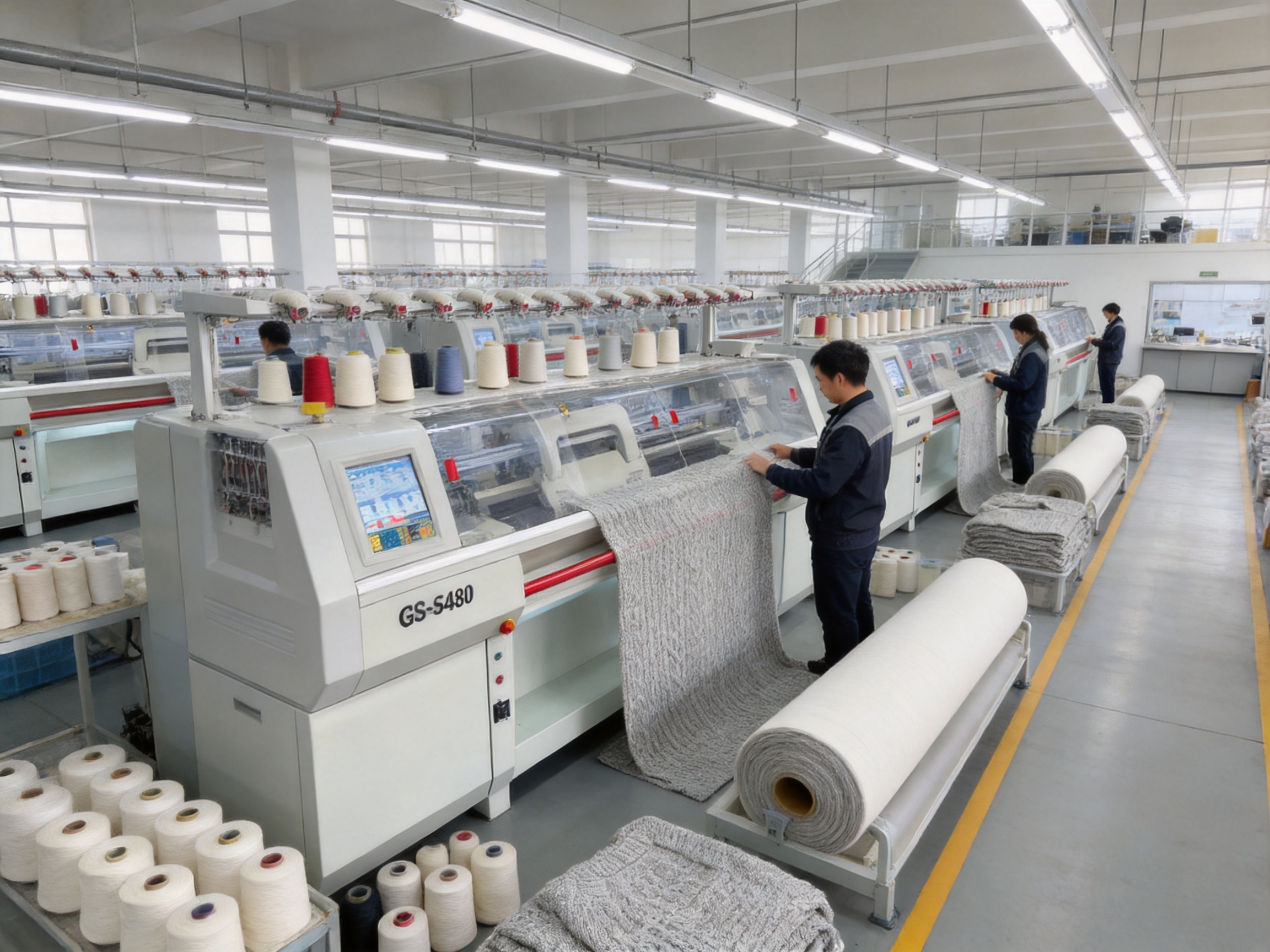
The GS-S480 is designed for a wide range of knitted product applications. Its performance is especially relevant to manufacturers producing sweater fabrics and full-piece knitted materials.
Standard Sweaters
For standard sweaters, the machine can produce front panels, back panels, sleeves, collars, cuffs, and other components with programmable shaping and density control. Different gauges allow the factory to match the equipment to lightweight, medium-weight, or heavier sweater constructions.
Textured Knitwear
Tuck, transfer, and miss functions support textured surfaces, decorative relief, open structures, and dimensional patterns. These techniques can add visual interest and help manufacturers develop differentiated products.
Jacquard Sweaters
Computerized jacquard capabilities are suitable for multi-color motifs, geometric designs, logos, and seasonal patterns. The programmable system helps coordinate needle actions and yarn carrier movement according to the selected design.
Intarsia Products
Intarsia is useful for large color areas and cleanly defined motifs. The multiple yarn carrier arrangement gives the machine flexibility for managing different color sections across the knitting width.
Full-Piece Fabric Rolls
The four-system arrangement is particularly suited to continuous knitted fabric production. High effective utilization and programmed take-down control support long production runs in which consistent fabric formation is required.
Large-Volume Orders
Manufacturers handling large orders can benefit from the machine’s combination of speed, system capacity, repeatable programming, and fault monitoring. Once the design and process parameters are validated, stored programs can help maintain consistency across production batches.
Energy, Labor, and Production Efficiency Considerations
Production efficiency should be evaluated as a complete operating system rather than by speed alone. The GS-S480’s four-system design may reduce unnecessary carriage movement, while automatic control functions can reduce the amount of manual intervention required during knitting.
Labor productivity can improve when operators manage several machines with clear monitoring systems and reliable alarm notifications. The machine’s interface helps operators view operating parameters and respond to abnormal conditions. However, successful labor optimization depends on operator training, factory layout, maintenance practices, and the complexity of the products being manufactured.
Material efficiency is also important. Shaping functions can help produce components closer to their intended form, potentially reducing cutting waste. Accurate stitch density and take-down management can improve fabric consistency and reduce the number of pieces rejected because of uneven structure.
Machine utilization has a direct impact on investment value. A machine that can handle multiple product categories may remain useful as customer requirements change. Its full-function capability can reduce the need to purchase separate specialized equipment for every type of pattern or fabric structure.
Manufacturers should assess the machine using practical indicators such as output per shift, first-pass quality rate, changeover time, sampling time, operator workload, maintenance frequency, yarn waste, and average production cost. These measurements provide a more realistic evaluation than nominal speed alone.
Recommended Implementation Process
Product and Yarn Evaluation
Before installation, the manufacturer should identify the intended yarn types, yarn counts, fabric weights, stitch structures, product dimensions, and target production volumes. This information helps determine the appropriate gauge, knitting width, yarn carrier arrangement, and program settings.
Program Preparation
Design files should be organized and checked before production. Operators and technicians should verify needle selection, carriage movement, yarn carrier assignments, density values, racking instructions, shaping lines, and take-down settings.
Sample Validation
A sample should be knitted and assessed for appearance, width, length, thickness, elasticity, handle, dimensional stability, and pattern accuracy. Any required changes can then be made to the digital program before mass production.
Operator Training
Operators should be trained in machine startup, yarn loading, program selection, parameter monitoring, alarm response, basic troubleshooting, cleaning, and daily inspection. Training should also cover safe operating procedures and emergency stopping methods.
Preventive Maintenance
Preventive maintenance should be scheduled according to operating hours and manufacturer recommendations. Needle condition, yarn paths, guide rails, drive components, sensors, take-down rollers, and electrical systems should be inspected regularly.
Q&A
What type of machine is the GS-S480?
The GS-S480 is a single-head, four-system, full-function computerized flat knitting sweater machine. It is designed for sweater production, knitted fabric production, full-piece fabric rolls, patterned knitwear, and high-volume orders.
What is the main advantage of the four-system design?
The four-system design
Product: GS-S480 Single Head Four-System Full-Function Computerized Flat Knitting Sweater Machine (Full-Function S)

Ready to Begin?
Product Categories
- Sweater Knitting Machine (Economic SE)
- Sweater Knitting Machine (Full Function S)
- Collar Knitting Machine (Economic CE)(Fabric)
- Collar Knitting Machine (Full-Function C)
- Blanket Knitting Machine(Fabric)
- Shoe Upper Knitting Machine
- Ready To Wear Sweater Knitting Machine
- Ready To Wear Glove Knitting Machine
- Ready To Wear Hat Knitting Machine
- Knee Pad Knitting Machine
- Metal Mesh Knitting Machine
Contact Information
-
 Email: gs@guoshengchina.cn
-
 Phone: +86-0512-52690511
-
 Address: No. 18, Hupu Pujiang Road, Bixi New District, Changshu City, Jiangsu Province, China
QR Code
