


 English
 Español
 русский
 عربى
 中文简体

Lin Yuxi — International Product Sales Manager
Four-System Full-Function Computerized Flat Knitting Machine for High-Efficiency Sweater Production
Date:Nov 11, 2026
Content
- 1 Why Four-System Technology Matters in Modern Knitting
- 2 Core Product Design
- 3 Product Specification Overview
- 4 High-Speed Operation with Controlled Movement
- 5 Full-Function Knitting Capability
- 6 Intelligent Stitch Density Control
- 7 Computer-Controlled Racking and Needle Selection
- 8 Flexible Yarn Carrier Management
- 9 Programmable Take-Down for Stable Fabric Formation
- 10 Intelligent Control and User-Friendly Operation
- 11 Production Safety and Automatic Protection
- 12 Manufacturing Strengths Behind the Equipment
- 13 Advantages Compared with Conventional and Lower-Specification Machines
- 14 Applications Across the Knitwear Industry
- 15 Operational Benefits for Textile Manufacturers
- 16 Recommended Production Workflow
- 17 Maintenance and Long-Term Performance
- 18 How the Machine Supports Sustainable Production
- 19 Purchasing Considerations for International Buyers
- 20 Frequently Asked Questions
- 20.1 What type of machine is the GS-S480?
- 20.2 What is the main advantage of four knitting systems?
- 20.3 What products can the machine produce?
- 20.4 What gauges are available?
- 20.5 What knitting functions are supported?
- 20.6 How does the machine control stitch density?
- 20.7 Can stitch density change during one production program?
- 20.8 How many yarn carriers are available?
- 20.9 What is the maximum knitting speed?
- 20.10 Does the machine include automatic protection functions?
- 20.11 How does the control system support production?
- 20.12 Is the machine suitable for large orders?
- 20.13 Is it also suitable for small-batch sampling?
- 20.14 What power supply does the machine require?
- 20.15 What should buyers consider before ordering?
- 21 Conclusion
- 22 References
- 23 Product: GS-S480 Single Head Four-System Full-Function Computerized Flat Knitting Sweater Machine (Full-Function S)
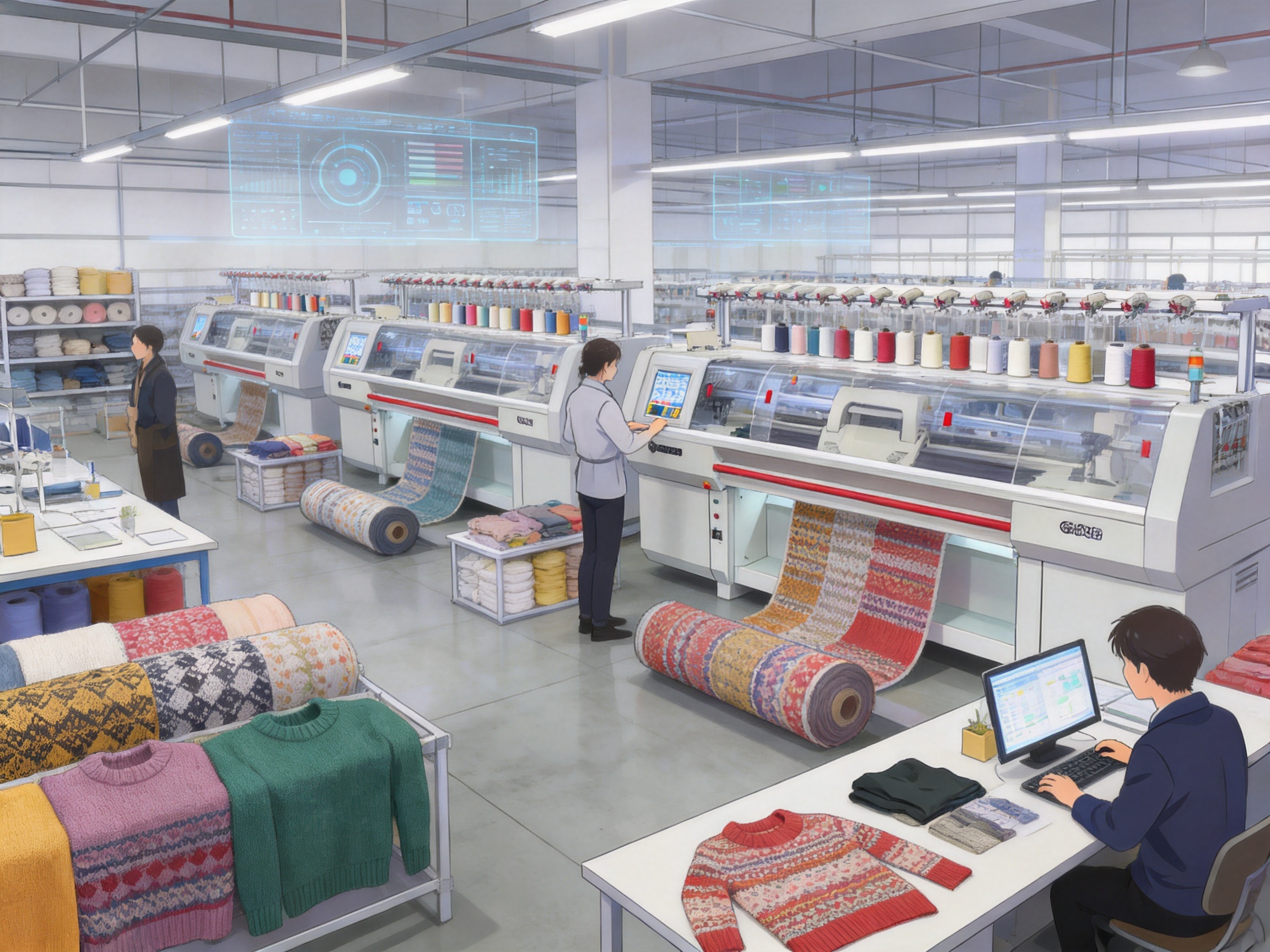
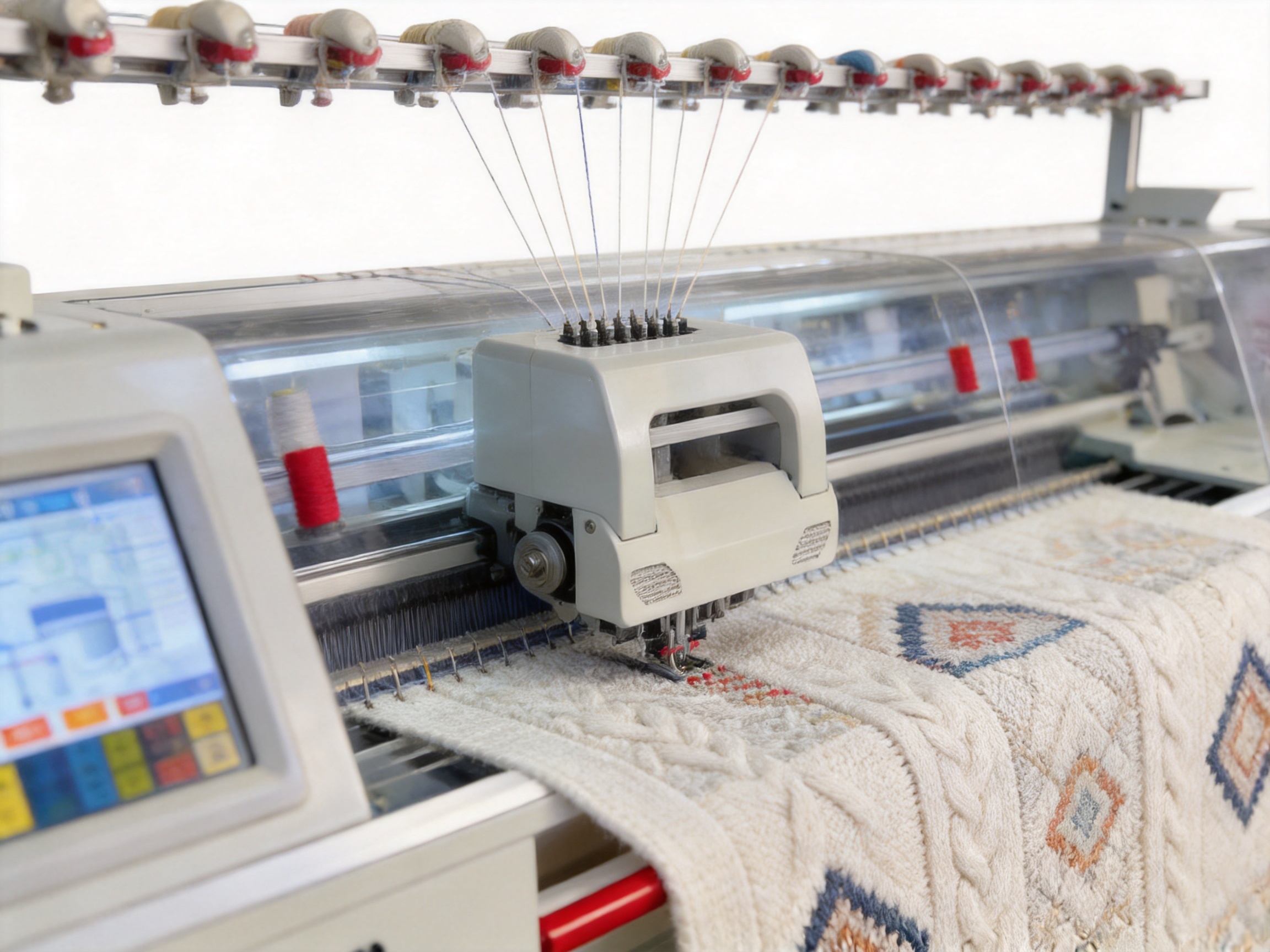
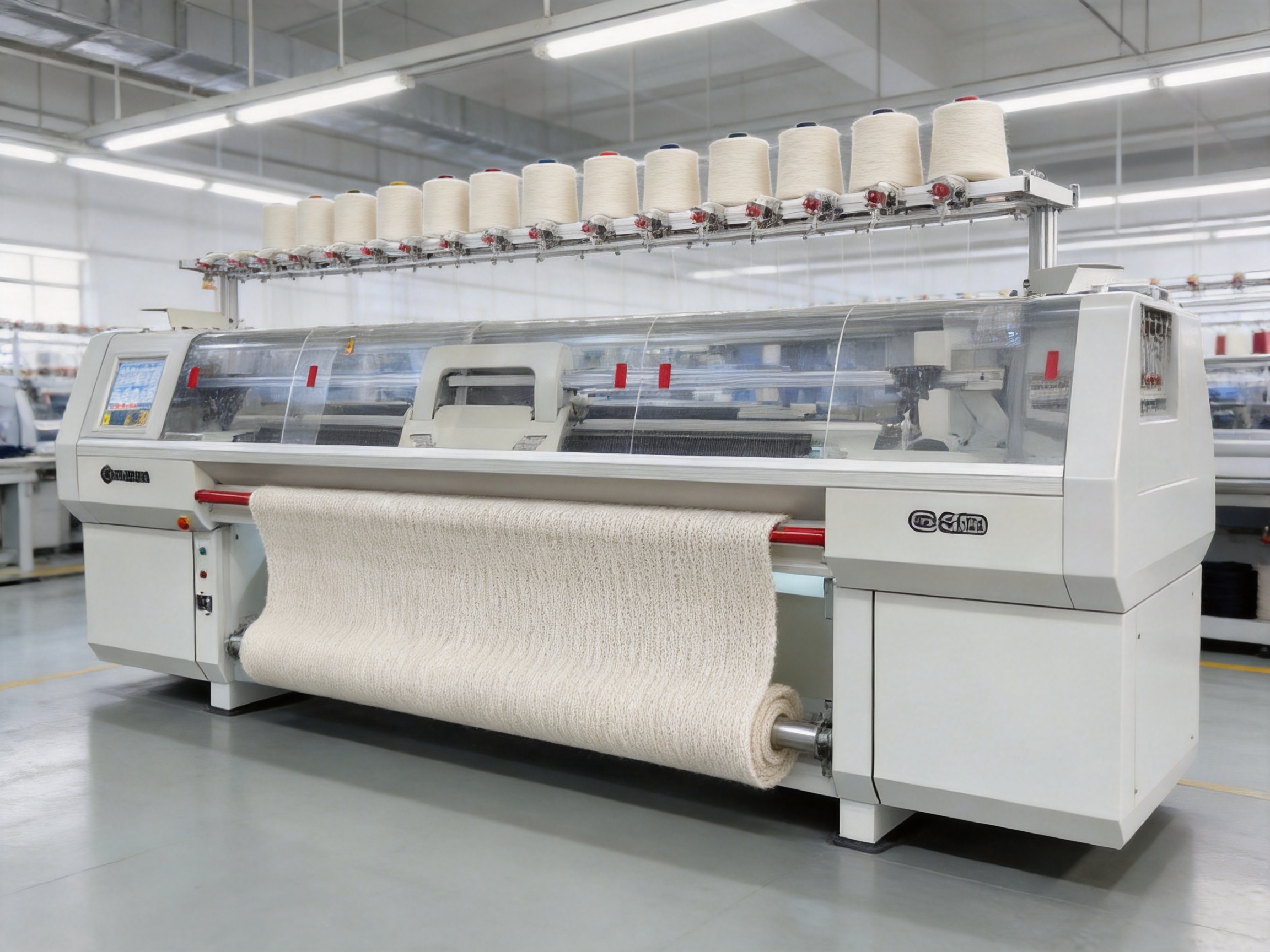
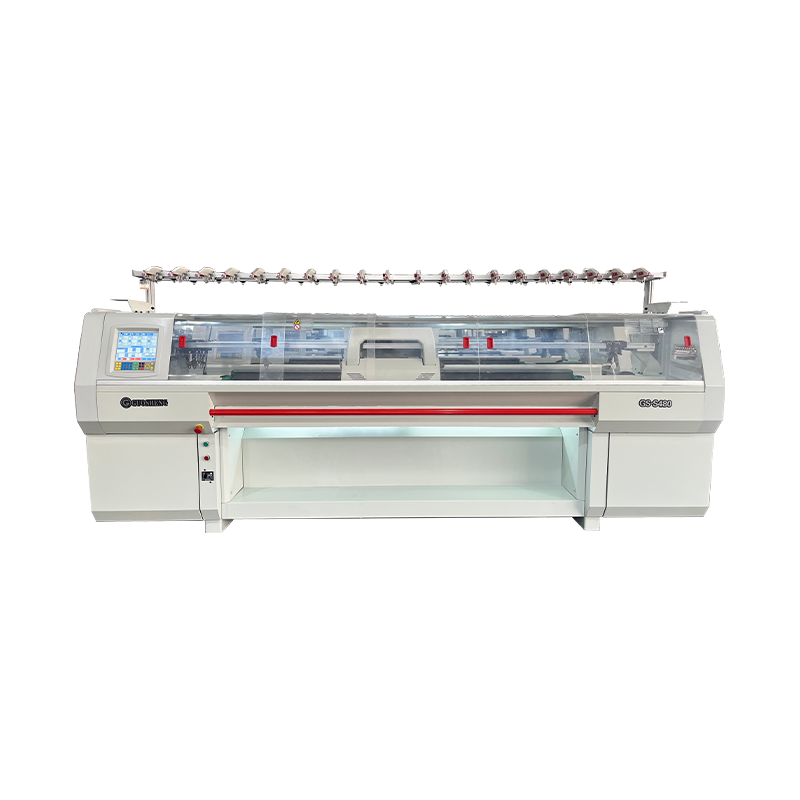
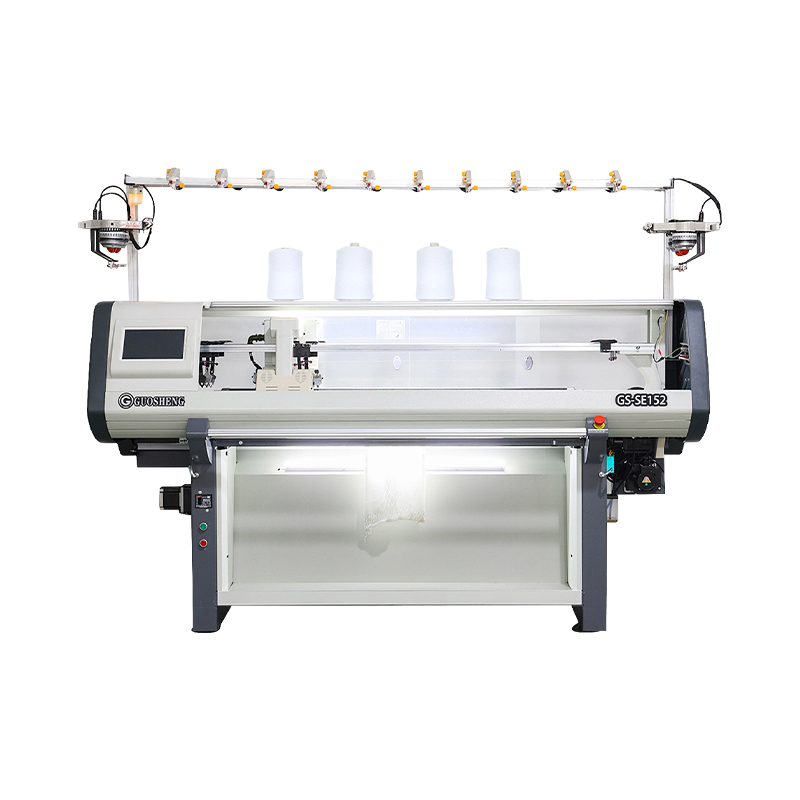
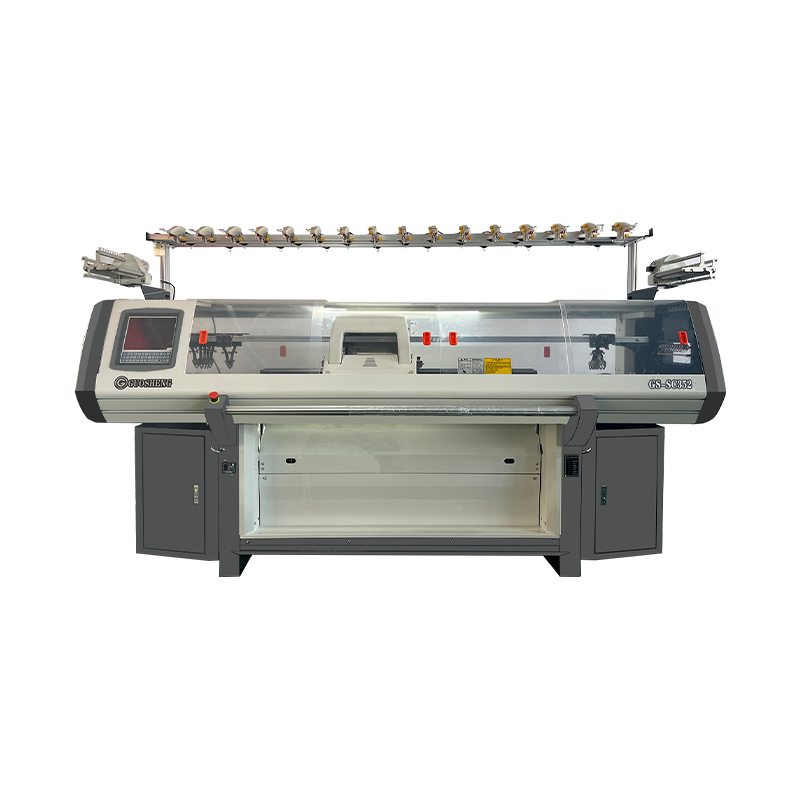
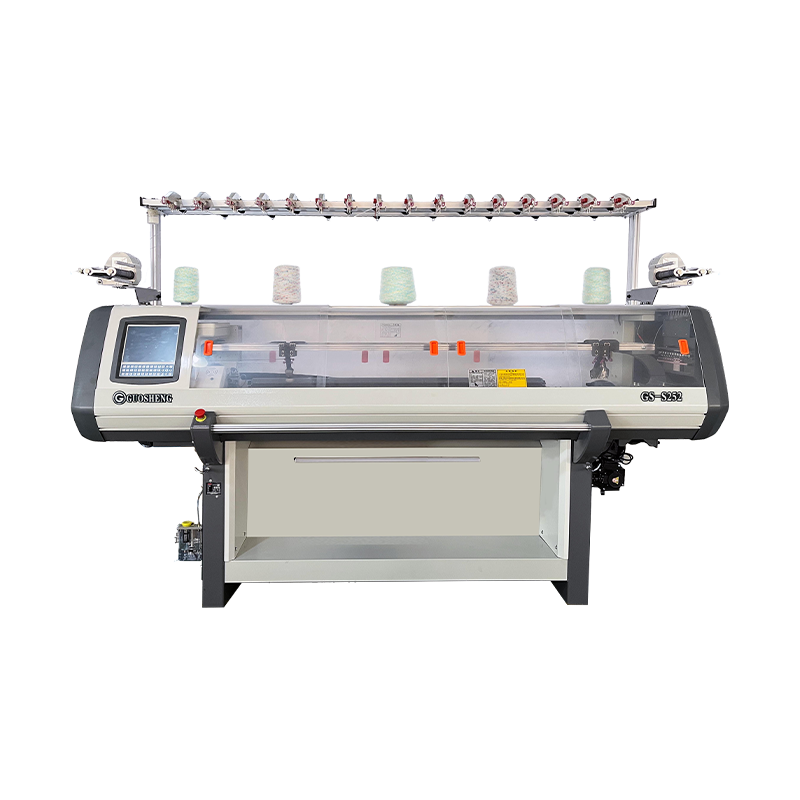
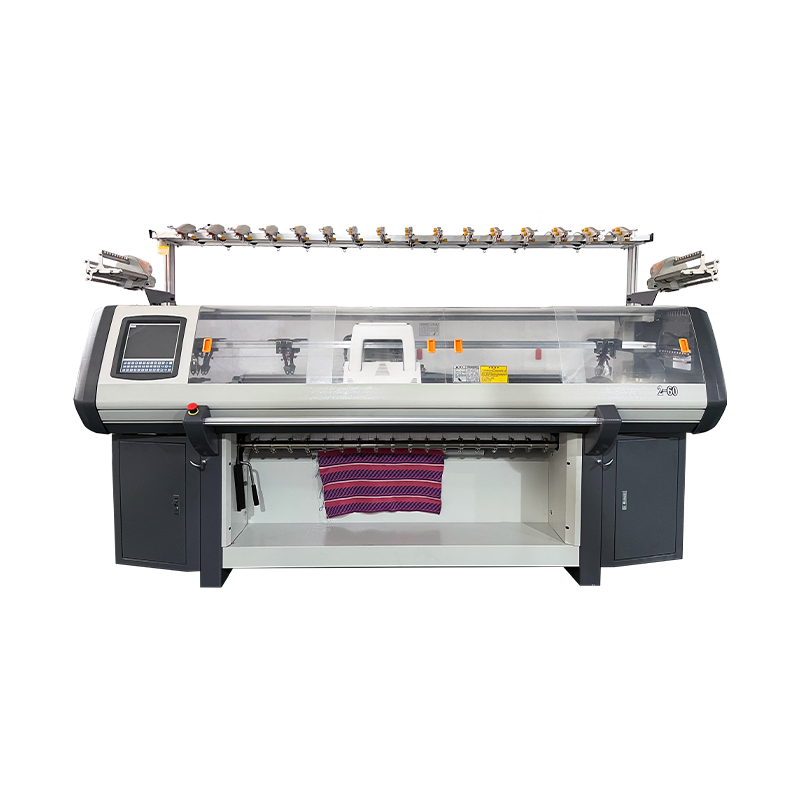
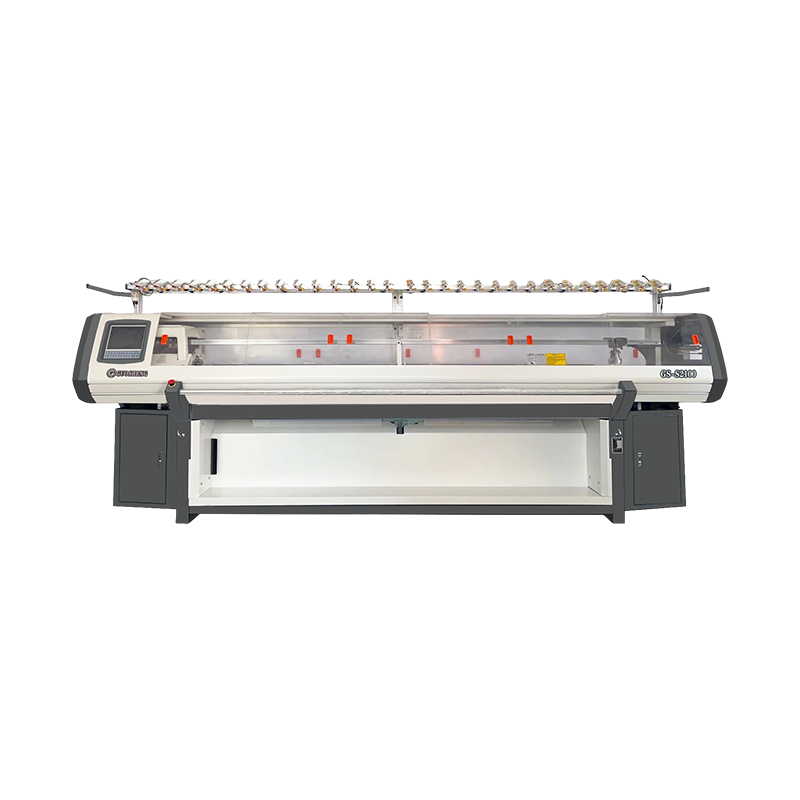
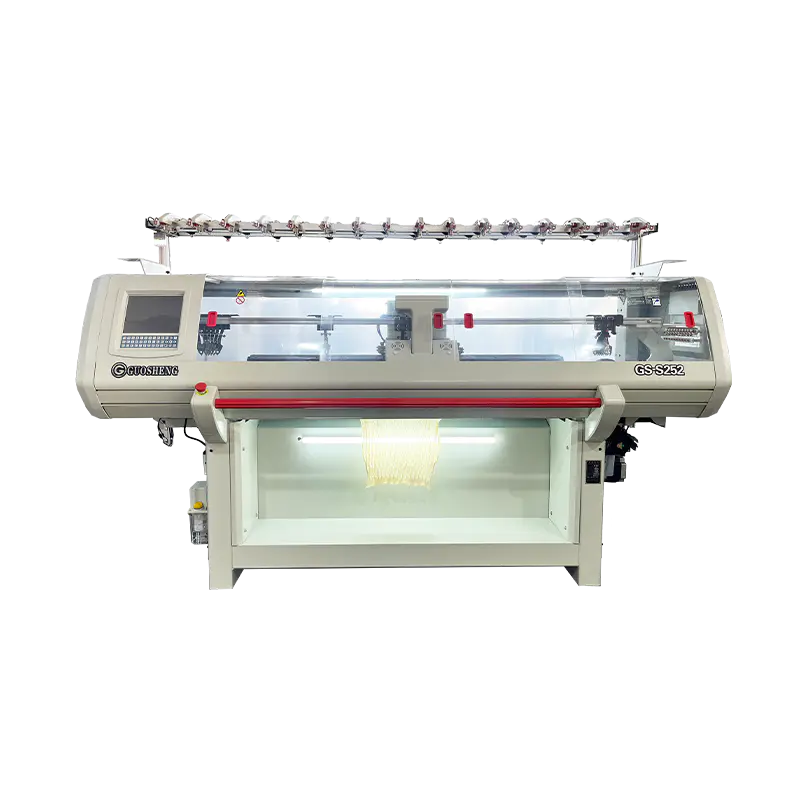
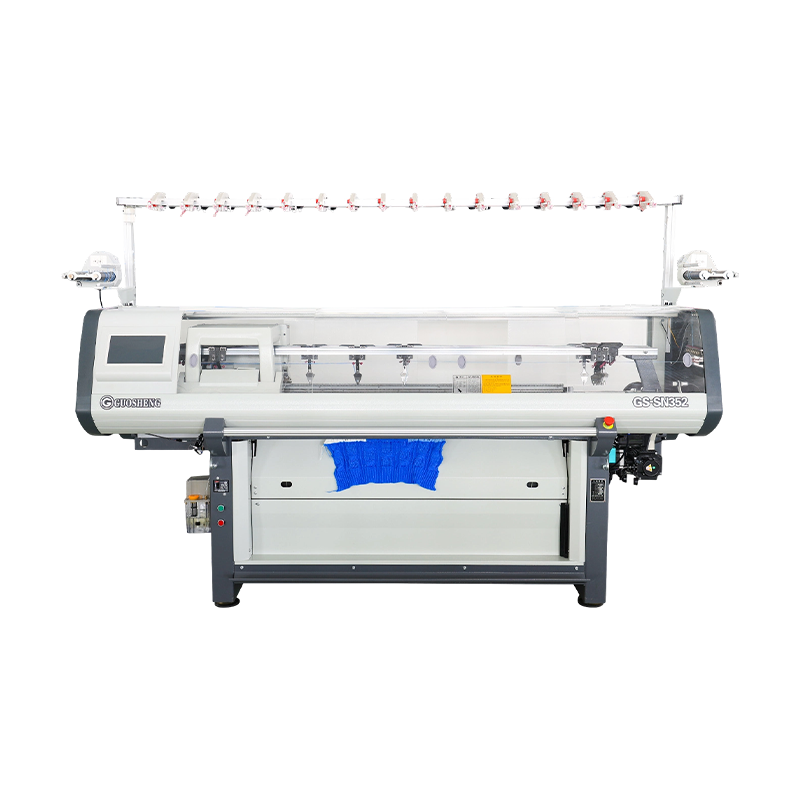
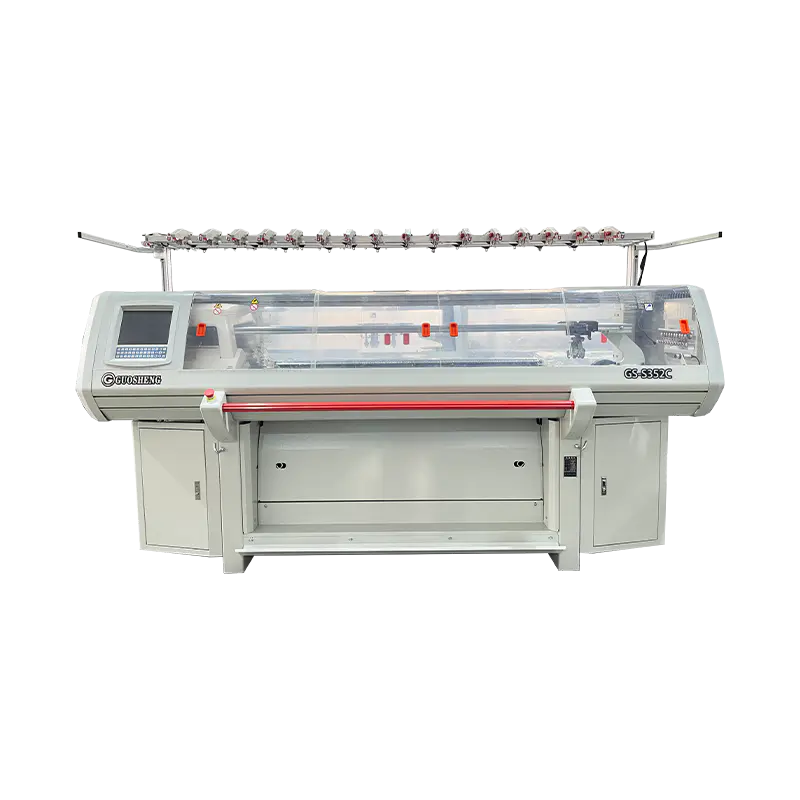
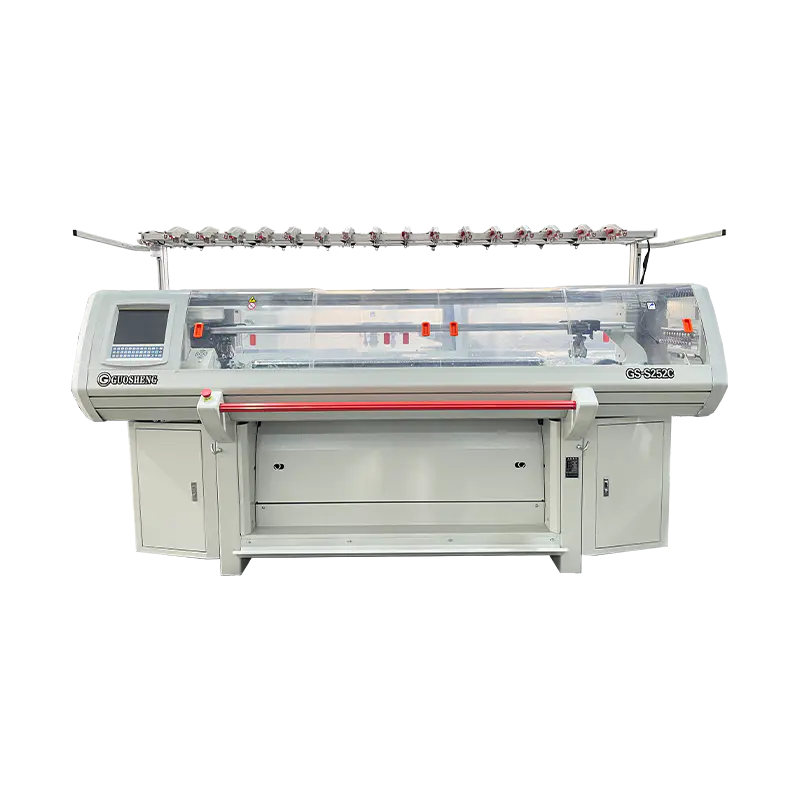
GS-S480 Single Head Four-System Full-Function Computerized Flat Knitting Sweater Machine (Full-Function S)
Modern knitwear manufacturers are under constant pressure to improve productivity, shorten development cycles, reduce operating costs, and deliver consistent fabric quality across increasingly diverse product ranges. Traditional knitting equipment can produce dependable results, but it may require longer carriage travel, more manual intervention, and additional machines when manufacturers need to handle complex structures, large fabric panels, or high-volume orders. A four-system computerized flat knitting machine provides a practical response to these challenges by combining intelligent control, flexible knitting functions, high-speed operation, and stable mechanical performance in one production platform.
The GS-S480 Single Head Four-System Full-Function Computerized Flat Knitting Sweater Machine is designed for manufacturers that need a versatile and efficient solution for sweaters, knitted fabric rolls, patterned textiles, and other flat-knitted products. As part of the Full-Function S Series, it integrates four knitting systems into a single carriage, allowing several knitting operations to be completed during one carriage movement. Its compact 5.2-inch carriage supports rapid reversal, while the computerized control system manages stitch density, needle selection, racking, take-down, yarn carriers, and production monitoring.
The result is a machine that balances productivity with precision. It is suitable for standard sweater production as well as more complex knitted structures involving transfer, tuck, miss, jacquard, intarsia, and shaping. Through programmable operation and adjustable production parameters, the machine can help textile manufacturers move from design development to repeatable production with less setup time and fewer manual adjustments.
Why Four-System Technology Matters in Modern Knitting
The knitting system is one of the most important factors affecting the productivity of a computerized flat knitting machine. In a conventional dual-system machine, the carriage may need to travel repeatedly across the needle bed to complete a knitted structure. During some of these movements, the carriage may not actively create new fabric, resulting in idle travel and lower overall machine utilization.
A four-system configuration allows more knitting operations to take place during the same overall production cycle. The four systems work together within a single carriage, reducing unnecessary movement and improving the productive value of each carriage pass. This is especially beneficial for full-piece fabric rolls, large panels, plain knitted fabrics, and large-volume orders where output consistency and daily production capacity are critical.
The advantage is not limited to speed alone. A four-system machine can also improve production planning. When a manufacturer receives an order involving multiple sizes, colors, or stitch structures, the machine can support more efficient program organization. Fewer interruptions may be required between knitting operations, which can reduce the time spent on machine preparation and increase the proportion of each shift devoted to actual fabric production.
Compared with traditional two-system equipment, the GS-S480 is engineered to provide a more productive workflow while maintaining the flexibility expected from a full-function computerized machine. It is not restricted to one basic fabric structure. Instead, it can support a broad range of knitting techniques and can be programmed for different product types according to the requirements of the order.
Core Product Design
The GS-S480 uses a single-head, single-carriage, four-system configuration. This arrangement provides a compact and coordinated mechanical structure while preserving the production advantages of multiple knitting systems. The 5.2-inch carriage is designed for rapid reversal and stable high-speed movement, helping reduce nonproductive travel and support continuous operation.
A single-carriage design also contributes to easier production management. Operators can monitor one central knitting unit and one integrated control environment instead of coordinating separate carriages. This can simplify parameter management, maintenance routines, pattern setup, and daily troubleshooting, particularly in factories operating multiple machines simultaneously.
The machine is available in a range of gauges, including 3–5G, 5G, 7G, 8G, 9G, 10G, 12G, 13G, 14G, 15G, 16G, and 18G. This broad gauge range allows manufacturers to select an appropriate configuration for thick sweaters, medium-weight knitwear, fine-gauge garments, patterned fabric, accessories, and other products. Gauge selection is a significant production decision because it affects fabric appearance, thickness, handle, yarn compatibility, and product application.
The standard knitting width is 80 inches, with selectable options including 52, 72, 80, 100, 110, and 120 inches. This range supports different production strategies. Narrower widths may be appropriate for compact garments or specialized products, while wider needle beds can support large panels, fabric rolls, blankets, and other products requiring greater working dimensions.
Product Specification Overview
| Model | GS-S480 |
| Machine Configuration | Single head, single carriage, four systems |
| Available Gauges | 3–5G, 5G, 7G, 8G, 9G, 10G, 12G, 13G, 14G, 15G, 16G, 18G |
| Standard Knitting Width | 80 inches |
| Optional Knitting Widths | 52, 72, 80, 100, 110, and 120 inches |
| Maximum Knitting Speed | Up to 1.5 meters per second |
| Knitting Functions | Knitting and tuck on the same line, transfer, tuck, miss, jacquard, intarsia, hidden or apparent shaping |
| Stitch Density Control | Stepping-motor controlled stitch system with subdivision technology |
| Stitch Density Adjustment Range | 128 or 32 adjustable levels, supported range 0–650 |
| Racking | Computer-controlled |
| Drive System | Synchronous belt drive with AC servo system |
| Yarn Carrier Arrangement | Four guide rails with 16 yarn carriers on each side |
| Yarn Carrier Positioning | Shiftable at any needle position |
| Take-Down Roller | Stepping-motor controlled and programmable |
| Take-Down Adjustment | 128-section level selection, adjustable range 0–100 |
| Control Interface | LCD screen with USB input |
| System Memory | 256 MB |
| Power Supply | 220 V, single phase |
High-Speed Operation with Controlled Movement
The maximum knitting speed of the GS-S480 reaches 1.5 meters per second. Actual production speed depends on gauge, yarn, pattern complexity, stitch structure, fabric width, and other operating conditions, but the machine is designed to support high-output manufacturing when properly configured.
Speed alone does not determine production performance. A machine that operates quickly but lacks control may experience vibration, uneven fabric formation, excessive yarn stress, or frequent stoppages. For this reason, the GS-S480 combines high-speed operation with an AC servo drive system and synchronous belt transmission. These technologies are intended to provide accurate movement, smooth acceleration and deceleration, and reliable synchronization between the carriage and the machine’s control functions.
The compact carriage contributes to rapid reversal. Shorter reversal distance can reduce the time required for the carriage to change direction, especially in repeated knitting cycles. This is valuable in continuous production because small time savings in every cycle can produce a substantial increase in output over a full operating shift.
Stable movement also supports fabric consistency. When carriage motion is accurately controlled, needle selection, yarn feeding, transfer, tuck formation, and other operations can be coordinated more precisely. This helps manufacturers reduce variation between production batches and maintain more predictable fabric quality.
Full-Function Knitting Capability
The machine supports knitting and tuck on the same line, transfer, tuck, miss, jacquard, intarsia, and hidden or apparent shaping. These functions provide the foundation for producing a wide range of garment and fabric designs.
Knitting and Tuck on the Same Line
Combining knitting and tuck operations on the same line enables designers to create more varied surface structures and fabric effects. Tuck stitches can add texture, volume, relief, and visual contrast. They can also influence fabric elasticity and handle when applied appropriately to the pattern.
Transfer Functions
Transfer operations allow loops to be moved between needles, supporting the creation of structural details such as openwork, cables, decorative holes, shaping transitions, and other engineered effects. Accurate transfer depends on coordinated needle selection, racking, carriage movement, and stitch control. The computerized system helps manage these operations through programmed instructions.
Miss and Jacquard Structures
Miss stitches and jacquard functions expand the machine’s ability to create color patterns, textured areas, and controlled float structures. These techniques are useful for fashion sweaters, sportswear, decorative panels, technical knitted components, and other products where visual differentiation is important.
Intarsia Production
Intarsia is used to produce clean, localized color areas without requiring conventional long floats across the back of the fabric. The machine’s multiple yarn carrier arrangement helps support color-area production and complex graphic designs. With suitable yarn preparation and program settings, manufacturers can create logos, geometric motifs, artistic patterns, and multi-color panels.
Hidden and Apparent Shaping
Shaping functions allow a knitted product to be formed according to a garment pattern or design requirement. Apparent shaping can be used as a visible design feature, while hidden shaping can help create a smoother finished appearance. These capabilities are important for producing shaped sweater pieces and improving the efficiency of later garment assembly.
Intelligent Stitch Density Control
Fabric quality is strongly influenced by stitch density. If the density is too loose, the fabric may lack stability or show excessive openness. If it is too tight, the fabric may become rigid, heavy, or difficult to process. Different sections of the same product may also require different density settings to achieve the correct appearance and dimensions.
The GS-S480 uses a stepping-motor-controlled stitch system with subdivision technology. It supports 128 or 32 adjustable levels within a range of 0–650. This provides a detailed adjustment capability for manufacturers that need to fine-tune fabric thickness, compactness, elasticity, and surface appearance.
The machine can automatically adjust knitting density according to the specific stitch structure. This intelligent approach helps create finer fabric textures and richer layering while reducing the need for constant manual correction. Operators can still adjust parameters when necessary, but automatic coordination gives the production process a more repeatable foundation.
Programmable density control is especially useful when a single product contains several structural zones. A sweater may require a different setting for the body, cuffs, collar, shoulder, or decorative panel. Similarly, a fabric roll may include alternating stitch structures that require controlled changes in density. The ability to manage these transitions through the program can improve design accuracy and reduce setup complexity.
Computer-Controlled Racking and Needle Selection
Racking is a key operation in flat knitting. It moves one needle bed relative to the other and supports transfer, shaping, pattern formation, and various structural effects. The GS-S480 uses computer-controlled racking to coordinate these movements with the knitting program.
Computerized racking can improve repeatability because the selected movement is stored within the design instructions rather than relying on manual positioning. This is important for products requiring symmetrical details, repeated transfers, or precise shaping sequences. It also makes it easier to reproduce an approved sample in later production runs.
Needle selection is controlled by the computer through an electric magnet or motor needle selection system. High-efficiency selection allows the machine to determine which needles participate in each operation. This supports complex patterns and helps coordinate knitting, tuck, miss, transfer, jacquard, and shaping functions.
Accurate needle selection can also reduce pattern errors. When the program, carriage movement, and selection mechanism operate in coordination, manufacturers can achieve more consistent pattern definition across a batch. This is particularly important for branded apparel, repeated motifs, technical textiles, and export orders with strict quality requirements.
Flexible Yarn Carrier Management
The GS-S480 is equipped with four guide rails and 16 yarn carriers on each side. The yarn carriers can be shifted to any needle position, giving manufacturers considerable flexibility when managing multiple colors and yarn types.
A larger yarn carrier capacity can reduce the need to stop the machine when a design contains several color sections. It also supports more complicated intarsia and jacquard arrangements. Yarn carriers can be assigned according to the pattern requirements, allowing manufacturers to handle multi-color designs, contrast details, logos, stripes, and localized decorative zones more efficiently.
Yarn management remains important even with advanced automation. Correct yarn tension, suitable yarn preparation, proper carrier positioning, and accurate program settings are essential for achieving a clean fabric surface. The machine’s carrier flexibility provides the technical foundation, while production personnel remain responsible for selecting suitable yarns and optimizing operating conditions.
For manufacturers serving different markets, this flexibility can be a competitive advantage. A single machine platform may be used for basic commercial sweaters during one production period and for complex fashion styles or multi-color knit panels during another. This helps improve equipment utilization and supports a more adaptable production schedule.
Programmable Take-Down for Stable Fabric Formation
The take-down system controls how knitted fabric is drawn away from the needle area. Take-down force influences fabric length, loop formation, surface appearance, and dimensional stability. Inconsistent take-down can result in uneven fabric, distorted patterns, or difficulties during subsequent sewing and finishing processes.
The GS-S480 uses a programmable stepping-motor-controlled take-down roller. It provides 128-section level selection with an adjustable range of 0–100. This enables manufacturers to set different take-down conditions for different stages or sections of a product.
Programmable take-down is useful for shaped products because the fabric requirements may change as the knitting width or stitch structure changes. It can also support transitions between dense and open structures, different yarn types, or different sections of a garment. By coordinating take-down with stitch density and needle selection, manufacturers can improve the stability of the finished knitted piece.
The system also contributes to process repeatability. Once a suitable take-down program has been developed for a product, it can be saved and used again for future production. This reduces reliance on memory or manual adjustment and helps standardize results between operators and shifts.
Intelligent Control and User-Friendly Operation
The machine is equipped with an LCD screen and USB input. The control system includes 256 MB of memory, allowing a large number of design files and production programs to be stored. This is useful for manufacturers that manage many styles, sizes, colors, and seasonal collections.
The monitoring menu displays operating parameters and allows adjustments while the machine is running. This makes it possible for operators to observe the production state and make controlled changes without unnecessarily interrupting the knitting cycle. Real-time access to operating information can improve response speed when production conditions change.
The design system is intended to be visual, easy to understand, and upgradeable. A clear interface can reduce the learning burden for operators and help technical staff manage program changes more efficiently. In a production environment, ease of operation matters because complicated controls can increase setup time and raise the risk of input errors.
Multi-language support, including Chinese and English, helps the machine serve international production environments. It can also make technical training and daily operation easier for factories with multilingual teams. A familiar interface allows operators to focus more effectively on pattern settings, production monitoring, and quality control.
USB-based file input supports a practical workflow for transferring design files. Designers and programmers can prepare patterns, save them in an organized library, and load the appropriate file when a production order is scheduled. This helps connect product development with factory-floor execution.
Production Safety and Automatic Protection
Unplanned stoppages can affect delivery schedules and increase production costs. The GS-S480 includes an automatic protection and alarm system designed to notify operators when abnormal conditions occur.
The system can provide alarms for yarn breakage, floating yarn, rewinding, the end of knitting, racking failure, needle breakage, and programming errors. Early notification allows operators to investigate the issue before it causes extensive fabric damage or affects a larger production quantity.
Yarn breakage detection is particularly important in high-speed knitting. If a broken yarn is not identified quickly, the resulting fabric may contain missing areas, structural defects, or an extended fault line. Automatic detection can reduce the response time and help protect the knitted piece.
Needle-breakage protection also supports production reliability. A damaged needle can affect loop formation and may create repeated defects if the machine continues to run. By identifying abnormal conditions and alerting the operator, the protection system helps reduce the risk of larger quality problems.
Programming-error alerts provide an additional safeguard during design transfer and production setup. They do not replace careful program verification, but they provide useful support when the machine detects an operating condition outside the expected range.
Manufacturing Strengths Behind the Equipment
The performance of a computerized flat knitting machine depends on more than its published functions. Mechanical accuracy, electronic integration, software development, assembly quality, testing procedures, and technical support all influence the machine’s value over its operating life.
Guosheng Wonderful Intelligent Technology is a specialized manufacturer focused on the research, development, manufacturing, and global supply of computerized knitting machinery. Its product portfolio includes computerized flat knitting machines, collar knitting machines, and flyknit shoe upper knitting machines. This product scope gives the company experience across several important knitting applications, including sweaters, collars, knitted accessories, sports footwear uppers, and other textile products.
Located in Changshu, Jiangsu Province, the company benefits from the region’s established textile machinery manufacturing ecosystem. A mature industrial environment can support access to engineering resources, component suppliers, technical labor, manufacturing services, and industry knowledge. These conditions are valuable when developing equipment that combines mechanical systems, electronic controls, software, and textile-specific functionality.
The company’s manufacturing strength is based on combining practical industry requirements with continuous equipment improvement. Rather than focusing only on a single performance indicator, the development approach considers machine stability, knitting flexibility, production efficiency, interface usability, and long-term operating performance.
Integration of Mechanical and Electronic Engineering
A computerized flat knitting machine requires close coordination between the needle bed, carriage, drive system, yarn carriers, racking mechanism, stitch control, take-down system, and computer controls. Each component must work within precise timing relationships. Mechanical movement that is not properly synchronized with electronic instructions can cause pattern errors, uneven fabric, or machine stoppages.
The GS-S480 integrates an AC servo drive, synchronous belt transmission, computerized needle selection, stepping-motor stitch control, and stepping-motor take-down. This combination reflects a manufacturing approach that treats the machine as an integrated system rather than a collection of separate parts.
Such integration can provide more consistent carriage movement, more accurate parameter execution, and greater flexibility in software-based adjustment. It also creates a platform that can be refined through control-system updates and production feedback.
Application-Oriented Product Development
Knitting factories have different requirements depending on their products, yarns, order sizes, and target markets. A machine intended for basic sweater panels may have different priorities from one used for fabric rolls, fine-gauge fashion garments, or technical shoe uppers. The manufacturer’s experience across multiple knitting machine categories supports a broader understanding of these application differences.
The GS-S480 is designed for practical use in high-volume knitwear production. Its four-system configuration addresses output requirements, while its full-function capability addresses product variety. Its programmable controls address repeatability, and its wide gauge and width options address different manufacturing strategies.
This application-oriented approach helps ensure that the machine is not simply fast, but useful across real factory conditions. A productive machine must be able to support development, sampling, repeat orders, style changes, and quality control throughout its operating life.
Quality and Process Consistency
Manufacturing advanced textile equipment requires consistent processes. Mechanical parts must be assembled accurately, electronic components must be integrated carefully, and software functions must be verified under practical operating conditions. Production consistency is especially important for machines that may be installed in multiple factories or used as part of a larger fleet.
By focusing on stable machine operation and consistent knitting quality, the manufacturer supports customers that need predictable output over repeated production cycles. Consistency also simplifies operator training because machine behavior is more predictable from one unit to another.
For international customers, manufacturing consistency is closely connected to supply confidence. Buyers typically evaluate not only the machine’s specifications but also the supplier’s ability to provide reliable equipment, clear documentation, technical communication, and continued support.
Advantages Compared with Conventional and Lower-Specification Machines
The GS-S480 offers several advantages over traditional dual-system or less integrated flat knitting machines.
Higher Productive Capacity
Four knitting systems allow more operations to be completed in a carriage cycle than a conventional two-system arrangement. This can reduce idle travel and improve machine utilization. For large orders and full-piece fabric production, the additional systems may provide a meaningful increase in daily output.
Greater Product Flexibility
The machine supports a wide range of knitting functions, gauges, and widths. This allows manufacturers to produce standard sweaters, textured fabrics, jacquard designs, intarsia panels, shaped pieces, and other knitted products on one adaptable platform.
Shorter Development Cycles
Computerized programming, USB file input, stored design memory, and visual operation help reduce the time required to prepare and modify patterns. Faster prototyping enables manufacturers to respond more quickly to customer requests and seasonal fashion changes.
Improved Repeatability
Computer-controlled racking, needle selection, stitch density, and take-down provide a more repeatable production process than manual or partially automated adjustment. This is important for repeated orders and products requiring consistent dimensions.
Better Use of Production Space
A single-carriage four-system machine can provide substantial productivity within one machine footprint. Depending on the factory’s production plan, this may reduce the need to install additional lower-capacity equipment and can make more efficient use of available floor space.
Reduced Dependence on Manual Intervention
Automatic density adjustment, programmable take-down, computerized needle selection, and alarm functions reduce the number of routine corrections required during production. Operators can focus more on monitoring, material preparation, quality checks, and efficient order management.
Support for Digital Manufacturing
The machine’s intelligent programming system and digital file management help connect design work with manufacturing execution. This supports the broader transition from manually controlled production toward data-based and digitally managed textile manufacturing.
Applications Across the Knitwear Industry
The GS-S480 is suitable for a broad range of production applications.
Sweater Production
The machine can produce standard sweater panels, shaped garment pieces, cuffs, collars, decorative sections, and complete knitted components. Its available gauges allow manufacturers to match the machine to different yarn weights and garment styles.
Full-Piece Fabric Rolls
The four-system arrangement is particularly suitable for continuous production of full-piece fabric rolls. This application benefits from high productivity, consistent stitch density, and programmable take-down control.
Patterned Knit Fabrics
Jacquard, intarsia, tuck, miss, transfer, and shaping functions support patterned textile production. Manufacturers can develop fashion designs, geometric patterns, logos, texture effects, and engineered surfaces.
High-Volume Commercial Orders
When order quantities are large, output and repeatability become essential. The machine’s multi-system structure and programmable operating functions can help manufacturers meet delivery schedules while controlling unit production costs.
Fashion and Sample Development
The machine is not limited to mass production. Its computerized programming capabilities make it suitable for sampling and small-batch development. Designers can test stitch structures, color arrangements, and shaped forms before committing to larger production quantities.
Knitted Accessories and Specialty Products
Depending on gauge, width, yarn, and program design, the machine can support certain knitted accessories and specialty textile components. Its flexibility allows factories to explore new product categories without requiring a completely different production platform.
Operational Benefits for Textile Manufacturers
Investment in a computerized flat knitting machine should be evaluated through its total production contribution rather than speed alone. The GS-S480 can support several operational improvements.
First, increased productivity can improve output per shift. When the same factory space and labor resources generate more fabric, the manufacturer may improve capacity without expanding the entire production line.
Second, reduced idle carriage travel can lower the time spent on nonproductive movement. This improves the efficiency of the machine’s working cycle and may help reduce unit manufacturing costs over time.
Third, stored programs can simplify repeat orders. Once a design has been tested and approved, the machine can recall the relevant file and operating parameters. This supports more reliable reproduction and reduces the time required to recreate a previous style.
Fourth, automatic alarms can reduce the impact of production abnormalities. Faster response to yarn breaks, needle problems, racking faults, and programming errors helps protect material and preserve production continuity.
Finally, a flexible machine can help manufacturers respond to changing market demand. The ability to produce basic and complex knitwear on the same platform can reduce the risk associated with relying on a narrow product range.
Recommended Production Workflow
To obtain the best results from the GS-S480, manufacturers should establish a structured workflow from design preparation through final inspection.
Design and Program Preparation
Designers or knitting technicians should define the required stitch structures, color areas, shaping details, gauge, width, and yarn specifications. The program should be checked for needle selection, transfer sequences, racking movements, and carrier assignments before being loaded into the machine.
Yarn and Material Preparation
Yarn should be inspected for count consistency, winding quality, moisture condition, strength, and compatibility with the selected gauge. Proper yarn preparation helps reduce breakage and improve fabric appearance. Carrier routing and yarn tension should be set according to the material and design.
Machine Setup
Operators should confirm the needle bed condition, carriage movement, yarn carrier positions, stitch density, take-down settings, and safety functions. A short test section can be produced to verify fabric dimensions, pattern registration, surface appearance, and structural stability.
Parameter Optimization
After the test section is evaluated, operators may adjust stitch density, take-down force, carriage speed, yarn tension, or pattern settings. The goal is to establish a balanced condition that provides the required appearance and dimensions without placing unnecessary stress on the machine or yarn.
Production Monitoring
During continuous production, operators should monitor alarms, fabric formation, yarn supply, carriage movement, and take-down behavior. Early attention to abnormal conditions can prevent larger defects and reduce material waste.
Quality Verification
Finished fabric should be checked for width, length, density, pattern accuracy, surface defects, yarn faults, and dimensional stability. For garment components, measurements should be compared with approved specifications before the order proceeds to sewing or finishing.
Maintenance and Long-Term Performance
Regular maintenance is essential for preserving the performance of any computerized knitting machine. Operators should follow the manufacturer’s maintenance recommendations for cleaning, lubrication, needle inspection, carriage inspection, belt condition, electrical connections, and software management.
Needle beds and knitting elements should be kept clean because lint, fiber accumulation, and foreign material can affect needle movement and stitch formation. Yarn carriers and guide rails should also be inspected to ensure smooth operation.
The synchronous belt drive and AC servo system should be monitored for unusual noise, vibration, or movement. Early identification of mechanical changes can help prevent unexpected downtime and protect production quality.
Electronic control systems should be protected from unsuitable operating conditions, including unstable power, excessive dust, moisture, and unauthorized software changes. Design files should be backed up so that important patterns and production programs are not lost.
Maintenance records can help factories identify recurring issues, plan service intervals, and calculate the actual operating cost of each machine. A disciplined maintenance program supports longer equipment life and more reliable production scheduling.
How the Machine Supports Sustainable Production
Efficient equipment can contribute to more sustainable manufacturing by reducing wasted movement, material loss, and unnecessary rework. The four-system configuration improves productive use of carriage travel, while programmable control helps reduce errors during repeated production.
Accurate stitch density and take-down control can also reduce the need to discard fabric because of dimensional inconsistency. Automatic protection functions may limit the length of defects caused by yarn breakage, needle damage, or other abnormalities.
Digital pattern storage reduces the need for repeated manual preparation and supports more efficient sampling. When a design can be tested and adjusted digitally before full production, manufacturers may reduce the amount of material consumed during trial-and-error development.
Energy efficiency depends on the complete production environment, including operating speed, machine utilization, maintenance condition, power management, and factory scheduling. By increasing output from a compact and integrated machine platform, manufacturers may improve the relationship between production capacity and factory resources.
Purchasing Considerations for International Buyers
When selecting a computerized flat knitting machine, buyers should evaluate product requirements before choosing gauge, width, and configuration. The correct machine should match the factory’s yarn range, garment types, expected order volume, design complexity, and available technical skills.
Buyers should also consider whether the machine’s control interface is suitable for local operators and whether technical documentation and training can be provided. Multi-language operation is helpful, but effective implementation also depends on clear setup procedures and practical instruction.
Another important consideration is the supplier’s ability to provide long-term support. Spare parts, troubleshooting communication, software assistance, maintenance guidance, and technical response can influence the total value of the equipment over many years.
The manufacturer’s experience in several knitting machine categories can be valuable when customers need to expand their product range. A supplier familiar with flat knitting, collar knitting, and shoe upper applications may be able to provide broader technical insight than a company focused on only one narrow product type.
Finally, buyers should assess the machine as part of a complete production system. Yarn preparation, pattern development, quality inspection, finishing, operator training, and maintenance all influence the results. A high-performance machine delivers the greatest value when these supporting processes are properly organized.
Frequently Asked Questions
What type of machine is the GS-S480?
The GS-S480 is a single-head, single-carriage, four-system computerized flat knitting machine designed for sweater production, knitted fabric rolls, patterned textiles, and other flat-knitted products.
What is the main advantage of four knitting systems?
Four knitting systems allow more knitting operations to be completed during a carriage cycle. This can reduce idle carriage travel, improve machine utilization, increase output, and lower unit production costs for suitable high-volume applications.
What products can the machine produce?
The machine can support standard sweaters, shaped sweater pieces, full-piece fabric rolls, patterned knit fabrics, jacquard designs, intarsia products, textured fabrics, and various knitted components. The final product range depends on gauge, yarn, width, pattern, and production settings.
What gauges are available?
Available gauges include 3–5G, 5G, 7G, 8G, 9G, 10G, 12G, 13G, 14G, 15G, 16G, and 18G. The appropriate gauge should be selected according to yarn type, fabric thickness, product design, and required surface appearance.
What knitting functions are supported?
The machine supports knitting and tuck on the same line, transfer, tuck, miss, jacquard, intarsia, and hidden or apparent shaping. These functions provide flexibility for both basic and complex knitwear designs.
How does the machine control stitch density?
Stitch density is controlled by a stepping motor and subdivision technology. The system supports 128 or 32 adjustable levels within a range of 0–650, allowing operators to fine-tune fabric structure and dimensions.
Can stitch density change during one production program?
Yes. Programmable density control allows different sections or stitch structures to use different settings. This is useful for shaped garments, mixed textures, collars, cuffs, decorative areas, and fabrics with changing structural requirements.
How many yarn carriers are available?
The machine has four guide rails with 16 yarn carriers on each side. The carriers can be shifted to any needle position, supporting multi-color designs and complex yarn arrangements.
What is the maximum knitting speed?
The maximum specified knitting speed is 1.5 meters per second. Actual operating speed depends on the gauge, yarn, pattern complexity, fabric width, stitch structure, and other production conditions.
Does the machine include automatic protection functions?
Yes. The machine can automatically alarm for conditions such as yarn breakage, floating yarn, rewinding, the end of knitting, racking failure, needle breakage, and programming errors.
How does the control system support production?
The control system uses an LCD screen, USB input, 256 MB of memory, a monitoring menu, adjustable operating parameters, visual design functions, and multi-language support. These features help operators manage design files, monitor production, and modify settings.
Is the machine suitable for large orders?
Yes. Its four-system configuration, high-speed operation, programmable controls, and stable take-down system make it particularly suitable for full-piece fabric rolls, knit fabrics, and high-volume orders.
Is it also suitable for small-batch sampling?
Yes. Computerized programming and stored design files make it suitable for sampling, product development, and small-batch production. Designers can test patterns and structures before moving to larger orders.
What power supply does the machine require?
The specified power supply is 220 volts, single phase. The machine also includes a power-off memory function to help preserve operating information when power is interrupted.
What should buyers consider before ordering?
Buyers should consider the required gauge, knitting width, yarn range, product types, order volume, pattern complexity, factory space, operator skills, maintenance capability, and available technical support. Selecting the configuration according to the actual production plan is essential.
Conclusion
The GS-S480 Single Head Four-System Full-Function Computerized Flat Knitting Sweater Machine is designed for manufacturers seeking higher productivity without sacrificing knitting flexibility or process control. Its four-system single-carriage configuration helps reduce idle movement and improve output, while the compact carriage supports rapid reversal and stable operation.
Its full-function design supports knitting, tuck, transfer, miss, jacquard, intarsia, and shaping. Computer-controlled racking and needle selection improve pattern accuracy, while intelligent stitch density adjustment and programmable take-down support consistent fabric formation. Multiple yarn carriers, broad gauge selection, selectable knitting widths, and a digital control system make the machine adaptable to a wide range of products.
The equipment is supported by a manufacturing approach centered on computerized knitting technology, application-oriented development, mechanical and electronic integration, and international supply capability. For textile manufacturers producing sweaters, fabric rolls, patterned knitwear, and high-volume orders, the machine offers a practical platform for improving capacity, shortening development cycles, reducing production variation, and advancing toward intelligent manufacturing.
References
1. Product technical information for the GS-S480 Single Head Four-System Full-Function Computerized Flat Knitting Sweater Machine.
2. Manufacturer-provided specifications for computerized flat knitting machine gauges, widths, knitting systems, control functions, and protection systems.
3. General principles of computerized flat knitting, stitch density control, racking, needle selection, yarn carrier management, and programmable take-down.
4. Industry practices for sweater production, knitted fabric roll manufacturing, jacquard knitting, intarsia knitting, and textile machine maintenance.
5. Technical considerations for digital manufacturing, production monitoring, machine utilization, and quality control in modern knitwear factories.
6. General textile machinery engineering references concerning AC servo drives, synchronous belt transmission, stepping-motor control, and computerized production systems.
7. Manufacturer company information concerning computerized knitting machinery research, development, manufacturing, and international customer support.
Product: GS-S480 Single Head Four-System Full-Function Computerized Flat Knitting Sweater Machine (Full-Function S)

Ready to Begin?
Product Categories
- Sweater Knitting Machine (Economic SE)
- Sweater Knitting Machine (Full Function S)
- Collar Knitting Machine (Economic CE)(Fabric)
- Collar Knitting Machine (Full-Function C)
- Blanket Knitting Machine(Fabric)
- Shoe Upper Knitting Machine
- Ready To Wear Sweater Knitting Machine
- Ready To Wear Glove Knitting Machine
- Ready To Wear Hat Knitting Machine
- Knee Pad Knitting Machine
- Metal Mesh Knitting Machine
Contact Information
-
 Email: gs@guoshengchina.cn
-
 Phone: +86-0512-52690511
-
 Address: No. 18, Hupu Pujiang Road, Bixi New District, Changshu City, Jiangsu Province, China
QR Code
