


 English
 Español
 русский
 عربى
 中文简体

Lin Yuxi — International Product Sales Manager
GS-SN352 52-Inch Three-System Full-Function Economical Sweater Knitting Machine
Date:Nov 17, 2026
Content
- 1 Designed for Economical Three-System Production
- 2 Compact 5.2-Inch Carriage and Floor-Space Efficiency
- 3 Three-System Single-Carriage Performance
- 4 Fixed-Track Cam Structure for Reliable Operation
- 5 Broad Gauge Range for Diverse Knitwear
- 6 Flexible Knitting Width Options
- 7 Complete Flat Knitting Functions
- 8 Precision Stitch Density Control
- 9 Stepping-Motor Take-Down System
- 10 AC Servo Racking Control
- 11 Sixteen-Carrier Yarn System
- 12 Programmable Scissor and Clamp System
- 13 Computerized Control and Operator Interface
- 14 Protection and Fault-Detection Functions
- 15 Power-Off Memory and Electrical Configuration
- 16 Manufacturing Strengths of the Equipment Supplier
- 17 Engineering and Quality Considerations
- 18 Competitive Advantages Compared with Conventional Alternatives
- 19 Applications in Sweater and Knitwear Manufacturing
- 20 Installation and Production Planning Considerations
- 21 Maintenance and Long-Term Performance
- 22 Operational Benefits for Small and Medium-Sized Factories
- 23 Technical Specification Table
- 24 Why the GS-SN352 Is a Practical Investment
- 25 Q&A
- 25.1 What type of machine is the GS-SN352?
- 25.2 What is the standard working width?
- 25.3 What makes the 5.2-inch carriage important?
- 25.4 Can the machine produce jacquard and intarsia designs?
- 25.5 How many yarn carriers does the machine have?
- 25.6 How does the machine help reduce yarn waste?
- 25.7 What gauges are available?
- 25.8 What is the maximum knitting speed?
- 25.9 Does the machine use servo control?
- 25.10 What control functions are included?
- 25.11 What protection functions are provided?
- 25.12 Is the machine suitable for small and medium-sized factories?
- 25.13 What power supply does the machine require?
- 25.14 How does the fixed-track cam system benefit production?
- 25.15 Can the machine store production programs?
- 26 Conclusion
- 27 References
- 28 Product: GS-SN352 52-Inch Three System Full-Function Economical Sweater Knitting Machine
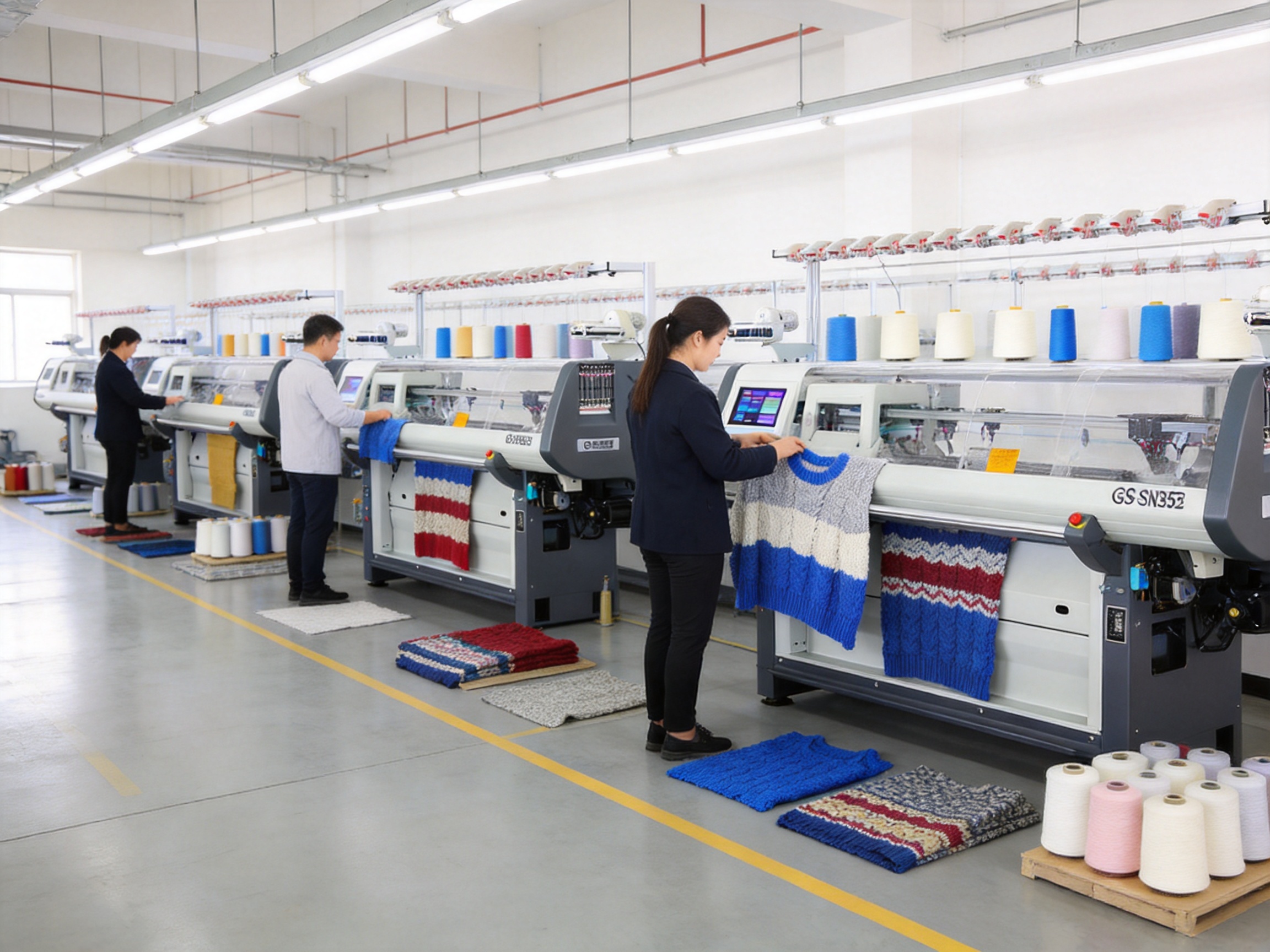
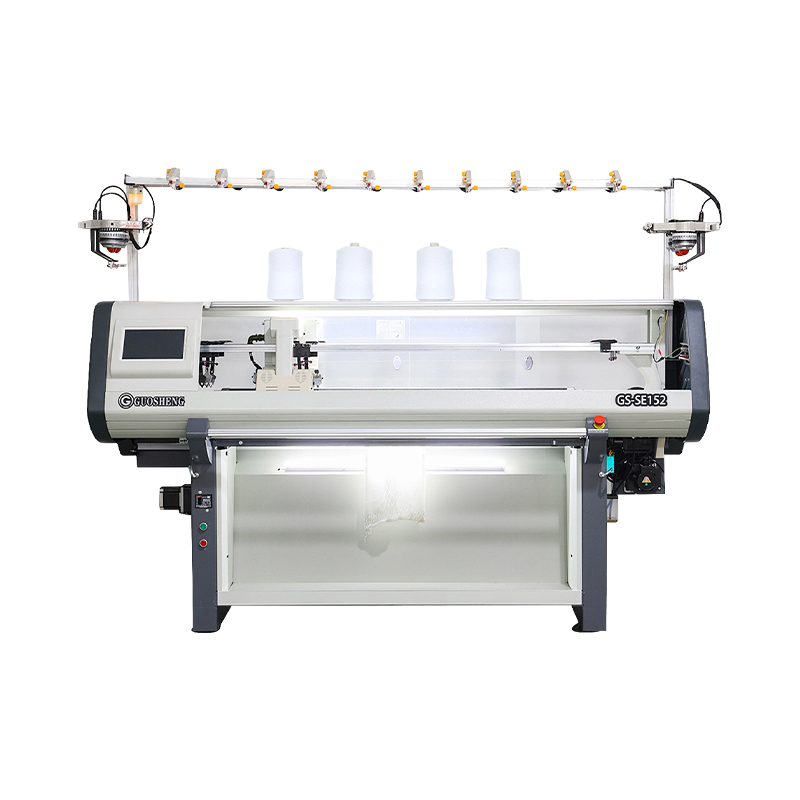
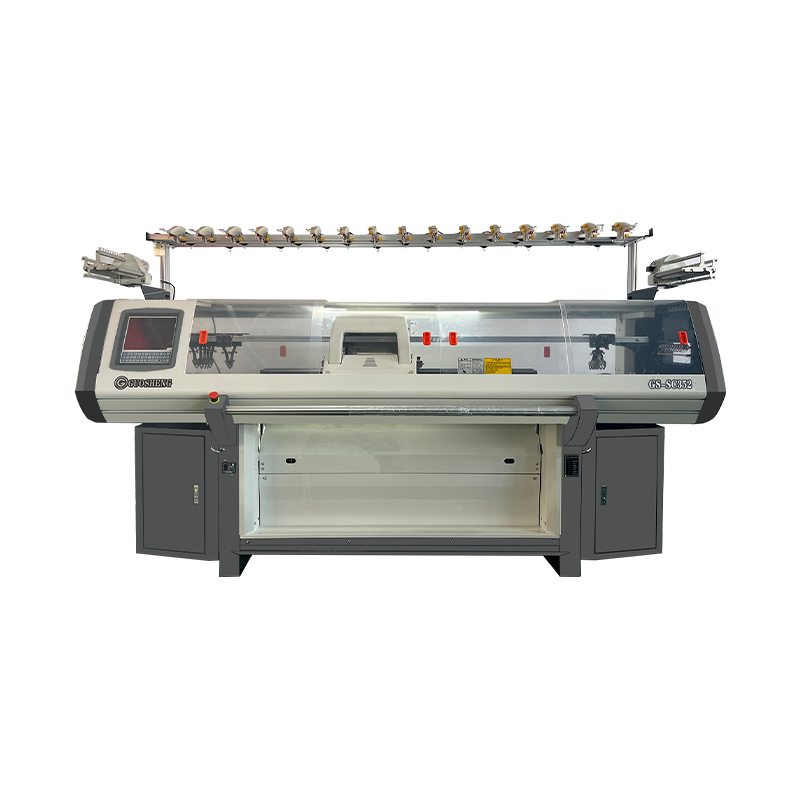
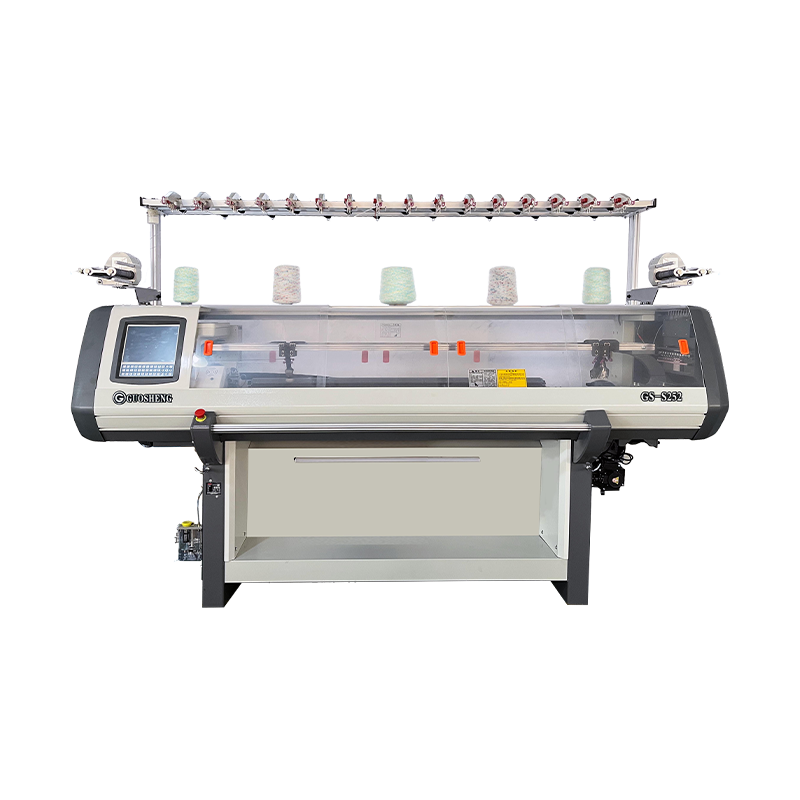
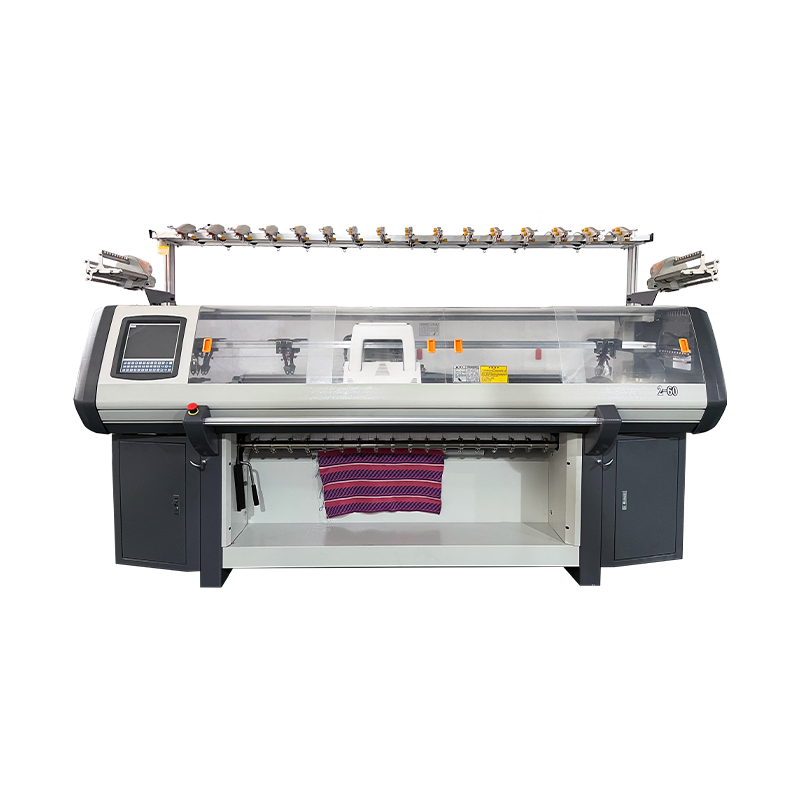
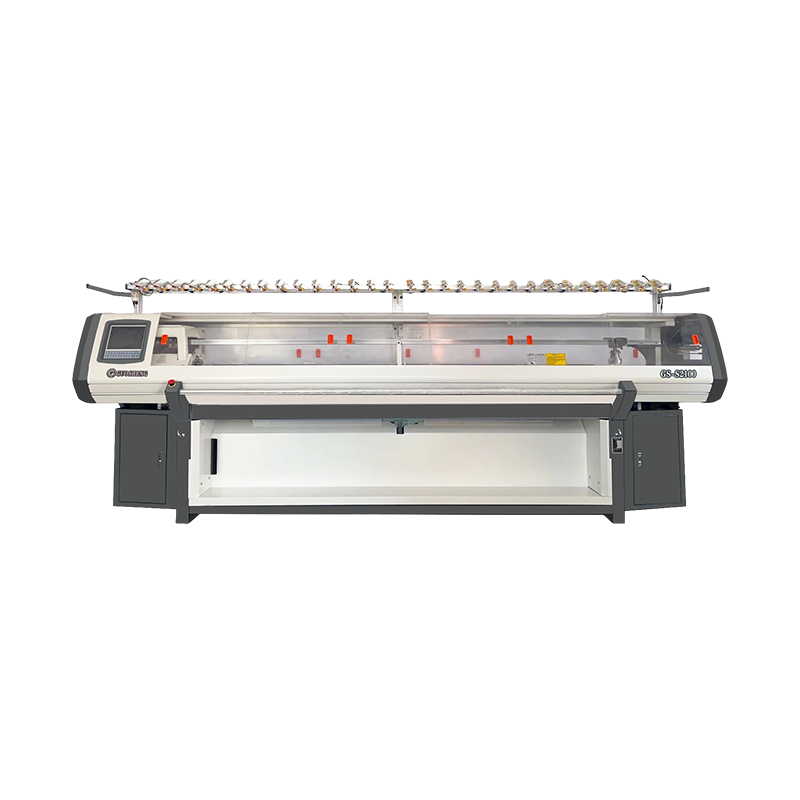
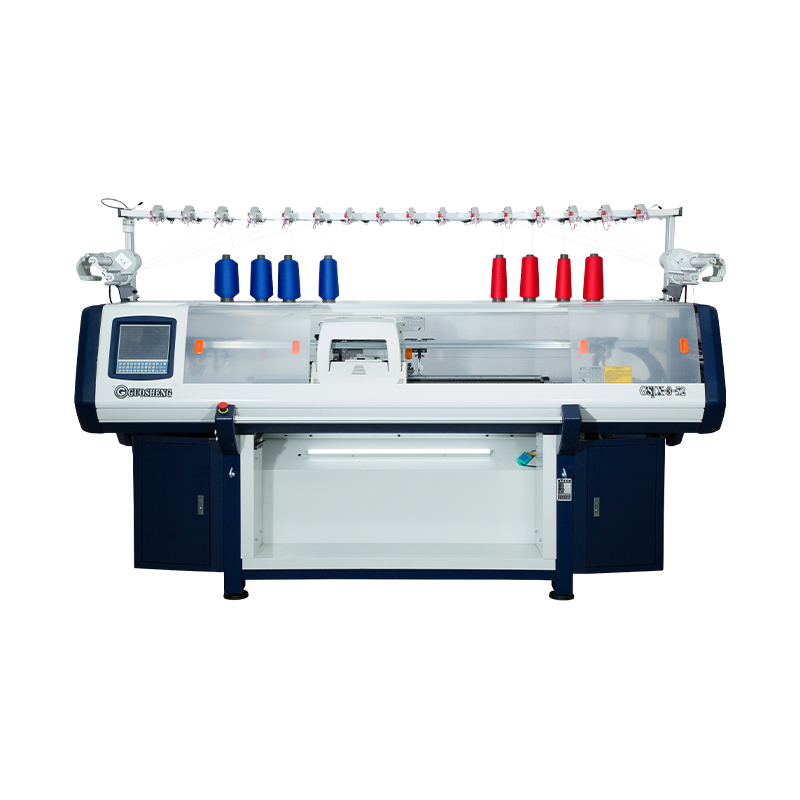
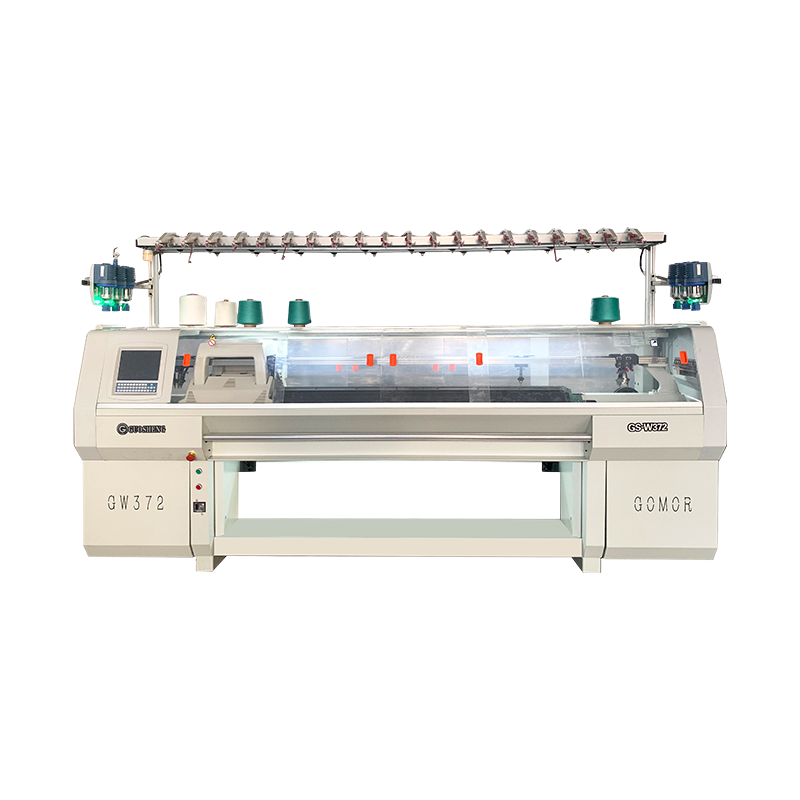
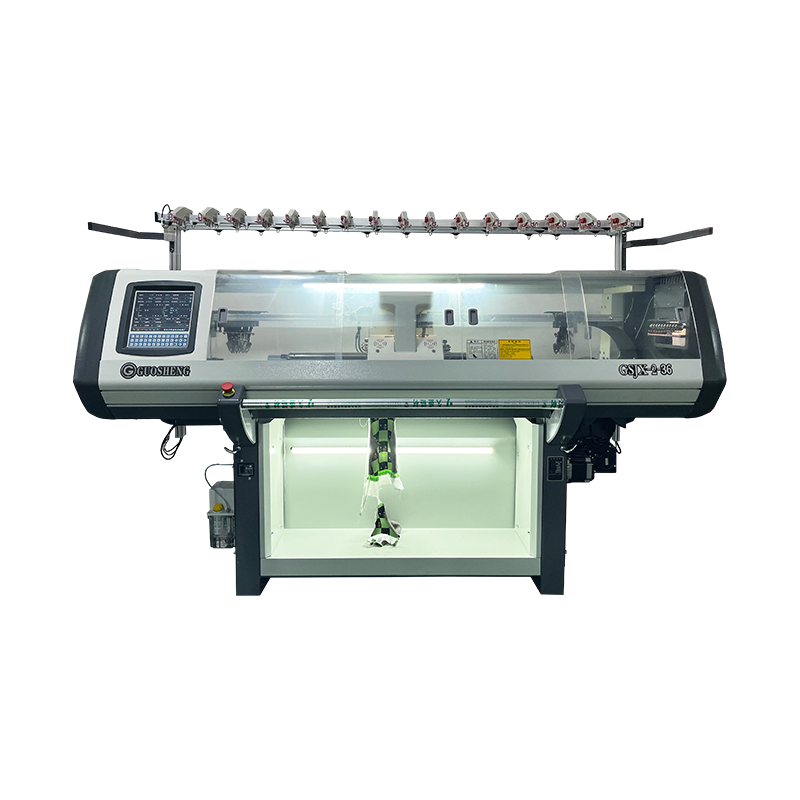
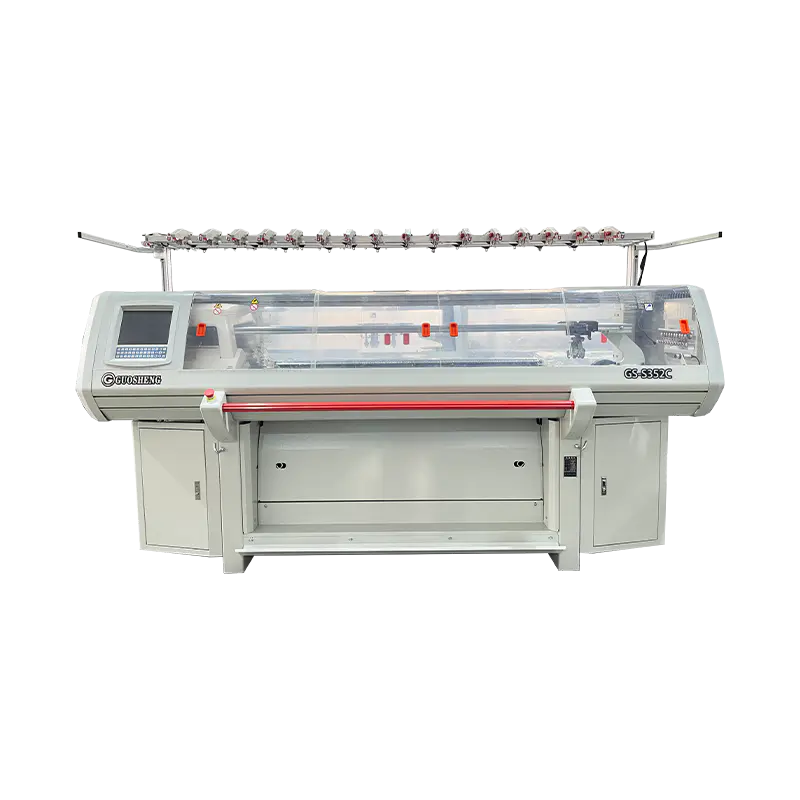
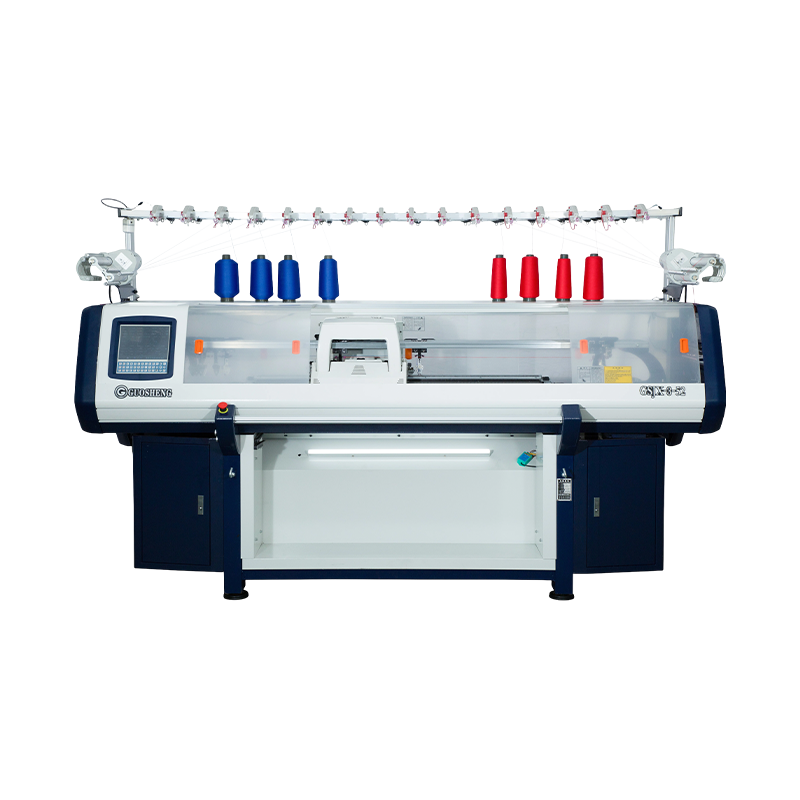
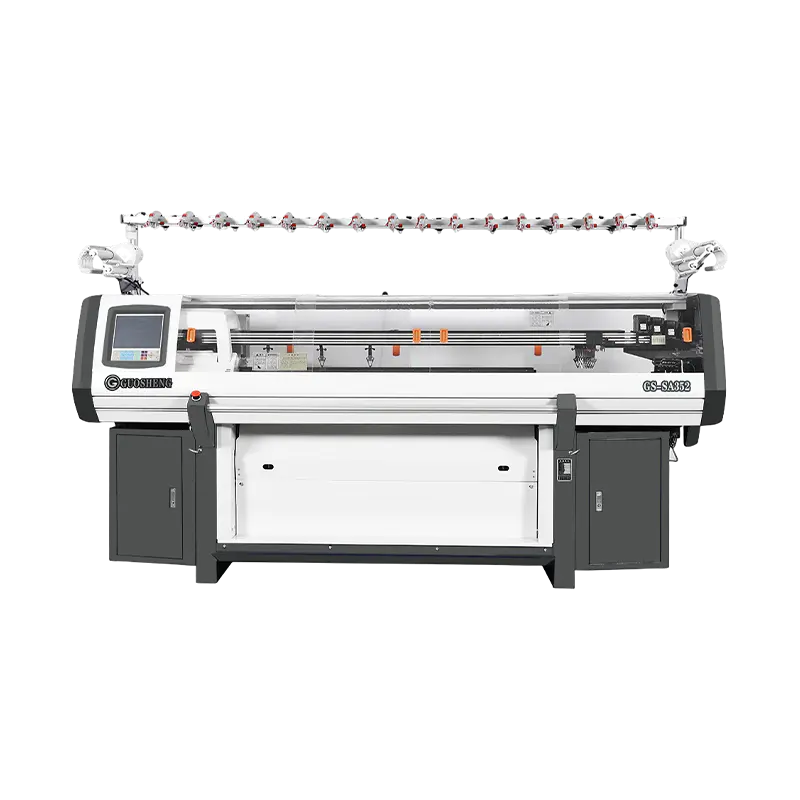
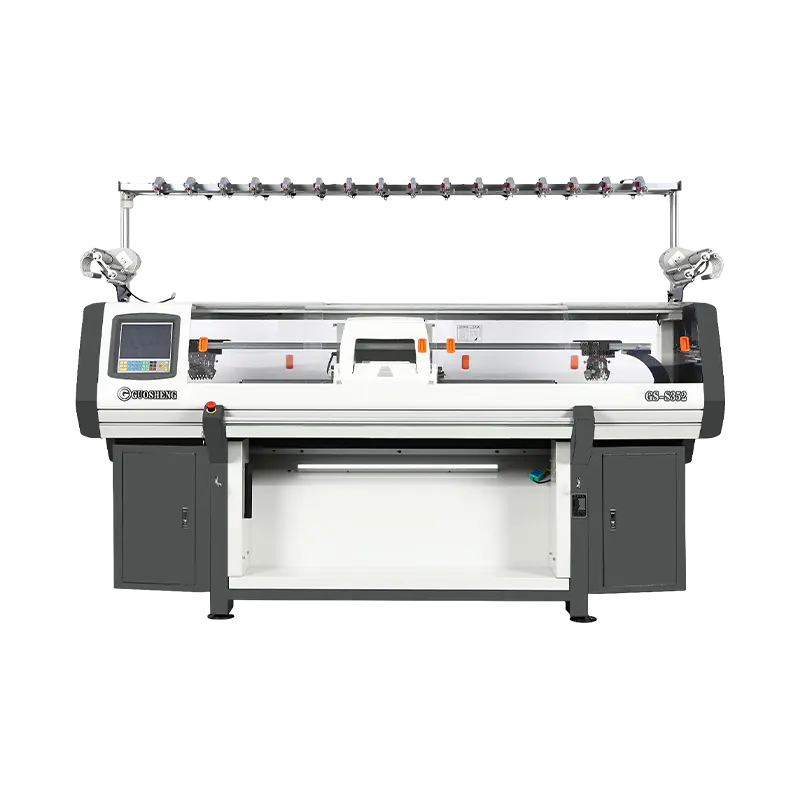
The GS-SN352 is a computerized flat knitting machine developed for sweater manufacturers that need the productivity and flexibility of a three-system platform without investing in the larger footprint, higher energy consumption, and greater operating cost associated with conventional full-size machines. Designed for small and medium-sized knitwear factories, this 52-inch economical model combines a compact carriage, reliable fixed-track cam technology, intelligent control, broad gauge coverage, and a complete set of professional knitting functions.
As demand for knitted garments continues to diversify, manufacturers must produce more than standard sweaters. Modern production may include lightweight pullovers, chunky knitwear, jacquard garments, intarsia panels, fashion accessories, shaped components, and customized small-batch orders. A suitable knitting machine must therefore provide high productivity while retaining the ability to change fabric structures, yarn types, garment dimensions, and production programs efficiently.
The GS-SN352 addresses these requirements through a three-system, single-carriage configuration. It supports transfer, tuck, miss, jacquard, intarsia, and needle transfer functions, allowing one machine platform to serve many product categories. At the same time, its 5.2-inch extra-small carriage reduces the machine’s physical size and helps lower energy consumption. The result is a practical balance between performance and investment efficiency.
Manufactured by Guosheng Wonderful Intelligent Technology (Changshu) Co., Ltd., the GS-SN352 reflects the company’s focus on computerized knitting machinery, engineering development, intelligent control, and practical textile production solutions. Its structure is intended not merely to deliver impressive technical specifications, but to support stable, repeatable, and economical operation in real factory environments.
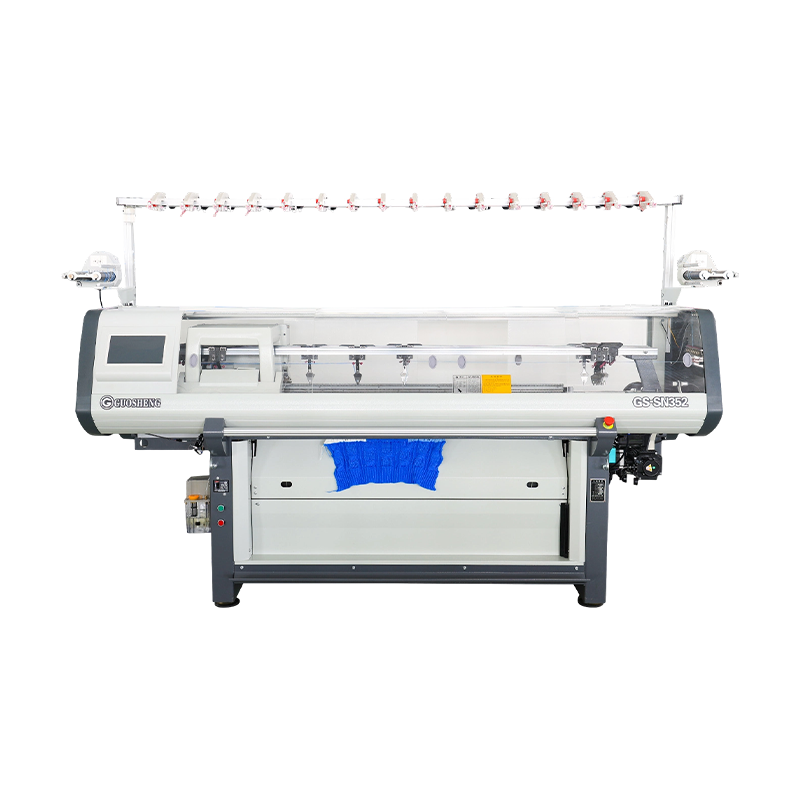
GS-SN352 52-Inch Three System Full-Function Economical Sweater Knitting Machine
Designed for Economical Three-System Production
Three-system knitting machines are valued because they can complete more knitting actions during each carriage pass than many two-system configurations. This can improve effective productivity, especially when a production program contains multiple knitting movements, color changes, transfers, or structured fabric operations. The GS-SN352 brings this three-system capability into a more compact and cost-conscious machine design.
The machine uses three working positions in a single carriage. This configuration supports full-function flat knitting operations while maintaining a relatively small mechanical format. For factories that need more output but cannot accommodate large numbers of full-size machines, the GS-SN352 can offer a more efficient use of available floor space.
The economical design does not mean that the machine is limited to basic sweater panels. It is equipped for professional knitting functions, including transfer, tuck, miss, jacquard, intarsia, and needle transfer. These functions give designers and production teams greater control over fabric appearance, thickness, elasticity, color placement, and garment shaping.
In a competitive manufacturing environment, production cost is determined by more than the purchase price of equipment. Energy use, floor-space utilization, maintenance requirements, yarn waste, downtime, operator efficiency, and fabric consistency all influence the final cost of each garment. The GS-SN352 is designed around this broader economic principle.
Its compact carriage reduces the movement mass and overall machine dimensions. Its fixed-track cam arrangement reduces mechanical complexity. Its programmable scissor and clamp system limits unnecessary yarn loss. Its stepping-motor controls support repeatable stitch and take-down settings. Together, these features create a machine platform intended to improve the total operating value of a knitting line rather than focusing on speed alone.
Compact 5.2-Inch Carriage and Floor-Space Efficiency
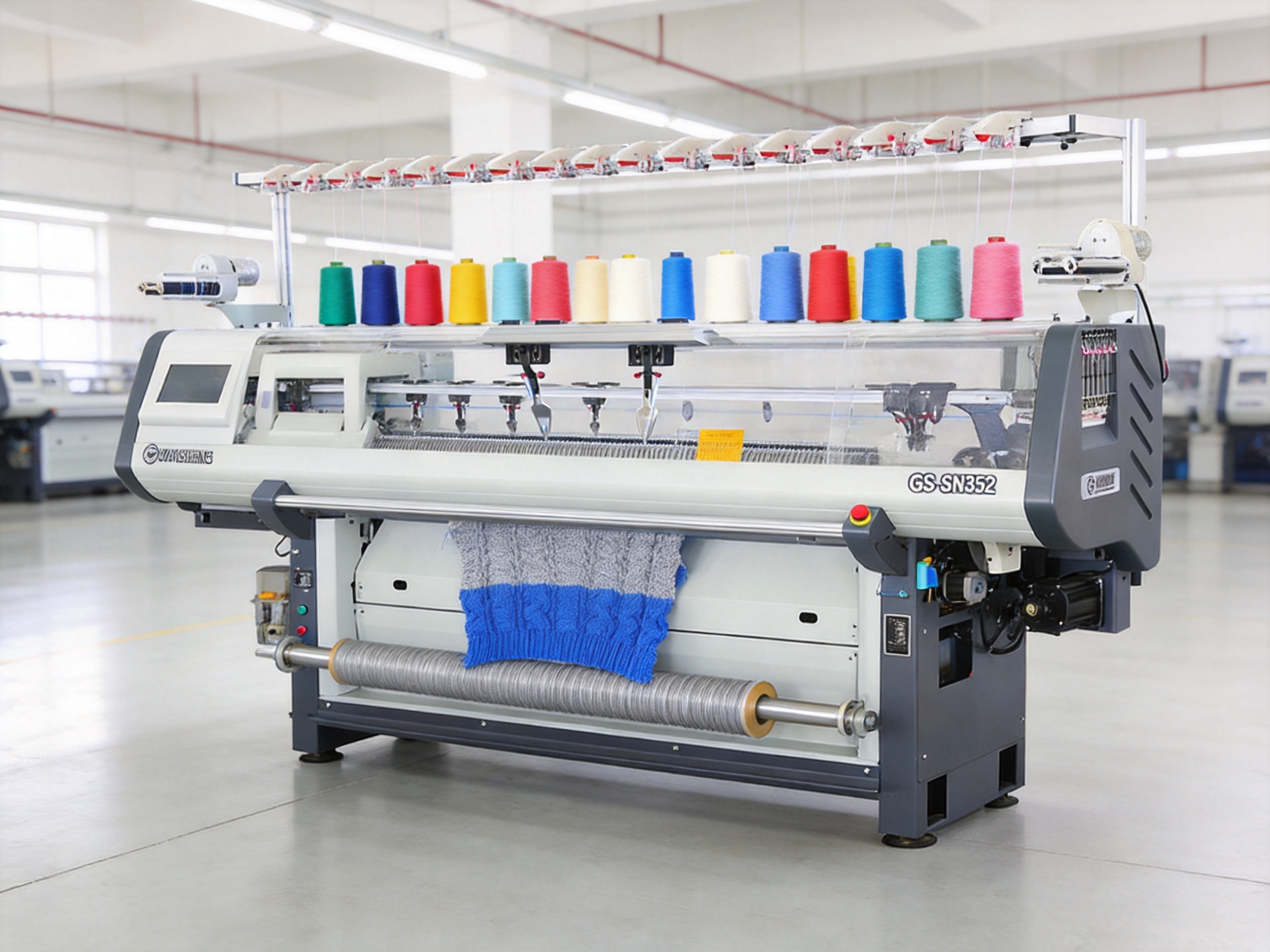
The defining structural feature of the GS-SN352 is its 5.2-inch extra-small carriage. This compact carriage is engineered to provide three-system productivity in a smaller machine format. Compared with machines using a conventional standard-size carriage, the design can reduce the overall equipment footprint by approximately 30 percent.
Floor space is an increasingly important consideration for knitwear factories. Production facilities often need to accommodate knitting machines, yarn storage, inspection stations, linking equipment, finishing equipment, packing areas, maintenance zones, and operator access paths. A large machine footprint can restrict production expansion even when customer demand is growing.
By reducing the space occupied by each machine, the GS-SN352 may allow manufacturers to install more equipment in the same workshop area. This can increase potential output per square meter and make better use of existing factory buildings. For manufacturers renting industrial space or operating in densely developed textile regions, this advantage can be particularly meaningful.
A smaller carriage also contributes to energy-conscious production. The carriage has less physical mass and a reduced travel structure, helping the machine operate with lower mechanical demand than a comparable large-carriage system. When multiplied across long production schedules and multiple machines, even moderate energy savings can have an important effect on operating expenses.
The compact design is especially appropriate for factories producing varied orders. Small and medium-sized manufacturers often need to combine different gauges, widths, colors, and garment programs within one production area. A more space-efficient machine can make this mixed-production model easier to organize.
Space efficiency also improves operator movement and workshop planning. Where machines are arranged correctly with sufficient service access, a compact machine layout can reduce unnecessary walking distances and simplify supervision. It may also provide additional room for material handling and finished-piece inspection.
Economic Value Beyond the Initial Purchase
The economic value of a knitting machine should be evaluated over its service life. A machine that costs less to operate, requires fewer interventions, and makes more efficient use of factory space may provide stronger long-term value than a machine selected only for its initial price.
The GS-SN352 contributes to this evaluation in several ways. Its three-system architecture supports productive carriage passes. Its compact carriage reduces space requirements. Its fixed-track cams are intended to lower failure risk and maintenance complexity. Its programmable yarn handling can reduce material waste. Its computer-based control system can simplify production changes and parameter management.
These advantages are most valuable when they work together. A factory may gain little from high theoretical speed if a machine occupies excessive space, consumes more power, requires frequent adjustment, or generates high yarn waste. The GS-SN352 is structured as an integrated economical solution in which productivity, reliability, and manageability support one another.
Three-System Single-Carriage Performance
The three-system single-carriage configuration is central to the machine’s productivity. Each system provides a working position for programmed knitting operations, allowing several actions to be performed during a carriage pass. Depending on the fabric design and machine program, this can reduce the number of passes required to complete a given sequence.
The machine has a maximum knitting speed of 1.5 meters per second. Actual production speed depends on gauge, yarn characteristics, fabric structure, stitch density, garment dimensions, pattern complexity, and machine settings. Nevertheless, the stated maximum provides the capacity required for volume sweater production when programs and materials are properly matched.
The drive system uses synchronous belt transmission together with AC servo control. Synchronous belt drive helps transfer motion with accurate timing, while AC servo technology provides responsive control of carriage and racking movements. This combination is intended to support smooth operation, precise positioning, and stable production performance.
Servo-controlled motion is especially important when a machine must coordinate carriage travel, needle selection, and racking operations. Inaccurate synchronization can cause pattern defects, transfer errors, or fabric irregularities. The GS-SN352 uses computerized control and servo-based movement to coordinate these functions more effectively.
Productivity should also be considered in relation to changeover requirements. A machine that can execute several knitting functions within one program may reduce the need for repeated manual intervention. This is useful for factories manufacturing garments with different structures, color blocks, transfers, or shaped sections.
Fixed-Track Cam Structure for Reliable Operation
The GS-SN352 adopts a fixed-track cam structure rather than relying entirely on fully motorized variable cams. Fixed-track cam technology uses a defined mechanical path to guide relevant knitting actions. This design can simplify the mechanical system and reduce the number of moving components exposed to wear.
A mechanically simpler structure may offer practical advantages in a production environment. Fewer moving parts can mean fewer potential failure points, reduced adjustment requirements, and easier maintenance procedures. These characteristics are valuable for factories that prioritize continuous operation and have limited access to specialized maintenance personnel.
Reliability is not simply a matter of avoiding major breakdowns. It also includes the ability to maintain stable fabric quality throughout extended production runs. Repeated operation places demands on cam tracks, needle selection mechanisms, drive components, yarn carriers, and take-down systems. A robust structure helps these components perform consistently when the machine is operated according to recommended procedures.
The fixed-track arrangement is particularly suitable for manufacturers seeking predictable production rather than unnecessary mechanical complexity. It can help reduce unplanned downtime and make routine servicing more manageable. Lower maintenance demands may also help control labor costs and improve machine availability.
Compared with a fully variable system, a fixed-track design may provide a more economical solution for factories whose production requirements are broad but based on established flat knitting techniques. The GS-SN352 still supports multiple fabric structures while maintaining a cost-optimized mechanical architecture.
Broad Gauge Range for Diverse Knitwear
The machine is available in a wide range of gauges, including 3-5-7G, 5G, 6G, 7G, 8G, 9G, 10G, 12G, 13G, 14G, and 16G. This selection allows manufacturers to choose a configuration appropriate for coarse, medium, fine, or high-count knitwear applications.
Coarser gauges can be used for chunky sweaters, heavy winter garments, textured knitwear, and products requiring a more prominent stitch structure. Medium gauges are suitable for many everyday sweaters, cardigans, sports knitwear, and commercial garment ranges. Fine gauges can support lighter fabrics, smoother surfaces, refined fashion pieces, and high-count knitted components.
Gauge selection affects yarn compatibility, fabric weight, stitch definition, production speed, garment hand feel, and design possibilities. By offering numerous gauge options, the GS-SN352 can be configured around a factory’s target market instead of forcing all production into a single fabric category.
A broad gauge offering is also beneficial for manufacturers serving multiple customers. One customer may require a thick 5G sweater, while another may order a lightweight 12G or 16G garment. Selecting the appropriate machine configuration can help preserve fabric quality and reduce the compromises that arise when one gauge is used for unsuitable yarns or structures.
Flexible Knitting Width Options
The standard knitting width is 52 inches, making the GS-SN352 suitable for a wide range of sweater panels and garment components. Optional widths of 40, 60, and 80 inches are also available, allowing manufacturers to choose a working width that corresponds to product size and production strategy.
A 40-inch configuration may be useful for narrower panels, selected garment components, or factories with limited product dimensions. The standard 52-inch model provides a balanced option for general sweater production. Wider 60-inch and 80-inch versions can support larger panels, broader fabric sections, and production programs requiring greater working width.
Width selection influences yarn usage, layout planning, panel dimensions, machine utilization, and the types of products that can be manufactured efficiently. The availability of several widths gives production planners greater freedom when building a machine fleet.
For manufacturers expanding gradually, choosing different widths within the same product family can simplify training, maintenance planning, and operating procedures. It also enables a factory to assign machines more precisely according to garment type and order requirements.
Complete Flat Knitting Functions
The GS-SN352 supports transfer, tuck, miss, jacquard, intarsia, and needle transfer functions. These operations provide the foundation for producing a broad range of knitted structures and visual effects.
Transfer Knitting
Transfer knitting moves loops between needles to create shaping, structural details, open effects, and changes in stitch arrangement. It is important for garment shaping and for designs requiring controlled movement of loops across the needle bed.
Tuck Knitting
Tuck knitting holds a loop while another loop is formed, creating additional thickness, texture, or visual relief. Tuck structures can be used in fashion designs, textured surfaces, decorative panels, and fabrics requiring specific dimensional effects.
Miss Knitting
Miss knitting controls selected needles so that they do not form a new loop during a particular operation. This technique can contribute to pattern definition, float structures, color effects, and specialized fabric designs.
Jacquard Knitting
Jacquard capability enables the production of multi-color patterns and repeated motifs. It is valuable for branded designs, geometric patterns, seasonal collections, and fabrics requiring controlled color placement.
Intarsia Knitting
Intarsia allows separate color areas to be knitted with individual yarn sections rather than relying on long floats across the back of the fabric. This is useful for large color blocks, pictorial motifs, logos, and fashion-oriented designs.
Needle Transfer
Needle transfer provides additional control over loop movement and fabric shaping. It can be used in combination with other functions to create complex structures, improve garment fit, and support advanced programming requirements.
The combination of these functions means that the GS-SN352 is not restricted to basic plain knit panels. It can support design development and commercial production across a wider range of sweater styles and knitted textile products.
Precision Stitch Density Control
Consistent stitch density is essential for fabric quality. It affects dimensions, weight, appearance, elasticity, handle, and the relationship between knitted panels during garment assembly. Variations in density can lead to uneven surfaces, size inconsistency, or difficulties during sewing and finishing.
The GS-SN352 uses a stepping motor to control the stitch system. It provides 128 adjustable levels, with a subdivision-supported adjustment range from 0 to 650. This enables operators and programmers to fine-tune stitch density according to yarn type, gauge, fabric structure, and garment requirements.
Subdivision technology allows the machine to make more precise adjustments than a simple coarse control system. The operator can establish suitable settings for different sections of a garment, including body panels, cuffs, collars, hems, textured zones, or shaped transitions.
Precise stitch control is particularly important when working with yarns that vary in thickness, elasticity, fiber composition, or surface friction. A setting that works well for one yarn may not produce the same result with another. The machine’s adjustable system gives production teams the flexibility to create and store appropriate settings for different materials.
During high-volume production, repeatability is as important as initial adjustment. Once a suitable stitch density has been established, computerized control helps reproduce the setting across additional pieces and production batches. This can support more uniform output and reduce dependence on manual mechanical adjustments.
Stepping-Motor Take-Down System
The take-down roller controls the fabric as it leaves the knitting area. Correct take-down tension is necessary to maintain stable loop formation, prevent fabric distortion, and support consistent dimensions. Excessive or insufficient pulling force can influence the appearance and performance of the knitted fabric.
The GS-SN352 uses a stepping motor to control the take-down roller. The system provides 128 selectable levels and an adjustable range from 0 to 100. These settings allow the operator to adapt take-down behavior to different yarn weights, fabric structures, and elasticity levels.
Fine control of take-down is useful when producing fabrics with different densities or patterns within the same garment. For example, a textured or tuck section may respond differently from a plain section. Programmed adjustment helps maintain appropriate tension throughout the knitting sequence.
Stable take-down also supports dimensional consistency from one garment panel to the next. When fabric tension is controlled more precisely, manufacturers can reduce the risk of uneven edges, excessive stretching, or changes in finished measurements.
AC Servo Racking Control
Racking moves the needle bed laterally in relation to the other bed. It is used for shaping, transfer operations, pattern formation, and specific fabric structures. The GS-SN352 uses an AC servo motor to control racking, with racking movement within two inches and a fine-adjustment function.
Servo control provides responsive movement and accurate positioning. Fine adjustment is valuable when a program requires precise alignment between needle beds or when fabric design depends on controlled lateral movement.
Racking accuracy contributes to the quality of transfers and shaped sections. If needle-bed movement is inconsistent, the resulting loops may not be positioned correctly. Computerized servo control helps coordinate racking with carriage movement, needle selection, and other programmed operations.
The combination of racking control and advanced knitting functions supports a broad range of design possibilities. It is particularly relevant for manufacturers producing shaped garments, structured patterns, and styles that require more than basic straight knitting.
Sixteen-Carrier Yarn System
The yarn system includes 16 yarn carriers on each side of four guide rails. The carriers can shift to any needle position, giving the machine substantial flexibility for multi-color and multi-yarn knitting.
Multiple yarn carriers are important for jacquard and intarsia production. Different colors or yarn types can be positioned close to the required knitting area and selected according to the program. This reduces the need for frequent manual repositioning and supports more complex color layouts.
The arrangement on four guide rails helps organize the yarn carriers across the working area. Carrier movement can be coordinated with the knitting program, enabling the machine to manage color changes and yarn placement with greater precision.
For manufacturers producing designs with several colors, the carrier system can reduce production interruptions. It can also support more efficient sampling because designers can test additional color combinations without changing the basic machine platform.
Yarn carrier flexibility is useful beyond decorative patterns. Different yarns may be required for body fabric, reinforcement areas, contrast details, cuffs, or special structures. A versatile carrier system allows the machine to accommodate these requirements within a computerized program.
Programmable Scissor and Clamp System
The left and right scissors and clamps can operate synchronously or independently according to program instructions. This provides control over yarn cutting, holding, and release during color changes or transitions between knitting sections.
Yarn waste is an important cost factor in sweater production. Uncontrolled yarn tails, excessive cut lengths, and inefficient color changes can increase material consumption over thousands of panels. The programmable scissor and clamp system is designed to minimize unnecessary yarn waste.
Independent operation is useful when the left and right sides of a design require different yarn handling sequences. Synchronized operation can be selected when both sides follow the same production logic. This flexibility allows the system to adapt to the structure of the knitting program rather than forcing one fixed yarn-handling method.
Reduced yarn waste may also improve the appearance and handling of finished panels. Better control of yarn ends can simplify subsequent linking, sewing, or finishing operations. Although yarn-saving performance depends on program design and operating conditions, the machine provides the control tools needed for more efficient management.
Computerized Control and Operator Interface
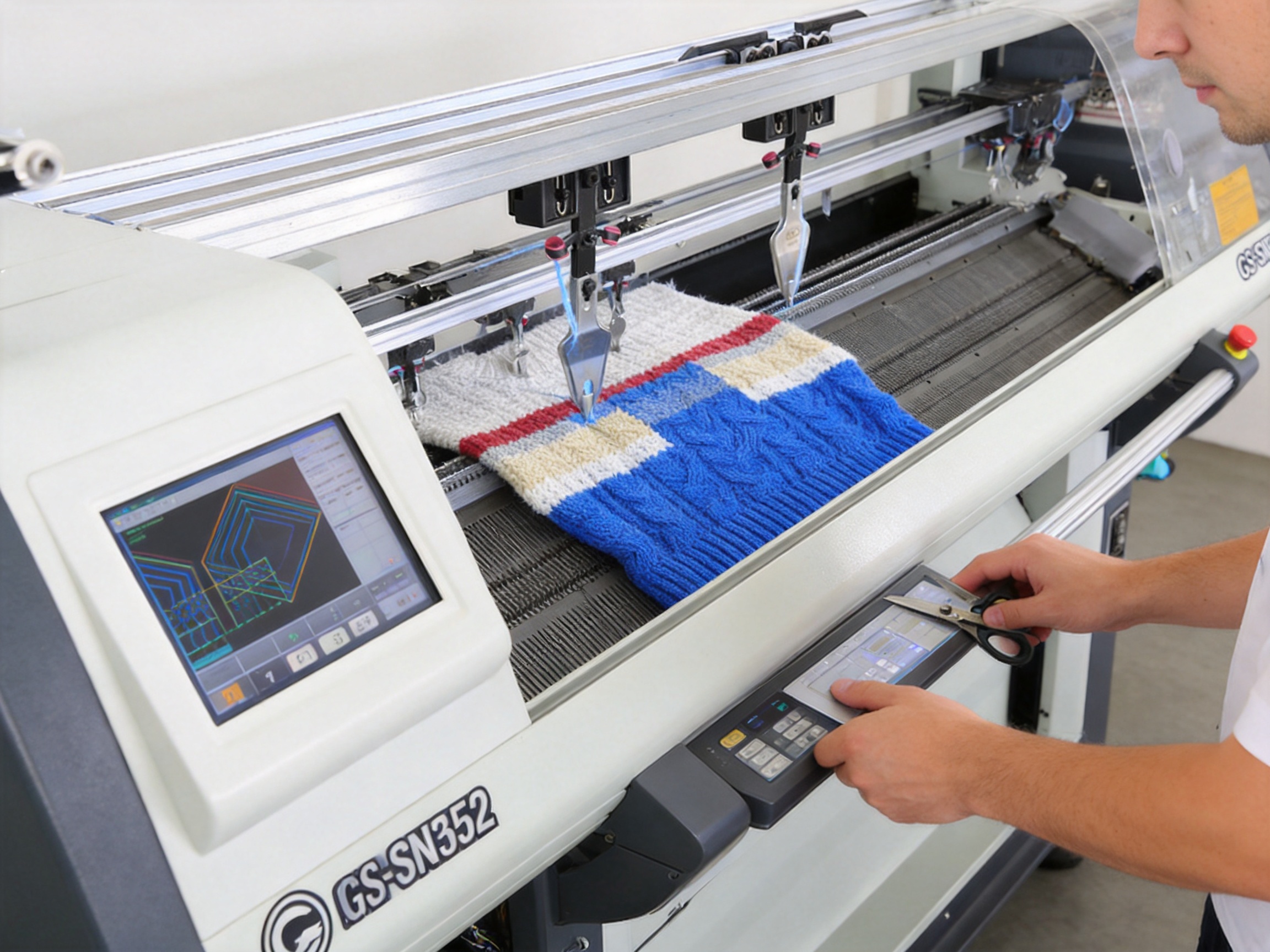
The GS-SN352 is equipped with an LCD control screen and USB input. Its 256MB system memory can store a substantial number of design files, allowing operators to access production programs without repeatedly transferring files from an external computer.
The monitoring menu displays operating parameters and enables adjustments while the machine is running. This real-time access helps operators respond to changes in yarn behavior, fabric requirements, or production conditions without stopping the entire process whenever a minor setting needs correction.
A visual design system makes programming and operation easier to understand. This is important in factories where operators have different levels of experience or where production programs change frequently. A clear interface can reduce training time and help operators identify relevant settings more quickly.
Multi-language support, including Chinese and English, improves accessibility for international users. Since the company supplies knitting equipment to multiple markets, language flexibility supports communication between machine operators, production managers, technicians, and overseas customers.
Computerized control also improves production repeatability. Design files and machine parameters can be organized according to customer, garment style, yarn specification, gauge, or production order. This provides a more systematic approach to managing repeated programs and reducing setup errors.
Protection and Fault-Detection Functions
Production reliability depends not only on mechanical strength but also on the machine’s ability to identify abnormal conditions quickly. The GS-SN352 includes automatic alarm and stopping functions for several potential problems, including yarn breakage, float yarn, rewinding faults, end of knitting, racking failure, needle breakage, and programming errors.
Yarn-break detection helps prevent the machine from continuing to knit without the required material. If operation continued after a yarn break, the resulting fabric could contain missing sections, structural defects, or extensive damage. Automatic detection allows the operator to correct the issue before unnecessary material is consumed.
Float-yarn detection provides protection against abnormal yarn behavior that may affect fabric quality. Rewinding and end-of-knitting monitoring help control the transition between production stages. Racking and needle-related protection can reduce the risk of mechanical damage or serious fabric defects.
Safety-related monitoring is also important. The machine is designed to respond to safety-door events and other abnormal operating conditions. Such protective functions help safeguard operators and equipment when the machine detects a situation outside normal parameters.
Protection systems do not eliminate the need for proper maintenance, operator training, and safe work procedures. However, they provide an additional layer of control and can reduce the impact of errors or unexpected events during production.
Power-Off Memory and Electrical Configuration
The GS-SN352 operates on a 220-volt, single-phase power supply. This configuration is suitable for many standard industrial and commercial electrical environments, subject to local installation requirements and appropriate electrical protection.
The machine includes a power-off memory function. If an unexpected interruption occurs, production data and operating information can be protected so that the operator can resume work more efficiently after power is restored. This feature is particularly useful in regions where temporary power fluctuations or interruptions may occur.
Power-off memory can reduce the risk of losing design files, settings, or production progress. It may also help shorten recovery time after an interruption, although the exact restart procedure should follow the machine’s operating instructions and the condition of the fabric at the time of the stoppage.
Manufacturing Strengths of the Equipment Supplier
Guosheng Wonderful Intelligent Technology (Changshu) Co., Ltd. specializes in the research and development, manufacture, and international supply of computerized knitting machinery. The company is located in Changshu, Jiangsu Province, an important textile machinery manufacturing region in China.
Operating within a mature industrial cluster provides access to engineering resources, component suppliers, manufacturing expertise, and textile-industry knowledge. This environment can support the development of machines that combine mechanical design, electronic control, software programming, and production-oriented functionality.
The company’s product portfolio includes computerized flat knitting machines, collar knitting machines, and flyknit shoe upper knitting machines. This range demonstrates experience across several related areas of knitted textile production. Knowledge gained from different applications can help inform the design of control systems, yarn-handling mechanisms, needle selection, fabric take-down, and machine protection.
Manufacturing advanced knitting equipment requires coordination between many disciplines. Mechanical structures must be accurately produced and assembled. Drive systems must operate smoothly. Electronic controls must communicate with sensors and motors. Software must translate design instructions into coordinated machine actions. The final machine must also be serviceable and understandable to factory operators.
The GS-SN352 reflects this integrated approach. Its compact carriage is a mechanical design choice connected to energy use and floor-space efficiency. Its AC servo drive and racking system combine electrical control with precision movement. Its stepping-motor stitch and take-down systems connect programming with fabric quality. Its USB interface, memory, and multi-language display connect machine capability with daily factory management.
The company’s emphasis on practical production requirements is also visible in the machine’s fixed-track cam architecture. Rather than adding complexity without a clear operating benefit, the design prioritizes robust operation, reduced failure points, and manageable maintenance. This approach is appropriate for manufacturers that value dependable output over unnecessary sophistication.
Engineering and Quality Considerations
Advanced manufacturing of computerized knitting machinery involves more than assembling standard components. The machine must maintain alignment between needle beds, carriage tracks, yarn carriers, take-down rollers, sensors, and drive systems. Small deviations can influence fabric quality, machine noise, wear, or operational stability.
A reliable manufacturing process therefore requires careful attention to component accuracy, assembly procedures, software integration, electrical testing, and functional verification. Each subsystem must operate correctly on its own and in coordination with the other systems.
The GS-SN352’s technical configuration indicates an emphasis on integrated testing. The three-system carriage must coordinate needle selection, cam action, yarn-carrier movement, and carriage travel. The AC servo system must control racking and drive motion. Stepping motors must deliver repeatable stitch and take-down adjustments. The protection system must respond appropriately to abnormal signals.
Manufacturing quality is also reflected in the machine’s suitability for long production runs. Sweater factories depend on equipment that can operate repeatedly across shifts and production orders. Stable mechanical movement, controlled yarn handling, and automatic fault detection all support this objective.
For international customers, a manufacturer’s strength also includes communication, documentation, technical support, spare-parts coordination, and an understanding of different factory environments. The company’s international supply focus positions its machines for use by garment, footwear, and textile manufacturers in multiple markets.
Competitive Advantages Compared with Conventional Alternatives
The GS-SN352 offers several advantages when compared with standard-carriage or less flexible flat knitting machines.
First, its three-system configuration can provide higher effective output than a comparable two-system machine when producing programs that benefit from multiple working positions. More operations may be completed during each carriage pass, helping reduce production time for suitable designs.
Second, the 5.2-inch extra-small carriage reduces the machine’s footprint and contributes to lower energy demand. The stated reduction of approximately 30 percent in floor-space occupancy can help factories increase equipment density without immediately expanding their buildings.
Third, fixed-track cams offer a simpler mechanical design than fully motorized variable-cam systems. This can reduce potential failure points and make routine maintenance more manageable.
Fourth, the machine retains full-function capability rather than limiting the user to plain knitting. Transfer, tuck, miss, jacquard, intarsia, and needle transfer functions allow manufacturers to address a broader product range.
Fifth, the broad gauge and width options make the machine adaptable to different commercial strategies. Manufacturers can select a configuration for coarse sweaters, medium-weight garments, fine knitwear, or larger fabric sections.
Sixth, the combination of 16-carrier yarn handling and programmable scissor and clamp control supports complex color designs while helping reduce yarn waste. This can be a practical advantage in jacquard and intarsia production.
Finally, computerized monitoring, multi-language operation, memory storage, fault detection, and power-off protection support more organized and dependable production management.
Applications in Sweater and Knitwear Manufacturing
The GS-SN352 is primarily intended for sweater and knitwear factories. It can be used for knitted body panels, sleeves, fronts, backs, decorative sections, and other garment components depending on gauge, width, yarn, and program requirements.
For everyday commercial sweaters, the machine can support repeatable plain, tuck, textured, and patterned structures. For fashion collections, its jacquard and intarsia functions can produce color motifs, large graphic areas, and contrasting sections. For premium knitwear, fine-gauge configurations can support lighter and more refined fabric constructions.
The machine may also be useful for manufacturers producing sports knitwear, school garments, corporate apparel, seasonal collections, private-label products, and customized small-batch orders. Its flexible programming makes it appropriate for factories that must change designs frequently.
Because the machine is available in multiple gauges and widths, production planners can select the configuration that best matches the intended product. A factory specializing in heavy winter sweaters may prioritize a coarse gauge, while a manufacturer producing lightweight fashion knitwear may select a fine gauge.
Installation and Production Planning Considerations
Before purchasing or installing a GS-SN352, manufacturers should evaluate product requirements, yarn specifications, available floor space, power supply, operator skills, maintenance resources, and anticipated order volume.
Gauge selection should be based on the intended yarn range and fabric structures. Width selection should correspond to panel dimensions and the way garments are planned and cut or assembled. Factories should also consider future product development rather than selecting a configuration only for current orders.
The compact design can support efficient workshop layouts, but adequate service access must still be maintained. Operators need sufficient room to load yarn, inspect fabric, access controls, perform cleaning, and carry out routine maintenance.
Production planning should include time for sample development, yarn testing, program verification, and stitch-density adjustment. The machine’s broad range of functions creates many design possibilities, but consistent results depend on appropriate programming and material preparation.
Operators should receive training in machine setup, design-file management, yarn routing, fault interpretation, cleaning, lubrication where applicable, and safe operating procedures. Proper training improves machine utilization and helps prevent avoidable downtime.
Maintenance and Long-Term Performance
Routine maintenance is essential for preserving the performance of any computerized knitting machine. Operators should follow the manufacturer’s recommended procedures for cleaning, inspection, lubrication, needle checks, yarn-carrier checks, electrical inspection, and software or control-system care.
The fixed-track cam structure is intended to reduce mechanical complexity, but it still requires regular inspection. Cam tracks, needles, sinkers, carriage components, and guide systems should be kept clean and checked for abnormal wear or damage.
Yarn systems also require attention. Carriers and guide rails should remain clean and correctly aligned. Scissors and clamps should be checked to ensure that they cut and hold yarn properly. Poor yarn handling can increase waste and create interruptions during color changes.
Take-down rollers should be inspected for cleanliness and consistent movement. If rollers become contaminated or worn, fabric tension may become uneven. The stitch and take-down settings should be reviewed when changing yarn types or fabric structures.
Preventive maintenance is generally more economical than waiting for a failure. Regular inspections can identify developing issues before they cause serious downtime, damaged fabric, or costly component replacement.
Operational Benefits for Small and Medium-Sized Factories
Small and medium-sized factories often operate under strict constraints. They may have limited floor space, modest capital budgets, small technical teams, and a need to accept varied orders. The GS-SN352 is designed with these conditions in mind.
Its economical structure lowers the barrier to adopting three-system technology. Its compact size helps make better use of existing workshops. Its fixed-track cams can simplify maintenance. Its visual control interface can make operation more accessible to developing teams.
The machine’s flexibility is also valuable for factories that do not produce millions of identical garments. Small-batch and medium-volume manufacturers need to change colors, sizes, structures, and patterns without excessive downtime. Computerized program storage and full-function knitting capability support this production model.
At the same time, the machine can contribute to factory growth. A manufacturer may begin with a focused product line and later expand into jacquard, intarsia, textured garments, or different gauges. A machine platform with broad capabilities can reduce the need to replace equipment as product requirements develop.
Technical Specification Table
| Specification | GS-SN352 Configuration |
|---|---|
| Machine type | Three-system, single-carriage computerized flat knitting machine |
| Gauge options | 3-5-7G, 5G, 6G, 7G, 8G, 9G, 10G, 12G, 13G, 14G, and 16G |
| Standard knitting width | 52 inches |
| Optional knitting widths | 40 inches, 60 inches, and 80 inches |
| Maximum knitting speed | 1.5 meters per second |
| Knitting functions | Transfer, tuck, miss, jacquard, intarsia, and needle transfer |
| Stitch density control | Stepping-motor controlled; 128 adjustable levels; subdivision-supported range of 0–650 |
| Racking system | AC servo motor controlled; racking within 2 inches with fine adjustment |
| Drive system | Synchronous belt drive with AC servo system |
| Needle selection | Computer-controlled electric magnet or motor needle-selection system |
| Yarn carrier system | 16 yarn carriers on each side of four guide rails; shiftable to any needle position |
| Scissor and clamp system | Left and right units can operate synchronously or independently through program instructions |
| Take-down roller | Stepping-motor controlled; 128 levels; adjustable range of 0–100 |
| Control system | LCD screen, USB input, 256MB memory, monitoring menu, multi-language support |
| Protection functions | Alarm or stop response for yarn breakage, float yarn, rewinding faults, end of knitting, racking faults, needle breakage, programming errors, and related conditions |
| Power supply | 220V, single-phase |
| Power interruption feature | Power-off memory function |
Why the GS-SN352 Is a Practical Investment
The GS-SN352 is designed for manufacturers that want to improve capacity without accepting the full cost and footprint of a large conventional three-system machine. Its strongest value comes from the way its features reinforce one another.
The compact carriage helps conserve space and energy. The three-system architecture supports efficient knitting. The fixed-track cam system promotes mechanical simplicity. Servo and stepping-motor controls support precision. The yarn-carrier and scissor systems improve design flexibility and material management. The computerized interface helps operators manage programs and parameters. The protection system supports safer and more stable production.
These advantages can help manufacturers improve several performance indicators simultaneously: output per unit of floor space, machine availability, design flexibility, fabric consistency, operator efficiency, and yarn utilization.
For companies competing in markets where customers expect shorter delivery times, more design variety, and stable quality, this combination is important. A machine does not create competitiveness through speed alone. It must also help the factory respond quickly, control costs, reduce waste, and maintain consistent results.
Q&A
What type of machine is the GS-SN352?
The GS-SN352 is a three-system, single-carriage computerized flat knitting machine designed primarily for sweater and knitwear production. It belongs to an economical full-function configuration intended for factories seeking three-system capability in a compact format.
What is the standard working width?
The standard knitting width is 52 inches. Optional configurations of 40, 60, and 80 inches are available for manufacturers with different product dimensions and production requirements.
What makes the 5.2-inch carriage important?
The 5.2-inch extra-small carriage is designed to reduce machine size, energy demand, and floor-space requirements while retaining three-system knitting capability. The stated footprint advantage is approximately 30 percent less space than comparable standard-carriage machines.
Can the machine produce jacquard and intarsia designs?
Yes. The GS-SN352 supports jacquard and intarsia, along with transfer, tuck, miss, and needle transfer functions. Its multi-carrier yarn system is intended to support complex color and yarn arrangements.
How many yarn carriers does the machine have?
The specification identifies 16 yarn carriers on each side of four guide rails. The carriers can shift to any needle position according to the knitting program.
How does the machine help reduce yarn waste?
The programmable left and right scissor and clamp units can operate synchronously or independently. This allows yarn-handling sequences to be matched more closely to the design and can reduce unnecessary yarn lengths during color changes.
What gauges are available?
Available gauges include 3-5-7G, 5G, 6G, 7G, 8G, 9G, 10G, 12G, 13G, 14G, and 16G. The appropriate gauge should be selected according to yarn type, fabric weight, stitch structure, and target garment range.
What is the maximum knitting speed?
The maximum stated knitting speed is 1.5 meters per second. Actual production speed depends on gauge, yarn, fabric design, stitch density, carriage settings, and the complexity of the programmed garment.
Does the machine use servo control?
Yes. The machine uses an AC servo system for drive and racking control. It also uses stepping motors for stitch-density and take-down adjustment.
What control functions are included?
The machine includes an LCD display, USB input, 256MB memory, a monitoring menu, real-time parameter adjustment, a visual design system, and multi-language support including Chinese and English.
What protection functions are provided?
The machine can automatically alarm or stop when it detects conditions such as yarn breakage, float yarn, rewinding faults, end of knitting, racking failure, needle breakage, programming errors, safety-door events, and related abnormalities.
Is the machine suitable for small and medium-sized factories?
Yes. Its compact footprint, economical mechanical structure, broad knitting functions, and flexible programming make it suitable for small and medium-sized factories that require varied production capability without a large machine investment.
What power supply does the machine require?
The stated power supply is 220V, single-phase. Electrical installation should be completed according to local regulations and the manufacturer’s technical requirements.
How does the fixed-track cam system benefit production?
The fixed-track cam structure uses a mechanically simpler arrangement with fewer moving parts than a fully motorized variable-cam design. This can help reduce potential failure points, maintenance demands, and unplanned downtime.
Can the machine store production programs?
Yes. The control system includes 256MB of memory and USB input, allowing a large number of design files and operating programs to be stored and accessed.
Conclusion
The GS-SN352 52-inch three-system full-function economical sweater knitting machine is a practical solution for manufacturers that require strong knitting capability within controlled investment, space, and operating-cost limits. Its three-system single-carriage configuration supports productive operation, while the 5.2-inch extra-small carriage reduces the physical footprint and contributes to energy-conscious production.
Its fixed-track cam structure supports reliability and simplified maintenance. Its gauge and width options allow the machine to serve diverse product categories. Transfer, tuck, miss, jacquard, intarsia, and needle transfer functions provide the flexibility required for modern sweater design. Precision stitch and take-down controls help maintain fabric consistency, while servo racking and synchronous belt drive support accurate machine movement.
The 16-carrier yarn system and programmable scissor and clamp assembly strengthen the machine’s ability to handle multi-color and multi-yarn production while controlling waste. Intelligent monitoring, USB connectivity, memory storage, multi-language operation, automatic protection, and power-off memory further support efficient factory management.
Backed by a manufacturer focused on computerized knitting machinery and international textile applications, the GS-SN352 combines practical mechanical engineering with electronic control and production-oriented design. For small and medium-sized sweater factories seeking to increase output, expand product variety, and use workshop space more efficiently, it offers a balanced and economical path toward more capable flat knitting production.
References
1. GS-SN352 Product Specification Sheet, computerized flat knitting machine technical information.
2. Product engineering information for three-system full-function sweater knitting machinery.
3. Technical notes on computerized flat knitting functions, including transfer, tuck, miss, jacquard, intarsia, and needle transfer.
4. Manufacturing information concerning computerized knitting machinery, servo control, stepping-motor systems, yarn carriers, and fabric take-down mechanisms.
5. Textile machinery production and maintenance principles for industrial flat knitting equipment.
Product: GS-SN352 52-Inch Three System Full-Function Economical Sweater Knitting Machine


Ready to Begin?
Product Categories
- Sweater Knitting Machine (Economic SE)
- Sweater Knitting Machine (Full Function S)
- Collar Knitting Machine (Economic CE)(Fabric)
- Collar Knitting Machine (Full-Function C)
- Blanket Knitting Machine(Fabric)
- Shoe Upper Knitting Machine
- Ready To Wear Sweater Knitting Machine
- Ready To Wear Glove Knitting Machine
- Ready To Wear Hat Knitting Machine
- Knee Pad Knitting Machine
- Metal Mesh Knitting Machine
Contact Information
-
 Email: gs@guoshengchina.cn
-
 Phone: +86-0512-52690511
-
 Address: No. 18, Hupu Pujiang Road, Bixi New District, Changshu City, Jiangsu Province, China
QR Code
