


 English
 Español
 русский
 عربى
 中文简体

Zhao Yutong — After-Sales Service Manager
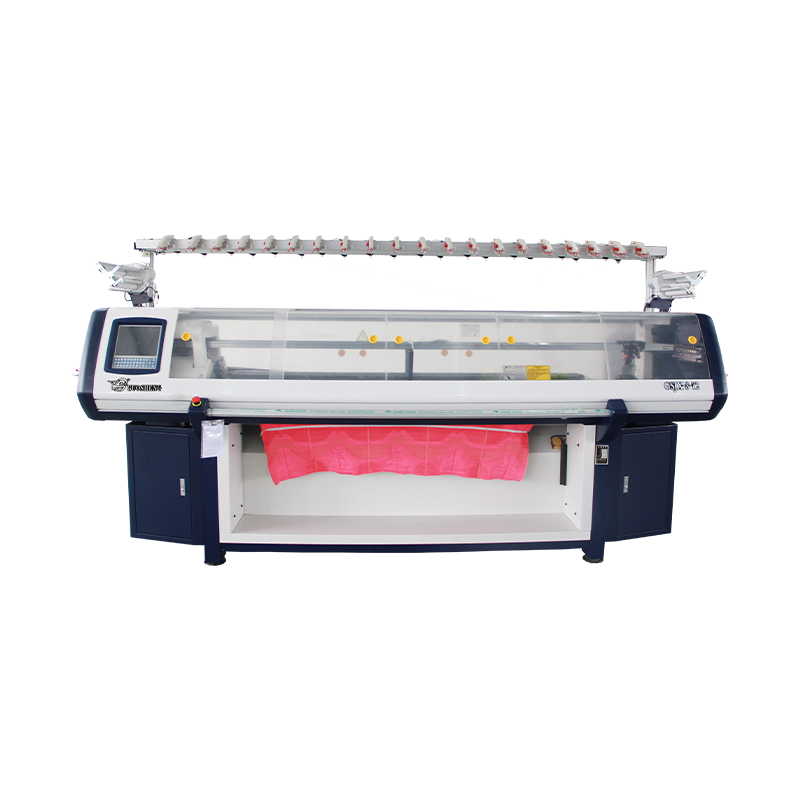
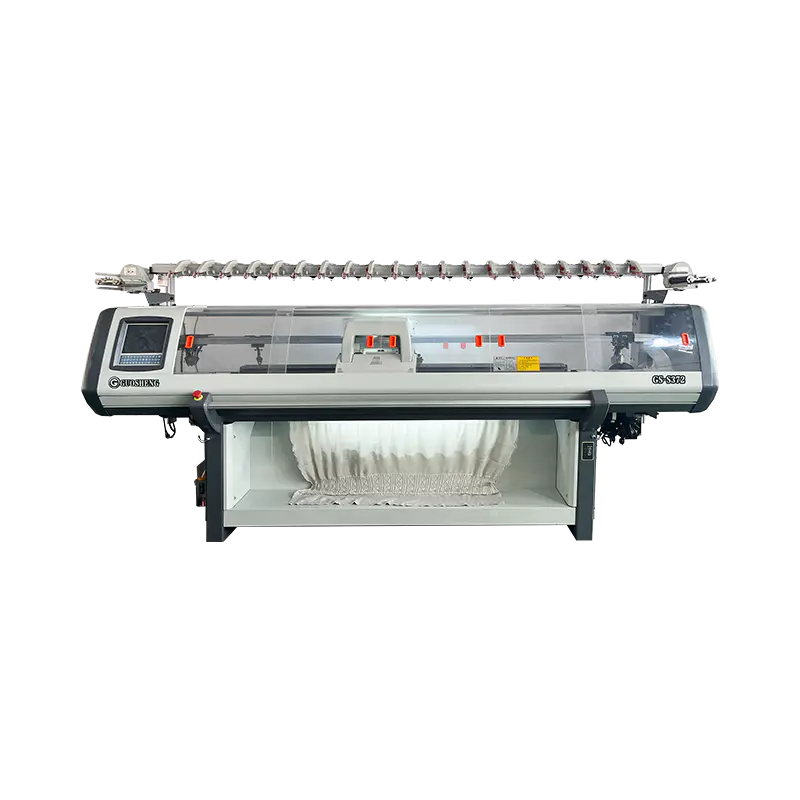
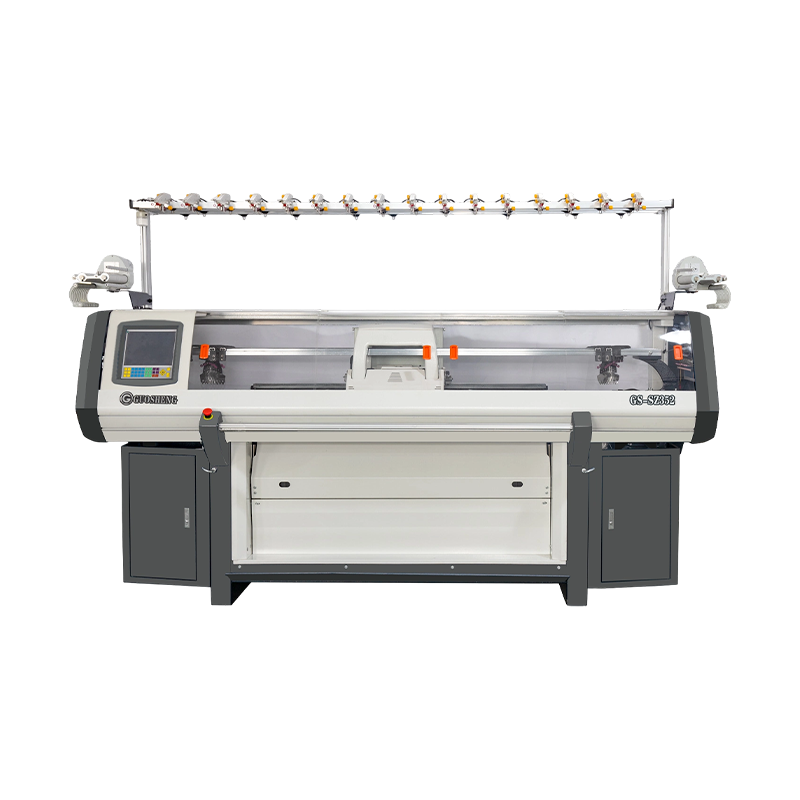
GS-RW372 10.2G 72-Inch Three-System Ready-to-Wear Computerized Flat Knitting Machine
Date:Oct 22, 2026
Content
- 1 Ready-to-Wear Knitting as a Modern Production Strategy
- 2 Core Product Positioning
- 3 Advantages of the Three-System Single-Carriage Design
- 4 Wide 72-Inch Knitting Width
- 5 Gauge Selection and Fabric Versatility
- 6 Multi-Station Sinker System
- 7 Stepless Adjustable Take-Down System
- 8 Comprehensive Knitting Functions
- 9 Sixteen-Carrier Yarn System
- 10 Precision Stitch Density Control
- 11 Racking, Needle Selection, and Drive Control
- 12 Computerized Control System
- 13 Protection and Production Reliability
- 14 Competitive Advantages in Industrial Applications
- 15 Manufacturing Strengths Behind the Equipment
- 16 Production Workflow with the GS-RW372
- 17 Material Efficiency and Sustainability Benefits
- 18 Applications and Product Opportunities
- 19 Operational Considerations for Buyers
- 20 Technical Specification Summary
- 21 Quality, Customization, and Long-Term Value
- 22 Q&A
- 22.1 What does ready-to-wear knitting mean?
- 22.2 What is the main benefit of the GS-RW372?
- 22.3 Why is the three-system carriage important?
- 22.4 What products can be made on this machine?
- 22.5 What gauges are available?
- 22.6 Why is a 72-inch width useful?
- 22.7 What is the purpose of the multi-station sinker system?
- 22.8 How does the take-down system improve knitting?
- 22.9 Can the machine produce multicolor patterns?
- 22.10 Does the machine support reverse yarn addition?
- 22.11 How is stitch density controlled?
- 22.12 What protection functions are included?
- 22.13 Is the machine suitable for international factories?
- 22.14 What should a factory consider before purchasing?
- 22.15 How does the machine support sustainable production?
- 23 Conclusion
- 24 References
- 25 Product: GS-RW372 10.2G 72-Inch Three System Ready-to-Wear Computerized Flat Knitting Machine
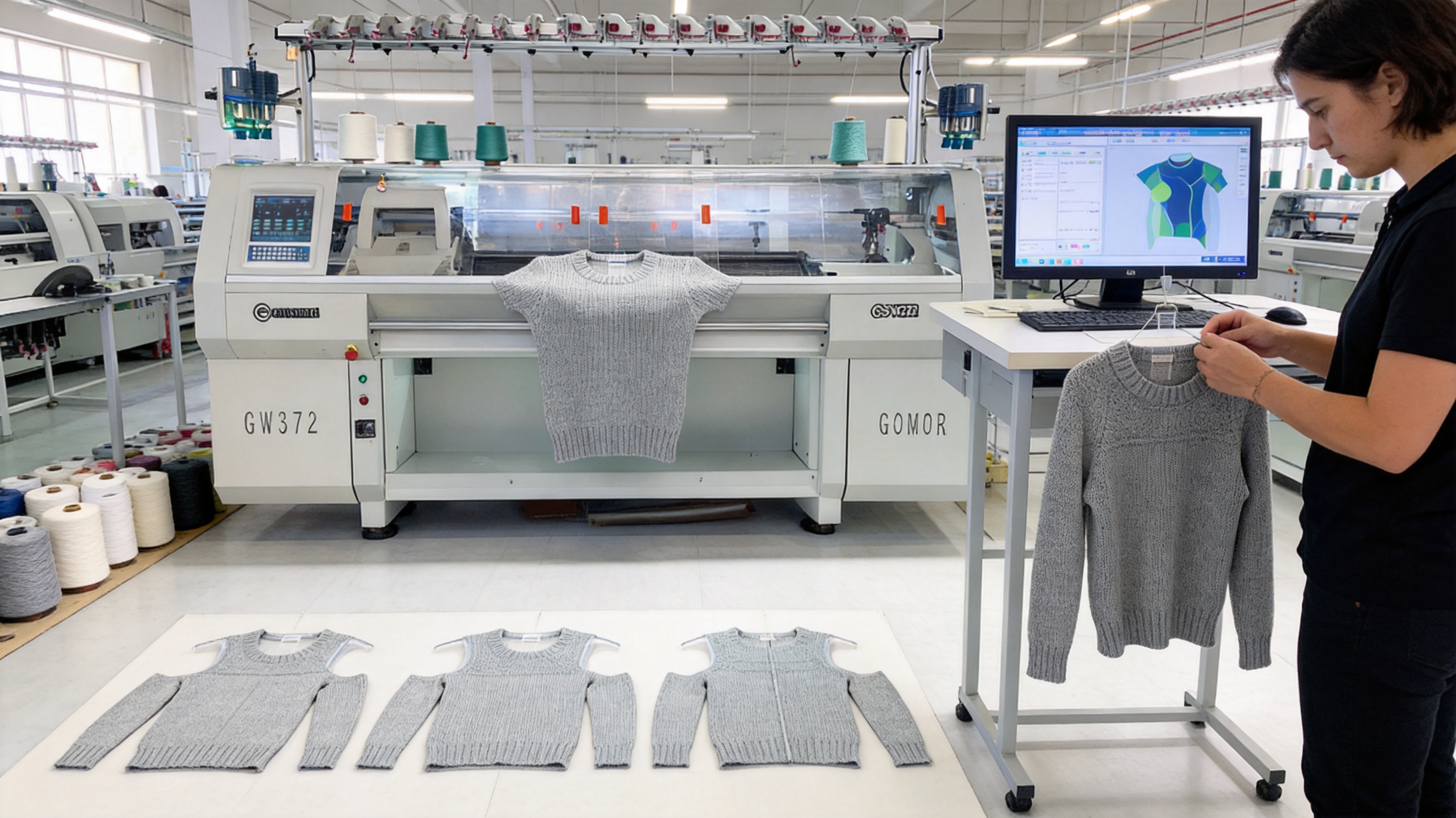
The GS-RW372 is a wide-width, three-system computerized flat knitting machine developed for factories that want to move from conventional panel production toward integrated ready-to-wear manufacturing. With a standard 72-inch knitting width, multiple gauge choices, a single-carriage three-system configuration, fully fashioned knitting capability, advanced take-down control, and a broad range of pattern functions, the machine is designed to knit complete sweater components in one continuous production process.
Ready-to-wear knitting represents a major change in the way sweaters are manufactured. Instead of producing separate front panels, back panels, and sleeves that must later be cut, linked, and sewn, the machine follows a unified process file that coordinates shaping and knitting operations for the garment. This production philosophy can reduce downstream labor, lower material waste, improve dimensional consistency, and help manufacturers respond more efficiently to premium knitwear orders.
The GS-RW372 combines this one-step production concept with the engineering capabilities of a high-speed computerized flat knitting machine. It is suitable for factories producing fully fashioned sweaters, fashion garments, structured knitwear, color-rich jacquard products, plated fabrics, and other complex knitted articles that demand precise control over yarn movement, stitch density, racking, fabric tension, and garment shaping.
Ready-to-Wear Knitting as a Modern Production Strategy
Traditional sweater production often divides the manufacturing process into several independent stages. A front panel is knitted, followed by a back panel and sleeves. The separate pieces are then inspected, cut or shaped where necessary, linked together, sewn, finished, and pressed. Every additional process introduces labor requirements, handling time, material consumption, and opportunities for dimensional variation.
Fully fashioned ready-to-wear knitting takes a different approach. The shape of the garment is created directly during the knitting process. The machine gradually increases or decreases the knitted width, forms neckline and shoulder areas, manages sleeve shaping, and coordinates other structural details according to a programmed design. The objective is to produce garment parts or complete garment structures with a shape that is much closer to the final wearable form.
The GS-RW372 is designed around this principle. Its control system manages the knitting instructions for garment sections within a continuous production file. This allows the machine to execute a long sequence of operations without requiring the operator to stop and manually reorganize the work between every panel. The result is a more integrated workflow for manufacturers that want to reduce reliance on cutting, linking, and sewing.
The ready-to-wear method is particularly valuable when producing garments with shaped silhouettes, carefully defined neckline construction, fitted sleeves, fashioning transitions, or complex pattern arrangements. Instead of treating shaping as a separate post-knitting operation, the machine makes shaping an intrinsic part of the knitting sequence.
For manufacturers, the advantages can extend beyond labor savings. Direct shaping can improve the relationship between pattern design and final garment dimensions. When the design file, yarn behavior, stitch density, take-down force, and racking instructions are coordinated correctly, the production process can deliver garments with better structural consistency from piece to piece.
Core Product Positioning
The GS-RW372 occupies a high-capacity position within a three-system ready-to-wear machine range. Its 72-inch needle bed is intended for full-size garment production and offers more working width than many standard narrow-format flat knitting machines. The wide format is important when producing larger sweater sizes, broad garment bodies, multiple sections across the needle bed, or designs that require substantial lateral space.
The machine is available in five gauge configurations: 5.2G, 6.2G, 7.2G, 9.2G, and 10.2G. This range allows manufacturers to select an appropriate needle spacing for medium-weight, fine-gauge, and more detailed knitwear applications. The featured product configuration is the 10.2G version, which is well suited to finer knitted structures and detailed fashion garments while retaining the advantages of the wide 72-inch format.
Optional knitting widths of 40, 60, and 80 inches provide additional configuration flexibility. These options allow a factory to align the machine format with its product portfolio, available floor space, target garment sizes, and expected production requirements.
Compared with a conventional single-system machine, the three-system architecture can complete more knitting actions during each carriage passage. This is especially meaningful in ready-to-wear manufacturing, where garment production may involve long continuous sequences containing shaping, transfers, tucks, misses, jacquard changes, and density adjustments. The ability to perform more operations efficiently can help shorten the knitting cycle and improve output capacity.
The machine uses a single carriage containing three knitting systems. A compact, fully motorized cam structure supports carriage movement and contributes to a maximum knitting speed of 1.5 meters per second. Actual production speed depends on gauge, yarn type, pattern complexity, stitch density, garment size, and the selected process parameters, but the high-speed architecture provides a strong foundation for industrial production.
Advantages of the Three-System Single-Carriage Design
The carriage is the central moving assembly responsible for executing knitting actions across the needle bed. In the GS-RW372, three knitting systems are integrated into one carriage. Each system can contribute to the sequence of needle selection and knitting operations as the carriage travels across the bed.
A multi-system arrangement is advantageous because it can reduce the number of carriage passes required for a given design sequence. Where a simpler machine may need additional traversals to complete different actions, a three-system machine can combine or organize more operations within the same general production cycle.
This benefit becomes more significant as garment complexity increases. Ready-to-wear knitting is not simply a matter of producing a rectangular fabric panel. It may require repeated transfers, narrowing and widening, changes in stitch structure, localized tension adjustments, color changes, and coordinated shaping. Each extra operation affects production time. The three-system format is therefore well matched to long, complex, and continuously programmed garment sequences.
The compact motorized cam design also supports responsive carriage operation. A smaller head can help reduce unnecessary mechanical bulk while allowing the machine to maintain high-speed movement. Motorized control gives the system greater flexibility in coordinating knitting actions, stitch formation, and pattern changes.
For factories comparing equipment, the three-system configuration offers a practical balance between productivity and process versatility. A machine designed only for maximum speed may not provide the pattern functions or shaping precision required for premium ready-to-wear products. Conversely, a machine with extensive functions but limited production efficiency may be unsuitable for commercial volumes. The GS-RW372 is positioned to combine both considerations.
Wide 72-Inch Knitting Width
The 72-inch needle bed is one of the defining characteristics of the GS-RW372. A wide needle bed provides more room for large garment panels, broad silhouettes, plus-size clothing, and designs that use multiple sections across the working area. It can also support production planning that places several components within a wider knitting layout when the selected process permits such an arrangement.
Wide-format knitting is increasingly relevant as clothing brands expand size ranges and develop looser, oversized, relaxed, and fashion-oriented silhouettes. A narrow machine may limit the width of the garment or require production to be divided into more stages. The 72-inch model provides additional space for larger structures while preserving the control functions associated with computerized flat knitting.
The large working width also supports more flexible product development. Manufacturers can produce standard sweater sizes as well as larger garments without necessarily changing to a completely different machine category. The available 40-inch, 60-inch, and 80-inch alternatives further allow equipment selection to be based on the factory’s specific production strategy.
A wide needle bed must be supported by stable drive control, accurate racking, uniform yarn management, and reliable take-down performance. A wide machine can only deliver consistent results if movement and tension remain controlled across the full operating range. For this reason, the width of the GS-RW372 is integrated with its servo drive, synchronous belt transmission, multi-station sinker arrangement, and programmable take-down system.
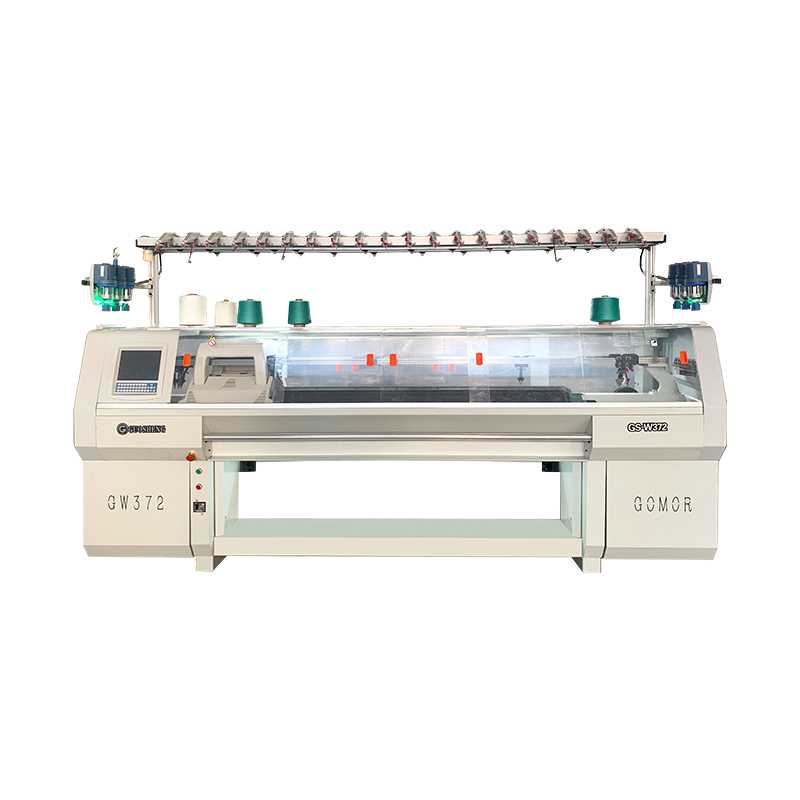
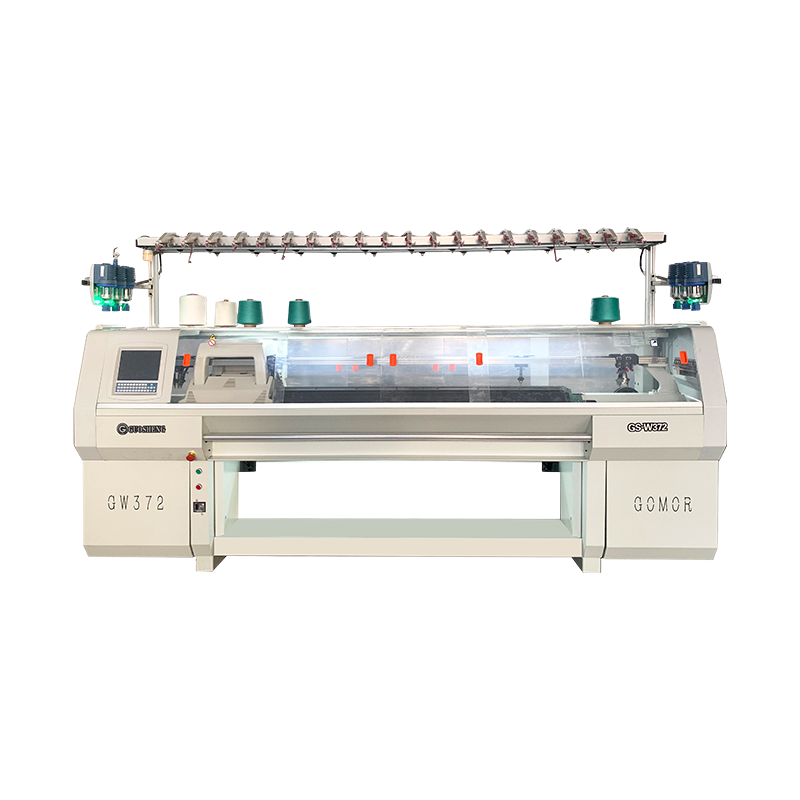
GS-RW372 10.2G 72-Inch Three System Ready-to-Wear Computerized Flat Knitting Machine
Gauge Selection and Fabric Versatility
Gauge influences the spacing between needles and therefore affects the appearance, weight, structure, and level of detail that can be achieved in a knitted fabric. The GS-RW372 is offered in 5.2G, 6.2G, 7.2G, 9.2G, and 10.2G versions. This selection covers a broad range of sweater applications, from relatively substantial structures to finer and more detailed knitted fabrics.
The 10.2G configuration is appropriate for fine-gauge applications where manufacturers require a refined surface, accurate pattern definition, and controlled garment shaping. Fine-gauge production can be particularly valuable for lightweight fashion sweaters, smooth jacquard surfaces, detailed plating structures, and garments that require a more delicate hand feel.
The lower gauge options provide additional flexibility for fabrics with greater yarn volume or more pronounced surface texture. Depending on yarn selection and programming, these configurations can support different weights, textures, rib effects, tuck structures, and visual treatments.
Gauge choice should be considered together with yarn count, fiber composition, twist, elasticity, finishing requirements, and the target garment dimensions. A computerized machine can provide precise settings, but the final result still depends on matching machine configuration with material behavior. The range offered by the GS-RW372 gives factories a broader platform for product diversification.
Because the machine supports adjustable stitch density, manufacturers can also fine-tune the compactness and appearance of different zones within a garment. A neckline, cuff, body area, shoulder transition, and fashioning section may each require different density settings. The ability to program these changes supports more accurate shaping and more controlled fabric performance.
Multi-Station Sinker System
The sinker system is essential to stable loop formation and fabric control. During knitting, sinkers help hold, guide, and manage the yarn and fabric while needles perform their selected actions. In simple structures, the demands placed on the sinker system may be relatively limited. In fully fashioned production, however, the machine must manage frequent structural changes and complex transitions.
The GS-RW372 uses a multi-station sinker system designed to provide yarn control at multiple positions. This arrangement supports operations such as needle transfer, fashioning, widening, narrowing, reverse yarn addition, and other processes that influence the geometry and tension of the knitted fabric.
During a fully fashioned sequence, the working width may change repeatedly. Needles may be brought into or removed from action, stitches may be transferred between beds, and the fabric may move through zones with different tension requirements. The sinker system helps maintain control of these transitions so that loops can be formed consistently.
Better yarn holding and guidance can contribute to improved pattern stability. This is especially important in fabrics containing tuck stitches, missed stitches, jacquard effects, plated yarns, or mixed structural features. When yarn behavior is carefully managed, the machine can execute more complex designs with less risk of irregular loops, unstable edges, or inconsistent surface appearance.
The multi-station sinker design is therefore not merely an accessory feature. It is a technical foundation for the ready-to-wear concept. Fully fashioned knitting depends on reliable control during shape changes, and stable sinker operation contributes directly to that control.
Stepless Adjustable Take-Down System
Take-down force determines how the knitted fabric is pulled away from the needle area. If the force is too high, the fabric may stretch excessively, distort, or develop irregular dimensions. If the force is too low, loops may not clear correctly, fabric may accumulate, and knitting stability can be affected.
The GS-RW372 uses a programmable take-down roller controlled by a stepping motor. The system provides 128 selectable levels across an adjustment range of 0 to 100. This allows operators and designers to define different take-down conditions for different phases of the garment process.
The ability to adjust take-down continuously is particularly valuable in fully fashioned knitting. A body section, cuff, neckline, sleeve cap, shoulder area, and fashioning zone do not necessarily require the same pulling force. A single fixed setting may be acceptable for basic fabric production but may be insufficient for complex garments with significant changes in width and structure.
With programmed take-down adjustment, the machine can apply more appropriate force as the garment moves from one stage to another. This supports smoother fabric handling during narrowing and widening operations and can help reduce deformation caused by unsuitable tension.
Stepless adjustment also assists production development. Operators can test and refine take-down values during sample making, then incorporate successful settings into the process file. Over time, a factory can build a library of optimized settings for different yarns, gauges, garment shapes, and fabric structures.
In practical terms, the take-down system supports greater control over three-dimensional shaping. It helps connect the digital process file with the physical behavior of the fabric and contributes to more consistent results between production batches.
Comprehensive Knitting Functions
The GS-RW372 supports flat knitting, transfer, tuck, miss, jacquard, and reverse yarn addition. These functions provide the foundation for a broad selection of sweater constructions and surface effects.
Flat knitting is used for standard fabric formation and provides the basic platform for garment production. Transfer functions allow loops to be moved between needles or needle beds, supporting structural transitions, decorative effects, openwork details, and shaping operations.
Tuck knitting holds selected loops while new yarn is introduced. This can create relief, texture, increased thickness, decorative surfaces, and variations in fabric density. Miss knitting, in which selected needles do not receive a new loop during a particular action, can be used to form floats, pattern effects, ventilation structures, and other surface designs.
Jacquard capability allows the production of multicolor patterns and engineered graphic effects. In a ready-to-wear environment, jacquard can be integrated directly into shaped sweater structures rather than being restricted to rectangular panels. This gives designers more freedom to position motifs around necklines, shoulders, sleeves, body areas, and other garment zones.
Reverse yarn addition provides additional flexibility for double-faced jacquard and plating fabrics. These techniques can combine colors, fibers, or yarn characteristics within a single knitted structure. They can also support contrast effects, improved coverage, different surface appearances, and specialized hand-feel requirements.
The combination of structural and color functions allows the machine to serve both basic and premium product lines. A factory can use the same equipment platform for straightforward fully fashioned sweaters, textured fashion garments, multicolor jacquard products, and more technically demanding plated articles.
Sixteen-Carrier Yarn System
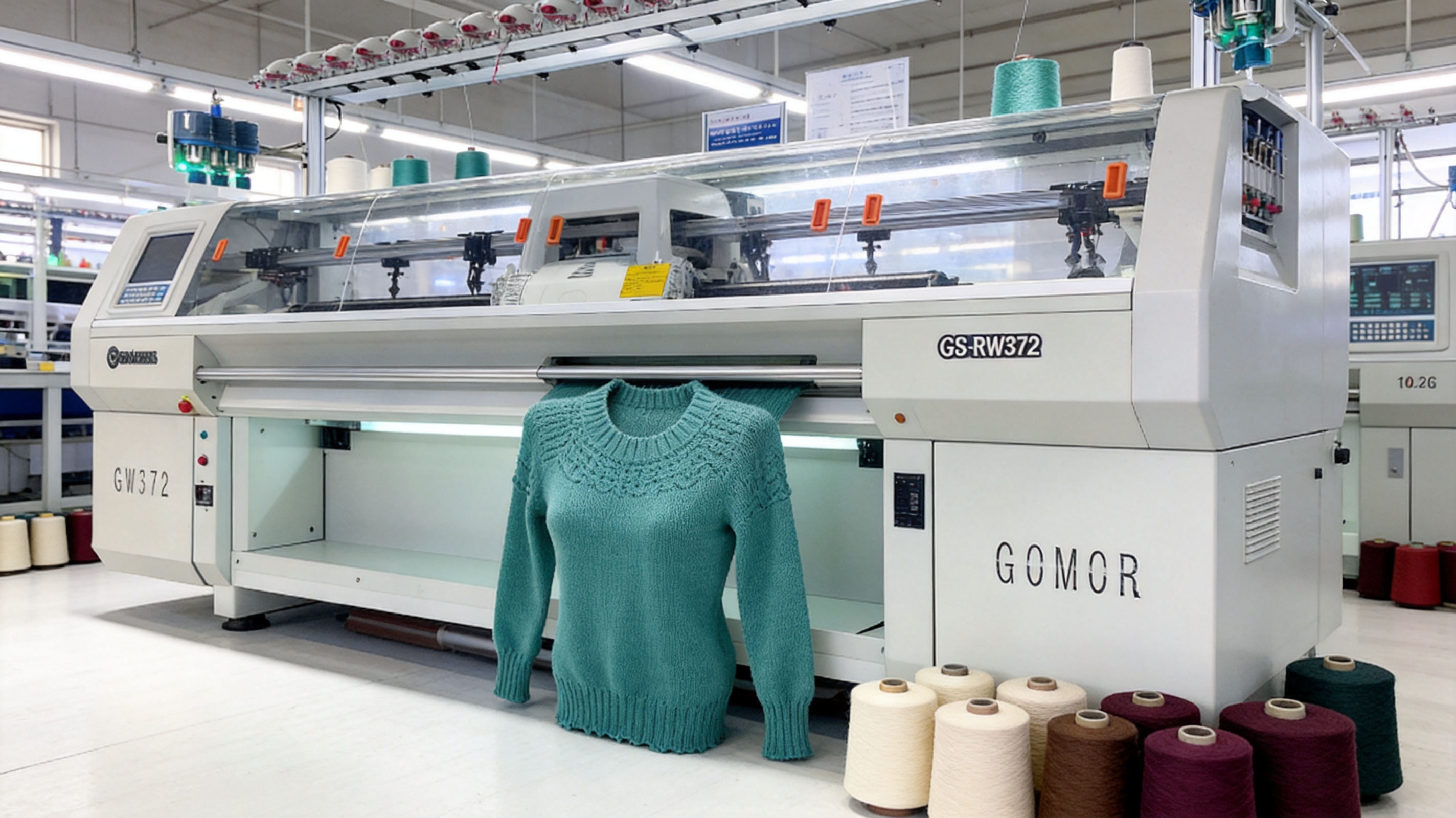
The yarn carrier system is designed to support frequent color and material changes during production. The GS-RW372 provides 16 yarn carriers on each side of four guide rails. The carriers can shift to any needle position, giving the machine a high level of yarn placement flexibility.
This arrangement is useful for multicolor jacquard, plating, contrast details, intarsia-related applications where supported by the selected programming method, and designs requiring multiple yarns to be available across the knitting width. It reduces the need to limit a pattern to a small number of fixed yarn positions.
Flexible carrier movement is particularly important on a wide machine. On a 72-inch needle bed, the distance between different design areas can be substantial. The ability to position carriers at the required needle location helps maintain efficient yarn delivery and supports complex pattern layouts.
A large carrier capacity also benefits product development. Designers can experiment with more colors, fiber combinations, and yarn effects without restructuring the entire machine setup for each variation. This can shorten the transition from sample development to small-batch production.
For premium knitwear manufacturers, color and material flexibility can be a significant commercial advantage. Product differentiation often depends on the ability to produce distinctive combinations of color, texture, and surface structure. The 16-carrier system provides the operational foundation for these possibilities.
Precision Stitch Density Control
The stitch density system is controlled by a stepping motor and provides 128 selectable levels through subdivision technology, with a stated adjustment scope of 0 to 650. This allows the machine to regulate the formation of stitches with a high degree of repeatability.
Stitch density affects fabric compactness, thickness, stretch, appearance, weight, and dimensional stability. It also affects the way a garment responds to shaping operations. A neckline may need a different density from the body, while a sleeve cap may require a carefully controlled transition to maintain the intended silhouette.
Computerized density control allows these changes to be defined within the program rather than relying entirely on manual mechanical adjustment. This supports repeatable production and makes it easier to reproduce approved samples.
Density control is also useful when working with different yarn types. Cotton, wool, acrylic, viscose, blended fibers, and elastic or specialty yarns can behave differently during loop formation. By adjusting the density profile, operators can compensate for material characteristics and refine the final fabric structure.
The 128-level control structure gives process technicians a practical framework for developing detailed density maps. Combined with programmable take-down, it allows the machine to manage both loop formation and fabric movement throughout a garment sequence.
Racking, Needle Selection, and Drive Control
Racking changes the relative position of the needle beds and is important for transfers, shaping, stitch structures, and certain decorative effects. The GS-RW372 uses computer-controlled racking with a 2-inch range and fine-tuning capability. This provides the positional flexibility needed for complex pattern execution.
Accurate racking is especially important when the design contains repeated transfers or structural features that must align across several rows. Small positional errors can affect the appearance of the fabric or make subsequent operations more difficult. Computer control helps maintain programmed positions with greater consistency.
Needle selection is also computer controlled. The system uses an electric magnet or motor needle selection arrangement intended to provide efficient and accurate selection across the needle bed. Precise needle selection is central to jacquard, tuck, miss, transfer, shaping, and fully fashioned operations.
The drive system uses synchronous belt transmission together with an AC servo system. Synchronous belts can help maintain coordinated movement between drive components, while servo control allows the machine to regulate movement accurately. Together, these systems support smooth carriage operation and stable racking performance.
Servo-based control is valuable in a wide-format machine because the carriage and associated mechanisms must maintain consistent movement over a large working distance. Stable acceleration, deceleration, and positioning can help reduce mechanical shock and support repeatable knitting results.
Computerized Control System
The machine is equipped with an LCD display and USB input. Its 256MB system memory allows a substantial number of design files and process programs to be stored for production use.
A computerized control system centralizes the management of knitting parameters. Operators can view operating information through monitoring menus and adjust selected parameters while the machine is running. This provides greater visibility into the process and can make production troubleshooting more efficient.
The visual design system is intended to be easy to understand and upgrade. A clear interface is important in a modern knitting factory because the machine may be operated by different teams responsible for sampling, production, maintenance, and quality control. An accessible interface can help reduce the learning curve and improve consistency between shifts.
Multi-language support, including Chinese and English, assists international operation and training. For export customers, language flexibility can simplify communication between equipment suppliers, factory technicians, programmers, and operators.
The USB input system supports the transfer of design files and production data. In a connected product development workflow, a designer can prepare the garment program, move it to the machine, conduct a sample test, adjust parameters, and save the refined version for future use.
Power-off memory is another practical feature. The machine operates on 220V single-phase power and retains production information in the event of an unexpected interruption. This can help protect design data and reduce the risk of losing process progress during temporary power failures.
Protection and Production Reliability
Industrial knitting equipment must protect both the machine and the knitted product when abnormal conditions occur. The GS-RW372 includes an automatic protection and alarm system designed to respond to a range of potential problems.
These conditions include yarn breakage, float yarn, rewinding faults, racking faults, needle breakage or collision, safety door events, end-of-knitting conditions, and programming errors. When the control system detects a fault, it can alert the operator and stop the machine to prevent the problem from becoming more serious.
Automatic stopping is important in fully fashioned production because the machine may be executing a long and highly coordinated sequence. If a yarn break or needle problem continues unnoticed, the resulting defect could affect a large section of the garment or damage mechanical components.
Protection functions also improve operator safety. Safety door monitoring helps ensure that the machine does not continue to operate when access conditions are unsafe. Fault alerts provide operators with information that can guide inspection and corrective action.
Reliability is not determined only by high speed. It also depends on whether the machine can maintain stable operation, identify abnormal conditions promptly, and protect process data. The combination of mechanical drive control, computerized monitoring, automatic alarms, and power-off memory contributes to a more dependable production environment.
Competitive Advantages in Industrial Applications
The GS-RW372 offers several advantages when compared with basic or narrowly specialized flat knitting equipment. Its strongest competitive position comes from the combination of wide format, three-system efficiency, ready-to-wear capability, multi-station fabric control, and comprehensive computerized adjustment.
First, the 72-inch width gives manufacturers greater capacity for large garments and expanded size ranges. A machine with a narrower bed may be adequate for standard panels but may require additional planning or restrictions when producing oversized and plus-size products.
Second, the three-system single-carriage structure is suited to long, complex knitting sequences. It can support higher process efficiency than simpler configurations, especially where the design includes many shaping and pattern operations.
Third, the fully fashioned focus helps reduce dependence on downstream cutting and joining. This can offer a meaningful advantage over production systems that still require separate panel preparation and extensive manual assembly.
Fourth, the multi-station sinker and stepless take-down systems are particularly appropriate for shaped garments. These features address the practical problems of yarn control and tension management that become more demanding as garment geometry becomes more complex.
Fifth, the broad function set makes the machine suitable for product diversification. Flat knitting, transfer, tuck, miss, jacquard, and reverse yarn addition allow manufacturers to serve different customer segments without limiting production to a single fabric category.
Finally, the computer-controlled system supports repeatability. Once a successful garment program and parameter profile have been developed, the same settings can be stored and reused, helping reduce variation between production lots.
These advantages do not eliminate the importance of yarn selection, programming quality, operator skill, and maintenance. Instead, they provide a stronger technical platform on which an experienced factory can build efficient and consistent production.
Manufacturing Strengths Behind the Equipment
Guosheng Wonderful Intelligent Technology (Changshu) Co., Ltd. is a specialized manufacturer of computerized knitting machinery. Based in Changshu, Jiangsu Province, the company operates within one of China’s important textile machinery manufacturing regions. This location provides access to an established industrial ecosystem, engineering resources, component suppliers, and textile production knowledge.
The company focuses on research and development, manufacturing, and global supply of computerized knitting machines. Its product portfolio includes computerized flat knitting machines, collar knitting machines, and flyknit shoe upper knitting machines. This product breadth provides experience across several knitted product categories rather than limiting the company to one narrow application.
Developing machines for sweaters, collars, footwear uppers, and knitted accessories requires an understanding of different yarn behaviors, fabric structures, production speeds, shaping requirements, and finishing expectations. Experience across these fields can support the development of more adaptable mechanical and control solutions.
The company’s manufacturing strength is also reflected in the integration of mechanical systems and intelligent controls. The GS-RW372 combines a synchronous belt drive, AC servo system, motorized cam operation, stepping-motor stitch control, programmable take-down, computerized needle selection, and digital design storage. These systems must work together accurately for the machine to achieve its intended performance.
Advanced manufacturing is not limited to assembling components. It includes structural design, component matching, control-system integration, software development, testing, parameter calibration, and quality verification. A high-performance knitting machine depends on the coordination of all these stages.
For a ready-to-wear machine, manufacturing quality must support stability across long production cycles. Wide needle beds, high-speed carriage movement, repeated racking, frequent yarn changes, and variable take-down settings all place demands on the machine structure. Careful engineering and testing are therefore necessary to ensure that the machine can perform consistently under practical factory conditions.
The company’s location in a mature industrial cluster also supports supply-chain coordination. Access to specialized manufacturing partners can help with machining, electronic components, motor systems, transmission parts, and other assemblies required by computerized knitting equipment.
International customers also benefit from a manufacturer experienced in export-oriented cooperation. Multi-language controls, global product support, and a portfolio covering several knitting applications can make equipment integration more straightforward for overseas factories.
Production Workflow with the GS-RW372
A typical production workflow begins with garment design. The designer or programmer creates the sweater structure, dimensions, stitch pattern, color arrangement, shaping details, and process instructions. The design is then translated into a machine-readable file containing needle selections, carriage actions, stitch densities, racking positions, yarn carrier movements, and take-down values.
Before bulk production, the factory usually conducts a sample run. The sample is evaluated for dimensions, hand feel, pattern appearance, neckline shape, sleeve proportions, fabric density, and overall garment balance. If necessary, the programmer adjusts the stitch density, take-down settings, shaping sequence, yarn carrier timing, or other parameters.
Once the sample is approved, the refined process file can be stored in the control system. The 256MB memory provides space for maintaining multiple designs and production versions. This can be useful for factories serving different customers or producing seasonal collections.
During production, the operator loads the selected yarns, checks the carrier arrangement, verifies the machine settings, and monitors the first production cycle. The LCD display provides access to operating information and parameter adjustments. The protection system remains active to identify faults such as yarn breakage, needle problems, or programming errors.
The finished knitted garment or garment components can proceed to inspection and limited finishing operations. Because the ready-to-wear process creates the intended shape during knitting, the amount of cutting, linking, and sewing may be reduced compared with conventional panel production.
This workflow can improve factory organization. Fewer manual joining steps may reduce work-in-process inventory and simplify movement between departments. It can also make production planning more closely connected to digital design files.
Material Efficiency and Sustainability Benefits
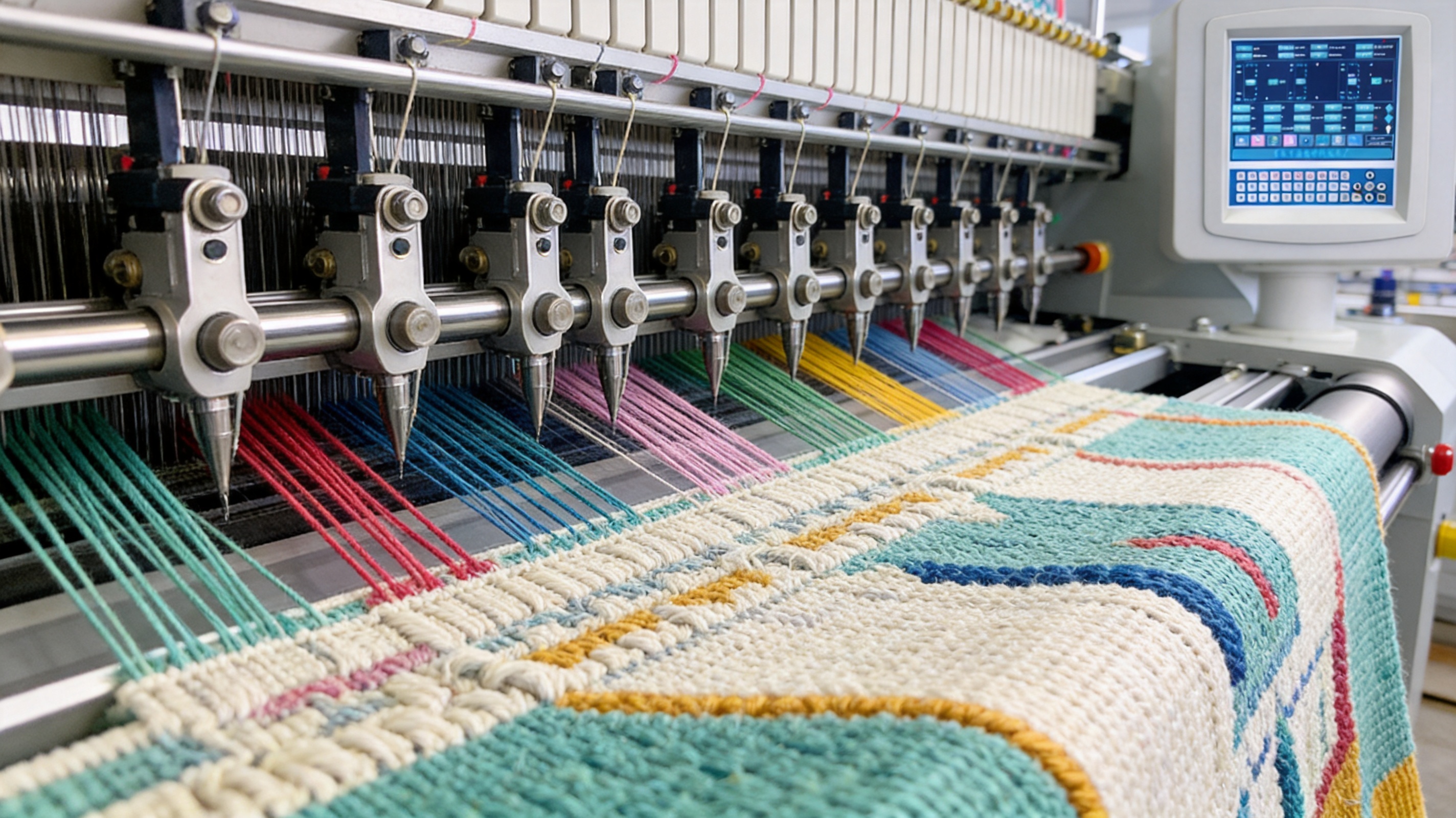
Material efficiency is an important consideration in modern textile production. Conventional cut-and-sew or panel-based processes may generate waste when fabric is cut into garment shapes. Fully fashioned knitting can reduce the need for extensive cutting because the knitted structure is shaped during production.
The GS-RW372 supports this approach by integrating shaping instructions into the knitting process. When the design is correctly programmed, the fabric can be produced closer to the required garment dimensions. This can reduce offcut waste and improve the utilization of yarn and fabric material.
Lower material waste can provide both environmental and economic benefits. Less waste means fewer discarded materials and better use of purchased yarn. Reduced downstream processing may also lower energy consumption associated with cutting, sewing, handling, and repeated transport between departments.
The machine’s programmable control functions can further support resource management. Operators can refine stitch density and take-down values to avoid producing fabric that is excessively heavy, loose, or dimensionally inaccurate. More precise control can help reduce rejected garments and the material consumed by unsuccessful production trials.
Sustainability performance still depends on the complete production system, including yarn selection, machine utilization, electricity consumption, maintenance, finishing, packaging, and product life. Nevertheless, ready-to-wear knitting provides a practical path toward more resource-efficient sweater manufacturing.
Applications and Product Opportunities
The GS-RW372 can be applied to a wide range of sweater and knitwear products. Its ready-to-wear orientation makes it suitable for fully fashioned pullovers, cardigans, fitted sweaters, oversized garments, fashion knitwear, and larger-size products.
Its jacquard and multi-carrier functions support color-rich garments with geometric patterns, seasonal motifs, brand-oriented graphics, and engineered color placement. The reverse yarn addition function adds further possibilities for double-faced effects and plated surfaces.
Transfer and tuck functions support textured designs, decorative panels, open structures, relief surfaces, and three-dimensional effects. Miss knitting can contribute to lightweight areas, ventilation patterns, and selected surface designs.
The machine may also be valuable for sampling and small-batch manufacturing. Digital programming allows designs to be changed without creating new mechanical templates or extensive manual pattern preparation. This flexibility is helpful for fashion brands and contract manufacturers that must produce multiple designs in limited quantities.
For larger factories, the machine can form part of a standardized production line. Approved programs can be stored, reused, and adjusted for different sizes or yarn combinations. Production teams can build a library of garment files and operating parameters, helping shorten future development cycles.
Operational Considerations for Buyers
Before purchasing a GS-RW372, a factory should evaluate its intended products, yarn range, available power supply, floor space, operator capabilities, and programming workflow. The 72-inch machine is designed for substantial working width and should be installed in a location that allows adequate access for operation, maintenance, yarn preparation, and finished-garment handling.
Gauge selection should be based on the expected product range. Factories focused on fine-gauge sweaters may prioritize the 9.2G or 10.2G configurations, while manufacturers producing heavier structures may require a different gauge. The choice should be made in relation to yarn specifications and the desired fabric appearance.
Operators should be trained in design-file preparation, carrier setup, stitch-density adjustment, take-down programming, fault interpretation, and routine maintenance. A sophisticated machine can deliver better results when operators understand how mechanical settings interact with yarn and fabric behavior.
Preventive maintenance should include inspection of needles, sinkers, yarn carriers, belts, sensors, take-down components, electrical connections, and safety devices. Regular cleaning and lubrication, where specified by the manufacturer, can help maintain smooth operation and extend service life.
Factories should also establish quality-control procedures for first-piece approval, in-process inspection, dimensional measurement, defect classification, and final garment evaluation. These procedures help ensure that the machine’s precision capabilities are translated into consistent commercial products.
Technical Specification Summary
| Model | GS-RW372 |
| Product Type | Three-system ready-to-wear computerized flat knitting machine |
| Gauge Options | 5.2G, 6.2G, 7.2G, 9.2G, and 10.2G |
| Featured Gauge | 10.2G |
| Knitting System | Three systems with a single carriage |
| Standard Knitting Width | 72 inches |
| Optional Knitting Widths | 40, 60, and 80 inches |
| Maximum Knitting Speed | 1.5 meters per second |
| Knitting Functions | Flat knitting, transfer, tuck, miss, jacquard, and reverse yarn addition |
| Stitch Density | Stepping-motor control, 128 selectable levels, adjustment scope from 0 to 650 |
| Racking | Computer controlled, with a 2-inch range and fine-tuning capability |
| Drive System | Synchronous belt transmission with AC servo control |
| Needle Selection | Computer-controlled electric magnet or motor needle selection system |
| Yarn Carrier System | 16 yarn carriers on each side of four guide rails |
| Carrier Positioning | Shiftable to any needle position |
| Take-Down Roller | Stepping-motor controlled, 128-level adjustment from 0 to 100 |
| Control Interface | LCD display with USB input |
| System Memory | 256MB |
| Languages | Chinese, English, and other supported language versions |
| Protection Functions | Alarm and automatic stopping for yarn, float, rewinding, racking, needle, safety, end-of-knitting, and programming faults |
| Power Supply | 220V, single-phase |
| Power-Off Function | Production data memory during power interruption |
Quality, Customization, and Long-Term Value
The value of an industrial knitting machine should be measured over its entire working life rather than only by its initial purchase price. Production speed, usable width, product flexibility, fabric quality, maintenance requirements, operator efficiency, and the ability to adapt to future orders all influence the return on investment.
The GS-RW372 is designed to support customization at several levels. Buyers can select different gauges and knitting widths. Production teams can customize garment programs, yarn combinations, stitch densities, take-down profiles, racking instructions, and carrier arrangements. This makes the machine suitable for factories that produce a changing mix of products rather than one permanent design.
Its ready-to-wear capability can also create opportunities for higher-value products. Garments produced with integrated shaping, intricate jacquard, plated yarns, and detailed three-dimensional structures may command a stronger market position than basic commodity panels.
Consistent quality is another element of long-term value. Computerized control, repeatable process files, precision motor systems, and automatic fault protection can help reduce variation and unplanned downtime. When combined with proper maintenance and operator training, these features support stable production over extended periods.
Q&A
What does ready-to-wear knitting mean?
Ready-to-wear knitting means that the garment shape is created directly during the knitting process. Front panels, back panels, sleeves, and other sections can be coordinated within a unified process file, reducing the need for extensive cutting, linking, and sewing after knitting.
What is the main benefit of the GS-RW372?
The main benefit is the combination of fully fashioned one-step garment production with a wide 72-inch knitting format, three-system efficiency, advanced take-down control, and comprehensive pattern functions. This combination supports efficient production of complex and larger ready-to-wear sweaters.
Why is the three-system carriage important?
A three-system carriage can execute more knitting actions during carriage movement than a simpler single-system configuration. This can reduce the number of passes required for complex patterns and help shorten production cycles, particularly in long fully fashioned garment programs.
What products can be made on this machine?
The machine can produce fully fashioned sweaters, fashion knitwear, structured garments, jacquard sweaters, textured fabrics, plated fabrics, double-faced effects, oversized styles, and larger-size garments. The exact product range depends on gauge, yarn, programming, and production requirements.
What gauges are available?
The available gauges are 5.2G, 6.2G, 7.2G, 9.2G, and 10.2G. The 10.2G model is suited to fine-gauge and detailed knitted products, while other gauges can be selected for different yarn weights and fabric structures.
Why is a 72-inch width useful?
A 72-inch needle bed provides additional space for full-size, oversized, and plus-size garments. It can also support wider layouts and more flexible production planning than a narrow-format machine.
What is the purpose of the multi-station sinker system?
The multi-station sinker system helps hold and guide yarn and fabric at multiple positions. It supports stable loop formation during transfers, fashioning, widening, narrowing, reverse yarn addition, and other complex structural operations.
How does the take-down system improve knitting?
The programmable take-down roller allows the operator to adjust fabric tension across 128 levels. Different garment zones can receive different take-down settings, helping control deformation and improve stability during fully fashioned shaping.
Can the machine produce multicolor patterns?
Yes. The machine supports jacquard knitting and provides 16 yarn carriers on each side of four guide rails. The carriers can move to any needle position, supporting multicolor patterns and plated structures.
Does the machine support reverse yarn addition?
Yes. Reverse yarn addition is supported and can be used for applications such as double-faced jacquard and plating fabrics. This expands the range of surface effects and material combinations available to designers.
How is stitch density controlled?
Stitch density is controlled by a stepping motor. The system provides 128 selectable levels and an adjustment scope from 0 to 650, allowing different fabric zones and yarn conditions to be managed more precisely.
What protection functions are included?
The machine can alarm and stop automatically when it detects conditions such as yarn breakage, float yarn, rewinding faults, racking faults, needle problems, safety-door events, end-of-knitting conditions, or programming errors.
Is the machine suitable for international factories?
Yes. The machine provides multi-language control support, including Chinese and English, and is designed for global supply. Its computerized storage, USB input, and flexible control functions support international production environments.
What should a factory consider before purchasing?
A factory should consider the intended garment range, gauge requirements, yarn types, production volume, available floor space, electrical supply, operator training, programming capability, maintenance resources, and expected level of fully fashioned production.
How does the machine support sustainable production?
By creating garment shapes during knitting, the machine can reduce the need for cutting and lower material waste. Reduced downstream processing may also decrease labor, handling, and energy requirements, although total sustainability depends on the entire manufacturing and supply chain.
Conclusion
The GS-RW372 10.2G 72-inch three-system ready-to-wear computerized flat knitting machine is designed for manufacturers seeking a more integrated, flexible, and technically advanced approach to sweater production. Its ready-to-wear philosophy reduces dependence on separate panel assembly, while its wide needle bed supports larger garments and broader product development possibilities.
The three-system single-carriage architecture provides a strong efficiency advantage for long and complex knitting sequences. The multi-station sinker system, programmable take-down roller, precise stitch-density control, computer-controlled racking, 16-carrier yarn system, and broad pattern functions provide the technical support required for fully fashioned and premium knitwear production.
Supported by a manufacturer focused on computerized knitting machinery, the machine reflects the integration of mechanical engineering, digital control, textile application knowledge, and export-oriented manufacturing capability. For factories that want to reduce downstream operations, improve material utilization, develop higher-value garments, and expand into complex ready-to-wear products, the GS-RW372 offers a comprehensive industrial platform.
References
1. Product technical specification sheet for the GS-RW372 three-system ready-to-wear computerized flat knitting machine.
2. Manufacturer product information concerning computerized flat knitting, ready-to-wear sweater production, collar knitting, and flyknit shoe upper machinery.
3. General textile engineering principles relating to flat knitting, fully fashioned garment formation, stitch density, racking, yarn carriers, and fabric take-down control.
4. Industrial guidance on computerized knitting machine operation, preventive maintenance, yarn management, and production quality control.
5. Technical literature concerning jacquard knitting, transfer structures, tuck knitting, miss knitting, plating, and double-faced knitted fabrics.
6. Manufacturing references on material efficiency, reduced cutting waste, digital garment programming, and modern sustainable knitwear production.
Product: GS-RW372 10.2G 72-Inch Three System Ready-to-Wear Computerized Flat Knitting Machine


Ready to Begin?
Product Categories
- Sweater Knitting Machine (Economic SE)
- Sweater Knitting Machine (Full Function S)
- Collar Knitting Machine (Economic CE)(Fabric)
- Collar Knitting Machine (Full-Function C)
- Blanket Knitting Machine(Fabric)
- Shoe Upper Knitting Machine
- Ready To Wear Sweater Knitting Machine
- Ready To Wear Glove Knitting Machine
- Ready To Wear Hat Knitting Machine
- Knee Pad Knitting Machine
- Metal Mesh Knitting Machine
Contact Information
-
 Email: gs@guoshengchina.cn
-
 Phone: +86-0512-52690511
-
 Address: No. 18, Hupu Pujiang Road, Bixi New District, Changshu City, Jiangsu Province, China
QR Code
